Monumento al Toro, Ronda
Monument in Ronda
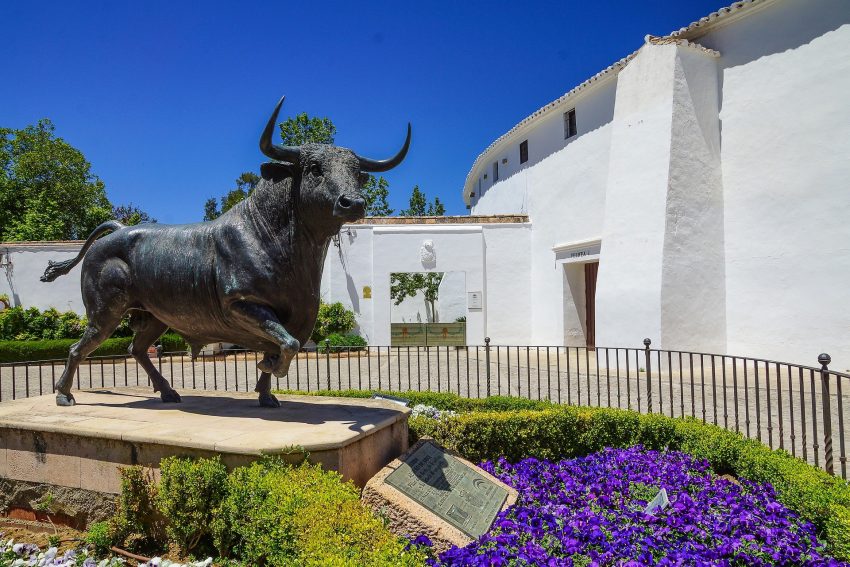
The Monumento al Toro is a modern landmark set beside Ronda's historic bullring, the Plaza de Toros, and it's exactly the kind of stop that works brilliantly in a busy sightseeing day: quick to see, easy to photograph, and instantly tied to the place you're standing in. The statue honors the toro de lidia, the fighting bull, and it's positioned as a symbolic companion piece to the arena-outside the ring, but fully part of its story.
Even if you're not planning to go inside the bullring, the monument gives you a moment of context in the open air. You'll often see visitors pause here before or after touring the arena, and it naturally fits into a walking tour of Ronda because it sits right where many classic routes converge-between the bullring area, the promenades, and the viewpoints near the gorge. It's also one of the top attractions in Ronda in the sense that it's woven into the city's most famous sight, even though it takes only minutes to visit.
Table of Contents
- History and Significance of the Monumento al Toro
- Things to See and Do in the Monumento al Toro
- How to Get to the Monumento al Toro
- Practical Tips on Visiting the Monumento al Toro
- Where to Stay Close to the Monumento al Toro
- Is the Monumento al Toro Worth Visiting?
- For Different Travelers
- FAQs for Visiting the Monumento al Toro
- Nearby Attractions to the Monumento al Toro
History and Significance of the Monumento al Toro
Unlike many of Ronda's older monuments, the Monumento al Toro is deliberately contemporary. It was inaugurated in 2005, which makes it a modern statement placed in dialogue with an arena that represents centuries of tradition and identity in the city.
The meaning is made explicit by the plaque at the foot of the statue, which frames the toro de lidia as a “pillar” of the festival, culture, and history of the town. In other words, it isn’t presented as a neutral artwork, but as a civic tribute-an emblem that signals how central the bullring tradition has been to Ronda’s public image and self-understanding.
As a result, the monument functions less like a standalone sculpture and more like a symbolic threshold: it’s part welcome marker, part cultural signpost, and part reminder that the bullring isn’t just architecture here, but a deeply embedded tradition that still shapes how visitors read the city.
Things to See and Do in the Monumento al Toro
Treat this as a short, focused stop with a clear purpose. First, view it up close and notice how it’s designed to be read quickly and clearly-a bold, recognisable form that works as a photo anchor and a “you are here” moment for the bullring area.
Second, use it as a conversation point, especially if you're traveling with others. It's a useful place to pause and acknowledge that bullfighting is culturally significant and also controversial, and that Ronda's relationship with it is part of what makes the city distinct in Andalusia.
Finally, if you’re visiting the Plaza de Toros, this monument works well as your pre-visit or post-visit marker: a quick photo, then move on. If you’re not going inside, it still delivers a sense of place without committing time to a full museum or tour.
How to Get to the Monumento al Toro
Most visitors reach Ronda via Málaga Airport and continue inland by train, bus, or car. For the best deals and a seamless booking experience, check out these flights to Ronda on Booking.com. Seville Airport is another common choice if Ronda is part of a wider Andalusia trip. For the best deals and a seamless booking experience, check out these flights to Ronda on Booking.com.
Ronda is reachable by train, and from the station it's straightforward to walk or take a short taxi ride to the bullring area. Train schedules and bookings can be found on Omio. The monument is right by the Plaza de Toros, so once you’re at the bullring, you’re essentially there.
If you’re driving, the simplest approach is to park in a central car park and walk to the bullring, rather than trying to stop directly beside it. If you are looking to rent a car in Spain I recommend having a look at Discover Cars, first, as they compare prices and review multiple car rental agencies for you.
Practical Tips on Visiting the Monumento al Toro
- Entrance fee: Free
- Opening hours: 24 hours
- Official website:
- Best time to visit: Visit in the morning for cleaner photos and fewer people clustering around the bullring entrance area. Late afternoon also works well if you want softer light and a livelier atmosphere in the surrounding streets.
- How long to spend: 5-15 minutes is plenty for viewing, reading the plaque, and taking a couple of photos. If you’re combining it with the bullring tour, it naturally becomes a brief stop on either side.
- Accessibility: Access is generally easy because it’s located in the open, near a major attraction with well-trodden pedestrian routes. Surfaces are typical for a central plaza area, but expect occasional crowding in peak times.
- Facilities: You’re surrounded by amenities here-cafés, shops, and services cluster around the bullring district. It’s a good place to grab water or take a short break before continuing to viewpoints or promenades.
Where to Stay Close to the Monumento al Toro
For a culture-heavy itinerary, the best area to base yourself is central Ronda near the old town and main sights so you can walk to viewpoints, historic lanes, and major monuments at quieter times; if your priority is transport connections and easy access to the newer district's restaurants and shopping, basing yourself around the bullring and central avenues is often the most practical.
For an iconic stay close to the gorge-edge promenades and within easy walking distance of the bullring, Parador de Ronda is a strong choice. If you prefer a well-established hotel with a scenic feel and an easy walk to the Plaza de Toros area, Catalonia Reina Victoria is a dependable base. For a smaller, more characterful stay that still keeps you walk-close to central sights, Soho Boutique Palacio San Gabriel is well placed.
Is the Monumento al Toro Worth Visiting?
Yes, as a quick and meaningful stop-especially if you’re already at the Plaza de Toros. It takes almost no time, but it adds a clear layer of context about what the bullring represents to the city, and it works as a memorable photo point.
It’s most worthwhile when you treat it as part of the wider bullring area experience rather than a standalone attraction. As a symbol and a signpost, it does its job well.
What Other Travellers Say...

Bullring of the Royal Cavalry of Ronda, on C. Virgen de la Paz 15 in Ronda, is an 18th-century bullring turned museum that highlights the town's bullfighting heritage and connection to famed matador Pedro Romero; visitors praise its striking architecture and central location in Ronda's old town, enjoy standing in the arena, and recommend the museum's collections of costumes, saddles and antique weapons plus the audio guide for deeper context, while noting a gift shop and that the site is family-friendly and easy to visit.


For Different Travelers
Families with Kids
This is an easy family stop because it’s outdoors, quick, and visually clear-kids immediately understand “this is a bull statue,” and it links neatly to the nearby bullring. It’s also useful as a meeting point if your group is splitting between sightseeing priorities.
If you’re discussing the topic with children, it can be a good moment to explain local tradition in simple, factual terms and then move on. Keep the visit short and use the surrounding cafés for a break.
Couples & Romantic Getaways
For couples, this is more of a “marker moment” than a romantic destination, but it works nicely as part of a gentle stroll around the bullring district and nearby promenades. A quick photo here, followed by a slow walk toward a viewpoint, makes for an easy, well-paced hour.
If you enjoy travel that includes cultural context, it can also be a moment to reflect together on how cities choose to represent their identity-what they celebrate publicly, and why.
Budget Travelers
This is an excellent budget stop because it costs nothing and sits right on the path of many self-guided routes. If you're skipping ticketed museums or pacing your spending, it still gives you a strong “Ronda is Ronda” moment without any cost.
Pair it with free viewpoints and promenade walks for a full, satisfying day that doesn’t rely on paid entries. It’s a high-value stop in a budget itinerary.
FAQs for Visiting the Monumento al Toro
Getting There
Visiting Experience
Tours, Context & Itineraries
Photography
Accessibility & Facilities
Food & Breaks Nearby
Safety & Timing
Nearby Attractions to the Monumento al Toro
- Plaza de Toros de Ronda: The historic bullring and museum complex that anchors this entire district.
- Alameda del Tajo: A leafy promenade and garden area with classic viewpoints over the gorge landscape.
- Mirador de Ronda: A gorge-edge viewpoint that captures the wide Serranía scenery and shifting light across the valley.
- Puente Nuevo: Ronda's iconic bridge, essential for the city's most dramatic gorge views.
- Paseo de Blas Infante: A scenic park walk behind the bullring that links into the broader gorge-edge promenade network.
The Monumento al Toro appears in our Complete Guide to Visiting Ronda!

Moira & Andy
Hey! We're Moira & Andy. From hiking the Camino to trips around Europe in Bert our campervan — we've been traveling together since retirement in 2020!
This website uses affiliate links which may earn a commission at no additional cost to you!
Planning Your Visit
24 hours
Free
Nearby Attractions
- Paseo de Orson Welles (0.0) km
Street - Paseo de Blas Infante (0.0) km
Park - Plaza de Toros de Ronda (0.1) km
Bullring and Historic Site - Mirador de Ronda (0.1) km
Viewing Point - Paseo de Ernest Hemingway (0.1) km
Viewing Point - Paseo de Kazunori Yamauchi (0.1) km
Street and Viewing Point - Plaza del Socorro (0.2) km
Square - Alameda del Tajo (0.2) km
Park - Mirador de Aldehuela (0.2) km
Viewing Point - Puente Nuevo (0.2) km
Bridge