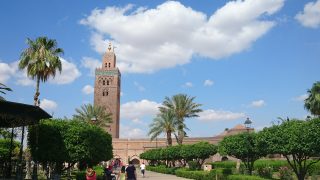
Menara Gardens, Marrakesh
Gardens in Marrakesh
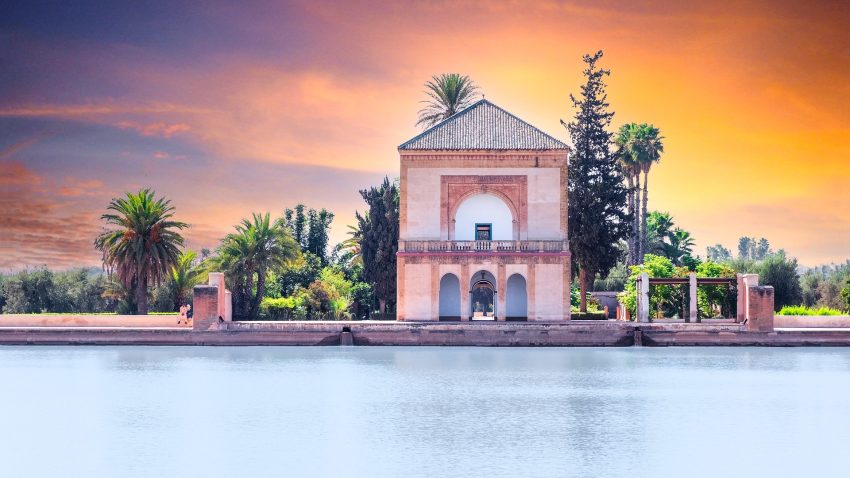
The Menara Gardens are where Marrakech suddenly opens up into sky, water, and olive trees. Just a short distance from the medina walls, this vast 12th-century garden estate centres on a huge rectangular reservoir and a 19th-century pavilion, often photographed with the snowy High Atlas Mountains shimmering in the background. Originally created under the Almohad ruler Abd al-Mu'min as part of a grand agricultural and leisure estate, it blends serious water engineering with a tranquil, almost dreamlike atmosphere, making it one of the best places to visit in Marrakech when you need space and fresh air.
Today, the Menara Gardens are as much a local hangout as a sightseeing stop. Families stroll the paths, couples sit on the reservoir wall, and kids weave between the olive trees on bikes while visitors circle the basin with cameras in hand. The long, straight avenues of olive and fruit trees, the geometry of the pool, and the simple lines of the pavilion all feel surprisingly contemporary, even though the site has been evolving for nearly 900 years. Often visited on walking tours of Marrakech that step beyond the medina, Menara is the place to come when you want to trade souks and squares for reflections, light, and horizon.
Table of Contents
- History and Significance of the Menara Gardens
- Things to See and Do in the Menara Gardens
- How to Get to the Menara Gardens
- Practical Tips on Visiting the Menara Gardens
- Where to Stay close to the Menara Gardens
- Is the Menara Gardens Worth Visiting?
- FAQs for Visiting Menara Gardens
- Nearby Attractions to the Menara Gardens
History and Significance of the Menara Gardens
The Menara Gardens belong to a long tradition of garden estates established on the outskirts of Marrakech. The Almoravids, who founded the city in 1070, created several such domains with artificial lakes and orchards known as buḥā'ir (“little seas”), where water storage, agriculture, and leisure all came together. When the Almohads conquered Marrakech in the 12th century, they continued and expanded this vision. In 1157, Abd al-Mu'min laid out a vast garden estate west of the city, complete with two large basins and enclosed by a long perimeter wall. One of those basins is the Menara reservoir you see today; the other, the now-empty Sahrij al-Bgar, stood closer to what is now Bab Ighli and the Agdal Gardens.
The name “Menara” appears in written sources from the 16th century, during the Saadian period, as Sahrij al-Manāra. The Arabic word menara can mean minaret, lighthouse, or beacon; some historians see the name as a reference to the two-storey pavilion by the reservoir, while others suggest it originally alluded to the Koutoubia Mosque’s minaret, with which the gardens were roughly aligned. Either way, the name hints at visibility and elevation, fitting for a place designed to frame long views towards the city and mountains. Under the Saadians, a pleasure pavilion was first built overlooking the basin, tying Menara into the wider network of royal gardens and palaces that also included the newly revitalised Agdal.
After the Almohad and Saadian peaks, both city and gardens went through periods of neglect, especially when the Marinids shifted the political focus to Fez. The Menara Gardens were revived in the 19th century under the Alaouite sultans Moulay Abd ar-Rahman and his son Muhammad IV, who restored the city's water systems and replanted both Menara and Agdal. The current pavilion dates from this phase and was completed in 1870, with an inscription on its balcony arch giving its exact date. For years the gardens also hosted ostriches and other exotic animals to impress visitors. In 1985, Menara, together with Agdal and the historic walled city, was recognised as part of Marrakech's UNESCO World Heritage status, underlining its importance as both a technological and aesthetic landscape.
Things to See and Do in the Menara Gardens
Most visits to the Menara Gardens naturally gravitate towards the main reservoir. Measuring roughly 195 by 160 metres, this great sheet of water reflects the pavilion, palm trees, and, on clear days, the High Atlas Mountains. Walking around the basin, you see the subtle engineering that underpins the beauty: the raised embankments, the stairs dropping down to the water's edge, and the way the reservoir sits slightly higher than the surrounding orchards so that gravity can feed the irrigation channels. It is a fantastic place for photography, especially in the late afternoon when the light softens and the pavilion glows.
The pavilion itself, with its green-tiled pyramidal roof and simple, restrained decoration, is a textbook example of Alaouite-era royal architecture. Built in stone, it has a functional ground floor opening onto the water through a triple-arched portico, and an upper room leading to a balcony where rulers once enjoyed private views over the basin and orchards. Its painted faux-brick corners, ochre inscriptions, and arabesque details are understated compared with earlier dynasties, but that simplicity lets the forms and setting stand out. Even if the interior is not always accessible, appreciating its proportions from outside is part of the Menara experience.
Beyond the reservoir, the real scale of the Menara Gardens reveals itself in the orchards. Laid out in a regular 10-metre grid, the trees are predominantly olives, with some fruit and cypress trees mixed in. Long straight tracks cut through the groves, making it easy to wander or find a quiet spot under the branches. This is where you feel the gardens' original agricultural purpose most strongly: rows of productive trees, watered by a system of underground khettaras that once carried water from the High Atlas aquifers to the city's estates. For visitors, these same avenues now offer shady walks, picnic possibilities, and the simple pleasure of seeing Marrakech from a more rural perspective.
How to Get to the Menara Gardens
The Menara Gardens lie just outside the historic centre of Marrakech, so reaching them starts with getting to the city itself. Most international visitors arrive via Marrakech Menara Airport, which sits very close to the gardens and has frequent flights from major European and Moroccan cities. For the best deals and a seamless booking experience, check out these flights to Marrakesh on Booking.com. From the airport, the gardens are just a short taxi ride or even a longer walk if you are staying nearby.
If you are travelling within Morocco, trains connect Marrakech with Casablanca, Rabat, Tangier, and other major cities, all arriving at the main railway station in the modern Gueliz district.Train schedules and bookings can be found on Omio. From there, petit taxis can take you towards Avenue de la Ménara or Bab Jedid; once dropped off, you simply follow the main road to the garden entrance. Long-distance buses from around the country also serve Marrakech, and taxis from their terminals can similarly bring you close to the Menara area.
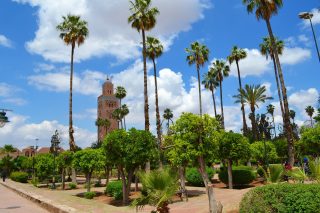
Many visitors choose to come to the Menara Gardens on foot or by taxi from the medina. From the Koutoubia Mosque, it is roughly a 30-minute walk along broad avenues lined with palms and hotels, or a short ride in a petit taxi that drops you near the gates, making this an easy side trip from central accommodation.
Practical Tips on Visiting the Menara Gardens
- Suggested tips: Bring water, sunscreen, and maybe a snack, as shade is limited around the reservoir and facilities are basic compared with inner-city sights.
- Best time to visit: Late afternoon is ideal for softer light, cooler temperatures, and the classic view of the pavilion and Atlas Mountains reflected in the reservoir.
- Entrance fee: Free
- Opening hours: Daily: From 8:00 AM to 6:00 PM
- Official website: https://menaragardens.com/
- How long to spend: Plan on 60-90 minutes to walk around the reservoir, explore some orchard paths, and linger over the views.
- Accessibility: Paths around the basin are mostly level but can be uneven and dusty; there are steps down to the water edge and long walking distances that may challenge some visitors.
- Facilities: Facilities are minimal; expect simple kiosks or vendors rather than full cafés, and consider using restrooms before you arrive or at nearby modern areas on your way.
- Photography tip: For the iconic shot, stand on the north or northeast side of the basin and frame the pavilion with the Atlas Mountains behind; reflections are best when the water is still and the light is soft.
- Guided tours: Many city tours include Menara as a brief stop, but visiting independently gives you more freedom to wander the orchards and wait for the best light.
- Nearby food options: Head back towards the city along Avenue de la Ménara or into the Hivernage and Gueliz districts, where hotels and cafés offer plenty of choices for a drink or meal.
Where to Stay close to the Menara Gardens
Staying near the Menara Gardens gives you a slightly different feel for Marrakech, with more space, resort-style properties, and easy access to both the medina and the mountains. Just a short walk or taxi ride from the orchards, Four Seasons Resort Marrakech offers lush gardens, pools, and views that echo the Menara’s blend of greenery and open sky. Nearby, Mövenpick Hotel Mansour Eddahbi Marrakech provides a comfortable base close to both the conference centre and the main road towards Menara, ideal if you want resort amenities with straightforward city access. For a slightly more traditional yet still modern option, Kenzi Menara Palace sits a short drive from the gardens and offers spacious rooms and palm-filled grounds that make it easy to balance sightseeing with downtime.
Is the Menara Gardens Worth Visiting?
The Menara Gardens are absolutely worth visiting, especially if you are looking for a different side of Marrakech beyond palaces and souks. The combination of Almohad-era history, ingenious irrigation, and the sheer visual impact of the reservoir, pavilion, and Atlas backdrop makes the site memorable even if you are not a garden enthusiast. Whether you come for a gentle stroll, a spot of people-watching, or that classic postcard photograph, the gardens comfortably earn their reputation as one of the top sights in Marrakech and a welcome breather in a busy itinerary.
What Other Travellers Say...

Menara Gardens in Marrakech offers a peaceful expanse of olive groves centered on a pavilion and a large enclosed water basin with mountain views; visitors find it pleasant for walking, picnics and shade under the olive trees, and there are vendors selling small souvenirs and fresh juices, but several reviewers warn the pond can be murky, access may involve a long walk from drop-off points, and it can be underwhelming for tourists expecting more than the scenic, tranquil setting.


FAQs for Visiting Menara Gardens
Nearby Attractions to the Menara Gardens
- Agdal Gardens: Another historic royal orchard and water-garden complex to the south of the city, linked to the palaces of the kasbah.
- Koutoubia Mosque: Marrakech's iconic mosque and minaret, aligned historically with the Menara axis and serving as a key landmark near the medina.
- Menara Mall: A modern shopping centre with cafés, shops, and family-friendly entertainment not far from the gardens.
- Hivernage District: A leafy neighbourhood of hotels, restaurants, and nightlife that bridges the gap between the medina and Menara.
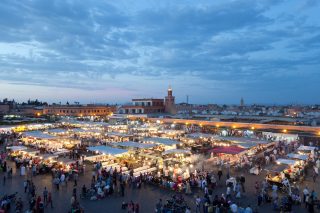
- Jemaa el-Fnaa: The city's famous main square, full of food stalls and performers, reachable by a short taxi ride or a longer walk from the gardens.
The Menara Gardens appears in our Complete Guide to Visiting Marrakesh!

Moira & Andy
Hey! We're Moira & Andy. From hiking the Camino to trips around Europe in Bert our campervan — we've been traveling together since retirement in 2020!
This website uses affiliate links which may earn a commission at no additional cost to you!
Planning Your Visit
Daily: From 8:00 AM to 6:00 PM
Free
Nearby Attractions
- Marrakech Menara Airport (RAK) (1.2) km
Airport - Koutoubia Gardens (Lalla Hassna Park) (2.8) km
Gardens - Kasbah Mosque (2.9) km
Mosque - Koutoubia Mosque (2.9) km
Mosque - Walls of Marrakesh (2.9) km
City Gate and City Walls - Saadian Tombs (3.1) km
Palace - Jemaa el-Fnaa (3.4) km
Market and Square - El Badi Palace (3.4) km
Palace - Dar el Bacha (3.5) km
Historic Building and Museum - Souks of Marrakesh (3.5) km
Market