Magdalena Bridge, Pamplona
Bridge in Pamplona
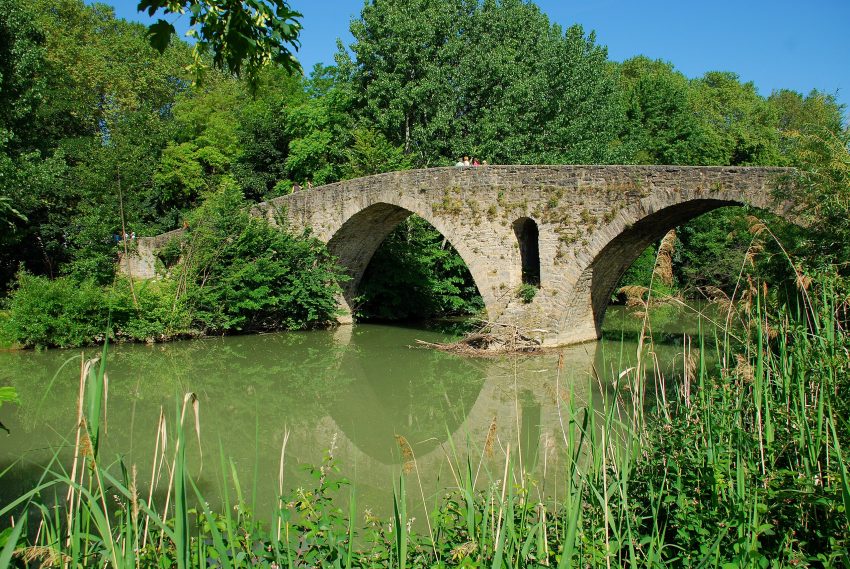
Spanning the Arga River in the leafy setting of Parque de la Tejería, the Magdalena Bridge is widely considered the most beautiful bridge in Pamplona. Built in the 12th century with a Romanesque origin and later Gothic modifications, this elegant stone crossing once guarded the entrance to the city for travellers coming from the east. Today it forms part of the Arga River Park and remains one of the best places to visit in Pamplona if you want to combine medieval architecture, gentle riverside walks and a real sense of arrival.
For pilgrims on the Camino de Santiago, the Magdalena Bridge is much more than a pretty photo stop: it has been their historic gateway to the city since medieval times, leading towards the fortified walls and the Gateway of France. Its three-arched profile and low stone parapets echo, on a smaller scale, the famous Puente la Reina bridge further along the route, and standing here you feel plugged into that same centuries-old flow of footsteps. With its greenery, river views and Camino heritage, this bridge is a highlight of any walking tour of Pamplona that links the Arga River Park with the old town ramparts.
Table of Contents
- History and Significance of the Magdalena Bridge
- Things to See and Do in the Magdalena Bridge
- How to Get to the Magdalena Bridge
- Practical Tips on Visiting the Magdalena Bridge
- Where to Stay close to the Magdalena Bridge
- Is the Magdalena Bridge Worth Visiting?
- FAQs for Visiting Magdalena Bridge
- Nearby Attractions to the Magdalena Bridge
History and Significance of the Magdalena Bridge
The origins of the Magdalena Bridge go back to the 12th century, when it was built as a Romanesque stone crossing over the Arga River on the eastern approach to Pamplona. At a time when rivers were major obstacles and strategic lines of defence, a solid bridge like this was critical for trade, communication and control of movement. Its position made it the natural entrance for travellers and, especially, for pilgrims approaching the city along the Camino de Santiago.
In the 15th century, the bridge was modified in Gothic times, which explains some of the stylistic details you see today in the shape of its arches and the overall profile. Despite those changes and the passage of centuries, the structure has retained its medieval character, helped by the relatively gentle development of the surrounding riverside landscape. A major restoration in 1963 consolidated the fabric and ensured that the bridge could continue in use while preserving its historical appearance.
The bridge takes its name from the neighbourhood in which it stands, La Magdalena, tying it closely to the identity of this corner of Pamplona. Its importance has been recognised formally, too: it has been declared a Site of Cultural Interest and a Historic-Artistic Monument, protecting it under Spanish heritage law. Its resemblance, in miniature, to the celebrated medieval bridge of Puente la Reina underscores its significance as part of the broader Camino infrastructure in Navarre, with both bridges acting as stone witnesses to centuries of pilgrimage.
Things to See and Do in the Magdalena Bridge
The simplest and most rewarding thing to do here is to walk slowly across the bridge in both directions. From mid-span, glance upstream and downstream along the Arga River and enjoy how the stone arches frame the water and trees of Parque de la Tejería on either side. The setting is particularly atmospheric in the soft light of morning or evening, when reflections shimmer on the surface and the bridge’s profile stands out clearly.
Once you have crossed, step down to the riverbank paths that form part of the Arga River Park. From below, you get a completely different view of the bridge, with its arches rising above you and the stones showing their age and irregularity. This is also a good vantage point for photographs: low angles emphasise the curves of the arches and contrast them with the greenery, while wider shots can include both the bridge and pilgrims or cyclists passing across it.
If you are following the Camino de Santiago, arriving at the Magdalena Bridge on foot is especially satisfying. It marks the moment when the rural section of the stage gives way to the urban approach into Pamplona, and you often share the span with other walkers heading in the same direction. Even if you are not doing the pilgrimage, you can follow part of the route from the bridge towards the city walls and the Gateway of France to get a sense of what medieval travellers experienced as they entered the fortified city.
How to Get to the Magdalena Bridge
Most visitors reach Pamplona via Pamplona Airport or larger regional airports such as Bilbao or San Sebastián, then continue into the city by bus, taxi or hire car. For the best deals and a seamless booking experience, check out these flights to Pamplona on Booking.com. From the historic centre, it is a pleasant walk down towards the Arga River and Parque de la Tejería on the eastern side of the old town to reach the bridge.
If you are travelling by train, Pamplona's main station connects with Madrid, Barcelona and other major Spanish cities.Train schedules and bookings can be found on Omio. From the station, take a local bus or taxi into the Old Quarter and then follow Camino de Santiago waymarks or city maps towards the Arga River and the Magdalena district; the bridge lies on the main pilgrim approach into the city.
Arriving by car, follow the main routes into Pamplona and park in a central or riverside car park near the edge of the Old Quarter or close to the Arga River Park.If you are looking to rent a car in Spain I recommend having a look at Discover Cars, first, as they compare prices and review multiple car rental agencies for you. From there you can walk through the park paths or neighbourhood streets to the Magdalena Bridge, combining your visit with a riverside stroll or a climb up to the city walls afterwards.
Practical Tips on Visiting the Magdalena Bridge
- Suggested tips: Combine the bridge with a walk along the Arga River Park and up to the city walls, so you experience both the natural setting and the fortified entrance to Pamplona.
- Best time to visit: Early morning or late afternoon offer softer light for photos and a quieter atmosphere; summer evenings can be especially pleasant by the river.
- Entrance fee: Free – the Magdalena Bridge is a public structure within the Arga River Park.
- Opening hours: Accessible at all times, though visiting in daylight is recommended to enjoy the scenery and for safety on paths.
- How long to spend: Allow 30-45 minutes to cross the bridge, explore viewpoints from the riverbank and take photos; longer if you include a full riverside or Camino walk.
- Accessibility: Access involves outdoor paths and slight slopes; the bridge surface is stone and may be uneven in places, so comfortable footwear is recommended and extra care is needed in wet weather.
- Facilities: There are no dedicated services on the bridge itself; cafés, bars and toilets are available back in the La Magdalena neighbourhood and nearer the Old Quarter.
- Photography tip: Shoot from the riverbank to capture the full curve of the arches, and from mid-bridge towards the city to show the route pilgrims follow into Pamplona.
- Guided tours: Some Camino de Santiago or fortifications-themed walking tours include the bridge as a key stop, adding context on its Romanesque and Gothic phases and its role in the city’s defences.
- Nearby food options: Pack a snack to enjoy by the river or return to nearby streets and the Old Quarter for pintxos bars and cafés after your walk.
Where to Stay close to the Magdalena Bridge
Staying in or near the Old Quarter gives you easy access to both the Magdalena Bridge and the main sights of Pamplona. A refined, central option on Plaza del Castillo is Gran Hotel La Perla, from which you can walk through historic streets and then down towards the Arga River to reach the bridge. For a base closer to the cathedral and sections of the Camino route, Pamplona Catedral Hotel works well, putting you within comfortable walking distance of the bridge, city walls and Gateway of France. If you prefer to be near parks as well as the old town, Hotel Tres Reyes Pamplona offers modern comfort between green spaces and the historic centre, with straightforward access by foot or bike to the Arga River Park and Magdalena Bridge.
Is the Magdalena Bridge Worth Visiting?
The Magdalena Bridge is definitely worth visiting, especially if you enjoy combining history with gentle outdoor walks. As a 12th century Romanesque bridge later shaped by Gothic modifications, and as a declared Site of Cultural Interest and Historic-Artistic Monument, it offers genuine medieval character in a peaceful riverside setting. Add its role as a key point on the Camino de Santiago and its resemblance to the famous Puente la Reina bridge, and you have a place that feels both beautiful and deeply rooted in Navarre's heritage, all within easy reach of central Pamplona.
What Other Travellers Say...

Magdalena Bridge at Puente de la Magdalena in Pamplona is a picturesque medieval crossing over the Arga River praised for its graceful arches and riverside walk; visitors enjoy strolling the bridge to admire historic buildings, watch pilgrims on the Camino enter the old city, and sometimes see locals and families enjoying the river below, with several callers noting its memorable, atmospheric setting and importance among the town's bridges.


FAQs for Visiting Magdalena Bridge
Nearby Attractions to the Magdalena Bridge
- Gateway of France: Historic city gate and traditional entrance for pilgrims into Pamplona, linking the riverside approach with the old walls.
- Pamplona Cathedral: The main Gothic cathedral with Neoclassical façade, cloister and royal tombs, located uphill in the Old Quarter.
- Arga River Park: Green corridor along the river with walking and cycling paths, ideal for extending your visit into a longer riverside walk.
- Mirador de Caballo Blanco: Scenic lookout on the Bastion of Redín, offering some of the best panoramic views over Pamplona and the Arga.
- Museum of Navarra: Regional museum housed in a former pilgrims' hospital, showcasing Navarre's history from prehistory through to modern art.
The Magdalena Bridge appears in our Complete Guide to Visiting Pamplona!

Moira & Andy
Hey! We're Moira & Andy. From hiking the Camino to trips around Europe in Bert our campervan — we've been traveling together since retirement in 2020!
This website uses affiliate links which may earn a commission at no additional cost to you!
Planning Your Visit
Accessible at all times, though visiting in daylight is recommended to enjoy the scenery and for safety on paths.
Free - the Magdalena Bridge is a public structure within the Arga River Park.
Nearby Attractions
- Mirador de Caballo Blanco (0.3) km
Viewing Point - Catedral de Pamplona (0.3) km
Cathedral - Portal de Francia (0.4) km
City Gate - Albergue de Jesús y María (0.4) km
Church and Hostel - Centro De Interpretacion De Las Fortificaciones (0.5) km
Castle, City Walls and Museum - San Fermín de Aldapa (0.5) km
Church - Calle Estafeta (0.5) km
Street - Royal and General Archive of Navarra (0.5) km
Archive and Palace - Ayuntamiento de Pamplona (0.6) km
Town Hall - Plaza del Castillo (0.6) km
Square