Hundheimer Torturm, Röttingen
Tower in Röttingen

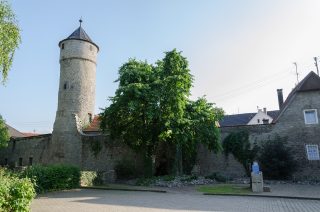
The Hundheimer Torturm is one of those landmarks you notice before you even try to find it: a solid, defensive-looking tower that still feels like it belongs to a walled medieval town. Built as part of Röttingen's fortifications, it once controlled one of the key entrances through the town walls, and today it gives you a clear, visual sense of how compact towns protected themselves in the Middle Ages.
It's one of the top sights in Röttingen because it's both atmospheric and easy to appreciate without a long visit, especially if you like places where history is written into the streetscape. On a walking tour of Röttingen, the tower works perfectly as a natural waypoint-an obvious place to pause, take a photo, and imagine the moment when this gate marked the boundary between safety inside the walls and the open countryside beyond.
Table of Contents
- History and Significance of the Hundheimer Torturm
- Things to See and Do in the Hundheimer Torturm
- How to Get to the Hundheimer Torturm
- Practical Tips on Visiting the Hundheimer Torturm
- Where to Stay Close to the Hundheimer Torturm
- Is the Hundheimer Torturm Worth Visiting?
- For Different Travelers
- FAQs for Visiting the Hundheimer Torturm
- Nearby Attractions to the Hundheimer Torturm
History and Significance of the Hundheimer Torturm
The Hundheimer Torturm dates to the 14th century, when towns like Röttingen strengthened their defenses with walls and gate towers designed to control access and deter attack. A gate tower wasn't just a symbolic entrance; it was a working piece of security infrastructure, positioned to funnel movement and give defenders an advantage through height, visibility, and protected openings.
Architecturally, the tower reflects the practical language of medieval military construction: thick stonework, narrow slits that could be used for defense, and a form built to endure pressure rather than impress with ornament. Even if you’re not a specialist, the shape alone communicates purpose-this was built to hold its ground.
Over time, structures like this often took on additional civic roles, and the Hundheimer Torturm is associated with later use as a prison. That detail changes how you read the building: it wasn't only about keeping outsiders out, but also about enforcing order within the town, turning a defensive tower into a tool of local authority.
Things to See and Do in the Hundheimer Torturm
Start with the exterior, where the tower’s proportions and stonework are the main story. Walk around it if you can, looking for the defensive openings and the way the structure sits in relation to the old town edge-gate towers make the most sense when you view them as part of a route rather than a standalone monument.
Use the tower as a “map point” for understanding medieval Röttingen. Stand nearby and imagine the old wall line, the choke point of the gate, and how daily movement-traders, farmers, visitors-would have been shaped by this single controlled passage.
If interior access is possible during your visit, it’s worth stepping inside for the change in atmosphere. Even limited access can make the tower feel more real, especially if you can see the thickness of the walls or any surviving hints of former holding cells.
How to Get to the Hundheimer Torturm
Most international visitors approach the region via Frankfurt Airport (FRA), Nuremberg Airport (NUE), or Munich Airport (MUC), then continue toward Würzburg and the Tauber Valley area. For the best deals and a seamless booking experience, check out these flights to Röttingen on Booking.com. From there, you'll typically plan the final leg into Röttingen using regional transport or a car.
By train, Würzburg Hauptbahnhof is the most practical rail hub for reaching this part of Franconia, with the last stretch usually completed via regional bus or a short taxi transfer depending on schedules.Train schedules and bookings can be found on Omio. Once you're in Röttingen, the town is compact and the tower is easiest to reach on foot from the center.
Buses can be convenient for the final connection, but services may be limited outside commuter times, especially later in the day or on Sundays. If you want flexibility to combine Röttingen with other Tauber Valley stops, traveling by car generally makes the logistics much simpler.If you are looking to rent a car in Germany I recommend having a look at Discover Cars, first, as they compare prices and review multiple car rental agencies for you.
Practical Tips on Visiting the Hundheimer Torturm
- Entrance fee: Free
- Opening hours: 24 Hours
- Best time to visit: Early morning for quiet streets and clean photos, or late afternoon for warmer light on the stonework.
- How long to spend: 15-30 minutes is enough for a satisfying stop, longer if you’re pairing it with a slow old-town loop.
- Accessibility: Expect uneven paving nearby and potentially steps if any interior areas are open.
- Facilities: Treat this as a short, outdoor-focused visit and plan cafés and restrooms in the town center.
Where to Stay Close to the Hundheimer Torturm
For a culture-heavy itinerary, the best area to base yourself is central Röttingen near the old town so you can walk to the main sights easily, but if your priority is transport links and a wider spread of evening restaurants, Würzburg makes a stronger hub for day trips. Staying in Röttingen keeps the experience calm and close to the town's character-you can wander early, return for better light, and enjoy the slower pace without planning around connections. If you're stitching together several towns across the region, a larger base can simplify logistics while still letting you visit Röttingen as a dedicated half-day.
Add name here is a good choice if you want to stay walkable to the old town and keep evenings simple and quiet. Add name here suits travelers who prefer a more comfortable base with dependable amenities for regional touring. Add name here works well as a straightforward, good-value option when you’re prioritizing location and ease.
Is the Hundheimer Torturm Worth Visiting?
Yes-especially if you enjoy compact historic sights that make a place feel older and more legible. The Hundheimer Torturm is the kind of landmark that instantly explains how a medieval town functioned, and it adds texture to a visit without demanding much time.
It's also worth it because it fits so naturally into exploring Röttingen. Even if you're only passing through, this is an easy stop that strengthens your sense of the town's shape, boundaries, and history in a way that modern streets alone can't.
What Other Travellers Say...
Reviews Summary
Old Hundheim Tower in Röttingen is a notable local landmark—listed simply by name and location, it invites visitors to explore this historic tower in the town's setting and serves as a point of interest for those wandering Röttingen's streets.
For Different Travelers
Families with Kids
For families, the tower works best as a short, visual stop with a simple story: this was the gate into the town, and it helped protect the people living inside the walls. Kids often engage quickly with details like arrow slits, thick stone, and the idea of a “real” medieval entrance.
Keep it moving by pairing the tower with a mini walking loop and a treat break afterward. A brief stop that leaves room for wandering usually lands better than trying to stretch the visit.
Couples & Romantic Getaways
For couples, the Hundheimer Torturm is a great slow-travel moment: a distinctive landmark, a quick pause for photos, and an excuse to explore side streets you might otherwise skip. The best experience is often unplanned-spotting angles, catching good light, and enjoying the quiet atmosphere of a small Franconian town.
If you’re visiting later in the day, the tower area can feel especially atmospheric as the streets calm down. Use it as the lead-in to a relaxed evening plan in the center.
Budget Travelers
Budget travelers will appreciate that this is a high-impact sight with minimal cost and minimal time required. You get a strong sense of local history simply by walking up, circling the structure, and using it as part of a self-guided route.
To maximize value, build a simple walking loop that links the tower with the town hall, the church, and one additional viewpoint. It’s an easy way to turn a short stop into a satisfying half-day without overspending.
FAQs for Visiting the Hundheimer Torturm
Getting There
Tickets & Entry
Visiting Experience
Tours, Context & Itineraries
Photography
Accessibility & Facilities
Food & Breaks Nearby
Safety & Timing
Nearby Attractions to the Hundheimer Torturm
- Burg Brattenstein: A historic castle complex above town that doubles as a cultural venue and adds a strong landmark stop to your route.
- Rathaus Röttingen: A charming half-timbered town hall that anchors the center and is ideal for a quick architecture pause.
- St. Kilian Church: A late-Gothic parish church with a serene interior that adds depth to a short old-town walk.
- Weinmuseum Röttingen: A compact museum that explains the town's wine identity through tools, artifacts, and local viticulture stories.
- Tauber Valley viewpoints around Röttingen: Short walks near the town edge reveal the landscape that shaped local settlement and wine culture.
The Hundheimer Torturm appears in our Complete Guide to Visiting Röttingen!

Moira & Andy
Hey! We're Moira & Andy. From hiking the Camino to trips around Europe in Bert our campervan — we've been traveling together since retirement in 2020!
This website uses affiliate links which may earn a commission at no additional cost to you!
Planning Your Visit
24 Hours
Free
Nearby Attractions
- Rottingen Wine Museum (0.1) km
Museum - Brattenstein Castle (0.1) km
Castle - Mühlenturm (0.1) km
Tower - St. Kilian Church (0.3) km
Church - Rathaus Röttingen (0.3) km
Town Hall - Rippacher Turm (0.4) km
Tower - Weikersheim Palace (5.9) km
Palace - Deutschordensschloss (Castle of the Teutonic Order) (13.9) km
Castle - Klingentor (20.8) km
City Gate - Rothenburg Museum (20.9) km
Museum