Hospital de los Venerables Sacerdotes, Seville
Gallery, Historic Building and Museum in Seville
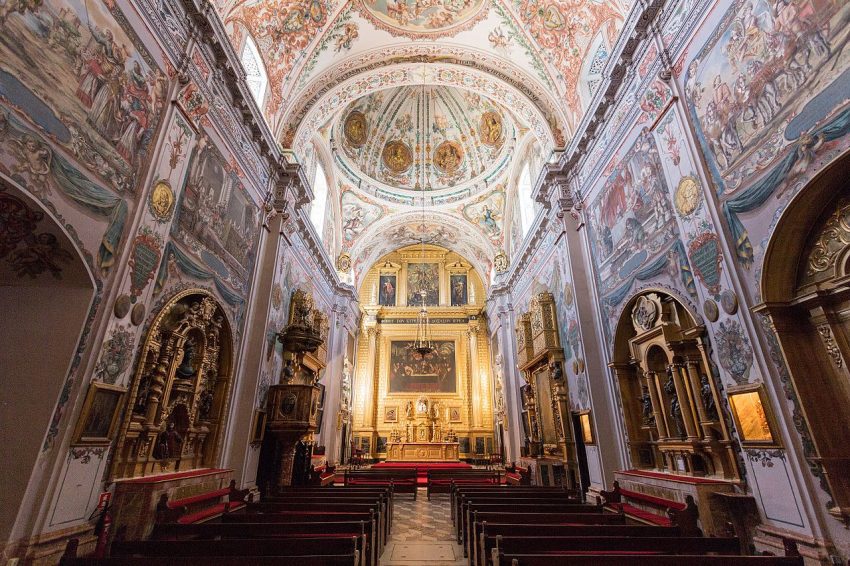
Hospital de los Venerables sits in a quiet, orange-tree-lined square in Barrio Santa Cruz, the kind of setting that makes you slow down before you even step inside. From the outside it feels understated, but once you enter, the building opens into one of Seville's most elegant Baroque spaces: a calm cloistered courtyard, tiled details, and an atmosphere that feels worlds away from the busier lanes nearby.
Today, the former priestly residence doubles as an art space, anchored by the Centro Velázquez and a tight but high-quality collection of 17th-century painting. Because it's compact and richly layered, it's one of the best places to visit in Seville when you want something more intimate than the blockbuster monuments, and it also fits naturally into a walking tour of Seville through Santa Cruz.
Table of Contents
- History and Significance of the Hospital de los Venerables
- Things to See and Do in the Hospital de los Venerables
- How to Get to the Hospital de los Venerables
- Practical Tips on Visiting the Hospital de los Venerables
- Where to Stay Close to the Hospital de los Venerables
- Is the Hospital de los Venerables Worth Visiting?
- For Different Travelers
- FAQs for Visiting Hospital de los Venerables
- Nearby Attractions to the Hospital de los Venerables
History and Significance of the Hospital de los Venerables
Hospital de los Venerables was founded in the late 17th century to provide a dignified home for elderly, impoverished, and infirm priests, an unusually specific mission that says a lot about Seville's religious and charitable networks at the time. The project is closely associated with Justino de Neve, a priest of the nearby Seville Cathedral, and it was strongly supported by the city's confraternal culture, where brotherhoods and patrons funded institutions that blended faith, care, and civic pride.
Construction began in 1676 under the architect Juan Domínguez, with significant design work later linked to Leonardo de Figueroa, one of the most important names in Spanish Baroque architecture. That combination helps explain why the building feels so coherent: it was designed to be functional as a residence, but it was also built with a confident sense of beauty-courtyards, staircases, and chapels that elevate everyday life into something ceremonial.
The building's story also includes reinvention. Financial strain in the 19th century pushed it toward a very different use as a textile factory, before it returned to its original owners a few years later by Royal Order. Today its significance is twofold: it remains a refined example of Seville Baroque architecture, and it offers a focused window into the city's 17th-century artistic world through its exhibitions.
Things to See and Do in the Hospital de los Venerables
Begin with the Centro Velázquez, which aims to recreate the artistic world of Diego Velázquez (1599-1660) and the wider Seville scene that shaped him. The emphasis here is on quality rather than quantity, so take your time with each room and let the labels do their quiet work of connecting artists, patrons, and the city's golden-age visual culture.
Look out for works linked to Sevillian painting traditions and the broader Baroque circle, including pieces associated with Murillo and other major names of the period. Because the collection is compact, it’s one of those rare galleries where you can actually give each artwork a proper moment rather than rushing past masterpieces in a crowd.
Upstairs, the mood shifts to contemporary art and later visual material, with works by artists such as Carmen Laffon, Ramón Gaya, and Luis Gordillo, alongside early photography from the late 19th century. It’s a satisfying contrast: you get the grandeur of the Baroque downstairs and a quieter, modern dialogue above.
Do not skip the church. It’s an ornate single-nave Baroque space, with a barrel vault punctuated by lunettes and arches, originally dedicated to San Fernando, King of Castile. The decorative richness is part of the point here: this was a charitable institution, but it expressed care and dignity through craftsmanship, sculpture, and painting.
Finally, linger in the cloister courtyard. It's a classic Seville patio in spirit-arcaded galleries, marble columns, Tuscan arches, and a central fountain framed by azulejos. The stepped design around the fountain is more than decorative; it reflects the practical realities of building at a higher level than the street, with water supply challenges that shaped the engineering of the space.
How to Get to the Hospital de los Venerables
The nearest airport is Seville Airport (SVQ), with straightforward bus and taxi connections into the historic centre. For the best deals and a seamless booking experience, check out these flights to Seville on Booking.com. If you are arriving from elsewhere in Andalusia, Málaga Airport (AGP) is a common alternative, followed by a train or coach onward to Seville.
If you arrive by train at Sevilla-Santa Justa, the simplest route is a short taxi ride to Santa Cruz, or a bus plus an easy walk once you are near the Cathedral area. Train schedules and bookings can be found on Omio. From within central Seville, this is an ideal walkable stop: Santa Cruz is built for wandering, and the hospital is set just off the main pedestrian flow.
If you are driving, plan to park in a central public car park (around Santa Justa, Arenal, or the historic-centre garages) and walk in, as the lanes in Santa Cruz are narrow, busy, and frequently restricted. If you are looking to rent a car in Spain I recommend having a look at Discover Cars, first, as they compare prices and review multiple car rental agencies for you.
Practical Tips on Visiting the Hospital de los Venerables
- Entrance fee: €12 general; €10 reduced; free for children under 12.
- Opening hours: Monday – Saturday: 10:00–19:00. Sunday: 10:00–15:00.
- Official website: https://fundacionfocus.es/visita-turistica/
- Best time to visit: Late morning is ideal for a calm gallery pace, while mid-to-late afternoon is lovely when the courtyards soften in the light and the crowds thin.
- How long to spend: Plan 60-90 minutes for the full experience, longer if you like reading labels and pausing in the cloister.
- Accessibility: Expect historic surfaces, steps, and tight corners in places; if you need step-light routing, aim for quieter hours and check staff guidance at the entrance.
- Facilities: This is a focused cultural site rather than a large museum complex, so plan cafés and longer breaks in Santa Cruz just before or after your visit.
Where to Stay Close to the Hospital de los Venerables
For a culture-heavy itinerary, base yourself in Santa Cruz or near the Cathedral and Alcázar; for nightlife and dining, look toward Alameda de Hércules or Triana and dip into the old town as needed.
For a classic, special-occasion Seville stay close to the major sights, Hotel Alfonso XIII, a Luxury Collection Hotel, Seville is hard to beat for location and sense of place. If you want a boutique option right in the Santa Cruz atmosphere, Hotel Casa 1800 Sevilla puts you steps from the lanes and courtyards you came to see. For a characterful mid-range stay with an old-town feel, Hotel Amadeus Sevilla is a strong choice for walking access and a quietly memorable vibe.
Is the Hospital de los Venerables Worth Visiting?
Yes, especially if you appreciate places where architecture and art reinforce each other. The hospital’s charm is not just the paintings or the Baroque details in isolation, but how they come together in a space that feels serene, curated, and unmistakably Sevillian.
It’s also an excellent counterbalance to Seville’s bigger-ticket highlights. You can do the Cathedral and Alcázar for scale and spectacle, then come here for craftsmanship, calm, and a more intimate encounter with the city’s 17th-century identity.
What Other Travellers Say...

Venerables Hospital at Pl. Venerables 3 in Seville is praised for its striking Baroque interiors, richly decorated ceilings, stairwells and a small but exceptional chapel, plus a tranquil central patio with orange trees and a fountain; visitors note an informative audio guide and recommend allowing ample time to explore, though several recent reports say the site is currently closed for renovation with little or no advance notice.


For Different Travelers
Families with Kids
This works best as a short, purposeful visit: the courtyard fountain and tiled details are the natural hooks for kids, and the compact layout keeps the experience manageable. Turn it into a quick “spot the angels, tiles, and arches” game, then reward everyone with a snack stop in Santa Cruz.
If you have very young children, aim for quieter hours so you are not navigating tight gallery rooms at peak times. A stroller may be awkward in certain historic sections, so a light carrier can make the visit smoother.
Couples & Romantic Getaways
For couples, this is one of Seville’s most atmospheric “slow” stops: a pretty square outside, a peaceful cloister inside, and galleries that encourage lingering rather than rushing. It pairs beautifully with a Santa Cruz wander where the route is the plan.
If you want a romantic rhythm, visit mid-afternoon, then transition into an evening of tapas nearby. The building’s calm makes it feel like a private discovery, even in a popular neighborhood.
Budget Travelers
Because the visit is compact and high-quality, it can be a cost-effective “paid” stop compared with larger, time-consuming attractions. Think of it as a concentrated cultural hit: one ticket, a strong dose of Baroque Seville, and then you are back to free wandering in Santa Cruz.
To keep the day inexpensive, build it into a walking loop with nearby landmarks you can enjoy from the outside, and save sit-down meals for slightly less tourist-heavy streets just beyond the Santa Cruz core.
History Buffs
The real pleasure here is reading the building as a social institution, not just a monument: a charitable residence shaped by religious networks, patronage, and Baroque aesthetics. Pay attention to how the architecture guides movement from public-facing beauty to more private, residential calm.
Then use the Centro Velázquez as a bridge into Seville’s wider 17th-century story, when the city’s art scene was a European magnet. Even a short visit can clarify why Seville’s Baroque legacy feels so cohesive across churches, hospitals, and civic spaces.
FAQs for Visiting Hospital de los Venerables
Getting There
Tickets & Entry
Visiting Experience
Tours, Context & Itineraries
Photography
Accessibility & Facilities
Food & Breaks Nearby
Safety & Timing
Nearby Attractions to the Hospital de los Venerables
- Real Alcázar of Seville: A palace complex of extraordinary detail and gardens, just minutes away on foot.
- Seville Cathedral and La Giralda: The city's essential landmark pairing, with sweeping views if you climb the tower.
- Casa de Murillo: A small, story-rich stop connected to Seville’s Baroque painting world, nearby in Santa Cruz.
- Archivo General de Indias: A grand historic archive building with a calm interior feel, close to the Cathedral area.
- Plaza de Doña Elvira: One of Santa Cruz's prettiest small squares, perfect for a short sit-down in classic Seville atmosphere.
The Hospital de los Venerables Sacerdotes appears in our Complete Guide to Visiting Seville!

Moira & Andy
Hey! We're Moira & Andy. From hiking the Camino to trips around Europe in Bert our campervan — we've been traveling together since retirement in 2020!
This website uses affiliate links which may earn a commission at no additional cost to you!
Planning Your Visit
Monday - Saturday: 10:00-19:00.
Sunday: 10:00-15:00.
€12 general; €10 reduced; free for children under 12.
Nearby Attractions
- Barrio Santa Cruz (0.1) km
Area - Casa Salinas de Seville (0.2) km
Palace - Royal Alcázars of Seville (0.2) km
Historic Building and Palace - La Giralda (0.3) km
Tower - Tomb of Christopher Columbus (0.3) km
Cathedral and Tomb - Seville Cathedral (0.3) km
Cathedral, Historic Building and Mosque - Casa de los Pinelo (0.3) km
Palace - Archivo General de Indias (0.3) km
Historic Building and Museum - Palacio de Mañara (0.4) km
Palace - Museo del Baile Flamenco (0.4) km
Museum