Forsinard Flows National Nature Reserve, Sutherland
Nature Reserve near Sutherland
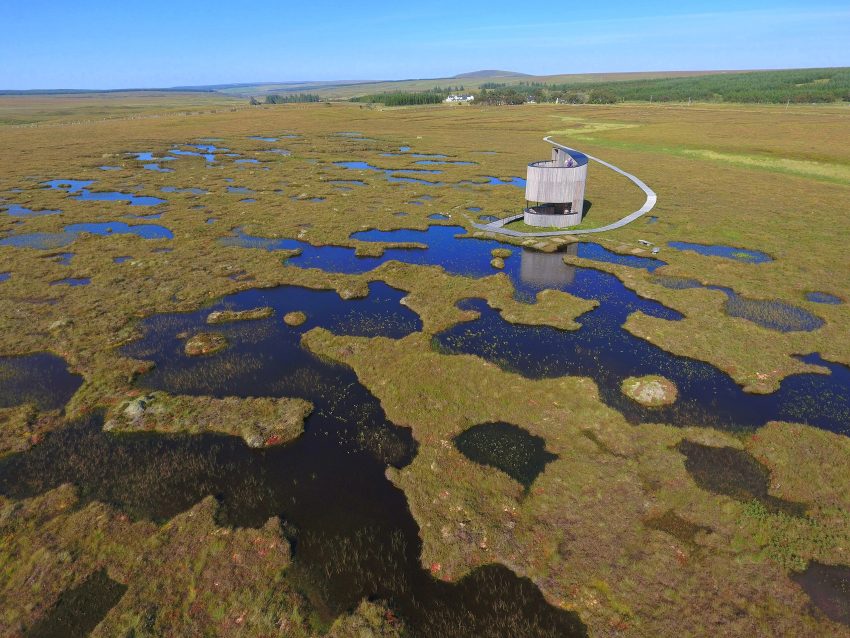
The Flow Country is one of Scotland's most unexpectedly beautiful landscapes: a vast, open sweep of blanket bog scattered with dark pools, soft mosses, and long horizons that make you feel wonderfully small. Spread across Caithness and Sutherland, it's a place where the land looks simple at first glance, then reveals an intricate mosaic of water, peat, and plant life as soon as you slow down and start paying attention.
If you're curious about wild places that don't look like the classic Highlands, this is one of the must-see places in Caithness, and it's surprisingly accessible once you know where to begin. The easiest gateway is around Forsinard, where self-guided trails and a distinctive lookout tower turn the bog into a memorable walking tour of the Flow Country that's more immersive than strenuous.
Table of Contents
- History and Significance of the Flow Country
- Things to See and Do in the Flow Country
- How to Get to the Flow Country
- Practical Tips on Visiting the Flow Country
- Where to Stay Close to the Flow Country
- Is the Flow Country Worth Visiting?
- For Different Travelers
- FAQs for Visiting the Flow Country
- Nearby Attractions to the Flow Country
History and Significance of the Flow Country
The Flow Country matters because blanket bog is globally rare, and this is one of the most extensive examples anywhere. These peatlands formed over thousands of years as waterlogged ground slowed decay, allowing layers of partially decomposed plant material to build up as peat. That slow process created a landscape that isn’t just scenic, but scientifically significant: it functions as a living archive of climate and ecology, and it supports species that can’t thrive in more “improved” countryside.
What many visitors don’t realise until they’re standing out on the boardwalk is that peatland is also a climate heavyweight. The peat beneath your feet holds immense stores of carbon, locked away because the bog stays wet and low-oxygen. Protecting and restoring peat isn’t only about rare birds and specialist plants; it’s also about keeping that carbon where it belongs.
The Flow Country is also culturally important in a quieter way. In the far north, peatlands shaped how people heated homes, moved across the land, and understood seasons. Today, the story has widened to include conservation and restoration, with visitor gateways like Forsinard helping travellers see the bog as a living ecosystem rather than “empty land.”
Things to See and Do in the Flow Country
The best first experience is a short self-guided walk on boardwalk trails that carry you safely across the bog surface and past pools that mirror the sky. From the lookout tower, the landscape finally makes sense: you can see how the pools, peat, and low vegetation create a patchwork that looks almost like a map, with long, quiet lines that draw your eye to distant hills.
Birdwatching is a major highlight, and the Flow Country rewards patience. In spring and early summer, you may spot or hear species that depend on this open, water-rich habitat, and even outside peak bird months the bog feels alive with movement-dragonflies, insects skimming the pools, and sudden ripples where something small disappears into cover.
Make time to look closely at the plants as well as the views. This landscape is built from specialist bog vegetation, and once you start noticing colour and texture-mosses, sedges, and insect-eating plants in the right spots-the bog becomes far more than “flat.” If you enjoy photography, the combination of reflective pools and fast-changing northern light can be spectacular even on a grey day.
How to Get to the Flow Country
The nearest airports are Inverness Airport (INV) for the wider Highlands and Wick John O'Groats Airport (WIC) for Caithness, then continue by road into the peatlands via Forsinard or other trail gateways. For the best deals and a seamless booking experience, check out these flights to Sutherland on Booking.com.
The Far North Line is an excellent way to arrive, with Forsinard station placing you right beside a key visitor gateway and making the bog feel immediately close rather than remote. Train schedules and bookings can be found on Omio.
Bus services exist across the far north, but they are limited and can be infrequent, so the most practical approach is usually to base yourself in a larger town and plan a specific day around timetables or a taxi connection.
Most visitors find a car the simplest option, using the A9 as the main spine before turning off toward Forsinard and the signed reserve car parks for trails and viewpoints.
Practical Tips on Visiting the Flow Country
- Entrance fee: Free.
- Opening hours: Nature reserve trails: 24 hours
- Official website: https://theflowcountry.org.uk/
- Best time to visit: April to June is excellent for peatland birds, while summer brings long daylight and a wider mix of plants and wildlife; aim for a calmer weather window for the best views from the tower.
- How long to spend: Plan 1-2 hours for a short trail and the lookout tower, or half a day if you want to try more than one walk and spend time scanning pools for wildlife.
- Accessibility: Boardwalk trails can make peatland more approachable, but conditions are still exposed and weather-dependent, so choose the shortest route if mobility or balance is a concern.
- Facilities: Use the visitor centre when it’s open for orientation and context, but expect limited services overall and bring food, water, and layers as if you’re heading into open countryside.
Where to Stay Close to the Flow Country
For most travellers, the best base is Lairg if you want a central hub with services and flexible day trips, while staying closer to Forsinard suits a trip focused on early starts for birds, quiet evenings, and maximum time on the bog. If you want to wake up near the peatlands, Forsinard Lodge puts you in the right landscape for dawn-and-dusk wildlife watching. For a more comfortable, classic Highland stay with a strong outdoors focus, Altnaharra Hotel is well placed for exploring the wider north. If you prefer a practical village base with easy onward routes, Lairg Highland Hotel makes planning day trips straightforward.
Is the Flow Country Worth Visiting?
Yes, especially if you like landscapes that feel truly different rather than merely pretty. The Flow Country isn’t about dramatic peaks or a single headline viewpoint; it’s about the slow reveal of a globally important ecosystem and the rare feeling of being in a place that still runs on natural rhythms.
It’s also one of the most rewarding stops in the far north because you can tailor it to your energy level. A short boardwalk loop and tower climb already gives you the essence, while longer days let you settle into wildlife watching and understand why peatlands are so important.
What Other Travellers Say...

RSPB Forsinard Flows, at A897 Forsinard KW13 6YT, is a quiet, expansive nature reserve with a small, free visitor centre by the train station offering interactive displays, tea/coffee and a toilet; from there boardwalk trails and an easy one‑mile/short walk lead to a viewing platform and lookout tower where you can enjoy bog plants, insects, wildlife (including deer and lizards) and atmospheric, open scenery, with opportunities for longer walks and picnic spots.


For Different Travelers
Families with Kids
This works best for families when you keep it simple and interactive: a short trail, the lookout tower, and a small “spotting game” for pools, insects, and birds. Wind and weather can make it feel more intense than a typical nature walk, so warm layers and a quick snack stop can be the difference between “adventure” and “too much.”
If you’re travelling with younger kids, focus on one short loop rather than trying to cover multiple sites. The goal is a memorable experience of a wild landscape, not distance.
Couples & Romantic Getaways
For couples, the Flow Country is quietly special: huge skies, minimal noise, and that sense of being far away from everything without needing technical hiking. It’s a strong place for a slow, unhurried walk, a climb up the tower, and a lingering pause to watch the pools change colour as the light shifts.
Pick a day with calmer wind if you can, then build the experience around atmosphere rather than speed. A warm drink afterwards in a nearby base town feels especially well earned.
Budget Travelers
The Flow Country is excellent value because the main experiences are free and outdoors. Your “budget strategy” here is about being prepared: bring food, water, and proper waterproofs so you don’t have to rely on limited nearby services.
If you’re relying on public transport, plan conservatively and treat the day as one key walk rather than trying to stitch together multiple trailheads. In remote areas, simplicity is what keeps a budget itinerary enjoyable.
FAQs for Visiting the Flow Country
Getting There
Tickets & Entry
Visiting Experience
Tours, Context & Itineraries
Photography
Accessibility & Facilities
Safety & Timing
Nearby Attractions to the Flow Country
- Forsinard Flows Visitor Centre and Lookout Tower: A key gateway experience with short trails and a panoramic view that helps you understand the peatland mosaic.
- Dunrobin Castle: A striking Highland castle near Golspie with grand architecture and a coastal setting that contrasts nicely with the open bog.
- Castle of Mey: A far-north castle visit near Thurso that pairs well with Caithness coastal driving.
- Dunnet Head: A dramatic headland and northern viewpoint on the Scottish mainland, excellent for sea views and changing weather.
- Loch Shin: A long Highland loch near Lairg that makes an easy scenic stop before or after peatland walking.
The Forsinard Flows National Nature Reserve appears in our Complete Guide to Visiting Sutherland!

Moira & Andy
Hey! We're Moira & Andy. From hiking the Camino to trips around Europe in Bert our campervan — we've been traveling together since retirement in 2020!
This website uses affiliate links which may earn a commission at no additional cost to you!
Planning Your Visit
Nature reserve trails: 24 hours
Free.
Nearby Attractions
- Strathnaver Museum (26.8) km
Museum - Torrisdale Bay and Broch, Invernaver (28.7) km
Beach - Badbea (29.4) km
Historic Site and Walk - Timespan, Helmsdale (30.2) km
Museum - Castle Varrich (33.7) km
Castle - Grey Cairns of Camster (37.5) km
Historic Site - Brora to Golspie Coastal Walk (38.3) km
Historic Site and Walk - Dunrobin Castle (41.0) km
Castle - Whaligoe Haven (43.3) km
Natural Phenomenon - Loch Fleet National Nature Reserve (45.1) km
Nature Reserve