Fontana dell'Elefante, Catania
Fountain, Monument and Square in Catania
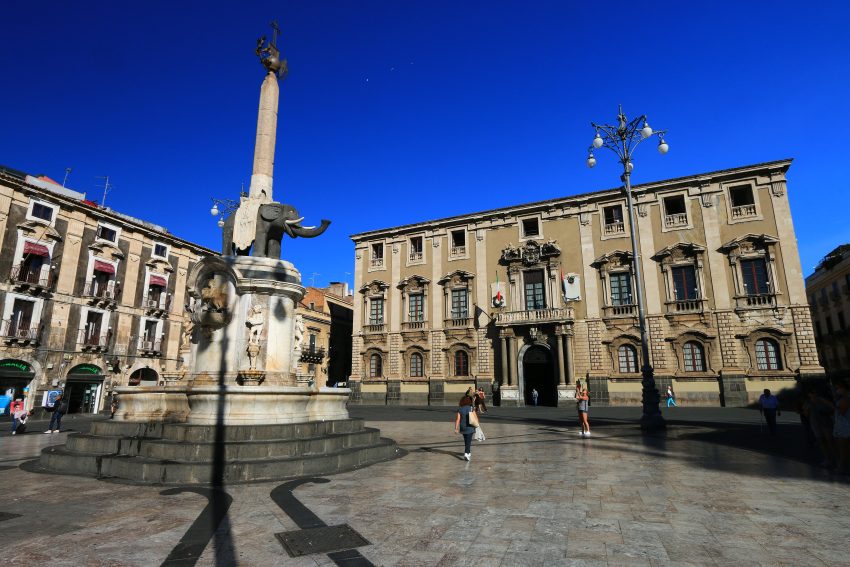
Fontana dell'Elefante is a public fountain in Piazza del Duomo, Catania, and one of the city's main landmarks. The monument centers on a black basalt elephant known locally as u Liotru, topped by an obelisk and set against the pale stone of the square. Designed in the 18th century, it sits directly in front of the cathedral area and is easy to reach on foot from the historic center.
Visitors usually come for the contrast of materials, the clear symbolism, and the way the fountain anchors the square. The base includes figures linked to Catania’s rivers, while the elephant itself faces the cathedral, making the composition easy to read in a few minutes. It suits first-time visitors, photographers, and anyone planning a short walk through the center. People looking for a longer standalone attraction may find it brief, but as part of a piazza visit it is hard to miss.
Table of Contents
- History and Significance of the Fontana dell’Elefante
- Things to See and Do in the Fontana dell’Elefante
- How to Get to the Fontana dell’Elefante
- Practical Tips on Visiting the Fontana dell’Elefante
- Where to Stay Close to the Fontana dell’Elefante
- Is the Fontana dell’Elefante
- For Different Travelers
- FAQs for Visiting Fontana dell’Elefante
History and Significance of the Fontana dell’Elefante (uʻ Liotru)
The fountain dates to Catania's grand Baroque rebuilding era, when the city was reshaped after the devastating 1693 earthquake. The elephant itself, carved from dark volcanic stone, is known locally as uʻ Liotru and has become the enduring emblem of Catania.
What makes the monument especially striking is the contrast between materials and eras: the black elephant supports a slender obelisk, creating a vertical silhouette that stands out against the pale stone façades around the square. Over the centuries, the fountain has been adjusted and restored, but its role has stayed the same: a civic icon and a natural meeting point in the heart of town.
Beyond aesthetics, the fountain is woven into local identity and storytelling. Even if you only stop for a few minutes, you’ll feel how it functions as Catania’s “center marker,” anchoring the city’s main square and orienting visitors as they explore the surrounding streets.
Things to See and Do in the Fontana dell’Elefante (uʻ Liotru)
Start by circling the fountain slowly to appreciate the elephant’s lava-stone texture and the way the obelisk changes shape from different angles. In the morning, the light is often softer and the square feels calmer; later in the day, the scene becomes more animated with street life and people pausing for photos.
Use the fountain as a launch point for a compact Piazza del Duomo loop: look toward the Cathedral of Sant'Agata, then pivot to spot the Palazzo degli Elefanti (City Hall) and the nearby Fontana dell'Amenano at the edge of the square. If you're on a walking tour, this is typically where guides explain Catania's Baroque reconstruction and point out how lava stone shows up across the city.
Finally, treat this as a “set-piece” stop for people-watching. Grab a quick coffee or granita nearby, then return to the square for a few minutes to watch the rhythm of the historic center-especially pleasant in the early evening when the stone buildings glow.
How to Get to the Fontana dell’Elefante (uʻ Liotru)
The nearest airport is Catania-Fontanarossa Airport (CTA), which is the main gateway for flights into eastern Sicily. For the best deals and a seamless booking experience, check out these flights to Catania on Booking.com.
If you're arriving by rail, Catania Centrale is the city's primary station; from there you can continue by local transport or a short taxi ride into the historic center. Use Omnio to easily compare schedules, book train tickets, and find the best prices all in one place for a hassle-free journey across Italy.
Driving into central Catania can be stressful due to limited traffic zones and tight streets, so it's often easiest to park outside the core and walk in to Piazza del Duomo. If you are looking to rent a car in Italy I recommend having a look at Discover Cars, first, as they compare prices and review multiple car rental agencies for you.
Practical Tips on Visiting the Fontana dell’Elefante (uʻ Liotru)
- Entrance fee: Free.
- Opening hours: 24 Hours.
- Best time to visit: Go early morning for fewer crowds and cleaner photos, or around sunset for warmer light and a lively square.
- How long to spend: Plan 10-20 minutes for the fountain itself, or 45-90 minutes if you’re pairing it with the cathedral and nearby sights.
- Accessibility: The fountain is in an open, mostly flat piazza; surfaces can be uneven in places, but it’s generally manageable for wheelchairs and strollers.
- Facilities: There are plenty of cafés and quick snack options around Piazza del Duomo, plus services and shops within a short walk along the central streets.
Where to Stay Close to the Fontana dell’Elefante (uʻ Liotru)
Base yourself in Catania's historic center near Piazza del Duomo and Via Etnea for the easiest walking access to major sights, restaurants, and evening strolls.
Palace Catania | UNA Esperienze A strong pick for comfort and location on Via Etnea, making it easy to walk to the fountain while still having a polished, full-service hotel feel.
Duomo Suites & Spa Close to Piazza del Duomo with a boutique vibe; ideal if you want to be steps from the action and like the idea of a spa wind-down after sightseeing.
Habitat Boutique Hotel Design-forward and central, great for travelers who care about style and want an easy walk to the square without being right on the busiest corner.
Hotel Centrum A practical, well-located option that balances price and convenience, especially if you want quick access to both the center and transport links.
Liberty Hotel A charming choice in a quieter pocket of the center; good if you want classic character and calmer nights while staying walkable to Piazza del Duomo.
Is the Fontana dell’Elefante (uʻ Liotru) Worth Visiting?
Yes-absolutely. It’s one of those landmarks that instantly helps you “read” the city: central, photogenic, and surrounded by Catania’s most important Baroque buildings. Even if you’re short on time, it’s an easy win because it naturally fits into any walk through the historic center.
Honest Pivot: If you dislike busy city squares, crowds, or quick photo stops, you might not find it compelling on its own. In that case, treat it as a brief pass-by on the way to a longer experience like the cathedral, markets, or a food-focused walking route.
What Other Travellers Say...
Fountain with a Roman statue of an elephant carved from basalt, now the symbol of the city.





For Different Travelers
Different travelers get different value from uʻ Liotru: for some it’s a must-have photo, for others it’s the perfect “anchor point” to structure a day in the center. Either way, it’s easiest to enjoy when you pair it with nearby sights rather than making it the only goal.
Families with Kids
Kids usually respond well to the elephant shape and the simple “spot the symbol of the city” story. It’s also a low-effort stop: no lines, no indoor rules, and plenty of space to reset between bigger activities.
To keep it fun, turn it into a mini scavenger hunt around the square-cathedral façade details, nearby fountains, and street performers depending on the day. Just keep a close hold in the busiest moments, as the piazza can get crowded.
Couples & Romantic Getaways
For couples, the fountain works best as part of an evening passeggiata through the historic center. The surrounding architecture and café culture make it easy to linger without feeling like you’re “doing an attraction.”
If you want a more romantic feel, aim for golden hour and then continue to a relaxed dinner nearby. The square's energy is lively rather than intimate, but it's a classic Catania scene to share.
Budget Travelers
This is a perfect budget-friendly highlight: it’s central, free, and pairs naturally with other walkable sights. You can build an entire day around the historic center with minimal transport costs.
Bring a refillable water bottle and plan a DIY walking route that includes Piazza del Duomo, Via Etnea, and a market stop. You'll get a lot of atmosphere without paying for tickets.
FAQs for Visiting Fontana dell’Elefante (uʻ Liotru)
Getting There
Tickets & Entry
Visiting Experience
Tours, Context & Itineraries
Photography
Accessibility & Facilities
Food & Breaks Nearby
Safety & Timing
The Fontana dell'Elefante appears in our Complete Guide to Visiting Catania!

Moira & Andy
Hey! We're Moira & Andy. From hiking the Camino to trips around Europe in Bert our campervan — we've been traveling together since retirement in 2020!
This website uses affiliate links which may earn a commission at no additional cost to you!
Nearby Attractions
- Piazza del Duomo (0) km
Cathedral, Fountain and Square - Fontana dell’Amenano (0) km
Fountain, Market and Square - Basilica Cattedrale di Sant'Agata (0.1) km
Basilica, Cathedral and Church - Porta Uzeda (0.1) km
City Gate, Historic Site and Monument - Chiesa della Badia di Sant'Agata (0.1) km
Church, Religious Building and Viewing Point - Palace Catania (0.1) km
Arts Venue, Hotel and Viewing Point - La Pescheria (0.1) km
Attraction, Bazaar and Market - Piazza Università (0.1) km
Area, Attraction and Square - Museum of Contemporary Art in Sicily (0.2) km
Arts Venue, Gallery and Museum - Basilica della Collegiata (0.2) km
Basilica, Church and Historic Building