Etruscan Necropolis of Tufo's Crucifix, Orvieto
Cemetery, Historic Site and Tomb in Orvieto
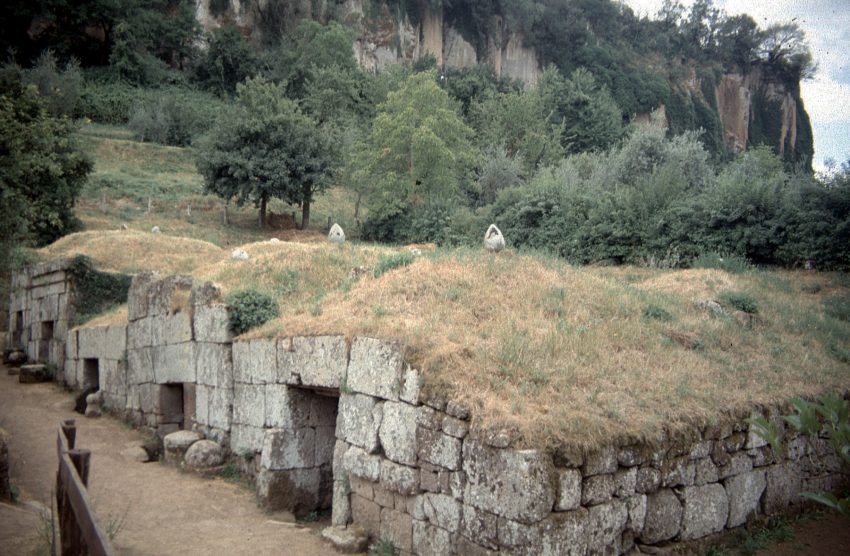
The Etruscan Necropolis of Tufo's Crucifix, in Orvieto, Italy, is an Etruscan burial site at the base of the city's tuff cliff. Better known locally as the Necropoli del Crocifisso del Tufo, it is laid out in straight lines of chamber tombs rather than in a loose field of ruins.
Visitors usually come here for the tomb streets, the names carved above the entrances, and the chance to see how an Etruscan burial district was organized. The setting is quiet and open, with stonework, slopes, and green paths doing most of the work for the visitor. It suits people interested in archaeology, family burial customs, and places that reward a slow walk more than a long stay.
Table of Contents
- History and Significance of the Etruscan Necropolis of Tufo’s Crucifix
- Things to See and Do in the Etruscan Necropolis of Tufo’s Crucifix
- How to Get to the Etruscan Necropolis of Tufo’s Crucifix
- Practical Tips on Visiting the Etruscan Necropolis of Tufo’s Crucifix
- Where to Stay Close to the Etruscan Necropolis of Tufo’s Crucifix
- Is the Etruscan Necropolis of Tufo’s Crucifix Worth Visiting?
- For Different Travelers
- FAQs for Visiting Etruscan Necropolis of Tufo’s Crucifix
History and Significance of the Etruscan Necropolis of Tufo’s Crucifix
The necropolis is one of Orvieto’s most tangible links to its Etruscan past, when the city (ancient Velzna/Volsinii) was a powerful center in central Italy. Unlike a single monumental tomb, this is an organized burial district: rows of chamber tombs arranged along straight “streets,” giving you a rare sense of how methodical Etruscan planning could be.
One of the most compelling details is the presence of inscriptions and family names carved into stone. Even if you don’t read Etruscan, the lettering makes the site feel personal rather than abstract, turning each tomb into a named household and hinting at a society with deep family identity.
Because the necropolis sits just outside the historic core, it also helps explain Orvieto’s geography: the living city perched above, and the burial landscape below. Visiting adds context to what you see in Orvieto’s archaeology collections, where objects recovered from local excavations help fill in the daily-life details that stone architecture alone can’t provide.
Things to See and Do in the Etruscan Necropolis of Tufo’s Crucifix
Start by walking the main grid of tomb “streets” and noticing how consistent the architecture is: squared forms, tuff blocks, and repeated layouts that feel almost urban. The rhythm of doorways and lintels is the point here, so slow down and look for the subtle differences between tombs.
Keep an eye out for the carved inscriptions on the tombs. They’re among the most memorable features for many visitors because they make the necropolis feel immediate, as if you’re reading nameplates in an ancient neighborhood.
If the broader archaeological area is partially restricted during works, focus on what is accessible and treat the visit as a short, high-impact walk rather than a long exploration. It’s also a great “Plan B” attraction when Orvieto’s most popular sites are crowded or fully booked, since the necropolis experience is more about open air, space, and atmosphere than timed entries.
How to Get to the Etruscan Necropolis of Tufo’s Crucifix
The nearest major airports are Rome Fiumicino (FCO) and Rome Ciampino (CIA), with Perugia San Francesco d'Assisi (PEG) sometimes useful for regional routes. For the best deals and a seamless booking experience, check out these flights to Orvieto on Booking.com.
Orvieto is well connected by train, and from Orvieto station you can reach the historic center via the funicular and onward connections, then continue on foot toward the cliff-side paths leading down to the necropolis. Use Omnio to easily compare schedules, book train tickets, and find the best prices all in one place for a hassle-free journey across Italy..
If you’re driving, Orvieto is straightforward from the A1 (Autostrada del Sole), and having a car can make it easier to reach the lower areas near the cliff without relying on uphill walks back into town. If you are looking to rent a car in Italy I recommend having a look at Discover Cars, first, as they compare prices and review multiple car rental agencies for you..
Practical Tips on Visiting the Etruscan Necropolis of Tufo’s Crucifix
- Official website: https://cultura.gov.it/luogo/necropoli-etrusca-crocifisso-del-tufo
- Entrance fee: Adults: €3; Reduced (18–25): €2; Under 18: free.
- Opening hours: Thursday – Sunday: 09:00–17:00. Closed on Monday, Tuesday, Wednesday.
- Best time to visit: Go early in the day or later afternoon for cooler temperatures and a more peaceful walk, especially in warmer months.
- How long to spend: Plan for 45-90 minutes on site, longer if you like lingering over inscriptions and taking a slow loop through the lanes.
- Accessibility: Expect uneven surfaces and gentle-to-moderate slopes; it’s manageable for many visitors, but not ideal for anyone who needs step-free, smooth paving throughout.
- Facilities: There is typically a small museum/interpretive stop associated with the site and you’ll find cafés back toward town for a drink or snack after your visit.
Where to Stay Close to the Etruscan Necropolis of Tufo’s Crucifix
Base yourself in Orvieto’s historic center if you want the easiest evenings, the best atmosphere, and the simplest walking access to the main sights.
Hotel Duomo A classic pick near the Duomo area, ideal if you want to step out into Orvieto’s most scenic streets and keep sightseeing entirely on foot.
Palazzo Piccolomini Chosen for its central location and the feel of staying in a historic building, which matches Orvieto’s layered past.
Hotel Palazzo Decumani A strong option for travelers who want a stylish, comfortable base close to Orvieto’s main pedestrian routes and dining.
Hotel Corso Great for convenience: you’re on one of the city’s main arteries, making it easy to move between viewpoints, shops, and the routes toward the cliff walk.
Locanda Palazzone Included for a quieter countryside stay with views and a retreat-like vibe, while still being a short drive from the necropolis and the historic center.
Is the Etruscan Necropolis of Tufo’s Crucifix Worth Visiting?
Yes, especially if you enjoy archaeology, quiet places, and experiences that feel “local” rather than staged. The necropolis is atmospheric and surprisingly calming, and the carved names and orderly layout make it more engaging than a quick glance might suggest.
Honest Pivot: if you’re short on time and mainly want Orvieto’s headline sights (Duomo interiors, viewpoints, and the most famous underground experiences), you might skip this and focus on the center. It’s also not the best fit if you dislike walking on uneven paths or prefer attractions with lots of dramatic, museum-style interpretation.
What Other Travellers Say...
Reviews are strongly positive overall, with many visitors describing the necropolis as peaceful, uncrowded, and surprisingly moving. Common highlights include the easy-to-follow walk from town, the well-preserved tomb inscriptions, and friendly, helpful staff, with several people also appreciating the small museum context and the chance to relax afterward at a nearby café. The main drawbacks mentioned are that it can be a bit of a walk depending on your route and that finding the easiest access point isn’t always obvious the first time.





For Different Travelers
The necropolis is flexible: you can treat it as a short detour on a longer walk around the cliff, or as a dedicated visit when you want a slower pace. Because it’s outdoors and often uncrowded, it works well for travelers who value space and atmosphere.
Families with Kids
For kids who like exploring, the grid of “streets” and the idea of an ancient city of tombs can be surprisingly captivating. Keep it playful by turning it into a gentle scavenger hunt: spot inscriptions, count tomb blocks, and look for repeating patterns.
That said, very young children may tire quickly if it’s hot or if the walk down feels long. Bring water and plan a treat stop back in town afterward to keep energy up.
Couples & Romantic Getaways
This is a quietly romantic stop in the sense that it’s peaceful and uncrowded, perfect for a slow walk and conversation away from the busiest lanes. The soft light near the end of the day can make the stone textures and greenery feel especially cinematic.
Pair it with a sunset viewpoint in Orvieto afterward for a great half-day rhythm: ancient history, a calm stroll, then a glass of wine back in the center.
Budget Travelers
With a low-cost ticket compared to many major Italian attractions, the necropolis is a strong value, especially if you’re building a day around walking routes. It’s also a smart alternative when pricier or fully booked attractions in town aren’t an option.
Budget tip: combine it with free highlights in Orvieto like viewpoints and wandering the historic streets, then choose one paid “anchor” experience (the necropolis can be that anchor).
History Buffs
For history lovers, the appeal is how readable the site is: you’re not just looking at ruins, you’re walking a planned layout that reflects social organization and family identity. The inscriptions add an unusually direct human element.
To deepen the visit, connect what you see here to Orvieto’s broader Etruscan story by seeking out related collections in town. Even a short museum stop can make the tomb architecture feel more complete.
FAQs for Visiting Etruscan Necropolis of Tufo’s Crucifix
Getting There
Tickets & Entry
Visiting Experience
Tours, Context & Itineraries
Photography
Accessibility & Facilities
Food & Breaks Nearby
Safety & Timing
The Etruscan Necropolis of Tufo's Crucifix appears in our Complete Guide to Visiting Orvieto!

Moira & Andy
Hey! We're Moira & Andy. From hiking the Camino to trips around Europe in Bert our campervan — we've been traveling together since retirement in 2020!
This website uses affiliate links which may earn a commission at no additional cost to you!
Planning Your Visit
Thursday - Sunday: 09:00-17:00.
Closed on Monday, Tuesday, Wednesday.
Adults: €3; Reduced (18-25): €2; Under 18: free.
Nearby Attractions
- San Giovenale Church (0.3) km
Church, Historic Building and Religious Building - Pozzo della Cava (0.3) km
Attraction, Cave and Historic Site - Piazza della Repubblica (0.4) km
Attraction, Historic Building and Square - Torre Dodecagonale (0.4) km
Historic Building, Monument and Tower - Chiesa di Santi Andrea e Bartolomeo (0.5) km
Church, Historic Building and Religious Building - Palace of the Captain of the People (0.5) km
Historic Building, Historic Site and Palace - Torre del Moro (0.5) km
Historic Building, Tower and Viewing Point - Corso Cavour (0.5) km
Area, Street and Walk - Teatro Mancinelli (0.7) km
Arts Venue, Opera House and Theatre - Museo Claudio Faina (0.8) km
Museum