City Walls of Seville
City Walls and Tower in Seville

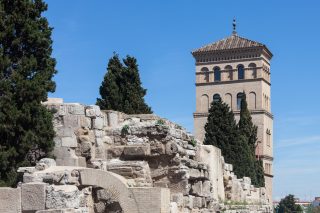
The City Walls of Seville in the Macarena area are a surviving stretch of the old Murallas de Sevilla, a historic city fortification now built into everyday streets. The section most people visit runs between the Puerta de Córdoba and the Puerta de la Macarena, where the wall, towers, and crenellations are still easy to pick out at street level.
This is not a large monument to tour for hours, but it does give a clear view of how Seville once protected and marked its boundaries. Visitors usually come for a short walk, a few photos, and the contrast between medieval stone and modern neighborhood life. It suits travelers who like local history, self-guided exploring, and sights that can be seen without a ticket or a long stop.
Table of Contents
- History and Significance of the Murallas de Sevilla
- Things to See and Do in the Murallas de Sevilla
- How to Get to the Murallas de Sevilla
- Practical Tips on Visiting the Murallas de Sevilla
- Where to Stay Close to the Murallas de Sevilla
- Is the Murallas de Sevilla Worth Visiting?
- For Different Travelers
- FAQs for Visiting Murallas de Sevilla
History and Significance of the Murallas de Sevilla
Seville has been fortified in one form or another since ancient times, but the walls visitors focus on today are most strongly associated with the city's medieval expansions and later restorations. The surviving Macarena section is especially evocative because it still shows the scale of what once enclosed the historic city: a serious perimeter, built to control access, protect trade, and signal power.
Over centuries, the walls were altered, repaired, and reinterpreted as Seville changed hands and grew beyond its historic footprint. In the 19th century, large sections were demolished to make way for urban expansion, which is why the remaining stretches feel so precious: they're not just “old stones,” they're fragments of a citywide system that shaped how Seville functioned for generations.
The Macarena stretch matters because it anchors a neighborhood that still carries a strong local identity. Here, the walls are not isolated behind ticket gates; they sit in the urban fabric, turning a simple walk into a small time-travel moment, especially when you imagine the gates as choke points for merchants, pilgrims, and visitors entering a much smaller city.
Things to See and Do in the Murallas de Sevilla
Start at the Puerta de Córdoba for a classic “gate-to-gate” walk. Even if you only have 15-20 minutes, the rhythm of towers and wall segments gives you a strong sense of the original defensive logic, and it's easy to photograph because the sightlines are long and clean.
As you move along the wall, watch for the towers that break up the silhouette and help you orient yourself in the neighborhood. The Torre Blanca area is often singled out as a highlight, and even from street level you can appreciate how these structures were designed for vigilance, not decoration. If you’re visiting at dusk, the lighting can make the wall feel unexpectedly cinematic, especially with the contrast of modern streets around it.
Finish near the Puerta de la Macarena and treat it as a springboard for the surrounding quarter. This is a great moment to slow down: grab a drink nearby, pop into the basilica area if it interests you, and enjoy the sense that you're seeing a part of Seville that locals still claim as their own, rather than a purely touristic stage set.
How to Get to the Murallas de Sevilla
Seville Airport (SVQ) is the closest airport, with easy connections into the city by taxi, ride-share, and regular bus services to central Seville. For the best deals and a seamless booking experience, check out these flights to Seville on Booking.com. From the centre, the Macarena stretch is straightforward to reach on foot, and it’s also well-served by city buses that run along the main avenues edging the historic core.
If you arrive by rail, Sevilla-Santa Justa station is the main hub, and you can reach the walls by a short taxi ride, a local bus, or a walk if you don’t mind a longer stroll through the city. Train schedules and bookings can be found on Omio. If you’re already staying in the historic centre, walking is often the most enjoyable approach because you can thread your way through smaller streets and naturally combine the walls with nearby sights.
Driving is rarely necessary for this stop, but if you have a rental car, it’s best to park outside the tightest historic-centre streets and approach the walls on foot. If you are looking to rent a car in Spain I recommend having a look at Discover Cars, first, as they compare prices and review multiple car rental agencies for you. That way you avoid restricted access zones and turn the journey into part of the experience rather than a navigation exercise.
Practical Tips on Visiting the Murallas de Sevilla
- Entrance fee: Free
- Opening hours: 24 Hours
- Official website: https://visitasevilla.es/barrio-de-la-macarena/
- Best time to visit: Aim for late afternoon or early evening for softer light and a more atmospheric walk, then stay nearby for food and a slower neighborhood feel.
- How long to spend: Give it 20-45 minutes for the wall walk itself, then add extra time if you want to pair it with the Macarena area’s churches, markets, or plazas.
- Accessibility: The walls are best enjoyed from street level with mostly flat approaches, though some nearby pavements can be uneven and routes vary depending on where you start and finish.
- Facilities: There aren’t “on-site” visitor facilities in the usual sense, but the surrounding neighborhood has plenty of cafés, pharmacies, and casual places to take a break.
Where to Stay Close to the Murallas de Sevilla
For a culture-heavy itinerary, base yourself in Seville’s historic centre for quick access to the cathedral-area sights; for a more local, lived-in feel with the walls on your doorstep, staying around Alameda and Macarena is a strong choice.
If you want to be within easy walking distance of the walls and still have plenty of restaurants and nightlife nearby, Hotel Patio de la Alameda is well-placed and makes it easy to explore the northern historic quarter at a relaxed pace. For a comfortable, well-connected base that works for both sightseeing and transport logistics, Hotel Macià Sevilla Kubb is a practical pick with a central feel. If you're leaning toward a more special stay with a classic Seville sense of grandeur, CoolRooms Palacio Villapanés 5 GL adds a distinctly palatial layer to the trip while keeping you close to the old city streets.
Is the Murallas de Sevilla Worth Visiting?
Yes, especially if you like Seville beyond the “big three” monuments. The walls are quick to visit, free to appreciate, and surprisingly evocative: you're seeing a surviving edge of the historic city, not a reconstructed replica.
They're also a smart travel move because they unlock a different Seville rhythm. Combine the walk with the Macarena quarter and Alameda area, and you get a more local, food-and-streets version of the city that balances out the grand palaces and cathedral interiors.
What Other Travellers Say...
Royal Alcázar of Seville is a landmark Moorish palace in Casco Antiguo featuring ornate arches, intricate tilework and carved wooden ceilings, peaceful courtyards like the reflective Patio de las Doncellas, and fountain-filled, impeccably kept gardens with shaded paths, orange trees and freely roaming peacocks; visitors say the architecture and detailed azulejos are stunning, recommend allowing a few hours to explore, and advise buying timed tickets in advance and considering a guide or audio guide for a fuller experience.





For Different Travelers
Families with Kids
For kids, the walls work well because the story is easy to grasp: towers, gates, and the idea of “protecting the city” makes immediate sense. Keep it short and let them lead the pace, turning it into a mini scavenger hunt for towers and viewpoints.
Pair it with something playful nearby, like a market stop for snacks or a plaza break where kids can reset. The best family version of this visit is light, flexible, and combined with somewhere to sit down afterwards.
Couples & Romantic Getaways
The walls are quietly romantic in the way that “old Seville” can be romantic: warm stone, evening light, and a slow walk that feels removed from the busiest tourist corridors. Go around sunset, then drift toward a tapas spot nearby to keep the mood unhurried.
If you’re doing a couple-focused itinerary, treat the walls as a gentle transition between sightseeing and dinner. It’s the kind of place that gives you atmosphere without demanding a big time commitment.
Budget Travelers
This is an ideal budget stop because you don’t need tickets, timed entry, or any add-ons to enjoy it. Bring a coffee, take your time, and use it as a scenic route between other free or low-cost stops in the northern historic centre.
If you want to keep costs down, build a simple loop: walls, a market snack, and a wander through Alameda's streets. You'll come away feeling like you experienced a real slice of Seville, not just the postcard highlights.
FAQs for Visiting Murallas de Sevilla
Getting There
Tickets & Entry
Visiting Experience
Tours, Context & Itineraries
Photography
Accessibility & Facilities
Food & Breaks Nearby
Safety & Timing
The City Walls of Seville appears in our Complete Guide to Visiting Seville!

Moira & Andy
Hey! We're Moira & Andy. From hiking the Camino to trips around Europe in Bert our campervan — we've been traveling together since retirement in 2020!
This website uses affiliate links which may earn a commission at no additional cost to you!
Planning Your Visit
24 Hours
Free
Nearby Attractions
- Basílica de la Macarena (0) km
Basilica, Church and Religious Building - Palacio de los Marqueses de la Algaba (0.4) km
Palace - Iglesia de San Luis de los Franceses (0.5) km
Church, Historic Building and Museum - Alameda de Hércules (0.6) km
Park - Palacio de Las Dueñas (0.9) km
Gallery, Historic Building and Palace - Museo Arqueologico Antiquarium (1.1) km
Museum - Metropol Parasol (1.1) km
Area, Monument and Notable Building - Palacio de Lebrija (1.2) km
Historic Building and Museum - Palacio de Villapanés (1.3) km
Palace - Calle Sierpes (1.3) km
Area, Shop and Street