Citânia de Briteiros
Historic Site in Braga
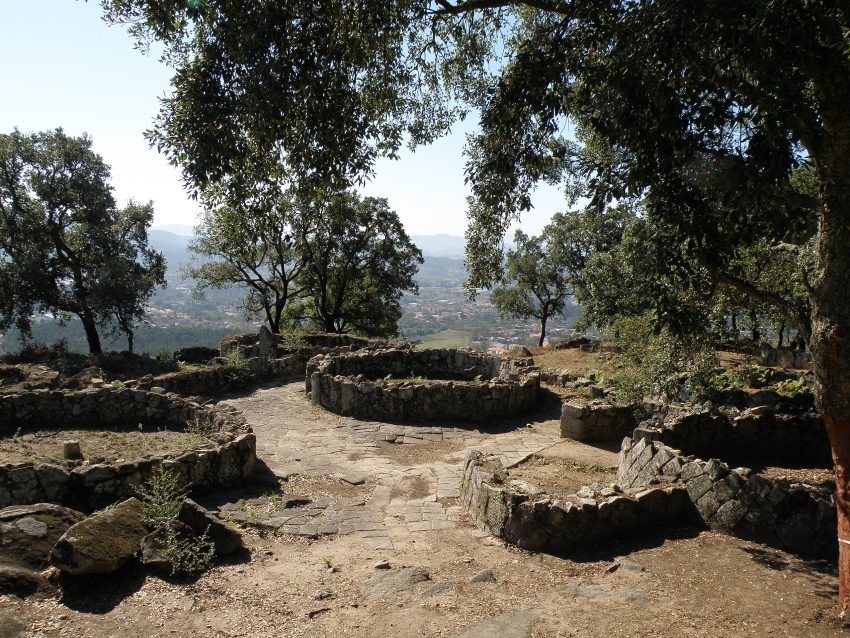
Citânia de Briteiros is an archaeological site in Braga, Portugal, set on São Romão hill above the Ave River valley. It is the remains of an ancient hill settlement, or castro, where stone walls, house foundations, and old streets are still visible across the hillside.
The site matters because it shows how communities in northern Portugal were organised long before modern towns took shape. Visitors notice the circular dwellings, the defended layout, and the wide views from the higher ground. It suits people interested in archaeology, ancient settlement patterns, and quiet outdoor visits, but the uneven terrain means it is less suitable for those wanting an easy flat walk.
History and Significance of Citânia de Briteiros
The origins of Citânia de Briteiros stretch back to the Late Neolithic and Chalcolithic periods when the granite slopes of São Romão hill were used for rock carvings. However, the settlement as we know it developed during the 1st millennium BC and flourished during the 2nd century BC, forming part of the broader Atlantic Bronze Age culture. It later became a significant centre of the Castro Culture - a network of fortified villages spread across northern Portugal and Galicia.
The site’s location on a hilltop offered both defence and control over the fertile Ave Valley below. Archaeological excavations have revealed a complex urban structure featuring defensive walls, paved streets, and clusters of circular or rectangular houses, often grouped into blocks or neighbourhoods. This advanced level of organisation reflects a society with strong community bonds and skilled construction techniques.
Even after the region was absorbed into the Roman Empire in the 1st century AD, Citânia de Briteiros continued to be inhabited, blending local traditions with Roman influences. A small Christian hermitage was later built in the 10th century on the acropolis, marking the site's enduring spiritual significance. Excavations led by archaeologists such as Francisco Martins Sarmento in the late 19th and 20th centuries uncovered much of what can be seen today, transforming Citânia into one of the cornerstones of Portuguese archaeology.
Things to See and Do at Citânia de Briteiros
Walking through Citânia de Briteiros feels like stepping into an open-air museum where nature and history coexist in perfect harmony. Visitors can explore the extensive network of ancient streets, lined with stone foundations of houses that once sheltered Iron Age families. The settlement's layout reveals a sophisticated sense of urban planning, with designated areas for living, work, and ritual.
The impressive stone walls surrounding the site are among its most striking features, demonstrating the defensive ingenuity of the Castro people. Within the settlement, reconstructed huts offer insight into daily life, while the acropolis area provides panoramic views of the valley and surrounding hills - a reminder of why this site was so strategically important.
Near the entrance, visitors will also find information panels explaining the archaeological findings and the site’s historical context. To deepen the experience, the Museu da Cultura Castreja (Museum of Castro Culture) in the nearby Solar da Ponte displays many of the artifacts discovered during excavations, including pottery, tools, jewellery, and inscriptions that shed light on the spiritual and social practices of the people who once lived here.
How to Get There
Citânia de Briteiros is located about 15 km north of Guimarães. The easiest way to reach the site is by car, following the EN309 or EN101 roads towards Briteiros. If you are looking to rent a car in Portugal I recommend having a look at Discover Cars, first, as they compare prices and review multiple car rental agencies for you. There is parking available near the entrance. For those travelling by train, Guimarães Station connects to major cities like Porto; from there, you can take a taxi or local bus to Briteiros. Train schedules and bookings can be found on Omio.
Practical Tips on Visiting Citânia de Briteiros
- Best time to visit Citânia de Briteiros: Spring and autumn for pleasant temperatures and clear views.
- Entrance fee in Euros: Around €3; combined ticket available with the Museu da Cultura Castreja.
- Opening hours: Typically Tuesday to Sunday, 10 am-1 pm and 2 pm-6 pm; closed Mondays.
- Official website: www.museusguimaraes.pt
- How long to spend: 1.5-2 hours for the site and an additional hour for the museum.
- Accessibility: Uneven terrain; wear sturdy shoes.
- Facilities: Restrooms and a small visitor centre near the entrance.
- Photography tip: Capture the stone walls and dwellings at sunrise or sunset for dramatic lighting.
- Guided tours: Available on request through the museum or local tourist office.
- Nearby food options: Traditional Portuguese restaurants in Briteiros or Guimarães.
Is Citânia de Briteiros Worth Visiting?
Absolutely. Citânia de Briteiros is one of the must-see places in Guimarães for anyone passionate about ancient history, archaeology, or scenic landscapes. Few places in Portugal so vividly connect visitors with the deep past - from prehistoric carvings to Iron Age settlements and Roman influence. The combination of cultural heritage, panoramic views, and peaceful surroundings makes it both intellectually fascinating and emotionally enriching.
What Other Travellers Say...
Citania de Briteiros is an archaeological hilltop site featuring the ruins of an Iron Age fort and village with varied structures and artifacts; visitors praise its picturesque hilltop views, tree cover, lively biodiversity and evocative atmosphere that encourages imagination, and note there’s a small parking area near the road with a short uphill walk to the entrance, on-site toilets and a snack bar. Wear sturdy shoes because paths are uneven and can become slippery in wet weather; the site has a midday closure period and a modest admission fee, and some visitors found signage or the map limited and advise staff could warn about hazardous conditions in poor weather.





FAQs for Visiting Citânia de Briteiros
The Citânia de Briteiros appears in our Complete Guide to Visiting Braga!

Moira & Andy
Hey! We're Moira & Andy. From hiking the Camino to trips around Europe in Bert our campervan — we've been traveling together since retirement in 2020!
This website uses affiliate links which may earn a commission at no additional cost to you!
Planning Your Visit
9am-6pm Apr-Sep, to 5pm Oct-Mar
adult/child incl museum €3/1.50
Nearby Attractions
- Sanctuary of Our Lady of Sameiro (4.8) km
Church - Sanctuary of Bom Jesus do Monte (6) km
Religious Building - Castelo de Guimarães (9) km
Castle - Igreja de São Miguel do Castelo (9.1) km
Church - Paço dos Duques de Bragança (9.1) km
Palace - Fonte do Ídolo (9.2) km
Historic Site - Palácio do Raio (9.3) km
Historic Building and Museum - Theatro Circo (9.3) km
Theatre - Largo dos Laranjais (9.3) km
Historic Building and Square - Fonte do Largo Dr. João da Mota Prego (9.3) km
Fountain and Square