Cirque de Gavarnie, Lourdes
National Park near Lourdes
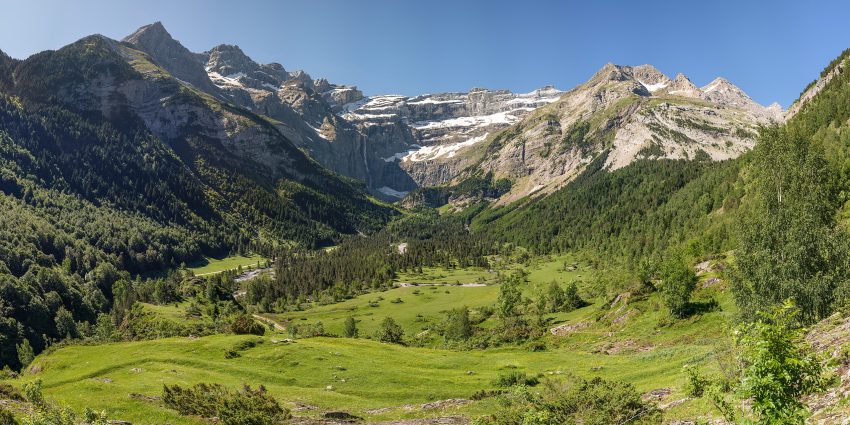
Cirque de Gavarnie is one of those landscapes that makes you stop in your tracks. Just over the mountains from Lourdes in the Hautes-Pyrénées, this vast glacial amphitheatre arcs around you in a mighty horseshoe, with cliffs rising up to 1,500 metres above the valley floor. Often described as the “Colosseum of nature,” it sits within Pyrénées National Park and forms part of a UNESCO World Heritage Site, combining raw rock faces, hanging terraces, and lush meadows into a setting that feels both dramatic and serene.
At its heart thunders Gavarnie Falls, one of the highest waterfalls in Europe, dropping 422 metres in a series of silvery cascades. Above and around it, legendary passes like La Brèche de Roland carve into the skyline at nearly 2,800 metres, feeding stories of knights and heroic exploits. Down in the valley, easy riverside paths, alpine pastures, and grazing horses soften the scale, making the cirque accessible to casual walkers as well as serious hikers. With this mix of grandeur and approachability, it is one of the best places to visit in Lourdes if you want to experience the full drama of the Pyrenees.
Table of Contents
- History and Significance of Cirque de Gavarnie, Lourdes
- Things to See and Do in Cirque de Gavarnie, Lourdes
- How to Get to Cirque de Gavarnie, Lourdes
- Practical Tips on Visiting Cirque de Gavarnie, Lourdes
- Where to Stay close to Cirque de Gavarnie, Lourdes
- Add a Is Cirque de Gavarnie, Lourdes Worth Visiting?
- FAQs for Visiting Cirque de Gavarnie, Lourdes
- Nearby Attractions to Cirque de Gavarnie, Lourdes
History and Significance of Cirque de Gavarnie, Lourdes
Cirque de Gavarnie owes its form to ice and time. During the last Ice Ages, powerful glaciers carved into the limestone and granite of the central Pyrenees, scooping out an enormous natural amphitheatre and leaving behind the stepped rock walls and terraces you see today. As the climate warmed and the ice retreated, waterfalls, streams, and vegetation gradually reclaimed the valley floor, creating the contrast between bare cliffs and green meadows that defines the cirque's atmosphere.
Humans have been passing through these mountains for centuries. Shepherds used the high pastures for seasonal grazing, while traders and pilgrims crossed nearby passes on routes between France and Spain. Over time, legends grew around La Brèche de Roland, a distinctive gap in the ridge said to have been opened by the sword of Charlemagne’s knight Roland. In the 19th century, Romantic writers and travellers “discovered” Gavarnie as a sublime landscape; Victor Hugo famously described it in almost theatrical terms, sealing its reputation as the Colosseum of nature.
Today, the cirque's geological and cultural importance is recognised through its inclusion in a cross-border UNESCO World Heritage listing, shared with neighbouring Spanish valleys. It forms a core part of Pyrénées National Park, home to rare species of flora and fauna, from high-altitude flowers to raptors and alpine mammals. For visitors based in Lourdes, Cirque de Gavarnie is often visited on walking-tours of Lourdes and the wider Pyrenean region, offering an easy day trip into a truly epic mountain setting.
Things to See and Do in Cirque de Gavarnie, Lourdes
The classic experience is the hike from the village of Gavarnie to the base of the cirque and its waterfall. Starting from the village, a well-marked path follows the river upstream, passing meadows, small cascades, and viewpoints that gradually reveal the full arc of the cliffs ahead. The walk is mostly gentle and suitable for most reasonably fit visitors, with cafés and viewpoints along the way where you can rest and soak in the scenery.
As you approach the cirque, the scale becomes more apparent: tiny dots of walkers against the valley floor, wisps of cloud drifting across the cliffs, and Gavarnie Falls plunging from a hanging valley high above. In late spring and early summer, snowmelt feeds the waterfall into a powerful, almost continuous plume; later in the season it may break into delicate threads, but the setting is just as impressive. On clear days, keen hikers can venture beyond the main viewpoint toward higher trails, while organised excursions or guides can help experienced walkers reach more demanding objectives such as La Brèche de Roland.
Beyond hiking, the area offers horseback rides, mule treks, and winter activities in the broader region when conditions allow. Wildlife and birdwatching can be rewarding, with chances to spot chamois on the slopes, marmots in the meadows, and raptors circling above the cliffs. Back in the village, you'll find small hotels, restaurants, and shops where you can sample local Pyrenean cuisine and pick up regional cheeses, cured meats, or honey. Taken together, the cirque and village make a complete mountain day out, with enough variety to suit both serious hikers and those who simply want to wander and stare at huge cliffs in awe, making this spot one of the top attractions in Lourdes and its surroundings.
How to Get to Cirque de Gavarnie, Lourdes
Cirque de Gavarnie is accessed via the village of Gavarnie in the Hautes-Pyrénées, around 2-2.5 hours' drive from Lourdes depending on conditions. From Lourdes, you follow mountain roads through the Gave de Pau valley and up into the higher Pyrenees, eventually reaching Gavarnie, where parking areas serve the village and the start of the walking trail.
For international arrivals, the nearest main gateway is Tarbes-Lourdes-Pyrénées Airport, with additional options at Pau or Toulouse for broader flight choices. For the best deals and a seamless booking experience, check out these flights to Lourdes on Booking.com. From these airports, you can continue by hire car or a combination of train and bus toward Lourdes and then into the mountains.
By train, Lourdes is the key hub, with regional and long-distance services from cities such as Toulouse, Bordeaux, and Paris.You can use SNCF Connect to check schedules, compare routes, and purchase tickets for National (SNCF ) and regional trains (TER). For a more streamlined experience, we recommend using Omio, which allows you to easily compare prices, schedules, and book tickets for both National and Regional travel across all of Europe, all in one place. From Lourdes, onward travel to Gavarnie is typically by regional bus (in season) or by organised excursion or car, so it’s worth checking timetables in advance or asking at the local tourist office for the latest connections.
If you are driving, good roads link Lourdes with the wider region, before narrowing into scenic mountain routes as you approach the cirque.If you are looking to rent a car in France I recommend having a look at Discover Cars, first, as they compare prices and review multiple car rental agencies for you. In peak summer, parking in Gavarnie can be busy, so try to arrive earlier in the day; from the car parks, the trail to the cirque begins directly from the village, with clear signage and plenty of places to pick up snacks or supplies.
Practical Tips on Visiting Cirque de Gavarnie, Lourdes
- Suggested tips: Start your hike early in the day to enjoy quieter trails and clearer views, and bring layers-weather in the high Pyrenees can change quickly even in summer.
- Best time to visit: Late spring to early autumn offers the best combination of accessible trails, flowing waterfalls, and comfortable temperatures; in winter, access and routes may be limited by snow.
- Entrance fee: Access to the cirque itself is free; parking fees or shuttle charges from Gavarnie may apply depending on season.
- Opening hours: The cirque is a natural site open year-round, but practical access and services (buses, parking, cafés) follow seasonal patterns; always check local advice, especially in winter.
- Official website: https://en.lourdes-infotourisme.com/explore/enjoy-a-wealth-of-outdoor-activities/the-most-stunning-natural-sites-at-the-gates-of-lourdes/gavarnie/
- How long to spend: Plan a full day from Lourdes, with 3-5 hours on site to walk from Gavarnie to the cirque, enjoy the views, and relax in the village.
- Accessibility: The main path from Gavarnie toward the cirque is relatively gentle but not fully wheelchair-accessible; surfaces are uneven, and good walking shoes are essential.
- Facilities: In Gavarnie you’ll find parking, cafés, restaurants, small shops, and public restrooms; facilities become more basic once you leave the village and head up the trail.
- Photography tip: Bring a lens that can handle both wide landscapes and details; early morning and late afternoon give the cliffs more depth, while spring and early summer highlight the waterfall at its strongest.
- Guided tours: Local guides can lead more challenging hikes (such as routes toward La Brèche de Roland) and provide insight into the cirque’s geology, flora, fauna, and legends.
- Nearby food options: Traditional mountain restaurants and inns in Gavarnie serve hearty Pyrenean dishes-perfect after a long hike-while Lourdes offers a wider range of dining choices if you're returning there for the night.
Where to Stay close to Cirque de Gavarnie, Lourdes
If you want to wake up surrounded by mountains, staying in or near Gavarnie is ideal. In the village itself, Hotel des Cimes offers a cosy base with easy access to the trailhead and sweeping views of the valley. Another atmospheric choice is Le Marboré, which puts you right in the heart of the village, close to cafés, shops, and the path leading into the cirque.
For travellers who prefer to base themselves in Lourdes and make a day trip into the mountains, Hôtel Panorama provides a comfortable, centrally located option near the Sanctuary area and transport links. This combination-a city stay in Lourdes with a mountain escape to Gavarnie-works especially well if you are exploring the broader region over several days.
Add a Is Cirque de Gavarnie, Lourdes Worth Visiting?
Cirque de Gavarnie is absolutely worth visiting, particularly if you're already planning time in Lourdes or the central Pyrenees. Few places in Europe combine such sheer vertical drama with accessible walking routes and a welcoming village at the trailhead. The combination of towering cliffs, the roar of Gavarnie Falls, and the quiet of alpine meadows makes it feel both humbling and restorative. Whether you are a dedicated hiker or a casual nature lover, this natural amphitheatre delivers the kind of mountain experience that tends to stay with you long after you've left.
What Other Travellers Say...

Cirque d'Estaubé in Gavarnie-Gèdre is praised as a quiet, remarkable cirque reached by a pleasant round-trip hike (about 12 km with ~250 m elevation gain from Gloriettes/EDF dam), passing a reservoir and ending at a waterfall whose flow can be low in late summer; expect a short, accessible walk, small parking so arrive early, opportunities to see marmots and abundant livestock (cows and sheep) that share the valley and can affect the experience with droppings and bells, and occasional vultures reported by visitors.


FAQs for Visiting Cirque de Gavarnie, Lourdes
Nearby Attractions to Cirque de Gavarnie, Lourdes
- Lourdes Sanctuary - Major pilgrimage site with basilicas, grotto, and processions, offering a contrasting cultural and spiritual experience to the wild landscapes of Gavarnie.
- Village of Gavarnie - Charming mountain village at the foot of the cirque, with traditional inns, cafés, and direct access to hiking trails.
- La Brèche de Roland - Famous high mountain pass on the French-Spanish border, reachable via demanding hikes for experienced walkers.
- Pont d’Espagne and Cauterets - Scenic valley and waterfalls with lakes and walking routes, showcasing another side of the central Pyrenees.
- Pic du Midi de Bigorre - Iconic summit with an observatory and panoramic views, accessible by cable car from La Mongie.
The Cirque de Gavarnie appears in our Complete Guide to Visiting Lourdes!

Moira & Andy
Hey! We're Moira & Andy. From hiking the Camino to trips around Europe in Bert our campervan — we've been traveling together since retirement in 2020!
This website uses affiliate links which may earn a commission at no additional cost to you!
Planning Your Visit
The cirque is a natural site open year-round, but practical access and services (buses, parking, cafés) follow seasonal patterns; always check local advice, especially in winter.
Access to the cirque itself is free; parking fees or shuttle charges from Gavarnie may apply depending on season.
Nearby Attractions
- Grottes de Betharram (46.8) km
Cave - Centro De Interpretacion De Las Fortificaciones (133.0) km
Castle, City Walls and Museum - Magdalena Bridge (133.1) km
Bridge - Plaza de Toros de Pamplona (133.2) km
Bullring - Running of the Bulls Monument (133.3) km
Statue - Palacio de Navarra (133.3) km
Palace - Catedral de Pamplona (133.3) km
Cathedral - Mirador de Caballo Blanco (133.3) km
Viewing Point - Albergue de Jesús y María (133.4) km
Church and Hostel - Calle Estafeta (133.4) km
Street