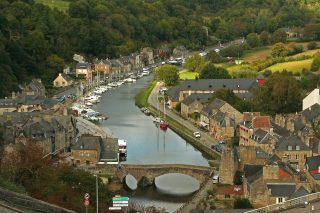
Château de Vitré, Rennes
Castle near Rennes

Château de Vitré is the landmark that defines the town of Vitré: a dramatic medieval fortress perched on a rocky promontory, looking out over the Vilaine Valley and the rooftops below. With its triangular plan, dry moats, and a skyline of towers that look lifted from an illuminated manuscript, it's instantly impressive even before you step through the gates.
Inside, you get a blend of defensive architecture and lived history, from cannon-adapted towers to the courtyard spaces that once served noble households and garrisons. It's one of the must-see places in Vitré, and it fits neatly into a walking tour of Vitré because the castle naturally links into the town's cobbled streets and half-timbered lanes just beyond the walls.
Table of Contents
- History and Significance of the Château de Vitré
- Things to See and Do in the Château de Vitré
- How to Get to the Château de Vitré
- Practical Tips on Visiting the Château de Vitré
- Where to Stay Close to the Château de Vitré
- Is the Château de Vitré Worth Visiting?
- For Different Travelers
- FAQs for Visiting Château de Vitré
- Nearby Attractions to the Château de Vitré
History and Significance of the Château de Vitré
Château de Vitré began as a wooden stronghold around the year 1000 before being rebuilt in stone in the 11th century, reflecting the shift toward more permanent fortifications in a region shaped by feudal rivalry. Its position on a rocky outcrop was not chosen for beauty alone: the height and contours of the terrain gave the castle strong defensive advantages and clear oversight of the valley approaches.
Over the 13th and 15th centuries, the fortress expanded and adapted as warfare evolved. The castle’s towers were adjusted to accommodate new military realities, including the later addition of cannon apertures, which is one of the most telling signs of how medieval strongholds had to modernize to survive.
The château’s significance is also political and civic. It served as a place of refuge in turbulent times, including periods when regional institutions sought safer ground during outbreaks of plague, and it later endured a long afterlife of changing uses, from abandonment and damage to repurposing as a prison and barracks. Its early classification as a historic monument in the 19th century helped secure its restoration and preservation, and today the museum setting gives the fortress a clear narrative framework for visitors.
Things to See and Do in the Château de Vitré
Start with the approach and the exterior viewpoints, because the castle’s silhouette is part of the experience. The best first impression often comes from stepping back far enough to see how the towers and walls follow the rocky contours, then moving closer to appreciate the defensive details that make the place feel purposeful rather than merely picturesque.
Inside, take time to walk the courtyard and trace the triangular layout, which is one of the castle’s most distinctive features. Look for the tension between beauty and strategy: elegant lines and dramatic angles that are also practical responses to terrain, sightlines, and attack points.
If the museum areas are open during your visit, use them to add context before you return outside. The most rewarding castle visits are usually the ones where you pair one “story layer” with one “structure layer,” so you leave with both the visual memory of towers and walls and a clearer sense of who lived here, why it mattered, and how it changed over time.
How to Get to the Château de Vitré
The nearest airports for reaching Vitré are Rennes-Saint-Jacques Airport for the quickest transfer and Nantes Atlantique Airport if you're building a wider Brittany-and-Loire itinerary. For the best deals and a seamless booking experience, check out these flights to Rennes on Booking.com.
Vitré is well connected by rail, and arriving by train is one of the easiest ways to make the town-and-castle visit feel effortless, especially as a day trip from Rennes.You can use SNCF Connect to check schedules, compare routes, and purchase tickets for National (SNCF ) and regional trains (TER). For a more streamlined experience, we recommend using Omio, which allows you to easily compare prices, schedules, and book tickets for both National and Regional travel across all of Europe, all in one place. From Vitré station, the walk into the historic center is straightforward and sets you up nicely for a castle-first route.
Regional buses can be useful if you’re linking smaller towns in Ille-et-Vilaine, but they are best treated as connection tools rather than a flexible sightseeing method. If you’re driving, it’s often simplest to park outside the tightest historic streets and finish the last stretch on foot so the visit stays relaxed and walkable.If you are looking to rent a car in France I recommend having a look at Discover Cars, first, as they compare prices and review multiple car rental agencies for you.
Practical Tips on Visiting the Château de Vitré
- Entrance fee: Adults: €7.00
- Opening hours: April, May, June and September: every day from 10 a.m. to 12:30 p.m. and from 2 p.m. to 6 p.m. July and August: every day from 10 a.m. to 6 p.m. October 1st to March 31st: Monday, Wednesday, Thursday and Friday: from 10 a.m. to 12:30 p.m. and from 2 p.m. to 5:30 p.m. Saturday and Sunday: from 2 p.m. to 5:30 p.m. Closed on Tuesdays and in the morning on Saturdays and Sundays
- Official website: https://www.vitre.bzh/chateaux-de-vitre-0
- Best time to visit: Late spring and early autumn are ideal for clear views and comfortable walking without peak-season crowding. If you’re visiting in summer, aim for earlier in the day so you can enjoy the ramparts and viewpoints before the town gets busier.
- How long to spend: Plan 1.5-2.5 hours for the château and museum at a comfortable pace, then add time for a slow loop through the old town nearby. If you're doing Vitré as a half-day stop, the castle plus one old-town circuit usually feels complete.
- Accessibility: Expect uneven surfaces, steps, and changes in level typical of a medieval fortress and hilltop setting. If mobility is a priority, focus on the most accessible viewpoints and courtyard areas and treat the visit as a selective route rather than a full coverage mission.
- Facilities: The most convenient cafés and services are in the surrounding town center rather than inside the monument itself. Plan for a castle visit followed by a café pause in the old town so you can reset before continuing your walk.
Where to Stay Close to the Château de Vitré
For a culture-heavy itinerary, base yourself in Vitré's historic center so you can walk to the château and timber-framed streets; if your focus is transport convenience for day trips, staying near Vitré station can make arrivals and early departures noticeably smoother.
For a comfortable central stay that keeps the château and old town within easy reach, consider Hôtel Le Magic & Spa. If you want a simple, practical base with good access to both the center and onward travel, ibis Vitré Centre is a dependable option. For a budget-friendly choice that can work well for road-trip style itineraries, B&B HOTEL Vitré is worth considering.
Is the Château de Vitré Worth Visiting?
Yes, particularly if you want a castle that delivers both atmosphere and structure. The setting above the valley, the distinctive tower-filled silhouette, and the compact walkability of the surrounding town combine into a visit that feels complete rather than “one attraction in isolation.”
It's also worth visiting because Vitré supports the château beautifully. When you pair the fortress with the half-timbered streets and small squares nearby, the experience becomes less like a museum stop and more like a coherent medieval townscape you can actually inhabit for a few hours.
What Other Travellers Say...

Vitré Castle is a dramatically restored medieval fortress on Place du Château featuring several towers and exhibits of relics, history and art; visitors praise the informative signage (with English explanations), guided-tours in French, family-friendly rooms that entertain children, and say the entry fee is worthwhile for a visit lasting an hour or several hours—don't miss exploring Vitré's old town afterward.


For Different Travelers
Families with Kids
Château de Vitré works well for families because it has a clear, visual “castle logic” that kids understand instantly: towers, walls, moats, and a courtyard that feels like a contained adventure space. A good family approach is to keep the visit moving, using viewpoints and big features as anchors rather than trying to read every panel or follow every detail.
Build in a reward break right after the castle, because the old town is ideal for snacks and quick sit-down stops. That rhythm makes the day feel easy: castle exploration first, then a calmer street wander with something in hand.
Couples & Romantic Getaways
For couples, the château has a storybook quality that feels especially good at a slower pace. The best version of this visit is not rushed: take time for silhouettes and angles, then drift into the old town for a café stop and a short loop through the timber-framed lanes.
If you enjoy quiet, atmospheric travel, aim for morning or late afternoon so you can catch softer light and a calmer feel. Vitré is particularly rewarding when it feels like you've stepped out of the modern rush for a few hours.
Budget Travelers
This is a strong budget stop because Vitré gives you a lot through simple walking: viewpoints, old streets, and the overall medieval atmosphere. Even with minimal spending, you can build a full experience by pairing the château visit with a self-guided town loop and a bakery-style picnic break.
The key is to keep the day compact and walkable. Vitré is the kind of place where you can see a great deal without paying for multiple attractions, as long as you let the streets do some of the work.
History Buffs
History-focused travelers will appreciate how the castle’s architecture shows adaptation over time, particularly the shift toward artillery-era defenses. The triangular plan and tower modifications aren’t just aesthetic choices; they’re evidence of strategic thinking shaped by evolving threats.
To get more from the visit, connect the castle’s story to the town’s development and later reuses of the site. The château becomes more compelling when you treat it as a living structure that moved through phases of power, decline, and reinvention rather than a single frozen medieval moment.
FAQs for Visiting Château de Vitré
Getting There
Tickets & Entry
Visiting Experience
Tours, Context & Itineraries
Photography
Accessibility & Facilities
Food & Breaks Nearby
Safety & Timing
Nearby Attractions to the Château de Vitré
- Vitré Old Town: A network of cobbled streets and half-timbered houses that makes the castle feel like part of a complete medieval setting.
- Église Notre-Dame de Vitré: A major town church with striking details that adds another architectural layer to your historic-center loop.
- Place du Marchix: A classic central square where Vitré’s everyday life plays out, ideal for a café pause and people-watching.
- Viaduc de Vitré: A dramatic structure spanning the valley that offers a different angle on the town's landscape and viewpoints.
- La Roche-aux-Fées: A famous megalithic site within easy regional reach, perfect for adding a prehistoric chapter to a medieval-themed day.
The Château de Vitré appears in our Complete Guide to Visiting Rennes!

Moira & Andy
Hey! We're Moira & Andy. From hiking the Camino to trips around Europe in Bert our campervan — we've been traveling together since retirement in 2020!
This website uses affiliate links which may earn a commission at no additional cost to you!
Planning Your Visit
April, May, June and September: every day from 10 a.m. to 12:30 p.m. and from 2 p.m. to 6 p.m.
July and August: every day from 10 a.m. to 6 p.m.
October 1st to March 31st: Monday, Wednesday, Thursday and Friday: from 10 a.m. to 12:30 p.m. and from 2 p.m. to 5:30 p.m. Saturday and Sunday: from 2 p.m. to 5:30 p.m. Closed on Tuesdays and in the morning on Saturdays and Sundays
Adults: €7.00
Nearby Attractions
- Château Fougères (25.6) km
Castle - Parc du Thabor (Park of Thabor) (33.7) km
Park - Saint George Palace (34.1) km
Palace - Lycée Émile-Zola (34.1) km
Historic Building - Museum of Fine Arts of Rennes (34.2) km
Museum - Parlement de Bretagne (34.3) km
Historic Building - Place de la Mairie (34.5) km
Square - Palais du Commerce (34.5) km
Historic Building - Place Honoré Commeurec (34.5) km
Square - Place du Champ-Jacquet (34.6) km
Square