Cathédrale Saint-Pierre-et-Saint-Paul de Nantes
Cathedral in Nantes
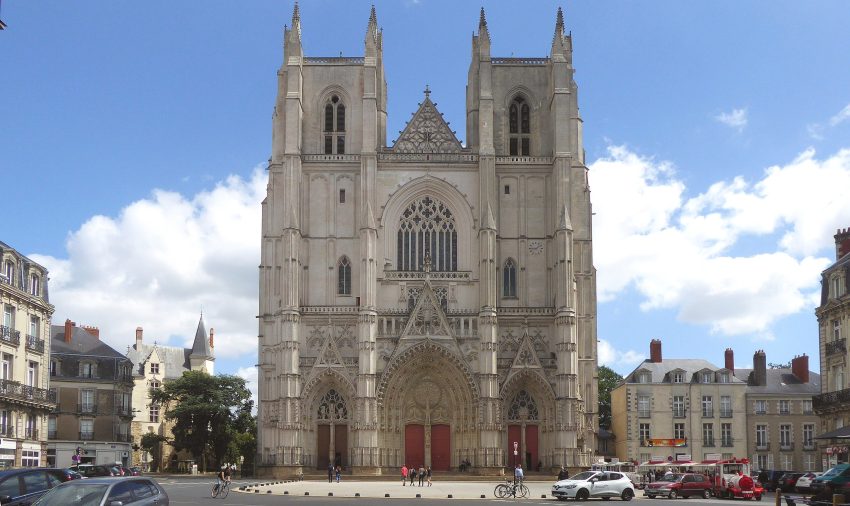
Rising above the historic centre, the Cathédrale Saint-Pierre-et-Saint-Paul de Nantes is one of the must-see places in Nantes, a luminous Gothic giant whose white stone façade and twin towers dominate the skyline. Begun in 1434 and completed only in 1891, the cathedral's architecture tells a story of patience and ambition: tall, elegant towers, a richly carved front, and a nave that soars almost 38 metres high. Step inside and the purity of the pale stone, pierced by jewel-toned stained glass, creates an atmosphere that feels both monumental and surprisingly serene.
The cathedral is much more than an impressive shell. Inside, you will find the exquisite marble tomb of François II, the last Duke of Brittany, and his wife Marguerite de Foix, along with crypts that trace the site's history back to an earlier Romanesque church. After surviving bombing in 1944, a fire in 1972, and the arson attack of 2020, Nantes Cathedral has recently reopened, still wrapped in some scaffolding but very much alive again, often visited on walking tours of Nantes by travellers eager to see how resilience and restoration have shaped this landmark.
Table of Contents
- History and Significance of the Cathédrale Saint-Pierre-et-Saint-Paul de Nantes
- Things to See and Do in the Cathédrale Saint-Pierre-et-Saint-Paul de Nantes
- How to Get to the Cathédrale Saint-Pierre-et-Saint-Paul de Nantes
- Practical Tips on Visiting the Cathédrale Saint-Pierre-et-Saint-Paul de Nantes
- Where to Stay close to the Cathédrale Saint-Pierre-et-Saint-Paul de Nantes
- Is the Cathédrale Saint-Pierre-et-Saint-Paul de Nantes Worth Visiting?
- FAQs for Visiting Cathédrale Saint-Pierre-et-Saint-Paul de Nantes
- Nearby Attractions to the Cathédrale Saint-Pierre-et-Saint-Paul de Nantes
History and Significance of the Cathédrale Saint-Pierre-et-Saint-Paul de Nantes
Construction of Nantes Cathedral began in 1434 under John V, Duke of Brittany, at a time when the duchy was prosperous and keen to express its power through grand religious architecture. Over the next four and a half centuries, successive generations of architects and craftsmen contributed to the building, creating a remarkably harmonious Gothic whole despite the long timeline. The façade, flanked by two towers over 60 metres high, is richly decorated with sculpted portals and a rose window that sets the tone for the splendour inside.
Inside, the nave rises to nearly 38 metres, making it one of the tallest in France and emphasising the cathedral’s verticality and light. The whiteness of the interior stone, punctuated by vivid stained glass, gives the space a clarity that feels almost modern, even though its details are rooted in late Gothic craftsmanship. Beneath the floor, the Romanesque crypt from the 11th century and a larger 19th-century crypt preserve fragments of earlier structures and display artefacts that chart the evolution of the building and the diocese over time.
Arguably the cathedral's most famous artistic treasure is the tomb of François II and Marguerite de Foix, a Renaissance masterpiece carved in Carrara marble by Michel Colombe. Allegorical figures representing virtues such as justice and temperance surround the ducal couple, turning the monument into a sculpted lesson in moral and political ideals. Together with the cathedral's turbulent recent history-bombing in World War II, the 1972 roof fire, and the 2020 arson attack-this blend of art, architecture, and endurance has made Nantes Cathedral a powerful symbol of both Breton heritage and French resilience.
Things to See and Do in the Cathédrale Saint-Pierre-et-Saint-Paul de Nantes
A visit naturally starts outside, where you can admire the bright, almost chalk-white façade that sets Nantes Cathedral apart from many darker Gothic churches. The two towers frame the central portal with its intricate stone carvings, and, when restoration works allow, the great west window and surrounding details are especially striking in soft morning or late afternoon light. Take a moment to walk around the exterior if possible; from different angles you can appreciate the scale of the building and spot scars and repairs that hint at its long, sometimes difficult history.
Inside the cathedral, head first for the nave and simply look up. The soaring height and elegant ribbed vaulting create a feeling of vertical pull, while the stained glass windows wash the interior with colour. Some windows and furnishings are modern replacements, installed after damage from the twentieth-century fires and bombings, giving an interesting dialogue between old and new. As you wander the side aisles and chapels, you will find statues, altarpieces, and memorials that reflect centuries of devotion and local memory.
Do not miss the tomb of François II and Marguerite de Foix, which is one of the top attractions in Nantes for anyone interested in Renaissance art. The tomb's delicate carving, expressive figures, and rich symbolism reward close inspection from all sides. If access is possible during your visit, explore at least part of the crypts: the Romanesque crypt evokes the earlier cathedral and the deep roots of Christianity in Nantes, while the larger 19th-century crypt often hosts displays on the cathedral's construction, damage, and restoration. With the building now reopened after the 2020 fire and major works continuing until around 2028, you may also see craftsmen at work or temporary screens explaining the restoration, adding another fascinating layer to the visit.
How to Get to the Cathédrale Saint-Pierre-et-Saint-Paul de Nantes
Nantes Cathedral sits in the historic centre of Nantes, a short walk from the Château des Ducs de Bretagne and many of the city's main sights, so it is easy to include in almost any central itinerary. The closest airport is Nantes Atlantique Airport, located just southwest of the city, with regular domestic and European flights and bus or shuttle connections into the centre. For the best deals and a seamless booking experience, check out these flights to Nantes on Booking.com.
If you are arriving by train, Nantes railway station is well connected by TGV, Intercités, and regional services from cities such as Paris, Rennes, and Bordeaux, and from the station it is only about a 10-15 minute walk to the cathedral or a short hop by tram or bus.You can use SNCF Connect to check schedules, compare routes, and purchase tickets for National (SNCF ) and regional trains (TER). For a more streamlined experience, we recommend using Omio, which allows you to easily compare prices, schedules, and book tickets for both National and Regional travel across all of Europe, all in one place. Once you reach the central area, pedestrian routes and clear signage make it straightforward to find the cathedral’s towers rising above the surrounding streets.
Travelling by car, you can follow signs for Nantes centre and use one of the multi-storey or underground car parks near the château or around the Cours des 50 Otages; from there, it is just a few minutes on foot to the cathedral through the compact Old Town.If you are looking to rent a car in France I recommend having a look at Discover Cars, first, as they compare prices and review multiple car rental agencies for you. Public transport is efficient and frequent, so you may prefer to leave the car parked and explore Nantes on foot or by tram, especially around the historic core where streets can be narrow and busy.
Practical Tips on Visiting the Cathédrale Saint-Pierre-et-Saint-Paul de Nantes
- Suggested tips: Combine your cathedral visit with nearby sights like the Château des Ducs de Bretagne and the Musée d'Arts de Nantes to build a rich, history-focused day in the city centre.
- Best time to visit: Late morning or mid-afternoon often offers beautiful light through the stained glass and a calmer atmosphere between peak tour-group times.
- Entrance fee: Free
- Opening hours: Daily: 9:00 to 19:00.
- Official website: https://www.cathedrale-nantes.fr/
- How long to spend: Allow at least 45-60 minutes to appreciate the nave, tomb, and crypts; art and architecture lovers may easily linger for longer.
- Accessibility: Main entrances and interior aisles are relatively level, but some areas, such as crypts or side chapels, may involve steps or uneven flooring; ask staff for current accessibility information.
- Facilities: Expect basic visitor services such as information points and sometimes a small shop or leaflet stand nearby; cafés, restaurants, and public toilets can be found within a short walk in the surrounding streets.
- Photography tip: Capture the façade early or late in the day when shadows bring out the carvings, and inside, focus on the interplay between white stone and stained glass-just be respectful during services.
- Guided tours: Look for cathedral or city tours that include the cathedral and its tomb, as guides can explain details of the sculptures, restoration work, and the impact of the 2020 fire more fully.
- Nearby food options: After your visit, wander towards the Bouffay district or around the château for plenty of bistros, bakeries, and wine bars that are perfect for a post-sightseeing break.
Where to Stay close to the Cathédrale Saint-Pierre-et-Saint-Paul de Nantes
Staying near the cathedral puts you right in the heart of historic Nantes, with easy access to major sights, trams, and riverside walks. Just a few steps from both the cathedral and the Château des Ducs de Bretagne, L'Hôtel - Face au Château offers a stylish, comfortable base for exploring the Old Town on foot. A short walk away, Hôtel La Pérouse Nantes combines contemporary design with a central location close to shopping streets and tram lines. For a quieter residential feel while still remaining within walking distance of the cathedral, Hôtel Chateaubriand provides a cosy, good-value option with easy access to both the historic centre and the Erdre riverfront.
Is the Cathédrale Saint-Pierre-et-Saint-Paul de Nantes Worth Visiting?
The Cathédrale Saint-Pierre-et-Saint-Paul de Nantes is absolutely worth visiting, whether you are an architecture fan, a history lover, or simply curious about the city's identity. Its soaring Gothic nave, luminous interior, and exceptional ducal tomb would make it impressive in any circumstances, but its recent reopening after the 2020 fire adds an extra emotional layer. You are not just seeing a static monument; you are witnessing a living church that has come through war, fire, and painstaking restoration to stand proudly once more in the heart of Nantes, and this spot is one of the best places to see in Cathédrale Saint-Pierre-et-Saint-Paul de Nantes if you want to understand the city's spirit.
What Other Travellers Say...

Cathédrale Saint-Pierre de Poitiers, at 1 Rue Sainte-Croix, is an early Gothic Roman Catholic landmark noted for its impressive stained-glass windows and peaceful interior; visitors praise the well-preserved, sometimes ancient glass (including a notable Crucifixion window), painted decorations and crisp vaulted ceilings, plus translated explanatory notes that make the site accessible to tourists, and advise avoiding visiting during religious services.


FAQs for Visiting Cathédrale Saint-Pierre-et-Saint-Paul de Nantes
Nearby Attractions to the Cathédrale Saint-Pierre-et-Saint-Paul de Nantes
- Château des Ducs de Bretagne: Impressive former ducal fortress and history museum just a short walk from the cathedral, exploring the story of Nantes and Brittany.
- Musée d'Arts de Nantes: The city's fine arts museum, with collections ranging from old masters to contemporary works in a beautifully renovated building.
- Jardin des Plantes: A leafy botanical garden with themed areas, sculptures, and family-friendly installations near the railway station.
- Passage Pommeraye: A 19th-century shopping arcade with elegant staircases, glass roofs, and boutique shops that showcase Nantes' bourgeois past.
- Quartier Bouffay: The atmospheric medieval quarter full of narrow lanes, half-timbered houses, restaurants, and bars, ideal for an evening stroll after cathedral sightseeing.
The Cathédrale Saint-Pierre-et-Saint-Paul de Nantes appears in our Complete Guide to Visiting Nantes!

Moira & Andy
Hey! We're Moira & Andy. From hiking the Camino to trips around Europe in Bert our campervan — we've been traveling together since retirement in 2020!
This website uses affiliate links which may earn a commission at no additional cost to you!
Planning Your Visit
Daily: 9:00 to 19:00.
Free
Nearby Attractions
- Porte Saint-Pierre (0.1) km
City Gate - Château des Ducs de Bretagne (0.3) km
Castle - Musée d'Arts de Nantes (0.3) km
Museum - Nantes History Museum (0.3) km
Museum - Jungle Intérieure (0.4) km
Gardens - Eglise Sainte-Croix (0.4) km
Church - Jardin des Plantes (0.6) km
Gardens - Place Royale (0.7) km
Historic Building - Passage Pommeraye (0.9) km
Historic Building - Place Graslin (1.1) km
Square