Castell de Bellver (Bellver Castle), Palma de Mallorca
Castle in Palma de Mallorca

Perched on a wooded hill overlooking Palma and its glittering bay, Bellver Castle is one of the top attractions in Palma de Mallorca for visitors who love a mix of history, architecture and big views. Built in the 14th century for King James II of Mallorca, it was designed as both royal residence and defensive stronghold, and its perfectly circular form still feels strikingly modern today. From the battlements you can see across the city, the marina full of yachts and ferries, and far along the coastline, making the climb up here feel instantly worthwhile.
Down in the courtyard and galleries, the atmosphere changes from fortress to palace. A graceful two-level arcade of Gothic semi-circular arches wraps around the central courtyard, while a well in the middle hints at the underground cistern that kept the castle supplied with water. It is easy to imagine royal processions and formal receptions taking place here centuries ago, just as cultural events and concerts still do today. The castle now houses Palma's History Museum, so as well as exploring the towers, moat and keep, you can follow the city's story from Roman times through the island kingdom of Mallorca and into the modern era. With its blend of architecture, scenery and storytelling, it is a highlight of any walking tour of Palma de Mallorca.
Table of Contents
History and Significance of Bellver Castle
Bellver Castle was commissioned in the early 1300s by King James II of Mallorca, at a time when the island was the seat of its own short-lived kingdom. Unlike the angular, square-plan castles more common in Europe, Bellver was conceived as a true circle, from its curtain wall to its inner courtyard and the arrangement of its towers. This rounded profile made the fortress visually distinctive and, at the time, symbolically powerful, suggesting completeness and royal authority as much as military might.
Although originally planned as a royal court and residence, Bellver’s history quickly took a tougher turn. As political fortunes shifted, the castle became a state prison, and its strong walls and isolated hilltop position made it ideal for holding political opponents and other high-profile prisoners. Over the centuries it has seen noble captives, soldiers and intellectuals pass through its cells, and that darker strand of history gives the site an intensity you can still feel in its lower levels and passageways.
In more recent times, Bellver Castle has been reclaimed as a symbol of the city rather than a place of confinement. Its role as Palma’s History Museum has helped reframe it as a place of learning and civic pride, while the central courtyard has become an elegant stage for concerts, official ceremonies and cultural events. Its circular silhouette, visible from ships approaching the bay and from many vantage points within the city, is now one of Palma’s most recognisable landmarks, linking the medieval past to a very lively present.
Things to See and Do in Bellver Castle
Most visits begin in the open central courtyard, where you can appreciate just how unusual Bellver’s design is. A ring of Gothic arches encircles the space on two levels, each arch opening into chambers that once served both ceremonial and residential functions. Look up to see the rhythm of arches, columns and the curve of the outer wall, which together create one of the most harmonious castle courtyards in Spain.
From here, stairways lead you to the upper level and the surrounding ramparts. Walking the circular walls is a highlight: you can peer down into the moat, examine the three smaller round towers attached to the outer wall and the freestanding central keep linked by a bridge, and look outward to a sweeping panorama of Palma, its harbour and the Serra de Tramuntana mountains. On a clear day, the view gives you a superb sense of the island’s geography and why this hilltop was such a strategic location.
Inside the rooms off the courtyard, Palma's History Museum lays out the city's past with artefacts, models and displays that take you from Roman foundations through medieval trade, the island kingdom and later centuries under the Crown of Aragon and the Spanish monarchy. Take time to explore the lower levels and former prison areas, where the thick stone walls and small openings give a tangible sense of confinement. If your timing is right, you might also catch a concert or cultural event in the courtyard, when lighting and live music add a different kind of drama to the ancient stone.
How to Get to Bellver Castle
Bellver Castle sits on a forested hill to the west of Palma’s city centre, above the Porto Pi and El Terreno districts, and is reachable by a combination of public transport and a short uphill walk or by taxi and car.
Most international visitors start from Palma de Mallorca Airport, where frequent buses and taxis head into the city. From central Palma you can change to a local bus or taxi heading towards Bellver's hillside neighbourhood, then walk the last section through the pine woods to the castle entrance. For the best deals and a seamless booking experience, check out these flights to Palma de Mallorca on Booking.com.
If you are elsewhere on Mallorca, you can take a train from towns such as Inca or Manacor to Palma's Estació Intermodal at Plaza de España. From there, local buses run towards the castle area, or you can take a taxi most of the way and then follow the signposted path up through the parkland to the main gate. Train schedules and bookings can be found on Omio.
Several city bus routes serve stops below the castle hill, and from these points you follow footpaths through the surrounding park, with occasional viewpoints looking back over Palma. Taxis can drop you close to the entrance if you want to minimise walking. Drivers can approach via the ring roads around Palma and follow signs up towards Castell de Bellver, parking in designated areas near the top and then walking a short distance to the castle itself; road access is relatively straightforward compared with the steep footpaths. If you are looking to rent a car in Spain I recommend having a look at Discover Cars, first, as they compare prices and review multiple car rental agencies for you.
Practical Tips on Visiting the Bellver Castle
- Suggested tips: Wear comfortable shoes for the uphill approach and the many steps inside the castle; bring water and allow time both for the museum and for slowly walking the ramparts and enjoying the views.
- Best time to visit: Mornings offer cooler temperatures and softer light over the bay; late afternoon can be wonderful too, especially if you want to see Palma starting to glow in the early evening.
- Entrance fee: Adults: €4.00
- Opening hours: From October to March: Monday: CLOSED - From Tuesday to Saturday: from 10 a.m. to 6 p.m. - Sundays and public holidays: from 10 a.m. to 3 p.m. From April to September: Monday: CLOSED - From Tuesday to Saturday: from 10 a.m. to 7 p.m. - Sundays and public holidays: from 10 a.m. to 3 p.m.
- Official website: https://castelldebellver.palma.cat/
- How long to spend: Plan for 1.5 to 2 hours to explore the museum, courtyard, towers and walls at a relaxed pace; add extra time if you enjoy photography or attend an event.
- Accessibility: The hilltop setting, steps and uneven surfaces can make access challenging for visitors with limited mobility; taxis can reduce the uphill walk, but interior exploration involves multiple staircases.
- Facilities: On-site facilities typically include restrooms and a small shop or kiosk; additional cafés and services are found in the neighbourhoods at the base of the hill.
- Photography tip: For classic shots, frame the circular courtyard from the upper gallery or capture the castle from the park below; wide-angle lenses help with interiors, while a zoom is ideal for city and harbour views from the ramparts.
- Guided tours: Consider joining a guided tour, especially if you enjoy historical detail; guides help decode the architecture, the castle’s prison history and Palma’s evolution over the centuries.
- Nearby food options: Before or after your visit, head down to the El Terreno area or towards the Passeig Marítim for cafés, tapas bars and restaurants with sea views.
Where to Stay close to the Bellver Castle
Staying near Bellver Castle gives you easy access to both the green calm of the hilltop and the buzz of Palma’s seafront and centre. A good option within walking distance of the castle and close to the harbour is Hotel Catalonia Majorica, which offers sea views and straightforward connections into the old town. For a more boutique feel near the waterfront and a short ride from Bellver, Hotel Costa Azul combines comfortable rooms with a prime position on the Passeig Marítim. If you prefer to base yourself in the historic centre and visit Bellver as a half-day trip, Boutique Hotel Posada Terra Santa offers historic charm and easy access to buses or taxis heading up to the castle.
Is Bellver Castle Worth Visiting
Bellver Castle is very much worth visiting, especially if you are spending more than a quick day in Palma. Its almost perfectly circular Gothic design is rare in Europe and instantly memorable, and the combination of inner courtyard, towers, moat and keep makes it feel both romantic and robust. Add in the superb panoramas over Palma, the marina and the surrounding hills, and it quickly becomes clear why so many visitors cite it as a highlight of their time on the island.
Beyond the architecture and views, the castle's role as Palma's History Museum adds real depth to a visit. You do not just see the walls; you learn how the city grew up beneath them, how the fortress shifted from royal palace to prison, and how Palma evolved into the lively Mediterranean capital it is today. If you enjoy places that offer both strong visuals and a compelling story, Bellver Castle should be high on your Palma shortlist.
What Other Travellers Say...

Castillo de Bellver sits on a wooded hill overlooking Palma and the Bay of Palma, notable for its rare circular Gothic plan and sweeping 360° views that reward the uphill walk or short bus ride; inside you can explore a central courtyard, ramparts and rooftop battlements, and a city history museum that presents Palma’s past, while practical notes from visitors mention parking near the entrance, multilingual museum information, and that late afternoon light enhances the stonework and vistas.


FAQs for Visiting Bellver Castle
Nearby Attractions to the Bellver Castle
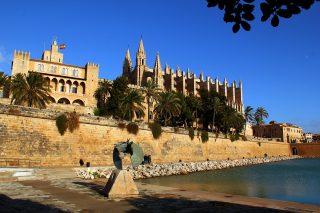
- Palma Cathedral La Seu - Palma's spectacular Gothic cathedral on the waterfront, easily reached by bus, taxi or a longer walk from the castle area.
- Passeig Marítim - The lively seafront promenade below the castle, lined with yachts, cafés and bars and perfect for an evening stroll.
- Castell de Sant Carles - A smaller coastal fort near the harbour entrance, offering further insight into Palma’s maritime defences.
- Es Baluard Museu d’Art Contemporani - Palma’s contemporary art museum housed in old bastions, combining modern exhibitions with views over the city and bay.
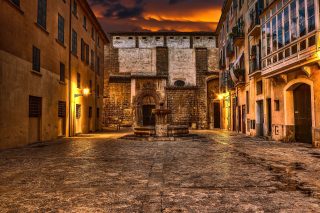
- Palma Old Town - The network of historic streets, squares and courtyards in the city centre, where you can explore shops, cafés and landmarks such as Plaza Mayor and Plaza de Cort.
The Castell de Bellver (Bellver Castle) appears in our Complete Guide to Visiting Palma de Mallorca!

Moira & Andy
Hey! We're Moira & Andy. From hiking the Camino to trips around Europe in Bert our campervan — we've been traveling together since retirement in 2020!
This website uses affiliate links which may earn a commission at no additional cost to you!
Planning Your Visit
From October to March: Monday: CLOSED – From Tuesday to Saturday: from 10 a.m. to 6 p.m. – Sundays and public holidays: from 10 a.m. to 3 p.m.
From April to September: Monday: CLOSED – From Tuesday to Saturday: from 10 a.m. to 7 p.m. – Sundays and public holidays: from 10 a.m. to 3 p.m.
Adults: €4.00
Nearby Attractions
- Pueblo Español (1.3) km
Museum - Joan Miró Museum (1.3) km
Museum - Es Baluard Centre (2.0) km
Museum - La Llotja (2.2) km
Historic Building - Royal Gardens of La Almudaina (2.4) km
Gardens - Royal Palace of La Almudaina (2.4) km
Palace - Passeig del Born (2.4) km
Street - Palau March Museum (2.5) km
Historic Building and Museum - La Seu: the Cathedral of Palma (2.5) km
Cathedral - Museu Diocesa de Mallorca (2.6) km
Museum