Casa Tartini, Piran
Museum in Piran
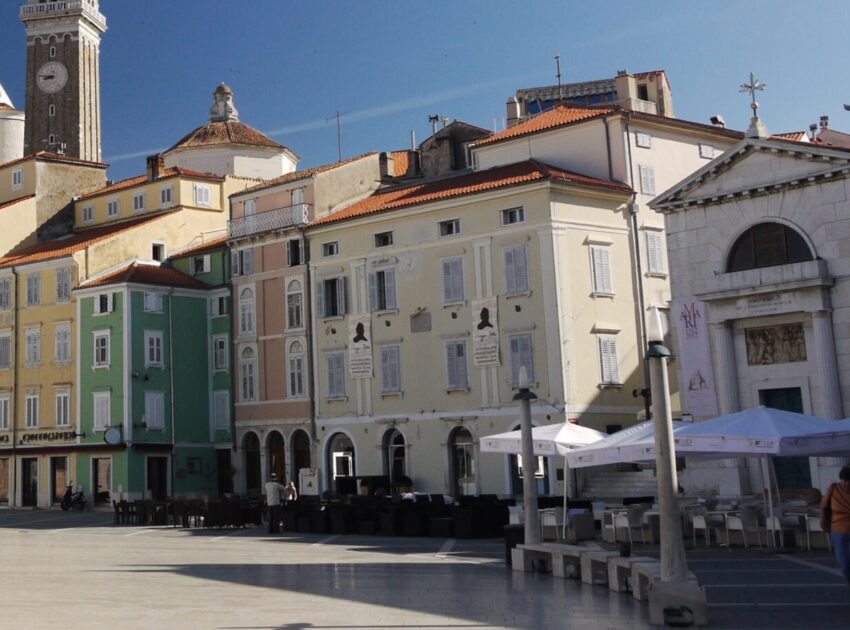
Casa Tartini gives Piran's main square a more personal layer, connecting the town's elegant Venetian character with the life of Giuseppe Tartini, the violinist and composer born here. From the outside, it blends into the historic setting of Tartini Square, but inside it shifts the focus from broad town history to one figure, his music and the community that continues to use the building today.
The house has a long story of its own, first recorded in the 14th century as Casa Pizagrua before later being reshaped in neoclassical style. A visit brings together several strands of Piran’s identity: the birthplace of Tartini, a compact museum with objects such as his violin and portrait, a gallery space, and the seat of the Italian community in Slovenia.
History and Significance of the Casa Tartini
Casa Pizagrua and the Medieval Square
The building now known as Casa Tartini has deep roots in the historic centre of Piran. Records mention it in 1384 as Casa Pizagrua, a Gothic house on what became the town's principal civic space.
Giuseppe Tartini and the Musical Legacy
Giuseppe Tartini was born here, giving the house a direct link to one of Piran’s most important cultural figures. His reputation as a violinist and composer turned the building into more than a preserved town house, because it now carries the memory of a musician whose name is also attached to the square outside.
Neoclassical Renewal and Later Restoration
The house later received a neoclassical appearance, reflecting the way Piran’s older buildings changed over time rather than remaining fixed in their medieval form. Restoration work from 1985 to 1991 uncovered wall paintings, adding another visible layer to the building’s history.
A Museum, Gallery and Community Space
Casa Tartini now serves as the seat of the Italian community in Slovenia and also functions as a venue for cultural projects, exhibitions and museum displays. This continuing use keeps the house connected to public life rather than presenting it only as a static memorial.
Things to See and Do in the Casa Tartini
The main reason I would go inside is to see the Tartini-related collection at close range. The violin gives the rooms their strongest focal point, while the portrait and copperplate engraving make the visit feel personal rather than purely architectural.
I would also slow down for the wall paintings, because they are easy to treat as background decoration when the musical objects attract most of the attention. They give the interior an older domestic character and help explain why the late restoration mattered so much.
How to Get to the Casa Tartini
The nearest useful airports for Piran are Trieste, Ljubljana and Venice, with onward travel by road or public transport depending on route and season. For the best deals and a seamless booking experience, check out these flights to Piran on Booking.com.
Piran has no mainline railway station, so rail travellers usually arrive via Koper or another nearby coastal connection before continuing by bus or taxi. You can easily check schedules and book tickets through the Slovenian Railways. However, for a smoother experience, we recommend using Omio, which simplifies the booking process and lets you compare prices and schedules all in one place.
Driving into the old centre is restricted, so it is usually better to use designated parking outside the historic core and continue on foot or by local shuttle.
Practical Tips on Visiting the Casa Tartini
- Best time to visit: Go earlier in the day if you want a quieter look at the rooms before the square becomes busier. In summer, check the day’s opening pattern carefully because museum hours can vary by season.
- How long to spend: Allow around 30-45 minutes for the museum rooms, or longer if you want to read the displays carefully and connect the visit with Tartini Square.
- Accessibility: The building is a historic house, so expect tighter interior spaces than in a purpose-built museum. Visitors with mobility needs should check access before going.
- Facilities: Expect a compact museum-style visit rather than a large visitor centre. The surrounding square has the practical advantages of being central, with cafés, services and other sights close by.
Where to Stay Close to the Casa Tartini
For a culture-heavy visit, the best base is Piran's old town or the area immediately around Tartini Square, where Casa Tartini, the waterfront and the main historic sights are all within a short walk. Travellers who want easier road access, resort facilities or beach-focused time may prefer nearby Portorož, but it feels less atmospheric for an old-town itinerary.
Art Hotel Tartini works well for travellers who want to stay directly on the square, close to Casa Tartini and the harbour. Hotel Piran is a practical choice for those who want waterfront access while still being close to the old centre, while Memento B&B Piran suits visitors looking for a smaller old-town base within walking distance of the main sights.
What Other Travellers Say...
Reviews describe Tartini House in Piran as a beautifully presented, well-curated museum that offers engaging insights into Giuseppe Tartini's life, with highlights including historical instruments, multimedia exhibits, and a calm atmosphere. Guided experiences are repeatedly praised, especially for a knowledgeable and charismatic guide who brings both Tartini's legacy and the town's history to life, and staff are noted as friendly. Events such as concerts and tastings are also appreciated, with reservations generally easy. The main drawback mentioned is that guided tours may require advance booking by email or phone and can be hard to fit in without planning.





FAQs for Visiting the Casa Tartini
What is Casa Tartini?
Casa Tartini is the birthplace of Giuseppe Tartini and now functions as a museum, cultural venue, gallery space and seat of the Italian community in Slovenia.
Where is Casa Tartini in Piran?
Casa Tartini stands by Tartini Square in the historic centre, making it easy to combine with the town's main square, harbour and old streets.
What can you see inside Casa Tartini?
Visitors can see exhibits connected with Giuseppe Tartini, including his violin, portrait and other personal or musical objects, along with interior wall paintings revealed during restoration.
Is Casa Tartini mainly about music?
Music is the central theme, but the house also tells a broader story about Piran’s architecture, cultural identity and the continued role of the Italian community.
Is Casa Tartini worth visiting?
It is worth visiting if you are interested in Tartini, music history or smaller house museums. It is less suited to visitors looking for a large museum with extensive galleries.
Can I visit Casa Tartini quickly?
Yes. The collection is compact, so it works well as a short cultural stop while exploring Tartini Square and the surrounding old town.
Is Casa Tartini suitable for families?
It can work for families with an interest in music or local history, but younger children may find it quieter and more display-focused than interactive attractions.
Should I visit Casa Tartini before or after Tartini Square?
I would look at the square first, then visit the house, because the museum gives more meaning to the name and statue associated with the surrounding space.
The Casa Tartini appears in our Complete Guide to Visiting Piran!

Moira & Andy
Hey! We're Moira & Andy. From hiking the Camino to trips around Europe in Bert our campervan — we've been traveling together since retirement in 2020!
This website uses affiliate links which may earn a commission at no additional cost to you!
Planning Your Visit
Tuesday: 10:00-13:00.
Wednesday: 15:00-18:00.
Thursday: 10:00-13:00.
Friday: 15:00-18:00.
Saturday: 10:00-18:00.
Sunday: 10:00-15:00.
Closed on Monday.
Adults €4; students and pensioners €3; children €2; family ticket €10.
Nearby Attractions
- Tartini Square (0.1) km
Square - Town Hall (0.1) km
Town Hall - Piran Port (0.1) km
Port - St. George’s Cathedral (0.1) km
Cathedral - Sergej Mašera Maritime Museum (0.1) km
Museum - Walls of Piran (0.3) km
City Walls - Piran Waterfront Promenade (0.3) km
Promenade - Piran Lighthouse (0.5) km
Lighthouse - Museo Ferroviario di Trieste Campo Marzio (19.5) km
Museum, Railway and Train Station - Museo Sartorio (20) km
Historic Building, Historic Room and Museum