Walls of Piran
City Walls in Piran
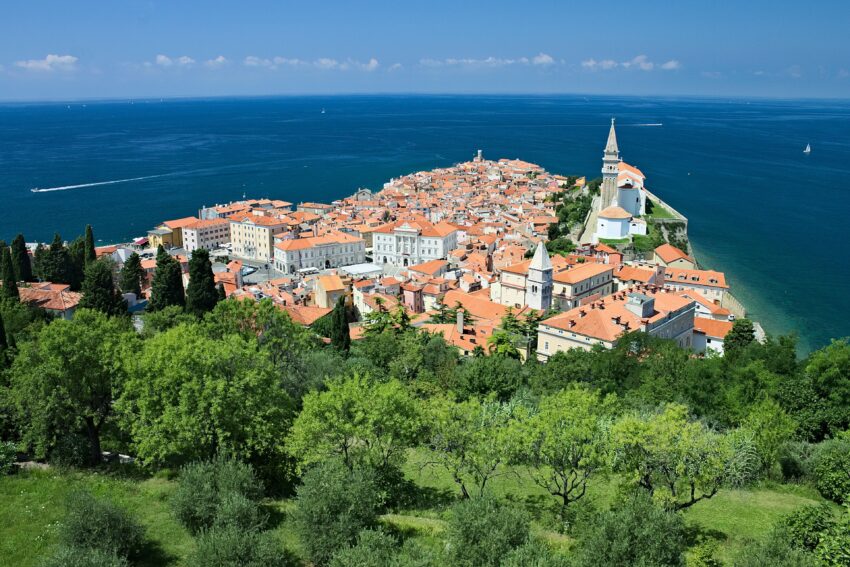
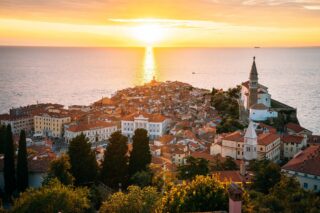
The Walls of Piran rise above the old town in a way that immediately changes the perspective of a visit. From below, they read as part of the town's historic silhouette, but from the path along the walls they become a place of height, distance and wide sea air rather than just masonry and towers. The setting feels more open than the streets below, with the town suddenly arranged beneath the visitor instead of around them.
The walls are not simply something to look at from the outside. Visitors can climb up, walk along the preserved sections and enter the towers, which gives the site far more substance than a quick photo stop from street level. This is a ticketed attraction rather than a free viewpoint, but the combination of access, elevation and atmosphere makes it one of the more rewarding paid stops in Piran.
What gives the site its lasting impact is the way it combines physical remains with a very readable sense of the town's past. The walls still feel defensive in character, yet they also work as one of the best places to understand how Piran grew, tightened and looked outward toward the sea. By the end of the visit, they often feel less like a surviving fragment and more like one of the places that explains the whole town best.
History and Significance of the Walls of Piran
Early fortifications of the Walls of Piran
The Walls of Piran began to take shape in the 7th century, and the fortifications continued to change over the following centuries as the town developed. That long building history matters because it explains why the walls do not feel like a single, neatly planned structure from one era. Instead, they reflect the needs of a settlement that kept adapting its defenses as it expanded.
The earliest walls protected a much smaller town than the one visitors see today. As Piran grew, new defensive lines followed that expansion, showing how closely urban growth and security were linked. The surviving sections therefore reveal not just military thinking, but the changing footprint of the town itself.
Venetian-era strengthening of the Walls of Piran
The best-preserved stretches visible today are strongly tied to the period when Piran developed under Venetian influence. This later strengthening gave the walls a more substantial form and left the towers and ramparts that now define the site for visitors. The result is a monument that is historically important not only because it is old, but because it still shows how a coastal town defended itself during a key period of its growth.
This matters visually as well as historically. The walls do not stand apart from Piran; they help shape the image of the town when seen from below and explain its relationship to the hill behind it. For visitors walking the route today, the stonework and towers make the town's defensive past feel concrete rather than abstract.
The Walls of Piran as a viewpoint today
Today, the walls are one of the most effective places to understand Piran as a whole. They offer a broad outlook over rooftops, church towers, the waterfront and the coastline, so the site works as both a historic monument and a panoramic platform. That dual role is what makes the visit so satisfying.
Their significance now lies in that balance between preservation and experience. The walls remain a serious historic landmark, but they are also one of the most memorable places to stand, pause and read the geography of the town at a glance. For many visitors, they become the place where Piran finally makes visual sense.
Things to See and Do in the Walls of Piran
The main reason to come here is the elevated walk itself. As visitors move along the ramparts and up into the towers, the views keep shifting between the sea, the clustered roofs of the old town and the higher landmarks that rise above it. This is the kind of site where the panorama is not a bonus but the main event, and it is best enjoyed slowly rather than rushed.
It is also worth paying attention to the structure of the walls rather than treating them only as a viewpoint. The towers, stone lines and preserved defensive character give the route a stronger sense of purpose than many scenic lookouts. A casual visitor might focus only on the photographs, but the more rewarding experience comes from noticing how the fortifications explain the town’s expansion and defensive logic at the same time.
How to Get to the Walls of Piran
The nearest practical airports are in Slovenia and nearby northern Italy, with the final journey to Piran usually completed by road. For the best deals and a seamless booking experience, check out these flights to Piran on Booking.com.
The simplest rail option is to travel to a larger city in the region by train and then continue to Piran by bus or road transfer, since the town does not have its own railway station. You can easily check schedules and book tickets through the Slovenian Railways. However, for a smoother experience, we recommend using Omio, which simplifies the booking process and lets you compare prices and schedules all in one place.
By car, it is easiest to park on the edge of Piran and walk uphill through the old town to the walls rather than trying to drive into the historic core.
Practical Tips on Visiting the Walls of Piran
- Best time to visit: Late afternoon is especially rewarding for softer light and clearer views over the rooftops and coastline, though early morning can be quieter. In hot weather, the more exposed sections feel less comfortable in the middle of the day.
- How long to spend: Allow 30-60 minutes, depending on how much time is spent on the towers and viewpoints. It works well as a substantial stop rather than a quick look.
- Accessibility: The route involves climbing and uneven historic surfaces, so it is not the easiest site in Piran for visitors with limited mobility. Sturdy footwear makes a noticeable difference.
- Facilities: This is primarily a historic viewpoint site rather than a fully serviced attraction, so it is best combined with cafés and other facilities lower down in the old town.
Where to Stay Close to the Walls of Piran
For a culture-heavy itinerary, the best base is central Piran around Tartini Square and the old town; for a quieter seaside stay with easier access to the coast, Fiesa makes more sense.
Staying in the old town works best for visitors who want to explore Piran entirely on foot and reach the walls early or late in the day when the light is better and the streets feel calmer. Art Hotel Tartini is a strong option for travelers who want to be right in the middle of the historic center, while Boutique Hotel Miracolo di Mare suits those who prefer a smaller base tucked into the old streets but still within easy walking distance of the main sights.
For a quieter overnight stay, Barbara Piran Beach Hotel is a better fit for travelers who want beach access, a calmer setting and a short walk back into town rather than staying directly in the busiest part of the old center. That kind of base is especially useful when the trip is focused as much on coastal downtime as on historic sightseeing.
What Other Travellers Say...
Reviewers consistently highlight the Walls of Piran as an interesting historic site with excellent panoramic views over the town and Adriatic Sea, especially from the towers. The small entrance fee (around €3) is widely seen as good value and worth the walk. Common downsides include steep steps, ladders and stairs, and some tight or low-clearance areas that can be uncomfortable for taller visitors or require extra care.





FAQs for Visiting the Walls of Piran
The Walls of Piran appears in our Complete Guide to Visiting Piran!

Moira & Andy
Hey! We're Moira & Andy. From hiking the Camino to trips around Europe in Bert our campervan — we've been traveling together since retirement in 2020!
This website uses affiliate links which may earn a commission at no additional cost to you!
Planning Your Visit
(Summer) Every day: 08:00-21:00.
(Winter) Every day: 08:00-18:30.
2 € per person
Nearby Attractions
- Casa Tartini (0.3) km
Museum - Sergej Mašera Maritime Museum (0.3) km
Museum - Piran Port (0.3) km
Port - Tartini Square (0.3) km
Square - Town Hall (0.3) km
Town Hall - St. George’s Cathedral (0.4) km
Cathedral - Piran Waterfront Promenade (0.5) km
Promenade - Piran Lighthouse (0.7) km
Lighthouse - Museo Ferroviario di Trieste Campo Marzio (19.4) km
Museum, Railway and Train Station - Civico Museo della Risiera di San Sabba (19.9) km
Historic Site, Memorial and Museum