Tartini Square, Piran
Square in Piran
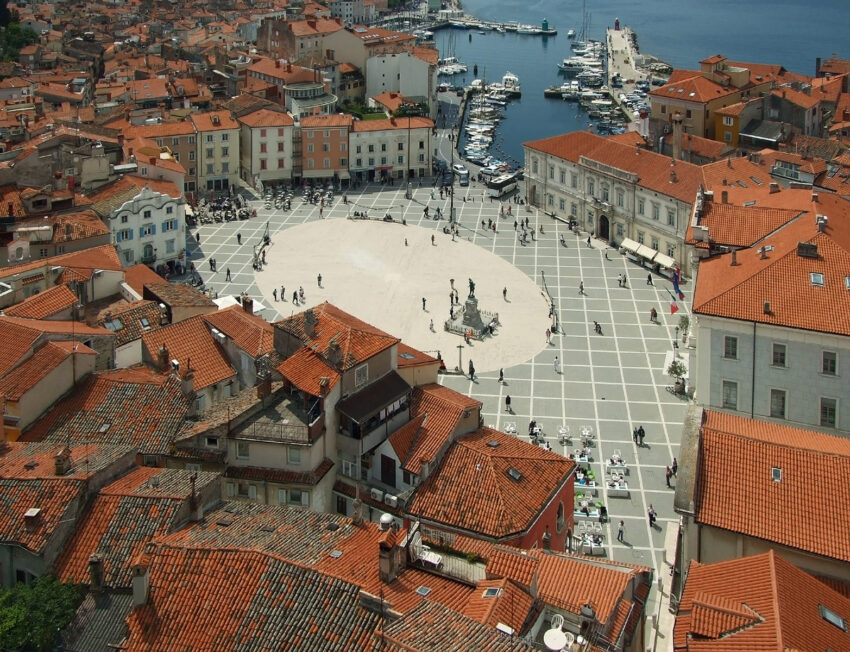
I arrived at Tartini Square in Piran and immediately understood why so many walks through the old town begin here. The space opens out in a way that feels almost surprising after the tighter lanes nearby, with the sea close at hand, polished facades catching the light, and café tables softening the formality of the buildings around the edge. It felt less like a monument to be ticked off and more like the town's living front room.
I found myself slowing down here rather than crossing it quickly. I looked from the statue at the center to the Town Hall and the line of historic buildings around the square, then drifted toward the waterfront side to watch how people actually used the space. The square itself is free to enter and easy to enjoy at any time, while nearby indoor sights such as Tartini's Birth House are the parts that may have their own opening hours or admission arrangements.
What stayed with me most was how clearly the square links everyday Piran with the town's longer story. It is open and sociable, but it also carries traces of an older urban plan and a strong cultural identity tied to Giuseppe Tartini. Once I had taken in the atmosphere, the surrounding architecture started to feel less decorative and more like a record of how the town changed over time.
History and Significance of the Tartini Square
Medieval origins of Tartini Square
The area that now forms Tartini Square did not begin as a formal civic plaza. For centuries, this part of the town functioned as an inner harbor, which placed trade and maritime activity at the center of daily life. That earlier use explains why the square feels unusually open compared with the compressed medieval streets behind it.
The change from harbor to square gave the old town a very different kind of public space. Instead of serving ships and goods, the area became a place for civic display, gatherings and movement through the historic core. That transformation still shapes the way visitors experience Piran today.
Nineteenth-century reshaping of Tartini Square
In the late 19th century, the former harbor was filled in and redesigned as a proper town square. This was not a minor adjustment but a major urban change that created the broad, recognizable space seen today. The new square gave Piran a central public setting that could match its cultural ambitions as well as its practical needs.
The statue of Giuseppe Tartini became the defining focal point of the redesigned square. By placing the composer at its center, the town tied the space directly to one of its most important historical figures. That decision turned the square into both a civic landmark and a statement about local identity.
Tartini Square and the architectural story of Piran
The buildings around the square help explain how different periods overlap in the old town. The Town Hall gives the space an official civic presence, while other facades add layers of Gothic, Venetian and later urban character. Rather than reading as a single planned ensemble, the square shows how Piran adapted older structures to a newly formed public setting.
That mix is part of why the square matters beyond its visual appeal. It brings together administration, culture and daily life in one place, and it frames several of the town’s best-known historic buildings within a setting that remains active rather than museum-like. For visitors, it is the easiest place to see how urban history and present-day use still meet.
Things to See and Do in the Tartini Square
I would start by standing near the center of the square and taking a slow turn rather than heading straight for one building. The statue of Tartini anchors the whole space, but the real pleasure is in seeing how the facades, the waterfront edge and the flow of people work together. Early morning and late afternoon are especially good for this, when the light softens the stone and the square feels less like a transit point and more like a place to linger.
The detail I would not rush past is the architecture around the perimeter, especially the older facades that reveal the town’s Venetian and civic history without needing a formal explanation panel at every step. It is also worth pausing by Tartini’s Birth House if it is open, even if you do not go inside, because it helps connect the open square to the personal story behind its name. A casual walk across the space can feel simple, but the more closely I looked, the more the square worked as a summary of the whole town.
How to Get to the Tartini Square
- The nearest practical airports are in Slovenia and nearby northern Italy, with the final approach to the old town usually completed by road to Piran. For the best deals and a seamless booking experience, check out these flights to Piran on Booking.com.
- The easiest rail option is to travel by train to a larger city in the region and then continue to Piran by bus or road transfer, as the town itself does not have a railway station. You can easily check schedules and book tickets through the Slovenian Railways. However, for a smoother experience, we recommend using Omio, which simplifies the booking process and lets you compare prices and schedules all in one place.
- By car, it is easiest to drive to the edge of Piran and continue into the historic center on foot, since the old town is far better suited to pedestrians than through-traffic.
Practical Tips on Visiting the Tartini Square
- Best time to visit: Early morning is best for a quieter look at the square and its facades, while late afternoon is good if you want softer light and more atmosphere. Midday can feel busier, especially when day visitors concentrate around the center.
- How long to spend: Allow 20-40 minutes for the square itself, or longer if you plan to sit at a café or combine it with nearby sights. It works best as a starting point for exploring the surrounding streets rather than as a stop in isolation.
- Accessibility: The square itself is relatively open and straightforward compared with the steeper lanes elsewhere in the old town, though surfaces may still be uneven in places. Reaching nearby hilltop sights involves more demanding walking.
- Facilities: You will find cafés, restaurants and visitor services close by, with more facilities spread through the surrounding old town. Indoor museum-style attractions nearby may keep separate opening hours from the public square.
Where to Stay Close to the Tartini Square
For a culture-focused stay, the best base is the old town around Tartini Square and the waterfront, where you can walk to the main historic sights without needing transport.
Staying close to the square makes the most sense if your priority is atmosphere, short walking distances and easy access to the old town from early morning into the evening. This part of Piran suits travelers who want to step straight into the historic core, take breaks without backtracking far, and enjoy the waterfront at quieter times of day. If you prefer easier parking, more space or a calmer overnight setting, it can make more sense to stay just outside the densest center and walk in rather than sleep directly in the middle of it.
What Other Travellers Say...

Reviews describe Piran—especially Tartini Square—as a picturesque, clean, and walkable coastal town with strong Venetian-era charm, narrow old-town streets, and scenic viewpoints from the walls and St. George's Church. Visitors repeatedly highlight the lively pedestrian square and waterfront promenade for cafes, seafood restaurants, people-watching, events, and sunset views over the harbor and Adriatic. The atmosphere is generally relaxed and family-friendly, with plenty of places to sit and enjoy the surroundings. Few negatives are mentioned, with most feedback being overwhelmingly positive.


FAQs for Visiting the Tartini Square
The Tartini Square appears in our Complete Guide to Visiting Piran!

Moira & Andy
Hey! We're Moira & Andy. From hiking the Camino to trips around Europe in Bert our campervan — we've been traveling together since retirement in 2020!
This website uses affiliate links which may earn a commission at no additional cost to you!
Planning Your Visit
24 Hours.
Free.
Nearby Attractions
- Town Hall (0) km
Town Hall - Casa Tartini (0.1) km
Museum - Piran Port (0.1) km
Port - Sergej Mašera Maritime Museum (0.1) km
Museum - St. George’s Cathedral (0.1) km
Cathedral - Piran Waterfront Promenade (0.2) km
Promenade - Walls of Piran (0.3) km
City Walls - Piran Lighthouse (0.4) km
Lighthouse - Museo Ferroviario di Trieste Campo Marzio (19.6) km
Museum, Railway and Train Station - Museo Sartorio (20) km
Historic Building, Historic Room and Museum