Sergej Mašera Maritime Museum, Piran
Museum in Piran
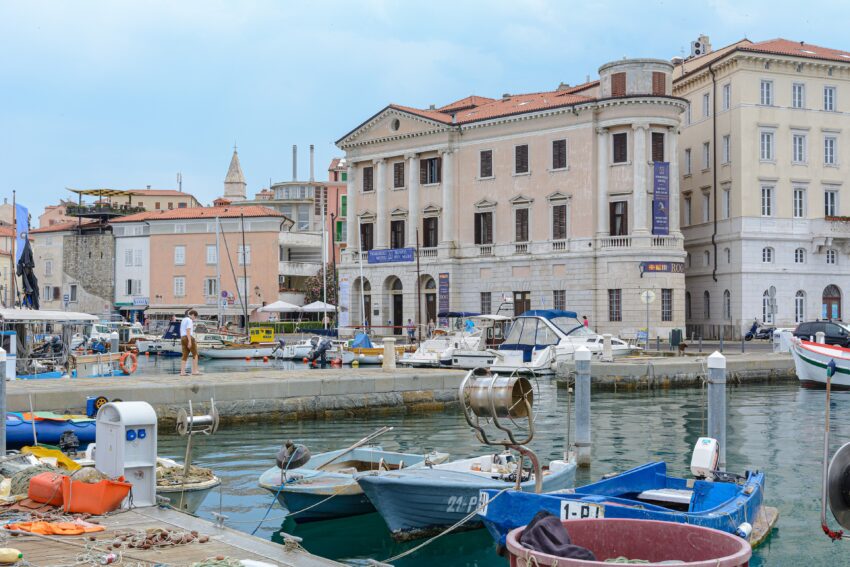
Table of Contents
- History and Significance of the Sergej Mašera Maritime Museum
- Things to See and Do in the Sergej Mašera Maritime Museum
- How to Get to the Sergej Mašera Maritime Museum
- Practical Tips on Visiting the Sergej Mašera Maritime Museum
- Where to Stay Close to the Sergej Mašera Maritime Museum
- FAQs for Visiting the Sergej Mašera Maritime Museum
History and Significance of the Sergej Mašera Maritime Museum
Origins of the Sergej Mašera Maritime Museum
The museum was established in 1954 and named after Sergej Mašera, a naval officer remembered as a maritime hero. That origin matters because it places the institution within the postwar effort to collect, preserve and interpret the maritime heritage of the Slovenian coast in a more systematic way. It is therefore not simply a local curiosity, but the central institution for maritime heritage in Slovenia.
Its location in Gabrielli Palace adds another layer of significance. The museum is not housed in a neutral modern building, but in a historic palace in the heart of Piran, which gives the collections a more fitting setting and strengthens the sense of continuity between the town's architecture and the stories on display inside. Visitors experience the museum as part of the old town rather than as something detached from it.
Maritime collections and the broader story of the coast
The museum's significance lies in the breadth of its collections. It covers maritime archaeology, fishing ethnology, historical artefacts, ship models, navigation instruments, naval uniforms and maps, which together build a fuller picture of life along this coast and its wider Mediterranean connections. That range makes the museum useful not just for understanding Piran itself, but for understanding the maritime world that shaped the region.
This broad approach also prevents the museum from feeling overly technical. Instead of focusing only on ships or only on archaeology, it shows how maritime history affected trade, work, navigation and daily life. For visitors, that makes the museum a much stronger interpretive stop than a narrower specialist collection would be.
The Sergej Mašera Maritime Museum today
Today the museum remains one of Piran’s key cultural institutions and one of the best indoor historic attractions in town. It continues to function as both a research-based heritage institution and a visitor-facing museum, with accessibility measures and a museum shop adding to its public role. That combination gives it practical relevance as well as historical importance.
Its importance today lies in how effectively it complements the rest of Piran. The waterfront, harbour and town walls show the outward face of a maritime town, but the museum explains the deeper material and cultural history behind them. For many visitors, it becomes the place where the visible townscape connects to a richer historical framework.
Things to See and Do in the Sergej Mašera Maritime Museum
The main reason to visit is the range of maritime collections gathered in one place. Visitors can move from ship models and navigation instruments to uniforms, archaeological material and historical maps, which gives the museum a pleasing rhythm rather than a repetitive sequence of cases. The standout detail is the Roman amphorae displayed under a glass floor, a feature that gives the visit a stronger visual memory than many small museums manage.
It is also worth paying attention to the building itself and the overall arrangement of the displays. Because the museum is housed in Gabrielli Palace, the experience carries more atmosphere than it would in a neutral gallery space. Visitors interested in the sea, local identity or simply a well-structured cultural stop usually find that the museum offers far more substance than its modest scale first suggests.
How to Get to the Sergej Mašera Maritime Museum
The nearest practical airports are in Slovenia and nearby northern Italy, with the final journey to Piran usually completed by road. For the best deals and a seamless booking experience, check out these flights to Piran on Booking.com.
The simplest rail option is to travel to a larger city in the region by train and then continue to Piran by bus or road transfer, since the town does not have its own railway station. You can easily check schedules and book tickets through the Slovenian Railways. However, for a smoother experience, we recommend using Omio, which simplifies the booking process and lets you compare prices and schedules all in one place.
By car, it is easiest to park on the edge of Piran and continue into the old town on foot, with the museum reached on Cankarjevo nabrežje a short walk from Tartini Square.
Practical Tips on Visiting the Sergej Mašera Maritime Museum
- Best time to visit: Late morning or early afternoon usually works best, especially when combined with other old-town sights. In summer, the museum is also useful as a cooler indoor stop between seafront walks.
- How long to spend: Allow 45-75 minutes for a proper visit, especially if there is interest in the full range of collections. The museum has enough material to reward a slower pace.
- Accessibility: The museum states that it is accessible to visitors with mobility impairments. Reaching it from the main bus area is also relatively straightforward compared with some steeper parts of the old town.
- Facilities: There is a museum shop on site, and cafés, restaurants and other services are close by in the surrounding center of Piran.
Where to Stay Close to the Sergej Mašera Maritime Museum
For a culture-heavy itinerary, the best base is central Piran around Tartini Square, Cankarjevo nabrežje and the old town; for a quieter coastal stay with easier beach access and a more relaxed pace, Fiesa is the better choice.
Staying near the museum suits visitors who want to explore Piran’s cultural core on foot and move easily between the waterfront, the square and the main historic sights. Hotel Piran works well for travelers who want a seafront base within an easy walk of the museum, while Art Hotel Tartini is a strong choice for those who want to stay right by the town’s main square and civic center.
For visitors who prefer a smaller property tucked into the old streets, Boutique Hotel Miracolo di Mare is a good fit. It suits travelers who value character and walkability over resort-style facilities, while still keeping the museum and the rest of the old town within very easy reach.
What Other Travellers Say...
Reviewers describe a small but impressive maritime museum in a historic waterfront building, with well-organized exhibits spanning local and Slovenian seafaring history from ancient times to the modern era. Highlights include detailed ship models, abundant artifacts (uniforms, instruments, maps and paintings), and an outdoor restored ship, with some visitors noting helpful, friendly staff and English interpretation. Many found it engaging enough to spend several hours. Few negatives are mentioned, aside from it being relatively small.





FAQs for Visiting the Sergej Mašera Maritime Museum
The Sergej Mašera Maritime Museum appears in our Complete Guide to Visiting Piran!

Moira & Andy
Hey! We're Moira & Andy. From hiking the Camino to trips around Europe in Bert our campervan — we've been traveling together since retirement in 2020!
This website uses affiliate links which may earn a commission at no additional cost to you!
Planning Your Visit
(September - June) Tuesday - Sunday: 09:00-17:00.
(July - August) Tuesday - Sunday: 09:00-12:00 & 17:00-21:00.
Closed on Monday.
Adults 5.00 €; students and pensioners 4.00 €; children 3.00 €; family ticket 12.00 €.
Nearby Attractions
- Piran Port (0.1) km
Port - Tartini Square (0.1) km
Square - Town Hall (0.1) km
Town Hall - Casa Tartini (0.1) km
Museum - St. George’s Cathedral (0.2) km
Cathedral - Piran Waterfront Promenade (0.3) km
Promenade - Walls of Piran (0.3) km
City Walls - Piran Lighthouse (0.5) km
Lighthouse - Museo Ferroviario di Trieste Campo Marzio (19.6) km
Museum, Railway and Train Station - Museo Sartorio (20.1) km
Historic Building, Historic Room and Museum