Casa de los Picos, Segovia
Historic Building in Segovia

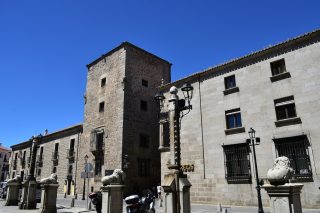
Casa de los Picos is one of those Segovia sights you don't need a ticket for to enjoy. It sits right on Calle Juan Bravo, the elegant old-town artery that links the aqueduct side of the centre with the cathedral end, and it's impossible to miss once you spot the façade: a whole wall of stone “spikes” that catches the light and makes the building feel part fortress, part Renaissance showpiece.
Even if you only stop for five minutes, it earns its place as one of the top attractions in Segovia because it's so visually distinctive, and it slips naturally into a walking tour of Segovia-an easy pause between bigger headline stops when you want something architectural and slightly eccentric.
Table of Contents
- History and Significance of the Casa de los Picos
- Things to See and Do in the Casa de los Picos
- Practical Tips on Visiting the Casa de los Picos
- Where to Stay Close to the Casa de los Picos
- Is the Casa de los Picos Worth Visiting?
- For Different Travelers
- FAQs for Visiting Casa de los Picos
- Nearby Attractions to the Casa de los Picos
History and Significance of the Casa de los Picos
The building began life in the late 15th century as a fortified house, associated with Pero López de Ayala, and it was positioned beside the former city gate of San Martín, which helps explain why it was designed to look tough rather than purely decorative. In the early 16th century the house took on its signature character when it was renovated under the de la Hoz family, whose heraldry you can still pick out on the lintels and around the entrance.
The detail everyone remembers is the façade: 617 granite points carved into diamond-like bosses that give the building its name and its slightly theatrical, defensive look. Step inside (when it’s open for exhibitions) and the mood changes: the Renaissance courtyard and Talavera tiles bring a softer, more civic feel, and you can see how the building has always balanced prestige with practicality.
In the 1970s the property was transferred to the Ministry of Education and rehabilitated to become the home of Segovia's art and design school, which has been based here since the late 1970s. That modern use matters: Casa de los Picos is not a frozen museum piece, but a working, living building whose public access depends on what's happening inside.
Things to See and Do in the Casa de los Picos
First, take your time with the façade. The best way to appreciate it is to stand slightly back on Calle Juan Bravo and let your eyes scan the pattern: the spikes read almost like a textile from a distance, then become sharply individual as you move closer, with small variations that show it’s hand-worked stone rather than a modern repeat.
Next, look for the de la Hoz heraldic details around the balconies and doorway, which add a “family statement” layer to what otherwise feels like pure geometry. If you're lucky and an exhibition is running, step inside for the courtyard atmosphere-this is where the building's Renaissance elegance comes through, and where the Talavera tiles (painted with Segovia motifs) give you a small, unexpectedly local storytelling moment.
Finally, enjoy the comparisons: the diamond-point style often reminds travellers of Salamanca's Casa de las Conchas, and it has that same “why did they do this?” spark that makes you stop and talk about it. It's a perfect short, memorable pause between the aqueduct and the cathedral zone, even if you never set foot beyond the door.
Practical Tips on Visiting the Casa de los Picos
- Entrance fee: Free (façade viewing; exhibition entry, when open, is typically free but can vary).
- Opening hours: 24 hours
- Official website:
- Best time to visit: Late morning is ideal when Calle Juan Bravo is lively but not yet at peak crowding, so you can step back for photos without feeling rushed.
- How long to spend: Plan 10-20 minutes for a satisfying exterior stop, or 30-45 minutes if there’s an exhibition open and you want to linger in the courtyard.
- Accessibility: The street outside is easy to reach on foot in the old town, but interior access depends on whether exhibitions are open and may involve historic thresholds or steps.
- Facilities: Treat it as a quick architectural stop and plan your café break nearby, since services are better along the main old-town route than at the building itself.
Where to Stay Close to the Casa de los Picos
For most travellers, the best base is Segovia Old Town around the Aqueduct and Plaza Mayor so you can walk to the main monuments early and return easily for dinner without relying on taxis. If you want to stay right in the heart of the historic centre, Hotel Infanta Isabel is a classic, ultra-central choice for a culture-heavy itinerary. For a comfortable, polished stay with a prime old-town location, Hotel Real Segovia keeps you steps from Casa de los Picos and the main walking streets. If you prefer being closer to transport and the aqueduct approach, Eurostars Plaza Acueducto is practical for arrivals while still being an easy walk into the historic core.
Is the Casa de los Picos Worth Visiting?
Yes-because it delivers a “Segovia moment” with almost no effort. You get a genuinely unusual façade, a strong sense of place, and a quick architectural story you can carry with you through the rest of the old town.
It’s also worth it precisely because it’s not a big commitment. Even if the interior is closed, the exterior stop adds texture to your day and breaks up the walk between Segovia’s larger monuments.
What Other Travellers Say...

Casa de los Picos, at C. Juan Bravo 33 in Segovia, is a 15th‑century building famed for its granite façade covered with 617 pyramid‑shaped points and a notable Renaissance courtyard/terrace; originally built as a fortified house, it now houses the Segovia School of Art and Design and is frequently praised by visitors for its striking, textured exterior and standout architecture, though some find it less extraordinary than expected.


For Different Travelers
Families with Kids
Kids usually enjoy this as a quick “spot the spikes” challenge rather than a long visit, and it works well as a short pause on the walk between bigger attractions. Keep it playful-count a few spikes, hunt for the coats of arms, then move on before attention fades.
If an exhibition happens to be open, it can be a nice, calm indoor reset, but it’s best to treat that as a bonus rather than the plan. Build your day around outdoor highlights and use this as a memorable in-between stop.
Couples & Romantic Getaways
Casa de los Picos is a great couples' stop because it's visually striking without being time-consuming, and it sits on one of Segovia's most atmospheric streets. It's especially enjoyable in the softer light of late afternoon when the stone surface looks warmer and the street pace feels more leisurely.
Pair it with a slow wander toward the cathedral end of town and a drink or tapas nearby, and it becomes part of a relaxed, “stroll-and-discover” Segovia rhythm rather than a checklist.
Budget Travelers
This is a high-value stop because the main experience is free: you're here for the architecture and the street atmosphere. Budget travellers can get a lot out of Segovia by leaning into these exterior-first sights, then choosing one or two paid monuments for the day.
If you're keeping costs down, use Casa de los Picos as one of several short, photogenic stops that turn a simple walk into a full sightseeing loop without spending much.
FAQs for Visiting Casa de los Picos
Getting There
Tickets & Entry
Visiting Experience
Tours, Context & Itineraries
Photography
Accessibility & Facilities
Food & Breaks Nearby
Safety & Timing
Nearby Attractions to the Casa de los Picos
- Segovia Cathedral: The late-Gothic showpiece of the old town, with soaring interiors and one of the city's most dramatic skylines.
- Plaza Mayor: Segovia's central square for people-watching, café stops, and an easy pause between monuments.
- Mirador de la Canaleja: A quick viewpoint stop that gives you a satisfying roofline-and-mountains panorama without a big walk.
- Church of San Martín: A handsome Romanesque church near the main street, easy to add as a short architectural detour.
- Roman Aqueduct of Segovia: The city's iconic landmark and the natural starting point for a classic old-town walk.
The Casa de los Picos appears in our Complete Guide to Visiting Segovia!

Moira & Andy
Hey! We're Moira & Andy. From hiking the Camino to trips around Europe in Bert our campervan — we've been traveling together since retirement in 2020!
This website uses affiliate links which may earn a commission at no additional cost to you!
Planning Your Visit
24 hours
Free (façade viewing; exhibition entry, when open, is typically free but can vary).
Nearby Attractions
- Torreón de Lozoya (0.1) km
Tower - Plaza de Medina del Campo (0.1) km
Square - Plaza del Azoguejo (0.2) km
Square - Aqueduct of Segovia (0.2) km
Aqueduct - Convento de Clarisas del Corpus Christi (0.3) km
Convent - Plaza Mayor (0.4) km
Square - Jewish Quarter (0.4) km
Area - Museo Zuloaga (0.4) km
Museum - Cathedral (0.5) km
Cathedral - Museo de Segovia (0.7) km
Museum