Museo de Ávila
Museum and Palace in Ávila

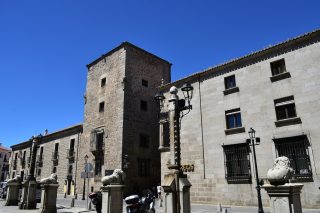
The Museo de Ávila is the province's main museum and one of the most rewarding “small stops” inside the walled old town, set on Plaza de Nalvillos in the former Casa de los Deanes (the 16th-century residence of the Cathedral's dean). It's the kind of place that feels quietly impressive rather than grandiose: two floors arranged around a central porticoed courtyard, where brick basket-handle arches sit on granite columns and the whole building reads like a calm, sunlit Italian-style gallery.
Beyond the architecture, the museum is one of the top attractions in Ávila for getting real context on what you're seeing outdoors-why the stone boars appear around the province, how the city evolved from Roman and medieval layers, and what everyday rural life looked like beyond the walls. It also fits neatly into a walking tour of Ávila because it breaks up churches and viewpoints with an indoor visit that still feels deeply local.
Table of Contents
- History and Significance of the Museo de Ávila
- Things to See and Do in the Museo de Ávila
- How to Get to the Museo de Ávila
- Practical Tips on Visiting the Museo de Ávila
- Where to Stay Close to the Museo de Ávila
- Is the Museo de Ávila Worth Visiting?
- For Different Travelers
- FAQs for Visiting Museo de Ávila
- Nearby Attractions to the Museo de Ávila
History and Significance of the Museo de Ávila
The museum’s setting is part of the story. The Casa de los Deanes was built in the 16th century as a Renaissance residence for the Dean of the Cathedral, with a quadrangular plan and a courtyard designed to distribute light and movement through the house. That courtyard-porticoed, orderly, and intentionally understated-creates the museum’s distinctive atmosphere: you’re not just looking at objects, you’re moving through a historic home that still makes architectural sense.
Stylistically, the façade is a fascinating blend: Herrerian-Plateresque in its disciplined structure and stonework, but with Gothic-Mudejar notes that add texture and local identity. You’ll also spot Cathedral-linked heraldry on both the front and in the courtyard, which grounds the building in Ávila’s ecclesiastical power network rather than treating it as an isolated “pretty palace.”
Declared a National Monument in 1962, the building now serves as the Provincial Museum of Ávila, framing collections that span archaeology, popular culture, and fine arts. It's a practical kind of significance: this is where the province's material history is gathered, explained, and connected to places you can still walk to today.
Things to See and Do in the Museo de Ávila
Start by giving the building its due. Step into the courtyard and look up: the brick basket-handle arches are a small detail, but they instantly separate this place from the heavier stone interiors you'll see elsewhere in Ávila. It's a calm space that slows you down in the best way, and it sets the tone for a visit that's about understanding, not rushing.
Inside the galleries, focus on the museum's three-part rhythm: archaeology, popular culture (ethnography), and fine arts. The archaeology section is the anchor for first-time visitors because it helps you connect the city's layers-Roman, medieval, and early modern-without needing a full academic deep dive. The ethnography displays are often the surprise highlight, translating rural Ávila into tangible objects and tools that make the province feel like more than a day-trip skyline.
If you have time, treat the museum as a two-site experience rather than a single building. The museum is closely linked to nearby spaces that display larger stone pieces, so you can pair the refined courtyard setting with a more “open storage” feel for hefty archaeological finds and inscriptions, which is a satisfying contrast in a short itinerary.
How to Get to the Museo de Ávila
The most practical airport gateway is Madrid-Barajas (MAD), with Salamanca (SLM) and Valladolid (VLL) as smaller regional options depending on your route. For the best deals and a seamless booking experience, check out these flights to Ávila on Booking.com.
Ávila has direct rail connections from Madrid, and arriving by train is often the simplest way to reach the historic centre without parking stress. Train schedules and bookings can be found on Omio.
Intercity buses also serve Ávila, and from the bus area it's an easy taxi hop or a walk into the walled city depending on luggage and weather.
If you are driving, plan to park outside the tightest historic lanes and walk the final minutes into the old town around Plaza de Nalvillos. If you are looking to rent a car in Spain I recommend having a look at Discover Cars, first, as they compare prices and review multiple car rental agencies for you.
Practical Tips on Visiting the Museo de Ávila
- Entrance fee: €1 (permanent exhibition); €0.60 (temporary exhibitions).
- Opening hours: (Summer) 01 July–30 September: Tuesday–Saturday: 10:00–14:00 & 17:00–20:00. Sunday & Public holidays: 10:00–14:00. (Winter) 01 October–30 June: Tuesday–Saturday: 10:00–14:00 & 16:00–19:00. Sunday & Public holidays: 10:00–14:00. Closed on Mondays.
- Official website: https://museoscastillayleon.jcyl.es/web/es/museoavila/museo-avila.html
- Best time to visit: Late morning works well for a relaxed pace, while mid-afternoon is ideal if you want a quieter interior break between outdoor wall walks.
- How long to spend: 60-90 minutes is a comfortable visit if you want both the building and the core collection highlights without rushing.
- Accessibility: Expect historic thresholds and stairs typical of a Renaissance house; if mobility is a concern, prioritize the most accessible galleries and keep the route flexible.
- Facilities: Think of it as a focused museum visit; plan cafés and longer breaks around the cathedral zone and main squares nearby.
Where to Stay Close to the Museo de Ávila
For a culture-heavy itinerary, base yourself inside the walled old town near the cathedral so you can walk everywhere; if your priority is logistics and faster arrivals, staying closer to the station side of town can simplify check-ins and onward travel.
If you want maximum walkability to both the cathedral area and museum stops, Hotel Palacio Valderrábanos puts you right in the historic core. For a more boutique, design-forward feel still inside the walls, Sofraga Palacio is an excellent base for an evening stroll-and-tapas rhythm. If you prefer a practical option by the walls with a classic location for coming and going on foot, Hotel Puerta de la Santa is a strong choice.
Is the Museo de Ávila Worth Visiting?
Yes-especially if you want Ávila to feel like more than a beautiful fortress skyline. The museum gives you quick, well-organized context for what you'll see across the city and province, and the Casa de los Deanes courtyard makes the visit feel atmospheric rather than purely informational.
It’s also a smart itinerary move: on days when the weather is cold or windy on the walls, this is one of the best indoor stops to keep your day balanced without losing the historic feel.
What Other Travellers Say...

Museum of Ávila, on Pl. Nalvillos 3, is a compact local museum housed in Casa de los Deanes that offers visitors ethnographic and archaeological displays across two floors; downstairs highlights include traditional costumes, kitchens, weaving and farming exhibits illustrating regional life, while upstairs features archaeological finds from Paleolithic times through later centuries, including a Roman mosaic and a notable collection of Vetton verracos (stone boar statues). Many visitors note free or very low-cost entry, friendly staff, and well-presented displays that make it an excellent place to begin exploring the city.


For Different Travelers
Families with Kids
This museum works best for families when you treat it as a highlight hunt rather than a full read-every-label visit. Choose a few “anchor” objects (big stone pieces, bold patterns, anything tactile-looking) and let the building itself do part of the entertaining through its courtyard and galleries.
A good strategy is to time it as a calm indoor reset between outdoor stops. Kids often do better when the museum is followed by an open plaza or a snack break, so the visit feels like part of a varied loop rather than a single long sit-still activity.
Couples & Romantic Getaways
For couples, the appeal is the atmosphere: Renaissance proportions, quiet rooms, and a courtyard that feels like a private pocket of Ávila away from the busiest lanes. It's a gentle, unhurried stop that adds depth to a day otherwise filled with walls and church interiors.
Pair it with a slow old-town route-museum first, then a café or tapas nearby-and you get a satisfying mix of culture and mood. It’s especially good if you prefer places that invite conversation rather than constant photo-chasing.
Budget Travelers
This is strong value because the ticket is inexpensive and the experience is compact but meaningful. If you are watching spend, it’s an ideal “one paid interior” to balance a day of free wall viewpoints, plazas, and exterior architecture.
It also helps you travel smarter: the museum’s context can make the rest of your sightseeing feel richer without needing to pay entry fees at every stop. Once you understand what you’re seeing, even a simple walk becomes more rewarding.
History Buffs
History-focused travelers will appreciate that the building and the collection reinforce each other. The Casa de los Deanes tells a story about ecclesiastical power and Renaissance domestic architecture, while the displays connect Ávila’s urban layers to the wider province’s older cultures and rural life.
To get the most from it, move in two passes: first, read the building (courtyard, façade details, heraldry), then read the objects with the city in mind. You'll leave with a clearer mental map of what in Ávila is Roman, medieval, early modern, and later.
FAQs for Visiting Museo de Ávila
Getting There
Tickets & Entry
Visiting Experience
Tours, Context & Itineraries
Photography
Accessibility & Facilities
Food & Breaks Nearby
Safety & Timing
Nearby Attractions to the Museo de Ávila
- Ávila Cathedral: A fortress-like Gothic cathedral that anchors the old town and pairs naturally with a museum visit for deeper context.
- Plaza del Mercado Chico: The city's main square inside the walls, ideal for a café break and a simple navigation hub.
- Ávila City Walls: The defining monument of the city, perfect for adding panoramic views after an indoor cultural stop.
- Basilica of San Vicente: A standout Romanesque church known for sculpture, atmosphere, and a strong medieval feel.
- Convento de Santa Teresa: A major heritage site tied to Ávila's most famous figure, easily combined on the same walking loop.
The Museo de Ávila appears in our Complete Guide to Visiting Ávila!

Moira & Andy
Hey! We're Moira & Andy. From hiking the Camino to trips around Europe in Bert our campervan — we've been traveling together since retirement in 2020!
This website uses affiliate links which may earn a commission at no additional cost to you!
Planning Your Visit
(Summer) 01 July-30 September: Tuesday-Saturday: 10:00-14:00 & 17:00-20:00. Sunday & Public holidays: 10:00-14:00.
(Winter) 01 October-30 June: Tuesday-Saturday: 10:00-14:00 & 16:00-19:00. Sunday & Public holidays: 10:00-14:00.
Closed on Mondays.
€1 (permanent exhibition); €0.60 (temporary exhibitions).
Nearby Attractions
- Palacio de los Serranos (0.1) km
Museum and Palace - Casa de la Misericordia (0.1) km
Historic Building - Casa Carnicerías (0.1) km
Historic Building and Tourist Office - Walls of Ávila (0.1) km
City Walls - San Vicente Garden (0.1) km
City Walls, Gardens and Park - Palacio del Rey Niño (0.2) km
Palace - Basílica de San Vicente (0.2) km
Church - Puerta de San Vicente (0.2) km
City Gate - Ávila Cathedral (0.2) km
Cathedral - Palacio de Valderrábanos (0.2) km
Palace