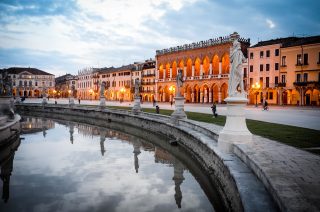
Cappella degli Scrovegni, Padova
Church in Padova
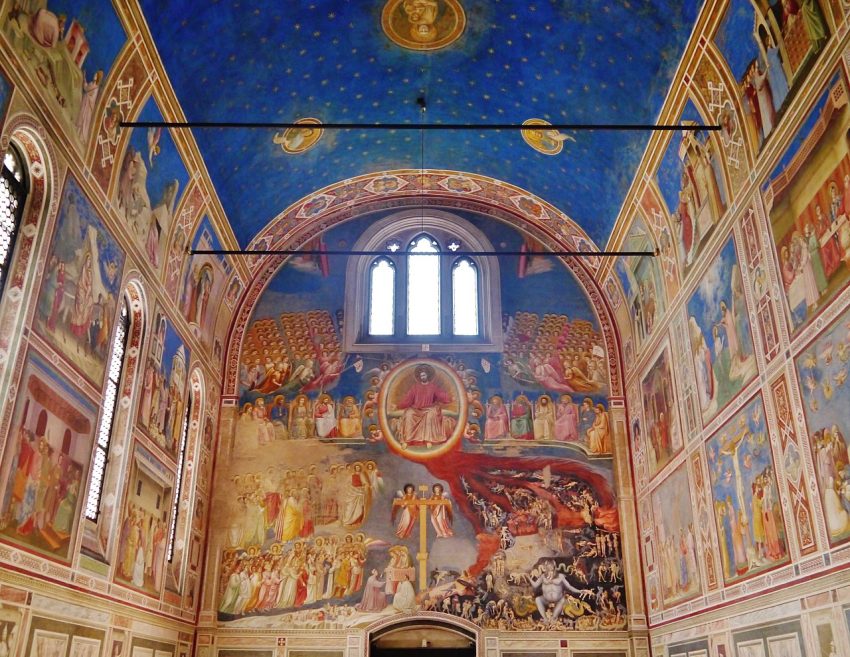
Stepping into the Scrovegni Chapel feels like walking straight into the pages of art history. Hidden just behind the busy streets and tram lines of central Padua, this compact church is one of the top attractions in Padua for anyone who loves Renaissance art, history, or quietly powerful spiritual spaces. Every inch of the interior is wrapped in Giotto's vivid frescoes, from the deep blue starry vault to the walls filled with scenes from the lives of Christ and the Virgin Mary.
Despite its global fame, the chapel itself is surprisingly intimate. Visitor numbers are strictly limited, visits are time-controlled, and you spend a few minutes in a climate-controlled antechamber before you even step inside, which adds to the sense that this is a precious and fragile masterpiece. Because it sits right next to the Eremitani Museums and close to Giardini dell'Arena, it is often visited on walking tours of Padua, forming the cultural heart of this part of the city.
Table of Contents
- History and Significance of the Scrovegni Chapel
- Things to See and Do in the Scrovegni Chapel
- How to Get to the Scrovegni Chapel
- Practical Tips on Visiting the Scrovegni Chapel
- Where to Stay close to the Scrovegni Chapel
- Is the Scrovegni Chapel Worth Visiting
- FAQs for Visiting Scrovegni Chapel
- Nearby Attractions to the Scrovegni Chapel
History and Significance of the Scrovegni Chapel
The Scrovegni Chapel, also known as the Arena Chapel, was built in the early 14th century by the wealthy Paduan banker Enrico Scrovegni on land beside the remains of a Roman arena. Enrico intended the chapel both as a private family oratory and as a funerary monument, and he commissioned Giotto di Bondone, already one of the most sought-after painters of his time, to decorate the interior. Giotto and his workshop covered the entire space with frescoes between about 1303 and 1305, transforming the small building into one of the most influential works of Western art.
The fresco cycle tells a complete story of salvation, beginning with scenes from the lives of Joachim and Anne and the early life of the Virgin, continuing with the life and Passion of Christ, and culminating in a dramatic Last Judgment over the entrance wall. Giotto’s handling of perspective, human emotion, and narrative clarity was revolutionary, moving away from the flat, stylised figures of earlier medieval painting towards something recognisably modern. His frescoes here influenced artists across Italy for generations, making the chapel a key turning point in the history of European painting.
In 2021, the Scrovegni Chapel was inscribed as part of the UNESCO World Heritage Site “Padua's 14th-century fresco cycles,” a group of eight buildings across the city that together showcase the flowering of fresco art in this period. Conservation has become a major focus: a long, carefully planned restoration project stabilised the frescoes and led to the installation of a special technological chamber where visitors acclimatise before their visit, helping to control humidity and dust. Thanks to these efforts, you can still see Giotto's colours and details with remarkable clarity more than 700 years after he painted them.
Things to See and Do in the Scrovegni Chapel
Once you step into the chapel, the deep ultramarine ceiling sprinkled with golden stars is the first thing that catches your eye, setting the tone for the entire space. Below, three main tiers of narrative scenes run along both side walls, with clear compositions and recognisable human expressions that make it easy to follow the biblical stories even without a guidebook. Look out for touches of everyday life in the backgrounds, from architecture to clothing, that anchor the scenes in a real, believable world.
The Last Judgment above the entrance is perhaps the most powerful single image in the chapel. Christ sits in glory at the centre, with the saved and the damned clearly separated, and Enrico Scrovegni himself kneeling in a small group offering the chapel model to the Virgin. On the lower walls, in monochrome grisaille, Giotto paints an extraordinary sequence of Virtues and Vices: Charity standing opposite Envy, Hope facing Despair, Justice opposite Injustice, each pair forming a kind of moral mirror for medieval viewers. Take your time here; this programme is dense with symbolism and repays slow, careful looking.
The experience is short but intense. Standard visits usually include a short introductory film in the climate chamber, which explains the history and conservation of the frescoes, followed by a strictly timed period inside the chapel itself. Audio guides or guided tours can be useful, but even without them the space speaks for itself. Because the Scrovegni Chapel is one of the best places to visit in Padua if you want to understand why the city is considered a cradle of Renaissance thought and art, many travellers pair their visit with nearby sights like the Eremitani Museum and the Palazzo della Ragione to build a bigger picture of medieval Padua.
How to Get to the Scrovegni Chapel
The Scrovegni Chapel is located just north of Padua's historic centre, within the complex of the Musei Civici degli Eremitani at Piazza Eremitani 8, an easy walk from many central hotels and sights.
Most international visitors arrive via Venice or Treviso, the closest major airports to Padua, with frequent shuttle buses and trains connecting Venice Marco Polo or Treviso Airport to Padova railway station. For the best deals and a seamless booking experience, check out these flights to Padova on Booking.com. From Venice, regional and high-speed trains run regularly to Padova, taking around 25-30 minutes, while trains from Verona, Bologna, and Milan also connect directly, making it straightforward to include the chapel as one of the must-see places in Padua during a wider Italy itinerary. Use Omnio to easily compare schedules, book train tickets, and find the best prices all in one place for a hassle-free journey across Italy.
From Padova railway station, you can walk to the Scrovegni Chapel in about 10-15 minutes, or take the city tram and get off at the Eremitani stop, which is just a short stroll from the museum complex. Local buses also serve the area, but the walk is flat and intuitive, following Viale Codalunga and then Via Eremitani.
If you are driving, Padua lies on the A4 (Turin-Venice) and A13 (Bologna-Padua) motorways, with well-signposted exits into the city; several paid car parks and garages are located within walking distance of the chapel, especially around Piazza Eremitani and the train station. If you are looking to rent a car in Italy I recommend having a look at Discover Cars, first, as they compare prices and review multiple car rental agencies for you.
Practical Tips on Visiting the Scrovegni Chapel
- Suggested tips: Book your ticket well in advance, arrive early for your time slot, and use the acclimatisation period in the technological chamber to watch the introductory film and adjust your eyes before entering the chapel.
- Best time to visit: Early morning or late afternoon slots tend to be quieter; visiting outside peak summer months also gives you a calmer experience in Padua overall.
- Entrance fee: Adults €8.00
- Opening hours: Daily: 9:00-19:00, Closed Mondays
- Official website: https://www.cappelladegliscrovegni.it/index.php/en/
- How long to spend: Allow at least one hour for the whole experience, including the pre-visit chamber and time in the chapel, plus extra if you plan to explore the Eremitani Museums.
- Accessibility: The museum complex is largely accessible, but access procedures and support for visitors with reduced mobility should be checked in advance when booking timed tickets.
- Facilities: You will find ticket offices, restrooms, and museum facilities in the civic museum complex; cafés and restaurants are a short walk away in the historic centre.
- Photography tip: Photography is generally restricted inside the chapel to protect the frescoes, so focus on absorbing the details in the moment and take your photos outside in the gardens afterward.
- Guided tours: Consider a guided tour or audio guide if you want deeper insight into the theological programme and symbolism behind Giotto’s scenes, especially the Virtues and Vices.
- Nearby food options: Head towards Piazza Garibaldi, Piazza dei Signori, or around Caffè Pedrocchi for plenty of cafés and trattorias within 10-15 minutes' walk of the chapel.
Where to Stay close to the Scrovegni Chapel
If you want to base yourself within easy walking distance of the Scrovegni Chapel and the civic museums, consider staying at Hotel Europa Padova, a long-established four-star hotel located just opposite the museum complex and convenient for both the train station and the historic centre. For a boutique option with a spa, Le Camp Suite & Spa offers stylish rooms, wellness facilities, and a prime position close to Caffè Pedrocchi, Palazzo Bo, and many of Padua's main sights. If you prefer a quieter residential feel but still want to be able to walk to the chapel and nearby attractions, look for small guesthouses or apartments in the streets around Giardini dell'Arena and along the canals, which make a relaxing base after a day exploring the city.
Is the Scrovegni Chapel Worth Visiting
Yes, the Scrovegni Chapel is absolutely worth visiting, especially if you are interested in art, history, or architecture. This small church punches far above its size, offering a concentrated, unforgettable encounter with Giotto's genius and with the early roots of Renaissance painting. The carefully controlled visitor numbers and sophisticated climate system can make the logistics feel a little formal, but they also mean you see the frescoes in the best possible condition. Combined with nearby highlights such as the Eremitani Museums, the Palazzo della Ragione, and Padua's historic cafés and piazzas, a visit here becomes a cultural experience that anchors any trip to the city.
What Other Travellers Say...

Scrovegni Chapel at Piazza Eremitani 8 in Padova houses a remarkable cycle of early 14th-century frescoes by Giotto, presented in an impeccably preserved space with base lighting that highlights the paintings; visitors view a short introductory film before entering, admission is strictly timed (15 minutes per visit), and many recommend booking consecutive slots or reserving in advance to fully appreciate the numerous, detailed panels and the vivid human emotions they portray.


FAQs for Visiting Scrovegni Chapel
Nearby Attractions to the Scrovegni Chapel
- Eremitani Museum and Church - Civic museum complex and Gothic church next door, with archaeological collections and important 15th-century fresco fragments.
- Giardini dell'Arena - Peaceful central park wrapped around the Scrovegni Chapel and the remains of the Roman arena, ideal for a stroll before or after your visit.
- Palazzo della Ragione - Monumental medieval market hall with a vast frescoed upper hall and a bustling food market at street level between Piazza delle Erbe and Piazza dei Frutti.
- Caffè Pedrocchi - Historic café known as “the café without doors,” long a meeting place for writers, students, and revolutionaries in the heart of Padua.
- Palazzo Bo - Historic seat of the University of Padua, home to the world's oldest permanent anatomical theatre and rich academic heritage linked to Galileo and other great scholars.
The Cappella degli Scrovegni appears in our Complete Guide to Visiting Padova!

Moira & Andy
Hey! We're Moira & Andy. From hiking the Camino to trips around Europe in Bert our campervan — we've been traveling together since retirement in 2020!
This website uses affiliate links which may earn a commission at no additional cost to you!
Planning Your Visit
Daily: 9:00-19:00, Closed Mondays
Adults €8.00
Nearby Attractions
- Roman Arena of Padua (0.1) km
Amphitheatre - Giardini dell’Arena (0.1) km
Gardens - Musei Civici di Padova (0.1) km
Historic Building and Museum - Palazzo Zuckermann (0.1) km
Historic Building and Museum - Chiesa degli Eremitani (0.1) km
Church - Ponte Molino (0.4) km
Bridge and Historic Building - Cafe Pedrocchi (0.5) km
Historic Building - Palazzo Bo (0.6) km
Historic Building and Palace - Palazzo della Ragione (0.6) km
Historic Building and Market - Piazza dei Signori (0.7) km
Square