Botanical Garden, Lucca
Gardens in Lucca
Tucked against Lucca's historic walls, the Botanical Garden of Lucca feels like a secret world of greenery in the very heart of the city. Founded in 1820 by Maria Luisa of Bourbon, then Duchess of Lucca, it spreads over more than two hectares, sheltering centuries-old trees, themed plant collections, and a tranquil pond threaded with local folklore. You can wander shaded paths under towering magnolias, ginkgos, and black pines, pause beside medicinal beds and hydrophyte pools, or simply sit on a bench and listen to birdsong instead of city traffic.
At the centre of it all stands one of the garden's celebrities: the majestic Lebanon cedar planted in 1822 by Paolo Volpi, rising around 22 metres high and spreading 6 metres across. Its grand canopy has become an emblem of the garden, joined by other giants that climb over 30 metres into the Tuscan sky. Add in the historic herbariums preserved in the Cesare Bicchi Botanical Garden, carefully curated collections of local edible plants and Ericaceae, and features like the tactile path for visually impaired visitors, and it's easy to see why this is one of the top attractions in Lucca for travellers who love nature, history, and quiet corners. It's also a great place to visit on a walking tour of Lucca when you're ready for a peaceful pause from churches and piazzas.
Table of Contents
- History and Significance of Botanical Garden of Lucca
- Things to See and Do in Botanical Garden of Lucca
- How to Get to Botanical Garden of Lucca
- “Practical Tips on Visiting Botanical Garden of Lucca,”
- Where to Stay close to Botanical Garden of Lucca
- Add a Is Botanical Garden of Lucca Worth Visiting?
- FAQs for Visiting Botanical Garden of Lucca
- Nearby Attractions to Botanical Garden of Lucca
History and Significance of Botanical Garden of Lucca
The Botanical Garden of Lucca was created in 1820 at the initiative of Maria Luisa of Bourbon, who ruled the Duchy of Lucca after the Napoleonic period. Her vision was not only ornamental but also educational and scientific: a living repository of plants where botany could be studied and taught. From the beginning, the garden was laid out systematically, with areas dedicated to different plant families and uses, reflecting the scientific curiosity of the 19th century and Lucca's desire to align itself with other enlightened European cities.
In 1822, the planting of the Lebanon cedar by Paolo Volpi set the tone for the garden’s role as a place of long-lived specimens and botanical “personalities.” Over time, more species arrived from around the world, joining native trees and shrubs to form a diverse collection. The garden evolved into an open-air classroom for the Botanical School and a reference point for scholars, doctors, and agronomists interested in medicinal plants, local edible species, and the wider flora of the Lucchesia.
The scientific heritage of the garden is preserved and expanded through the Cesare Bicchi Botanical Garden, an annex that safeguards historical herbariums (including the Puccinelli and Bicchi collections) and teaching materials passed down through generations. These carefully pressed plants and notes tell the story of how botanists have observed, classified, and used vegetation across centuries. At the same time, recent additions like the guided path for visually impaired visitors-with handrails and braille signs-underline the garden's commitment to accessibility and inclusive education, showing that this “living museum” continues to evolve with contemporary values.
Things to See and Do in Botanical Garden of Lucca
Start your visit with the great Lebanon cedar, one of the garden’s most photographed residents. Its broad, layered branches and impressive trunk immediately convey the age and dignity of the collection. Nearby, look for other towering trees such as the stately magnolia, the fan-leaved ginkgo, and soaring black pines, each adding a different texture and colour to the skyline. These giants give the garden a sense of vertical drama that contrasts beautifully with the low beds of herbs and shrubs.
As you wander, explore the themed collections that reveal the garden’s scientific soul. The medicinal plant section showcases species long used in traditional remedies, while the Ericaceae and hydrophyte areas highlight families adapted to specific soils and aquatic environments. Another fascinating corner focuses on spontaneous vegetables traditionally eaten in the Lucchesia area, connecting botanical diversity with local culinary culture. When in season, the camellia collection adds a splash of elegance and colour, reflecting the region’s long-standing love for these ornamental shrubs.
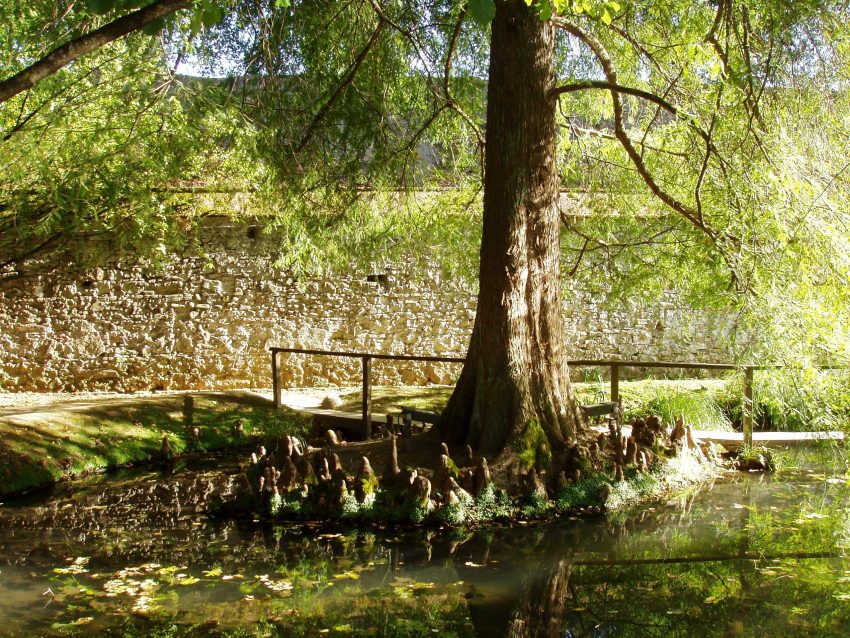
Don't miss the pond, one of the most atmospheric spots in the garden. At its centre rises a bald cypress, a species native to the swamps of Florida, its roots reaching into the water while its trunk and branches form a sculptural silhouette. The pond is also the stage for one of Lucca's most enduring legends: the story of Lucida Mansi, the noblewoman who allegedly traded her soul for eternal youth and was finally dragged through the city on a fiery chariot before vanishing into the water here. Knowing the tale adds a slightly eerie, fairy-tale edge to an otherwise peaceful scene, and turns a simple stroll by the pond into a moment where natural beauty and local myth intertwine, making this spot one of the best places to see in Botanical Garden of Lucca's leafy grounds.
How to Get to Botanical Garden of Lucca
The Botanical Garden of Lucca is located inside the historic city walls, close to the southeastern section of the circuit and within an easy walk of the main sights. Once you're in the old town, you can simply follow local signs for the “Orto Botanico” or head toward the walls near Porta Elisa; the entrance is well marked and close to the ramparts.
If you are arriving by air, Pisa International Airport and Florence Airport are the most convenient gateways to Lucca. For the best deals and a seamless booking experience, check out these flights to Lucca on Booking.com. From either airport you can continue by train, bus, or hire car to reach the city, then enter the walled centre on foot to find the garden.
By train, Lucca has regular regional connections from Pisa, Florence, and other Tuscan towns.Use Omnio to easily compare schedules, book train tickets, and find the best prices all in one place for a hassle-free journey across Italy. From the station, walk through Porta San Pietro and follow the inner ring roads or pedestrian streets along the walls toward the southeast sector; the garden is roughly a 15-20 minute stroll, passing cafés and shops along the way.
If you are driving, Lucca is connected to Pisa, Florence, and the rest of Tuscany via the A11 motorway and local roads.If you are looking to rent a car in Italy I recommend having a look at Discover Cars, first, as they compare prices and review multiple car rental agencies for you. Park in one of the car parks outside or just inside the walls-especially those near Porta Elisa or Porta San Pietro-and then walk in; from the closest parking areas, it’s only a few minutes to the garden entrance.
“Practical Tips on Visiting Botanical Garden of Lucca,”
- Suggested tips: Bring a small field guide or plant app if you enjoy identifying species, and take your time in the themed beds to appreciate how the garden is organised.
- Best time to visit: Spring and early summer are ideal for blossom and fresh foliage, while autumn colours and quieter paths offer a different kind of charm later in the year.
- Entrance fee: Adults: €6.00
- Opening hours: Winter: Saturday to Sunday 11:00 – 16:00 Summer: Monday to Friday 10:30 - 19:30
- Official website: https://ortobotanicodilucca.it/
- How long to spend: Allow 1-2 hours to stroll the grounds, linger by the pond, and explore the collections without rushing.
- Accessibility: Paths are generally level and well maintained, and the specially designed route with handrail and braille signage makes parts of the garden particularly welcoming for visually impaired visitors.
- Facilities: Expect basic visitor facilities such as rest areas, benches, and possibly a small information point; additional cafés, shops, and restrooms are easily found just outside in the surrounding streets.
- Photography tip: Early morning or late afternoon light works best for capturing the shapes of the big trees and reflections in the pond; focus on textures like bark, leaves, and water for more intimate shots.
- Guided tours: At certain times, guided visits or educational activities may be available through the Botanical School or garden staff, adding depth to what you see in the collections.
- Nearby food options: Step out into the nearby streets or toward Piazza Napoleone and Via Fillungo for trattorie, wine bars, and cafés where you can enjoy a drink or meal after your visit.
Where to Stay close to Botanical Garden of Lucca
Staying near the Botanical Garden of Lucca means you're close to both the peaceful greenery of the walls and the lively streets of the historic centre. For a comfortable base within walking distance of the garden and the ramparts, Hotel Ilaria offers modern rooms and easy access to the eastern stretch of the walls. If you prefer to be slightly closer to the cathedral while still only a pleasant stroll from the garden, Albergo San Martino makes a cosy, centrally located choice. Travellers who enjoy historic settings might opt for Palazzo Alexander, a characterful hotel in a restored palace that keeps you within easy reach of the garden, Piazza dell'Anfiteatro, and the rest of Lucca's walled centre.
Add a Is Botanical Garden of Lucca Worth Visiting?
Yes, the Botanical Garden of Lucca is absolutely worth visiting, especially if you appreciate quieter, more contemplative corners of a historic city. It offers a different lens on Lucca-less about towers and churches, more about long-lived trees, scientific curiosity, and local legends. The combination of carefully curated collections, centuries-old specimens, accessible paths, and the haunting tale of Lucida Mansi at the pond creates an experience that feels both educational and atmospheric. For a couple of hours of shade, fresh air, and gentle exploration within the city walls, it's hard to beat.
What Other Travellers Say...

Orto Botanico Comunale di Lucca is a compact, well-kept botanical garden tucked inside the city walls featuring an arboretum with impressive sequoias, exotic and tropical plants housed in greenhouses, a pond and bog, benches and tranquil paths that visitors find peaceful and relaxing; note the entrance is on the southern side by the city wall, some gates and greenhouses may be closed at times and signage is reported to be only in Italian.


FAQs for Visiting Botanical Garden of Lucca
Nearby Attractions to Botanical Garden of Lucca
- Lucca's Historical Walls - Tree-lined Renaissance fortifications encircling the city, perfect for a walk or bike ride before or after your garden visit.
- Cathedral of San Martino - Lucca's duomo, home to the Volto Santo and the famous tomb of Ilaria del Carretto.
- Piazza dell'Anfiteatro - Unique oval piazza built on the footprint of a Roman amphitheatre, surrounded by cafés and shops.
- Basilica di San Frediano - Romanesque church known for its striking golden mosaic façade and tranquil interior.
- Guinigi Tower - Medieval brick tower crowned with a rooftop garden, offering panoramic views over Lucca and its green ring of walls.
The Botanical Garden appears in our Complete Guide to Visiting Lucca!

Moira & Andy
Hey! We're Moira & Andy. From hiking the Camino to trips around Europe in Bert our campervan — we've been traveling together since retirement in 2020!
This website uses affiliate links which may earn a commission at no additional cost to you!
Planning Your Visit
Winter: Saturday to Sunday 11:00 - 16:00
Summer: Monday to Friday 10:30 – 19:30
Adults: €6.00
Nearby Attractions
- Villa Bottini (0.2) km
Historic Building - Church of St Maria della Rosa (0.3) km
Church - Cathedral of San Martino (0.4) km
Cathedral - Guinigi Tower (0.4) km
Tower - Villa Guinigi National Museum (0.4) km
Museum - Church and Baptistery of Santi Giovanni e Reparata (0.5) km
Church and Museum - Torre delle Ore (0.5) km
Tower - Piazza dell Anfiteatro (0.6) km
Amphitheatre - Teatro del Giglio (0.6) km
Theatre - Via Fillungo (0.6) km
Street