Baptistère Saint-Jean, Poitiers
Baptistery in Poitiers
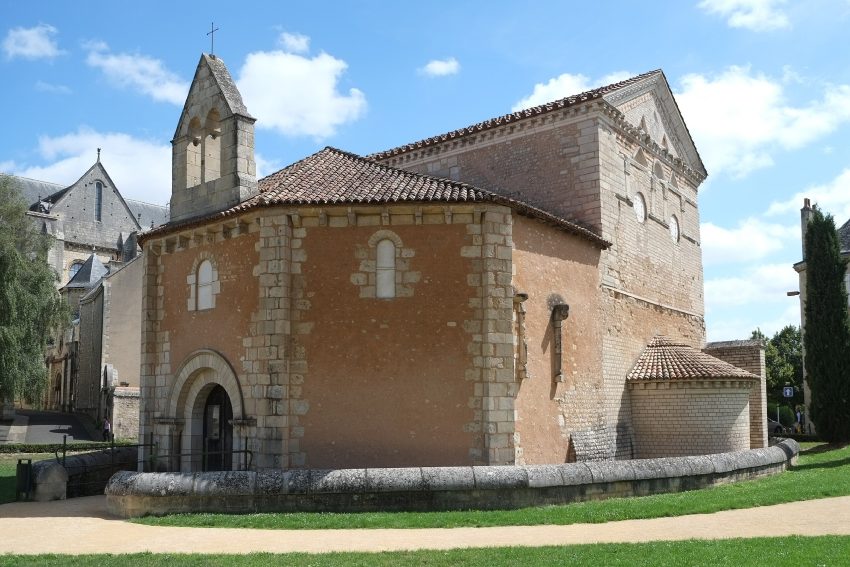
Tucked just a short stroll from the bustle of central Poitiers, the Baptistère Saint-Jean feels like a quiet time capsule. From the outside, its modest stone walls do not immediately reveal how old it is, but step closer and you are standing in front of a building whose origins reach back to the 4th century. First a late Roman civic structure and later transformed into a baptistery, it carries the marks of many eras: Merovingian additions, medieval restorations, damage and repair after invasions, and finally its near loss and rescue in the 19th century. Today it is one of the top attractions in Poitiers for anyone curious about how Christianity took root in this part of France.
Inside, the atmosphere shifts from historical curiosity to something more intimate. The space is compact, with a polygonal narthex, apse and short transept arms that reflect its Merovingian architecture. Faded but still evocative frescoes from Romanesque and Gothic periods decorate the walls, showing Christ's ascension, peacocks symbolising eternal life and even an image of Emperor Constantine. The rediscovered baptismal pool, used when early Christians were immersed rather than sprinkled with water, gives the building a strong sense of purpose: you can imagine small groups gathering here in late antiquity, stepping down into the water to begin a new life of faith. It is a highlight of any walking tour of Poitiers that focuses on the city's Christian heritage.
Table of Contents
- History and Significance of the Baptistère Saint-Jean
- Things to See and Do in the Baptistère Saint-Jean
- How to Get to the Baptistère Saint-Jean
- Practical Tips on Visiting the Baptistère Saint-Jean
- Where to Stay close to the Baptistère Saint-Jean
- Is the Baptistère Saint-Jean Worth Visiting
- FAQs for Visiting Baptistère Saint-Jean
- Nearby Attractions to the Baptistère Saint-Jean
History and Significance of the Baptistère Saint-Jean
The story of the Baptistère Saint-Jean begins in the late Roman era, when a civil building was constructed over earlier ruins. As Christianity spread through Gaul, this structure was adapted into a baptistery, making it one of the earliest Christian buildings in what is now France. By the 6th century, a baptismal pool had been installed for full immersion rites, consistent with early Christian practice across the Mediterranean world. This pool survived under later floors until its rediscovery during 20th century restoration, confirming the building's ancient liturgical function.
In the early Middle Ages, the baptistery was reshaped in the Merovingian style. A polygonal narthex, apse and transept arms were added, giving the building the distinctive outline it has today. The site did not escape the turmoil of the era: it suffered damage during the Visigoth occupation in the 5th century, only to be restored after Clovis I defeated Alaric II at the Battle of Vouillé in 507. That restoration under early Frankish rule helped cement Poitiers’ status as a Christian centre and ensured the baptistery remained in use for centuries.
The interior decoration tells its own layered story. Romanesque and Gothic frescoes depict themes such as Christ’s ascension and symbolic peacocks, often associated with resurrection and eternal life, alongside a representation of Emperor Constantine, the first Roman emperor to embrace Christianity. These images underline the baptistery’s role as both a liturgical space and a visual textbook of faith in an age when few could read. Later history was less kind: during the French Revolution, the building was abandoned and used as a warehouse, falling into serious disrepair. It narrowly escaped demolition in 1834, and 20th century restorations not only saved it but also brought to light the original baptismal tank and a wealth of Merovingian sarcophagi, now displayed as part of a small museum inside.
Things to See and Do in the Baptistère Saint-Jean
Begin your visit by walking around the exterior to appreciate the unusual, compact shape of the baptistery. The mix of masonry and the slightly irregular footprint speak to centuries of additions and repairs. From outside, try to picture the Roman and late antique buildings that once surrounded it; this was not always a quiet corner but part of a lived in urban landscape.
Inside, the first thing to look for is the baptismal pool. Even if partially reconstructed, it gives an immediate sense of how rituals were performed here in the early centuries of Christianity, with catechumens descending into the water rather than standing at a small font. Standing by the pool, you can imagine the building filled with soft lamplight and the sounds of chanting, reinforcing its role as a place of transition and belonging.
Next, take time to study the frescoes on the walls and vaults. Some are fragmentary, but you can still make out scenes of Christ, angels, symbolic animals and ornamental patterns that layer Romanesque and Gothic styles. These paintings are not just decorative; they illustrate key beliefs and stories in a way that would have been immediately legible to medieval worshippers. Finally, explore the small museum display of Merovingian sarcophagi inside the building. Their carved lids and shapes offer an intimate glimpse into early Christian burial practices in the region and remind you that this was a sacred place for both the beginning of spiritual life and its earthly end.
How to Get to the Baptistère Saint-Jean
If you are flying into the region, the nearest airport is Poitiers-Biard Airport; from there, you can take a taxi or local bus into the city centre and then walk to the historic quarter where the baptistery is located close to the cathedral. For the best deals and a seamless booking experience, check out these flights to Poitiers on Booking.com.
Poitiers is well connected by train, with regular services from cities such as Paris and Bordeaux; from the main railway station it is around a 15-20 minute walk or a short bus ride up into the old town, from where clear local signage or a simple city map will lead you to the Baptistère Saint-Jean near the cathedral complex. You can use SNCF Connect to check schedules, compare routes, and purchase tickets for National (SNCF ) and regional trains (TER). For a more streamlined experience, we recommend using Omio, which allows you to easily compare prices, schedules, and book tickets for both National and Regional travel across all of Europe, all in one place.
For those travelling by car, follow signs into central Poitiers and park in one of the public car parks serving the historic centre, then continue on foot through the old streets to the baptistery beside the cathedral precinct. If you are looking to rent a car in France I recommend having a look at Discover Cars, first, as they compare prices and review multiple car rental agencies for you.
Practical Tips on Visiting the Baptistère Saint-Jean
- Suggested tips: Combine your visit here with the nearby cathedral and Palace of the Counts of Poitou to build a coherent picture of Poitiers' religious and political past in a single circuit.
- Best time to visit: Late morning or mid afternoon usually offers a good balance of light inside and manageable visitor numbers, especially outside peak holiday periods.
- Entrance fee: Adults: €3.00
- Opening hours: Winter: 14:00 to 17:00l Summer 10:30 - 12:30 & 14:00 to 18:00
- How long to spend: Around 30-45 minutes is usually enough to see the pool, study the frescoes and look over the sarcophagi at a relaxed pace.
- Accessibility: Access can involve steps and uneven floors inside this very old building, so visitors with reduced mobility should enquire in advance and take extra care when moving around.
- Facilities: There are no major facilities inside beyond the museum displays; rely on cafés, shops and public services in the surrounding streets for toilets, food and drinks.
- Photography tip: Use a higher ISO or a steady hand for interior photos, as light levels are low and flash may be restricted; focus on details such as fresco fragments, sarcophagi carvings and the baptismal pool.
- Guided tours: If a guided tour is available, it is worth joining to hear more about the building phases, the fresco iconography and how the baptistery fits into the broader story of early Christian Gaul.
- Nearby food options: The nearby streets of the old town and squares around the cathedral offer plenty of cafés and restaurants where you can sit outside and reflect on your visit.
Where to Stay close to the Baptistère Saint-Jean
Staying in Poitiers' historic centre makes it very easy to visit the Baptistère Saint-Jean along with the cathedral and palace. A comfortable and central base is Hôtel de l'Europe, within walking distance of the main monuments and the old town’s restaurant streets. If you would like to be a little closer to the station while still being able to stroll up to the baptistery and cathedral, Best Western Poitiers Centre Le Grand Hôtel is a practical choice with straightforward access to both transport and sights. For a smaller and simple option in the central area, Hotel Central lets you walk to the Baptistère Saint-Jean in under 20 minutes while keeping you well placed for exploring the rest of the city.
Is the Baptistère Saint-Jean Worth Visiting
The Baptistère Saint-Jean is absolutely worth visiting if you have even a passing interest in early Christian history, archaeology or old religious architecture. Few places in France let you stand inside a building whose liturgical story stretches back to the 4th and 6th centuries, complete with an original baptismal pool and layers of fresco painting that track the evolution of Christian art. Because it is relatively small, the experience feels personal and manageable, yet it adds enormous depth to your understanding of Poitiers when combined with the nearby cathedral and palace. For many travellers, it becomes one of the best places to visit in Poitiers precisely because it is both modest in scale and huge in historical significance.
What Other Travellers Say...
Reviews Summary
Baptistère Saint-Jean in Grand Poitiers is a compact Merovingian-era church often described as one of the oldest surviving Christian buildings in the region; visitors note its rarity and architectural interest, say it can be seen in about 15 minutes, and describe friendly staff, though some have reported awkward interactions at the entrance when paying for admission.
FAQs for Visiting Baptistère Saint-Jean
Nearby Attractions to the Baptistère Saint-Jean
- Poitiers Cathedral (Cathédrale Saint-Pierre): The city's main Gothic cathedral, just a short walk away, offering grand architecture and impressive stained glass.
- Palace of the Counts of Poitou: A former ducal residence with the vast Salle des Pas Perdus, illustrating the political power of medieval Poitiers.
- Church of Notre-Dame-la-Grande: A superb Romanesque church with a richly sculpted façade and peaceful interior on nearby Place Charles-de-Gaulle.
- Historic streets of the old town: Wander the lanes linking the baptistery, cathedral and squares to enjoy medieval houses and later townhouses.
- Place Charles-de-Gaulle: A lively square with cafés and shops, ideal for a drink or meal before or after your visit to the baptistery.
The Baptistère Saint-Jean appears in our Complete Guide to Visiting Poitiers!

Moira & Andy
Hey! We're Moira & Andy. From hiking the Camino to trips around Europe in Bert our campervan — we've been traveling together since retirement in 2020!
This website uses affiliate links which may earn a commission at no additional cost to you!
Planning Your Visit
Winter: 14:00 to 17:00l Summer 10:30 – 12:30 & 14:00 to 18:00
Adults: €3.00
Nearby Attractions
- Musée Sainte-Croix (0.0) km
Museum - Cathédrale Saint-Pierre de Poitiers (0.1) km
Cathedral - Church of Notre-Dame-la-Grande (0.6) km
Church - Palace of the Counts of Poitou (0.6) km
Palace - Place du Maréchal Leclerc (0.7) km
Square - Amphithéâtre de Poitiers (0.7) km
Amphitheatre and Roman Site - Place de la Liberté (0.8) km
Square - Poitiers Prefecture (1.0) km
Historic Building - City Walls of Poitiers (1.3) km
City Walls - Parc de Blossac (1.3) km
Park