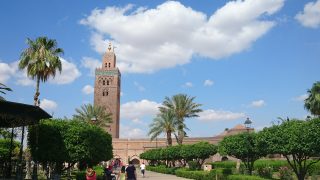
Agafay Desert, Marrakesh
Desert near Marrakesh

The Agafay Desert is Marrakech's wild backyard: a broad sweep of rocky hills and stony “dunes” spreading over hundreds of hectares on the first slopes of the High Atlas. Just thirty kilometres from the city, it offers an instant change of scenery from medina alleys to an open, elemental landscape of white and ochre tones. This is not the Sahara with towering sand mountains, but a reg desert - a hard, stone-covered terrain shaped by wind and water - where the light shifts dramatically throughout the day and sunsets can be spectacular.
Cutting through this lunar landscape is a green surprise: a seven-hectare oasis, nicknamed the “enchanted oasis”, where eucalyptus, olive trees, and vines grow thanks to a nearby wadi. Around it, desert camps, quad-biking bases, and viewpoints make Agafay one of the things to do in Marrakech for travellers who want adventure without a long transfer. You can ride a camel, share a Berber dinner under the stars, or simply sit on a terrace and watch the colours of the hills change as the sun slips behind the Atlas peaks. The area is often visited on tours from Marrakech that include a half-day or sunset excursion into the desert fringe.
Table of Contents
- History and Significance of the Agafay Desert
- Things to See and Do in the Agafay Desert
- How to Get to the Agafay Desert
- Practical Tips on Visiting the Agafay Desert
- Where to Stay close to the Agafay Desert
- Is the Agafay Desert Worth Visiting?
- FAQs for Visiting Agafay Desert
- Nearby Attractions to the Agafay Desert
History and Significance of the Agafay Desert
Agafay’s appeal lies less in ancient monuments and more in its geography and proximity. This rocky plateau marks the transition between the Haouz plain around Marrakech and the rising bulk of the High Atlas. For centuries, local communities have lived on its fringes, using seasonal watercourses and small oases to grow olives, vines, and cereals in an otherwise harsh environment. The “desert” you see today reflects both natural erosion of the stony surface and human adaptation to a landscape where water is precious and seasonal.
Unlike the far-off Sahara, Agafay is a compact desert expanse that feels manageable and accessible, making it ideal for short trips from Marrakech. As the city’s tourism industry has grown, this has turned into a clear advantage: visitors can now leave their riad after lunch and be watching the sunset over rocky hills and the faint silhouette of the Atlas within an hour. New camps and activity providers have sprung up to meet demand, ranging from simple Berber-style tents to high-end glamping outfits, all trading on the combination of desert solitude and city convenience.
At the same time, Agafay stands as a reminder of how fragile semi-arid environments can be. The “enchanted oasis” at its heart depends on a small wadi, and the vegetation that softens parts of the landscape is easily threatened by overuse of water and unregulated development. Choosing low-impact activities, supporting camps that respect local communities, and being mindful of waste are small but meaningful ways travellers can help keep this landscape special.
Things to See and Do in the Agafay Desert
Most visits to Agafay begin with the journey out of Marrakech itself. As you leave the city behind, low-rise neighbourhoods give way to open countryside, scattered villages, and glimpses of the High Atlas ahead. Soon the terrain becomes more rugged: low hills, dry gullies, and waves of stony ground that look almost like frozen sand dunes. Many camps and activity bases sit on these slopes, giving broad views of the desert-like scenery and, on clear days, the snow-capped peaks in the distance.
Once in Agafay, popular activities include quad biking and buggy rides across designated tracks, camel treks that trace slower routes across the hills, and guided walks that focus on local geology and plant life. The oasis area, planted with eucalyptus, olives, and vines, offers a softer contrast and is a pleasant place to pause for tea in the shade. Multicoloured stairs and viewpoints created by some camps and cafés add a slightly surreal, Instagram-friendly touch to the otherwise muted tones of rock and scrub.
Many visitors choose to time their trip for late afternoon so they can watch the sunset and stay for dinner. As the sun drops, the stony hills shift from pale beige to deep gold and finally purple, while the temperature cools and stars begin to appear. Evening in Agafay often centres around shared meals of local food - tagines, grilled meats, flatbreads, and salads - sometimes accompanied by live music around a fire. If you stay overnight in one of the desert camps, you gain the bonus of waking to dawn light over empty hills, a very different rhythm to the medina’s early-morning bustle.
How to Get to the Agafay Desert
Reaching Agafay is straightforward, especially from Marrakech. Most international travellers start their journey at Marrakech Menara Airport, which lies just outside the city and is well connected to major European and Moroccan destinations. For the best deals and a seamless booking experience, check out these flights to Marrakesh on Booking.com. From the airport or from central Marrakech, many hotels and riads can arrange private transfers or excursions to the desert, often combining transport, activities, and meals.
If you are travelling within Morocco, you can arrive in Marrakech by train from cities like Casablanca, Rabat, or Tangier, and then use local transport to reach Agafay.Train schedules and bookings can be found on Omio. From the main railway station in Gueliz, taxis and organised tours frequently head towards the desert camps. Group excursions usually include hotel pick-up and drop-off in the city, making logistics simple if you don’t want to haggle over fares.
For those driving themselves, Agafay is accessed via the provincial road P2014 towards the small town of Tameslohte, with signposted turn-offs leading to various camps and viewpoints. The distance from Marrakech is roughly thirty kilometres, and the drive typically takes 45-60 minutes depending on traffic and exact destination. Road conditions are generally good, but some final stretches into camps may be on unpaved tracks, so take your time and avoid driving off-road in unfamiliar areas.
Practical Tips on Visiting the Agafay Desert
- Suggested tips: Bring layers - it can be hot in the afternoon sun but cool quickly after sunset - and wear closed shoes to handle stones and dust on quad rides or walks.
- Best time to visit: Late afternoon into evening is ideal for softer light and comfortable temperatures, especially in summer; winter can be crisp but beautiful with snow on the Atlas peaks.
- Entrance fee: There is no fee to enter the desert itself; individual camps and activities (quad biking, dinners, camel rides) charge their own prices.
- Opening hours: The desert is always “open”, but camps and activity operators generally run from late morning through to the evening.
- How long to spend: A half day is enough for a quick taste of the landscape, but many travellers prefer a full afternoon and evening with dinner, or an overnight stay in a desert camp.
- Accessibility: Terrain is uneven and stony; vehicle access is possible to most camps, but walking on slopes and tracks may be challenging for those with mobility issues.
- Facilities: Facilities vary by camp but often include toilets, restaurants, shaded seating, and sometimes pools; away from camps, there is no infrastructure, so plan accordingly.
- Photography tip: Aim for golden hour when the low sun brings out the white and ochre tones of the hills; including the distant Atlas ridgeline in your frame adds drama.
- Guided tours: Joining an organised excursion is an easy way to combine transport, activities, and meals, while also benefitting from local knowledge about the landscape and Berber culture.
- Nearby food options: Most people eat within their chosen camp or café, where local dishes are served with desert views; if self-driving, it is worth booking ahead with a specific camp for dinner.
Where to Stay close to the Agafay Desert
Spending a night in the Agafay Desert lets you swap city noise for silence and big skies. Many options take the form of desert camps that blend tented rooms with lodge-style facilities. For a stylish eco-conscious stay, Terre des Étoiles Ecolodge offers comfortable tents, organic gardens, and wide views over the stony hills. Those looking for a photogenic “camp with comfort” experience often choose Scarabeo Camp, where white canvas tents and candlelit dinners create a classic desert mood. If you prefer a mix of pool time and desert panoramas, Agafay Luxury Camp provides well-appointed tents and shared spaces where you can relax between quad rides, camel treks, and sunset sessions.
Is the Agafay Desert Worth Visiting?
The Agafay Desert is absolutely worth visiting if you are staying in or around Marrakech and want to experience a desert landscape without a long journey south. Its rocky hills, white and ochre tones, and Atlas views make it visually striking, while the oasis, camel rides, quad biking, and Berber dinners add layers of experience beyond simple sightseeing. It will not replace a journey to the deep Sahara if you dream of towering sand dunes, but as a convenient, atmospheric, and increasingly creative desert escape, it stands out as one of the best places to visit in Marrakech's immediate surroundings.
What Other Travellers Say...

AGAFAY DESERT: Dinner ,Camel Ride ,BERBER CAMP, QUAD near 279 Hotel islane Avenue Mohammed V, Marrakech offers sunset camel rides, quad biking and a camp dinner with live Berber music and performances including a fire show; seating is tiered to give uninterrupted views across the Agafay landscape and colorful lighting enhances the evening atmosphere. Visitors praise the value, hotel pickup, bilingual guides, friendly camel handlers and entertaining musicians, and describe memorable drives to the venue; some note mechanical issues with quads, higher onsite prices for water, uneven food portions, and at least one report of poor communication from a guide.


FAQs for Visiting Agafay Desert
Nearby Attractions to the Agafay Desert
- Lalla Takerkoust Lake: A scenic reservoir near the foothills of the Atlas Mountains, popular for water sports, picnics, and lakeside cafés.
- Marrakech Medina and Jemaa el-Fnaa: The city's historic core and famous main square, ideal to combine with Agafay for a city-and-desert experience.
- High Atlas Mountains (Imlil area): A gateway village for treks towards Toubkal and valley walks, reachable as a separate day trip from Marrakech.
- Menara Gardens: Historic orchards and a reflecting pool on the edge of Marrakech, offering calm views towards the Atlas range.
- Amizmiz and surrounding Berber villages: Small mountain communities south of Marrakech where you can explore weekly souks and rural life in the Atlas foothills.
The Agafay Desert appears in our Complete Guide to Visiting Marrakesh!

Moira & Andy
Hey! We're Moira & Andy. From hiking the Camino to trips around Europe in Bert our campervan — we've been traveling together since retirement in 2020!
This website uses affiliate links which may earn a commission at no additional cost to you!
Planning Your Visit
The desert is always “open”, but camps and activity operators generally run from late morning through to the evening.
There is no fee to enter the desert itself; individual camps and activities (quad biking, dinners, camel rides) charge their own prices.
Nearby Attractions
- Marrakech Menara Airport (RAK) (26.6) km
Airport - Menara Gardens (27.8) km
Gardens - Walls of Marrakesh (30.2) km
City Gate and City Walls - Saadian Tombs (30.3) km
Palace - Koutoubia Gardens (Lalla Hassna Park) (30.4) km
Gardens - Kasbah Mosque (30.5) km
Mosque - Koutoubia Mosque (30.5) km
Mosque - Agdal Gardens (Aguedal Park Gardens) (30.5) km
Gardens - Asni (30.6) km
Town - El Badi Palace (30.6) km
Palace