Acquedotto Medievale di Salerno
Aqueduct in Salerno
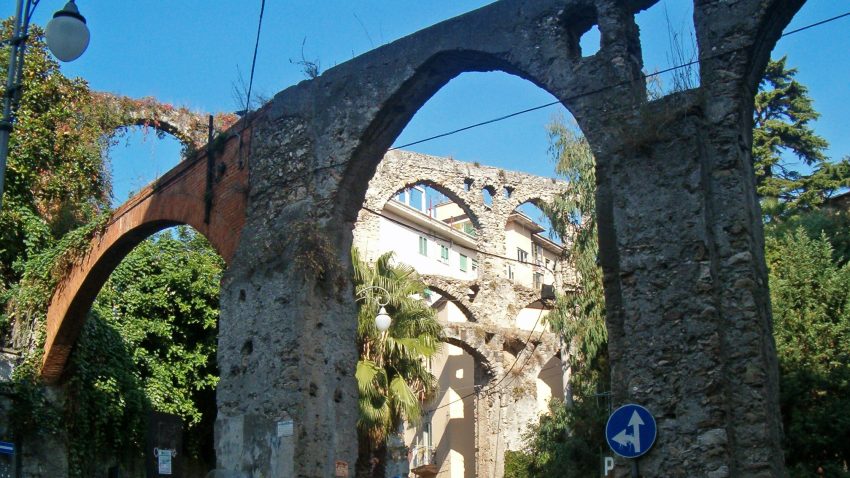
Threaded through a quiet corner of Salerno's historic center, the Acquedotto Medievale di Salerno is one of those landmarks that feels bigger in person than you expect from photos. The pointed arches stride across Via Arce with real presence-part fortress, part cathedral skeleton-yet the site still feels slightly tucked away, as if you've stumbled into a fragment of the city's working medieval infrastructure rather than a “formal” attraction.
Locals often call it the Ponti del Diavolo, the Devil's Bridges, and that nickname is half the fun: the aqueduct's shadowy setting and dramatic arches fed legends about nighttime spirits and a magician building it in a single night. It's one of the top sights in Salerno for travelers who enjoy history with a side of storytelling, and it fits effortlessly into a walking tour of Salerno because it's quick to visit but leaves you with a strong sense of the city's layered past.
Table of Contents
- History and Significance of the Acquedotto Medievale di Salerno
- Things to See and Do in the Acquedotto Medievale di Salerno
- How to Get to the Acquedotto Medievale di Salerno
- Practical Tips on Visiting the Acquedotto Medievale di Salerno
- Where to Stay Close to the Acquedotto Medievale di Salerno
- Is the Acquedotto Medievale di Salerno Worth Visiting?
- For Different Travelers
- FAQs for Visiting Acquedotto Medievale di Salerno
- Nearby Attractions to the Acquedotto Medievale di Salerno
History and Significance of the Acquedotto Medievale di Salerno
The aqueduct is traditionally dated to the 10th century and linked to Benedictine monastic life, created to bring water from the northern hills into the city and toward the San Benedetto area. In practical terms, it's a reminder that medieval Salerno wasn't only churches and walls-it was also engineering, logistics, and the daily problem-solving that kept a growing town alive.
Its most famous identity, though, comes from folklore. By the 12th century, stories had attached themselves to the arches: a local magician, Pietro Barliario, supposedly raised the structure overnight with supernatural help, and the space beneath became a place people avoided after dark. Legends like this often cling to infrastructure because it feels mysterious-water disappears and reappears, stone arches loom over narrow streets, and the “how did they build that?” factor is real.
There’s also a broader cultural myth woven into the site: the tale that the founding figures of Salerno’s medical tradition met beneath the arches on a stormy night, reflecting the city’s role as a crossroads of peoples and ideas. Whether you treat these stories as history or poetic local memory, they add meaning to what could otherwise be “just” a set of old arches.
Things to See and Do in the Acquedotto Medievale di Salerno
The simplest pleasure here is slowing down and letting the architecture do the talking. Stand back far enough to see the rhythm of the arches, then move closer to notice the masonry and the way the structure interacts with the street level. If you visit when the light is angled-morning or late afternoon-the shadows make the arches look even more theatrical.
For a more atmospheric experience, approach from the old town lanes so the aqueduct reveals itself gradually. It’s especially satisfying as a connective stop: you can pair it with nearby streets, small churches, and local food stops without ever feeling like you’ve “left” the historic center.
If you like photography, give yourself a few minutes to experiment with perspective. The pointed arches are naturally dramatic, and the best shots usually come from low angles that emphasize height, or from slightly offset positions that show the repeating geometry rather than a flat, straight-on view.
How to Get to the Acquedotto Medievale di Salerno
Most international visitors fly into Naples International Airport (NAP), then continue to Salerno by train, bus, or private transfer. For the best deals and a seamless booking experience, check out these flights to Salerno on Booking.com.
Salerno Costa d’Amalfi Airport (QSR) can be closer when routes align, although flight options are usually more limited. For the best deals and a seamless booking experience, check out these flights to Salerno on Booking.com.
By train, arrive at Salerno’s main station and then continue into the Centro Storico on foot or by a short taxi/bus ride, depending on where you’re staying. Use Omnio to easily compare schedules, book train tickets, and find the best prices all in one place for a hassle-free journey across Italy.
Local buses are useful if you want to save your legs for the old town, but the final approach is best done on foot because the lanes around Via Arce are made for walking.
If you’re driving, park on the edge of the historic center and walk in, as the old town is easier (and far more enjoyable) without a car. If you are looking to rent a car in Italy I recommend having a look at Discover Cars, first, as they compare prices and review multiple car rental agencies for you.
Practical Tips on Visiting the Acquedotto Medievale di Salerno
- Entrance fee: Free
- Opening hours: 24 Hours
- Best time to visit: Early morning for quiet streets and clean photos, or late afternoon when shadows sharpen the arches and the atmosphere feels more dramatic.
- How long to spend: 15-30 minutes is perfect for viewing, photos, and a slow wander beneath the arches, longer if you’re building it into an old-town loop.
- Accessibility: Expect uneven historic paving and occasional steps in the surrounding lanes; approach from the flattest route available if mobility is a concern.
- Facilities: There are no dedicated facilities on-site, so plan your café, water, and restroom stops around the nearby historic-center streets.
Where to Stay Close to the Acquedotto Medievale di Salerno
For a culture-heavy itinerary, the best area to base yourself is the Centro Storico so you can walk to the main sights early and enjoy the lanes after day-trippers thin out; if your trip is focused on transport links and day trips, staying near the station makes early departures and late returns much smoother.
For an old-town stay with maximum atmosphere, B&B Palazzo Fruscione places you right in the historic lanes, ideal for a walk-everywhere rhythm. If you want a practical base that still keeps the Centro Storico within easy reach, Hotel Montestella balances walkability with city convenience. For the most straightforward arrivals and departures, Hotel Plaza is a strong choice if you’re doing multiple day trips and want logistics to be effortless.
Is the Acquedotto Medievale di Salerno Worth Visiting?
Yes-especially if you like your sightseeing compact but memorable. The aqueduct delivers a strong visual hit, it’s genuinely different from the usual church-and-museum loop, and the folklore gives it personality you can feel as you walk beneath the arches.
It's also a smart “connector” stop. Even if you only have one day in Salerno, this is the kind of place that adds texture to your route without demanding much time, and it makes the historic center feel more layered and lived-in.
What Other Travellers Say...

Medieval Aqueduct on Via Fiera Vecchia is an imposing stone structure with ogee arches—two branches of a 9th-century aqueduct—that rise among urban streets; visitors note its striking, free-to-see ancient architecture and on-site panels that help explain the presence of two aqueducts, while others point out it sits amid traffic and parking and that some protective wall wrappings can look unattractive; local lore and myths are part of its character, and it’s an easy, short walk up from the train station or ferry dock.


For Different Travelers
Families with Kids
For kids, this works best as a short “castle-bridge” style stop: big arches, spooky legends, and plenty of shapes to spot. Keep it playful by sharing the Devil’s Bridges story, then move on before it becomes too static.
If you’re traveling with a stroller, plan your approach carefully-the lanes can be uneven and narrow-but as a quick outdoor stop, it’s often easier than a museum visit with lots of rules.
Couples & Romantic Getaways
For couples, the aqueduct is a great atmosphere stop, especially in softer light when the arches cast longer shadows and the street feels quieter. It pairs naturally with a slow old-town wander and an unhurried café stop nearby.
If you enjoy photography together, this is one of those places where you can take a few genuinely distinctive shots without competing with crowds-particularly early in the day.
Budget Travelers
This is an easy budget win: it’s free, outdoors, and high-impact. Use it as part of a self-guided loop through the Centro Storico so your day feels full without relying on multiple ticketed attractions.
It’s also ideal in shoulder seasons when you want quick, satisfying stops between food breaks and longer walks-no planning required, just show up and enjoy.
FAQs for Visiting Acquedotto Medievale di Salerno
Getting There
Tickets & Entry
Visiting Experience
Tours, Context & Itineraries
Photography
Accessibility & Facilities
Food & Breaks Nearby
Safety & Timing
Nearby Attractions to the Acquedotto Medievale di Salerno
- Duomo di Salerno (Cattedrale di San Matteo): The city's defining landmark, ideal for pairing with the aqueduct in a historic-center loop.
- Via dei Mercanti: Salerno’s classic old-town street for wandering, shopping, and soaking up everyday atmosphere.
- Complesso Monumentale di San Pietro a Corte: A rare Lombard-era site that adds political history and layered architecture to your day.
- Giardino della Minerva: A terraced botanical garden that offers calm paths, greenery, and a different perspective over the city.
- Lungomare Trieste: The seafront promenade for an easy, scenic walk that balances stone lanes with sea air and sunset views.
The Acquedotto Medievale di Salerno appears in our Complete Guide to Visiting Salerno!

Moira & Andy
Hey! We're Moira & Andy. From hiking the Camino to trips around Europe in Bert our campervan — we've been traveling together since retirement in 2020!
This website uses affiliate links which may earn a commission at no additional cost to you!
Planning Your Visit
24 Hours
Free
Nearby Attractions
- Museo Archeologico Provinciale of Salerno (0.2) km
Museum - Salerno Porta Nova (0.3) km
City Gate - Museo Diocesano San Matteo di Salerno (0.4) km
Museum - Duomo di Salerno (0.4) km
Cathedral - Chiesa di San Giorgio (0.5) km
Church - Lungomare Trieste (0.6) km
Park - Complesso Monumentale di San Pietro a Corte (0.6) km
Palace and Roman Site - Complesso Monumentale di Santa Sofia (0.6) km
Church - Chiesa della Santissima Annunziata (0.9) km
Church - Villa Comunale di Salerno (0.9) km
Gardens