Nördlingen, Germany: The Ultimate Travel Guide 2026
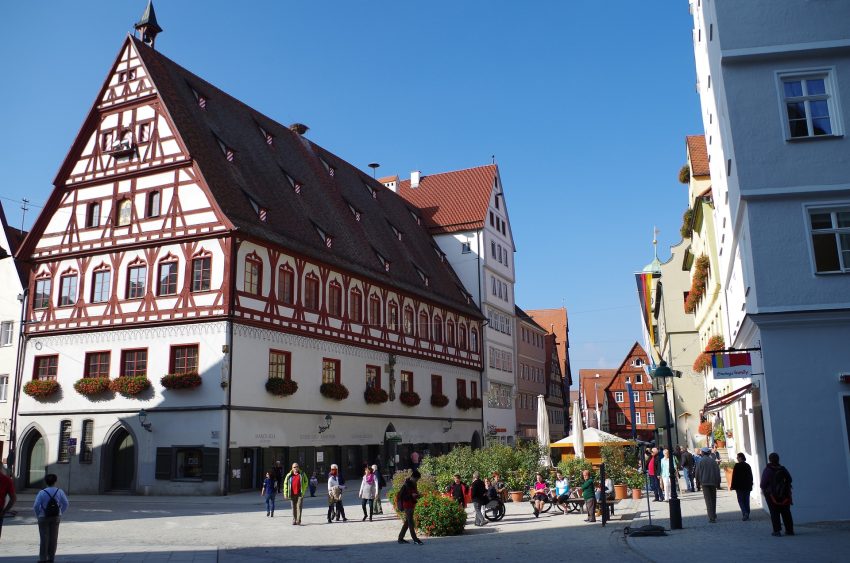
Nördlingen is a historic town in the region of Swabia, located in Bavaria, Germany. It is situated in a large meteorite crater, and the town’s unique location has made it a popular tourist destination.
One of the town’s most notable attractions is its well-preserved medieval walls, which encircle the town and offer stunning views of the surrounding countryside. Visitors can explore the walls and towers, which date back to the 14th century, and take in the picturesque views of the town and the nearby Ries Crater.
Another popular attraction in Nördlingen is the St. George's Church, which is located in the town's central square. The church features a striking Gothic interior, and its tower provides panoramic views of the town and the surrounding landscape.
The town also has a number of other historic buildings, including the historic town hall and the Heilig-Geist-Spital, a former hospital that now houses a museum and art gallery.
Nördlingen is also known for its annual Kinderzeche festival, which celebrates the town's history and culture. The festival takes place in July and features a range of events, including traditional music, dance performances, and a historical parade.
Overall, Nördlingen is a charming town with a rich history and a range of attractions for visitors to explore. Its unique location and well-preserved architecture make it a must-visit destination for anyone interested in the history and culture of Bavaria.
Table of Contents
- History of Nördlingen
- Nördlingen’s Prehistoric and Early Medieval Foundations
- Nördlingen in the High and Late Middle Ages
- Nördlingen’s Role in the Reformation and the Thirty Years’ War
- Nördlingen’s Early Modern Recovery and Baroque Influence
- Nördlingen’s Industrialization and 19th-Century Growth
- Nördlingen through the World Wars and Reconstruction
- Nördlingen’s Contemporary Heritage and Community
- 8 Best places to See in Nördlingen
- 11 Best Day Trips from Nördlingen
- Where to Stay in Nördlingen
- Best Time to Visit Nördlingen
- How to get to Nördlingen
History of Nördlingen
Nördlingen’s Prehistoric and Early Medieval Foundations (Prehistoric–9th Century)
Evidence shows human activity around Nördlingen dating back to the Neolithic era, with flint tools and pottery fragments uncovered near the Ries crater’s rim. By the early Middle Ages, a wooden refuge and small market community had formed on the raised plateau above the crater basin. This nascent settlement leveraged the meteorite-formed terrain for natural defense and slowly evolved into a stop for regional trade routes.
Nördlingen in the High and Late Middle Ages (10th–15th Centuries)
In the 10th century, Nördlingen emerged as a fortified market town under ecclesiastical and noble oversight. Stone walls and gate towers began replacing timber palisades in the 11th and 12th centuries, culminating in the impressive circular fortifications that still gird the town today. The 13th century brought Imperial Free City status, fueling a boom in crafts—especially cloth-weaving and tanning—and the expansion of the marketplace around St. Georg’s Church.
Nördlingen’s Role in the Reformation and the Thirty Years’ War (16th–17th Centuries)
During the 16th century, Nördlingen’s city council adopted Lutheran reforms, closing monasteries and reorganizing church property. However, the town’s strategic walls drew it into conflict during the Thirty Years’ War. In 1634, the Battle of Nördlingen saw Imperial-Spanish forces defeat the Swedish-Protestant army in a bloody engagement that left parts of the town damaged and its economy strained for decades.
Nördlingen’s Early Modern Recovery and Baroque Influence (18th Century)
After the devastations of war, Nördlingen entered a period of slow recovery in the 18th century. Baroque architecture softened the medieval skyline, as wealthy merchants financed new townhouses and ornate guildhalls. While the walls and towers remained integral defensive symbols, they were also transformed into promenades and viewpoints, reflecting a quieter era of civic pride and cultural renewal.
Nördlingen’s Industrialization and 19th-Century Growth
The 19th century introduced rail connections that integrated Nördlingen into wider economic networks. Small factories and workshops sprouted near the station, producing machinery parts and textiles. Population growth prompted limited expansion beyond the medieval walls, with new residential quarters emerging along the river and main roads—as well as the first public schools and hospital.
Nördlingen through the World Wars and Reconstruction (20th Century)
Nördlingen experienced minimal direct bombardment during both world wars but still contributed manpower and materials to wartime efforts. In the post-1945 era, reconstruction emphasized modern utilities while preserving historical fabric. Restoration projects in the 1960s and ’70s stabilized the ancient walls and rehabilitated the Daniel tower, ensuring the medieval core remained intact amid gradual modernization.
Nördlingen’s Contemporary Heritage and Community (21st Century)
Today, Nördlingen balances living traditions with tourism. Annual medieval markets and wall-walking festivals celebrate the town’s unique circular fortifications, while local industries in precision engineering and renewable energy drive economic vitality. Community initiatives have reinvigorated traditional crafts workshops, and adaptive reuse of old mills and barns has created art spaces and cafés—blending centuries-old heritage with modern communal life.

Moira & Andy
Hey! We're Moira & Andy. From hiking the Camino to trips around Europe in Bert our campervan — we've been traveling together since retirement in 2020!
Visiting Nördlingen for the first time and wondering what are the top places to see in the city? In this complete guide, I share the best things to do in Nördlingen on the first visit. To help you plan your trip, I have also included an interactive map and practical tips for visiting!
This website uses affiliate links which earn a small commission at no additional cost to you.
8 Best places to See in Nördlingen
This complete guide to Nördlingen not only tells you about the very best sights and tourist attractions for first-time visitors to the city but also provide insights into a few of our personal favorite things to do.
This is a practical guide to visiting the best places to see in Nördlingen and is filled with tips and info that should answer all your questions!
1. Rathaus am Marktplatz

Location: Marktplatz, Nördlingen, Germany | Hours: Monday to Thursday: 8:00 a.m. - 12:00 p.m. and 2:00 p.m. - 4:00 p.m Friday: 8:00 a.m. - 12:00 p.m | Price: Free for public areas | Distance: 0.1km

2. Saint George's Church

Location: Saint George Church, Marktplatz, Nördlingen, Germany | Hours: April to October from 10:00 to 18:00; November to March from 10:00 to 16:00. Church Tours: Monday to Friday at 11:00 am, On weekends and public holidays at 3:30 pm | Price: Church entry is usually free; expect a small fee of around €3.50–€5.00 per adult for climbing the tower, with concessions for children and families. | Website | Distance: 0.1km
3. The Daniel Tower

Location: Kirchturm Daniel, Windgäßchen, Nördlingen, Germany | Hours: Opening times vary by season, typically from late morning to late afternoon or early evening; verify current hours at St. Georg church or the local tourist information. | Price: Expect a modest entrance fee of around €3.00–€5.00 per adult, with possible reductions for children and families; check locally for current prices. | Website | Distance: 0.1km
4. Nördlingen City Museum

Location: Stadtmuseum im Hl.-Geist-Spital, Vordere Gerbergasse 1, 86720 Nördlingen, Deutschland | Hours: March 14th to November 5th Tuesday-Sunday 1.30pm-4.30pm | Price: Adults €5.00 All admission tickets are also valid in the RiesKraterMuseum on the day of purchase! | Website | Distance: 0.3km
5. Infozentrum Geopark Ries

Location: Geopark Ries, Oskar-Mayer-Straße, Nördlingen, Germany | Hours: Tuesday to Sunday: 10:00 to 12:00 and 13:30 to 16:30 | Price: Adults: €5.00 | Website | Distance: 0.4km
6. Nördlingen City Walls

Location: Nördlingen | Hours: 24 Hours | Price: Free | Website | Distance: 0.4km
7. Rieskrater Museum

Location: Rieskrater Museum, Eugene-Shoemaker-Platz, Nördlingen, Germany | Hours: 04/01/2023 – 11/05/2023 from 10:00 a.m. to 4:30 p.m 11/07/2023 to 03/22/2024 from 10:00 a.m. to 12:00 p.m. and from 1:30 p.m. to 4:30 p.m English audio guide available. | Price: Adult €5.00 Children €2.00 | Website | Distance: 0.4km
8. Stadtmauer Museum

Location: Stadtmauermuseum, An der Löpsinger Mauer, Nördlingen, Germany | Hours: Tuesday - Sunday 10:00 - 13:00 and 13:30 - 16:30 | Price: Adults €3.00 | Website | Distance: 0.5km
Best Day Trips from Nördlingen
A day trip from Nördlingen offers the perfect opportunity to escape the urban rhythm and discover the surrounding region's charm. Whether you're drawn to scenic countryside, historic villages, or cultural landmarks, the area around Nördlingen provides a variety of easy-to-reach destinations ideal for a one-day itinerary. If you are looking to rent a car in Germany I recommend having a look at Discover Cars, first, as they compare prices and review multiple car rental agencies for you.
1. Harburg Castle

Location: Harburg Castle, Burgstraße, Harburg, Germany | Hours: Open daily from 10:00 AM to 5:00 PM. | Price: Adults €3.50 (Courtyard Access); Adults €5.00 (Castle Tour) | Website | Distance: 16.2km
Visiting Harburg Castle
2. Dinkelsbühl

Visiting Dinkelsbühl
3. Augsburg

Visiting Augsburg
4. Rothenburg ob der Tauber
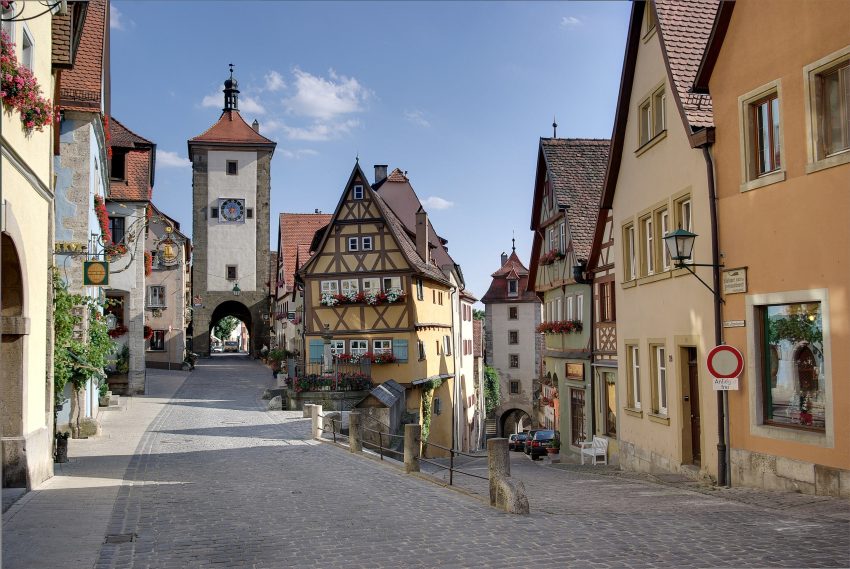
Visiting Rothenburg ob der Tauber
5. Röttingen
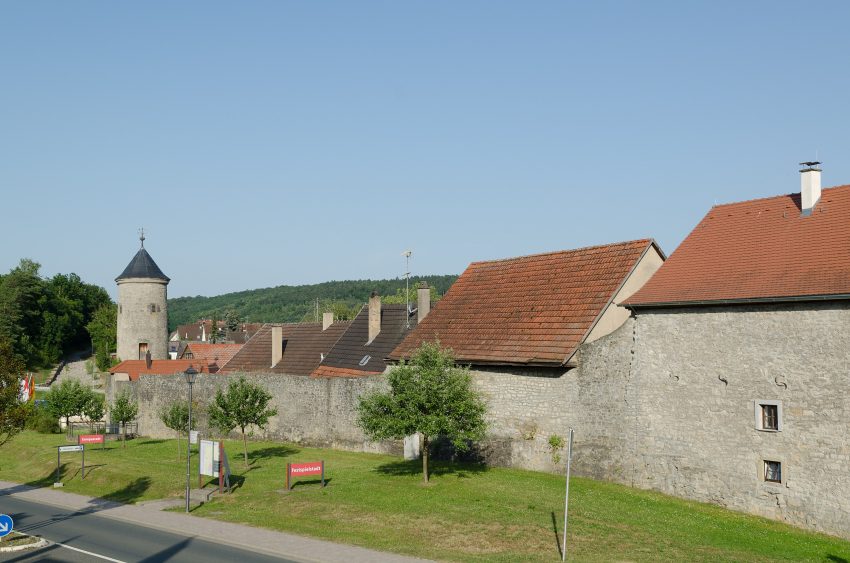
Visiting Röttingen
6. Bad Mergentheim

Visiting Bad Mergentheim
7. Stuttgart

Visiting Stuttgart
8. Würzburg

Visiting Würzburg
9. Munich

Visiting Munich
10. Bamberg
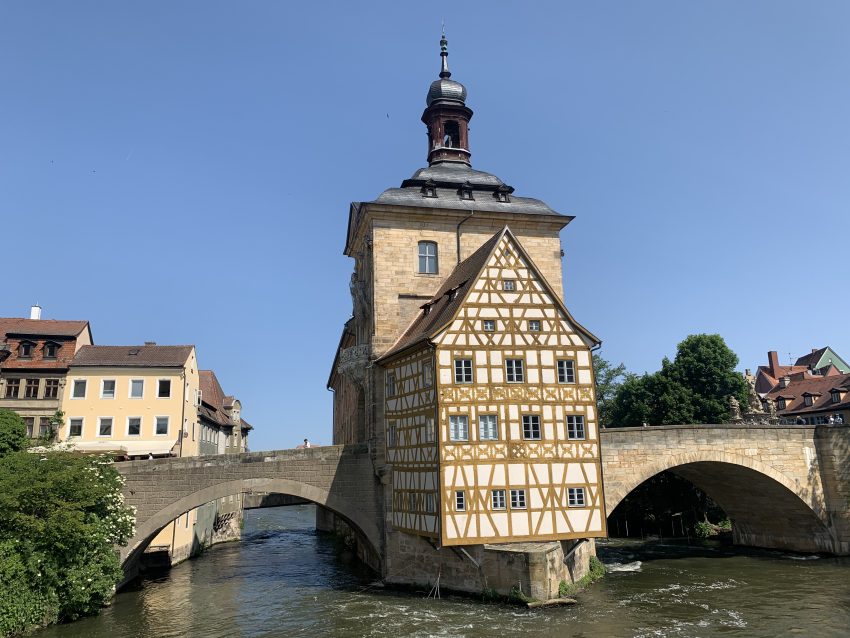
Visiting Bamberg
11. Füssen

Visiting Füssen
Where to Stay in Nördlingen
Nördlingen’s medieval Altstadt, perfectly preserved within its circular city walls, is the quintessential place to stay for first-time visitors. Winding cobblestone lanes radiate out from the market square and St. Georg’s Church, putting you steps from bakeries, cafés, and the famous Daniel tower. A standout choice here is Ringhotel Loew’s Merkur, which offers spacious rooms in a historic building just off the main square, plus an excellent breakfast buffet to fuel your wall walk.
Just beyond the walls, the Bahnhofviertel (Train Station Quarter) combines convenience with modern comforts. You’ll find simple guesthouses and business hotels that are ideal if you’re arriving by rail or renting a car. A reliable pick is Hotel Goldener Adler, where you can park easily, enjoy contemporary décor, and still be only a ten-minute stroll from the old town gates.
For a quieter, more residential vibe, head to the Grünes Viertel on the town’s eastern edge. This leafy district features family-run pensions and B\&Bs nestled among small parks and playgrounds—perfect if you’re traveling with children or pets. Consider Hotel am Kocherpark, which backs onto green lawns and offers cozy, cottage-style rooms with garden views.
If you’d like to immerse yourself in the wider Ries region, base yourself in one of the charming hamlets just outside Nördlingen’s walls. These villages boast half-timbered farmhouses converted into guesthouses, where you can enjoy farm-to-table breakfasts and explore the gentle countryside trails by bike or on foot. A delightful countryside retreat is Landgasthof Riesblick, offering rustic rooms, panoramic views of the crater landscape, and hearty regional cuisine in its tavern.
Using the our Hotel and Accomodation map, you can compare hotels and short-term rental accommodations in Nördlingen. Simply insert your travel dates and group size, and you’ll see the best deals for your stay.
Nördlingen Accommodation Map
Best Time to Visit Nördlingen
Thought for a couple of seconds
Nördlingen in Spring
Spring (March–May) sees Nördlingen’s medieval walls ringed by blooming cherry and apple trees, making strolls along the Stadtmauer particularly charming. In late April, the Frühlingserwachen market brings local artisans to the Marktplatz with handmade crafts, seasonal produce, and live folk music. Mild temperatures and fewer visitors make spring ideal for exploring the historic core and climbing the Daniel tower for panoramic views of the Ries crater.
Nördlingen in Summer (Best)
Summer (June–August) is widely considered the best time to visit Nördlingen. The highlight is the Kinderzeche festival in early July—a lively celebration of a 17th-century legend where children march in colorful costumes, reenactments fill the streets, and fireworks crown the evenings. In late August, the Stadtmauerfest turns the walls into open-air stages with medieval entertainers, jugglers, and taverns serving local beer beneath torchlit ramparts. Long, sunny days let you soak in the town’s unique circular layout and relaxed al fresco dining.
Nördlingen in Autumn
Autumn (September–November) paints the Ries landscape in gold and rust, perfect for cycling or hiking the crater rim paths just outside town. In October, the Herbstmarkt offers tastings of Franconian wines and freshly pressed cider alongside hearty bratwurst and roast chestnuts. Crisp mornings invite peaceful wall walks shrouded in mist, while the early closing of summer attractions makes autumn a quieter, more reflective season to enjoy Nördlingen’s architectural treasures.
Nördlingen in Winter
Winter (December–February) lends Nördlingen a tranquil, snow-dusted beauty. From late November, the traditional Christmas market fills the Marktplatz with wooden chalets selling mulled wine, gingerbread, and handcrafted ornaments. Carolers perform beneath the Daniel tower, and guided torchlight tours of the walls evoke the town’s medieval past. Though temperatures can dip below freezing, warm taverns and the glow of market lights create an intimate and festive atmosphere.
Annual Weather Overview
- January 4°C 43°F
- February 6°C 47°F
- March 10°C 54°F
- April 16°C 65°F
- May 18°C 68°F
- June 22°C 76°F
- July 24°C 80°F
- August 25°C 80°F
- September 21°C 73°F
- October 16°C 64°F
- November 8°C 51°F
- December 6°C 46°F
How to get to Nördlingen
Getting to Nördlingen by air
Major International Airports
The closest major airport is Munich Airport (MUC), about 200 km southeast. Stuttgart Airport (STR) is roughly 150 km west, and Nuremberg Airport (NUE) lies 180 km to the north.
Airport Transfer Options
From Munich Airport, take the S-Bahn to Munich Hauptbahnhof, then a direct ICE/IC to Augsburg or Donauwörth and change for a regional train to Nördlingen. Similar connections run from Stuttgart and Nürnberg via Stuttgart Hbf or Nürnberg Hbf.
Getting to Nördlingen by train
Main Rail Operators
- Deutsche Bahn (DB): https://www.bahn.com
- Go-Ahead Bayern: https://www.go-ahead-bayern.de
Typical Connections
- From Munich: Regional Express via Donauwörth takes about 2 h.
- From Stuttgart: IC/RE via Ulm in around 2 h 30 min.
- From Nuremberg: RE via Ansbach and Gunzenhausen in roughly 2 h.
Getting to Nördlingen by Car
Motorways and Routes
Nördlingen sits at the intersection of the A7 and B25. From the A7, exit at “Nördlingen Nord” and follow signs into the town center.
Parking in Nördlingen
Several Park & Ride lots encircle the walls, connected by shuttle bus. Central options include the Graben-Parkhaus and Markt-Parkhaus near St. Georg’s Church.
If you are looking to rent a car in Germany I recommend having a look at Discover Cars, first, as they compare prices and review multiple car rental agencies for you.Travelling around Nördlingen
Nördlingen’s historic core is best explored on foot—circle the full 2.7 km of intact city walls for panoramic views. Local buses connect the train station to outlying neighborhoods and the Ries Crater Museum. Bike rentals at the station make it easy to explore the surrounding crater landscape along marked cycling routes.


