Chiang Mai, Thailand: The Ultimate Travel Guide 2026
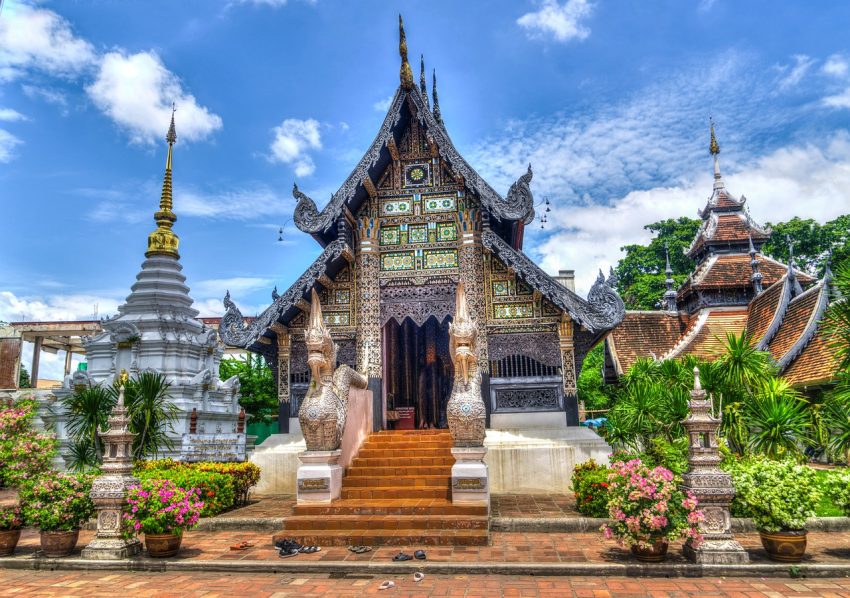
Chiang Mai Temple
Chiang Mai Temple

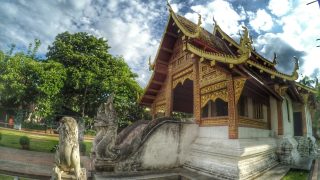
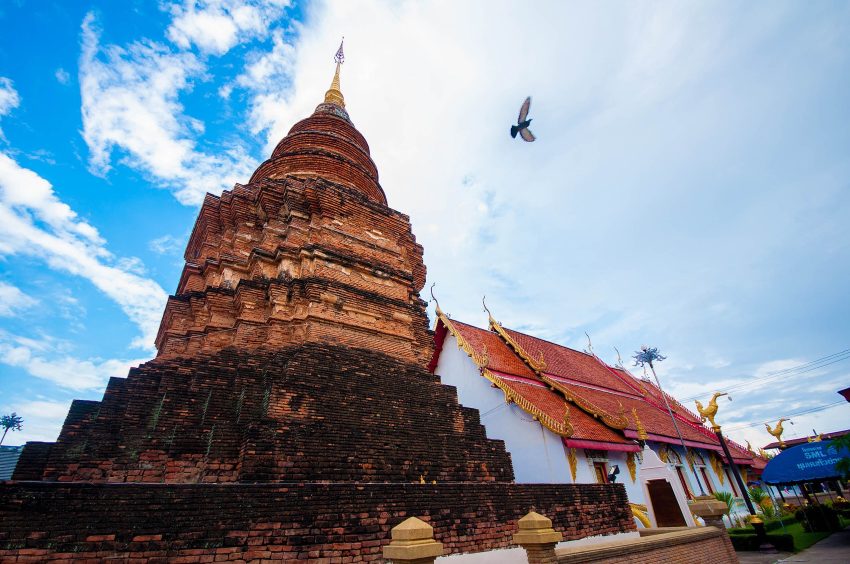
Visiting Chiang Mai, nestled in the lush mountains of northern Thailand, is a journey into a vibrant blend of nature, culture, and relaxation. Known as the “Rose of the North,” this charming city offers tranquil temples, bustling night markets, and serene landscapes. Wander through its old city, where ancient walls and moats surround stunning temples like Wat Phra Singh and Wat Chedi Luang, creating a peaceful yet dynamic atmosphere.

Beyond the city's historic center, Chiang Mai is a hub for outdoor enthusiasts and cultural explorers. Take a day trip to the majestic Doi Suthep Temple, perched on a hill with breathtaking views, or visit elephant sanctuaries that promote ethical tourism. The city is also famous for its cooking schools, where you can master the art of Thai cuisine. Whether you're seeking adventure, spirituality, or culinary delights, Chiang Mai offers an unforgettable experience.

History of Chiang Mai

The Founding of Chiang Mai

Chiang Mai, meaning “New City,” was established in 1296 by King Mangrai as the capital of the Lanna Kingdom. Strategically located along trade routes, it quickly became a significant cultural and economic hub in northern Thailand. The city was built with a distinctive layout, featuring a square-shaped old city surrounded by a protective moat and walls to guard against invasions.

Chiang Mai’s Role in the Lanna Kingdom

Under the Lanna Kingdom, Chiang Mai flourished as a center of religion, art, and learning. Temples like Wat Phra Singh and Wat Chedi Luang were constructed during this era, reflecting the city’s importance as a cultural heartland. Buddhism played a central role, influencing the city’s architecture and traditions, many of which are preserved to this day.

The Burmese Influence in Chiang Mai

In the mid-16th century, Chiang Mai fell under Burmese control, marking a period of significant influence. This lasted for over 200 years until the late 18th century, when King Taksin of Siam liberated the city. Despite this, traces of Burmese architectural and cultural elements remain visible in Chiang Mai’s temples and traditions.

Integration into Siam

In 1774, Chiang Mai officially became part of the Kingdom of Siam (modern Thailand), though it retained a degree of autonomy for some time. The city slowly regained prominence as a regional center. Its integration led to a blending of Lanna traditions with central Thai culture, enriching its heritage.

Modern Development of Chiang Mai

Chiang Mai began modernizing in the 20th century, especially after the railway connection to Bangkok was established in 1921. Today, it is a thriving city that seamlessly combines its historical roots with modern amenities, making it one of Thailand’s most popular destinations.

Chiang Mai’s history, marked by periods of independence, conquest, and cultural fusion, is a testament to its resilience and enduring charm.

Moira & Andy
Moira & Andy

Hey! We're Moira & Andy. From hiking the Camino to trips around Europe in Bert our campervan — we've been traveling together since retirement in 2020!

Read our full story here

Visiting Chiang Mai for the first time and wondering what are the top places to see in the city? In this complete guide, I share the best things to do in Chiang Mai on the first visit. To help you plan your trip, I have also included an interactive map and practical tips for visiting!

This website uses affiliate links which earn a small commission at no additional cost to you.

Powered by GetYourGuide

25 Best places to See in Chiang Mai

This complete guide to Chiang Mai not only tells you about the very best sights and tourist attractions for first-time visitors to the city but also provide insights into a few of our personal favorite things to do.

This is a practical guide to visiting the best places to see in Chiang Mai and is filled with tips and info that should answer all your questions!

1. Chiang Mai City Arts & Cultural Centre
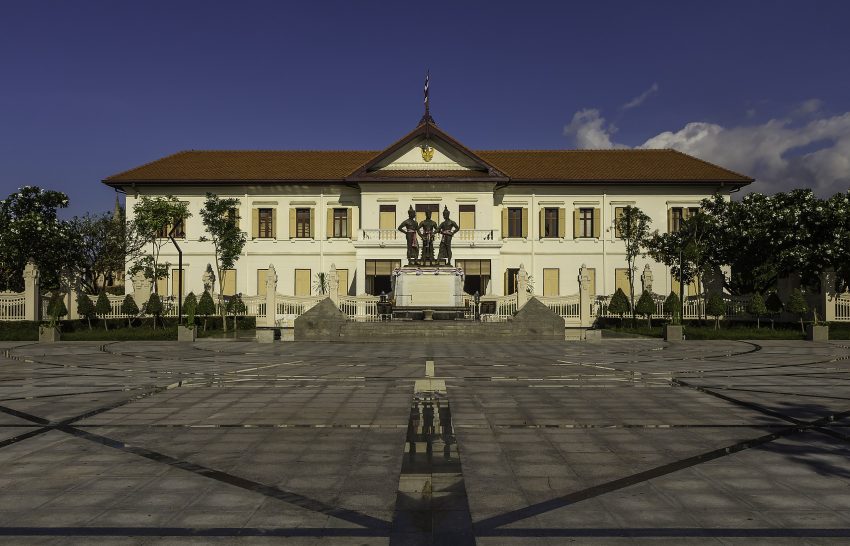
Chiang Mai   Chiang Mai City Art and Cultural Center
Chiang Mai Chiang Mai City Art and Cultural Center
CC BY-SA 3.0 / Stefan Fussan
Housed in a beautifully restored 1920s Provincial Hall behind the Three Kings Monument, the Chiang Mai City Arts & Cultural Centre pairs neoclassical symmetry with modern, multimedia storytelling. Galleries trace the city’s evolution from its 13th-century founding through the Lanna Kingdom era and its shifting relationship with Siam, using maps, archival photos, dioramas, and well-kept artifacts. The first floor digs into Lanna spirituality—Buddhist and animist traditions—alongside temple art, rituals, and craftwork. Upstairs, recreated scenes make it feel lived-in: a traditional market, a temple interior, even a replica train car, plus hands-on displays on textiles, festivals, and music. Visitors often mention the calm atmosphere and the small café on the ground floor.
Location: Chiang Mai City Arts & Cultural Centre, Prapokkloa Road, Si Phum, Mueang Chiang Mai District, Chiang Mai, Thailand | Distance: 0km


Here is a complete selection of hotel options in Chiang Mai. Feel free to review each one and choose the stay that best suits your needs.

2. Three Kings Monument

The Three Kings Monument Chiang Mai
CC BY-SA 3.0 / FredTC
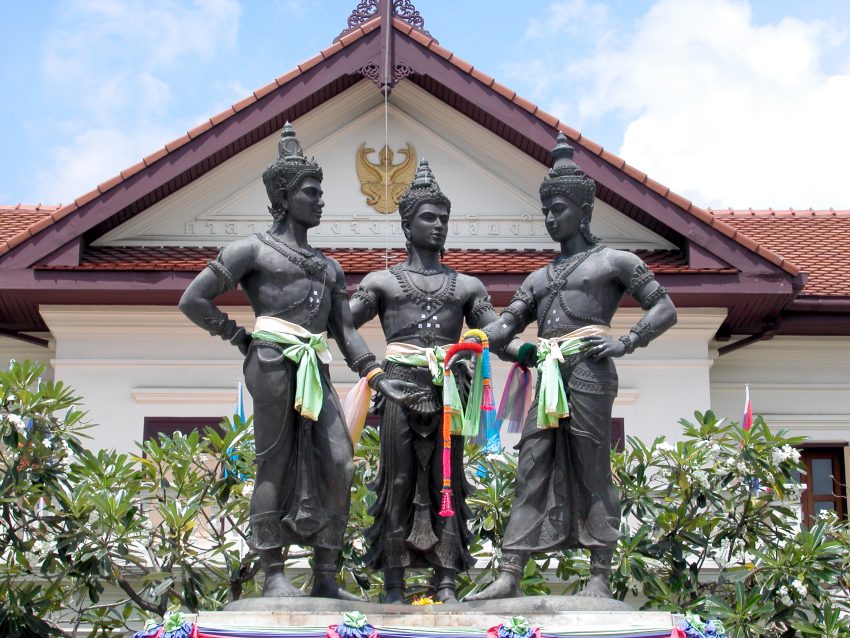
Set in a broad Old City plaza, the Three Kings Monument is a bronze tribute to the 13th-century alliance that shaped the early Lanna realm. King Mengrai stands at the centre, flanked by King Ramkhamhaeng of Sukhothai and King Ngam Muang of Phayao, their outward-facing stances suggesting shared purpose and watchfulness. The statue sits before the elegant frontage of the City Arts & Cultural Centre, with trees, benches, and open paving that often becomes a gathering space for exhibitions and festival crowds. By day it’s an easy pause for photos and close-up details of the sculpted expressions; after dark, the lighting throws crisp silhouettes across the square.
Location: Three Kings Monument, Prapokkloa Road, Si Phum, Mueang Chiang Mai District, Chiang Mai, Thailand | Distance: 0km

Traveling to a country with a different currency? Avoid ATM transaction fees and pay in local currency with a Wise Card. Having used it for over 5 years, we've saved loads on fees!

3. Wat Inthakhin Sadue Mueang

Chiang Mai   Wat Inthakin Sadue Muang
Chiang Mai Wat Inthakin Sadue Muang
CC BY-SA 3.0 / Stefan Fussan
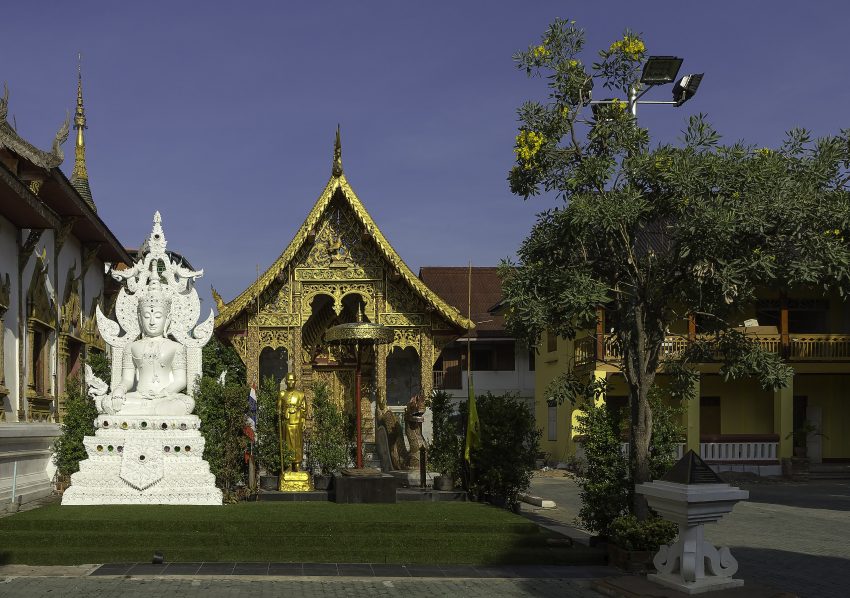
Wat Inthakhin Sadue Mueang (the “City Pillar Temple”) is a small, contemplative wat tied to the city’s founding era, once associated with the Sao Inthakin pillar believed to safeguard the community (now enshrined at Wat Chedi Luang). Set near the Three Kings Monument, it’s easy to miss from the street, but inside you’ll find a tidy courtyard and a Lanna-style wooden wihan with ornate carvings and traditional gables. Visitors often remember the warm, well-kept feel and the colourful interior details, where hues are used with symbolic intent. Next to the hall stands an older chedi that adds a sense of age and gravity to this modest complex.
Location: Wat Inthakhin Sadue Muang, Intrawarorot Road, Si Phum, Mueang Chiang Mai District, Chiang Mai, Thailand | Distance: 0.1km

Click here to read our blog about Best Day Trips from Chiang Mai, Thailand (2026)

4. Lanna Folklife Museum

Lanna Folklife Museum
CC BY-SA 4.0 / Supanut Arunoprayote.
Set in a carefully restored early-20th-century provincial courthouse facing the Three Kings Monument, the Lanna Folklife Museum is a calm, air-conditioned deep dive into northern Thai life under the Lanna Kingdom (13th–18th centuries). Galleries across two floors pair everyday tools and agricultural objects with vivid dioramas of village routines, family customs, and Buddhist ceremonies. You’ll notice intricate carved woodwork and a quiet central courtyard that makes the building as memorable as the displays. Cases of traditional textiles, musical instruments, lacquerware, and brass Buddha images explain the motifs and meanings seen around town. Visitors often describe it as peaceful and easy to explore, even on a rainy day.
Location: Lanna Folklife Centre, Prapokkloa Road, Si Phum, Mueang Chiang Mai District, Chiang Mai, Thailand | Hours: 8:30am-16:30pm Open on Wednesday - Sunday (Including public holidays) Closed on Monday and Tuesday | Price: Adult 90 Baht | Website | Distance: 0.1km

Click here to read our blog about Best Museums in Chiang Mai, Thailand 2026: Art, Culture & Hidden Gems

5. Wat Phan Tao

Wat Phan Tao
Wat Phan Tao
CC BY-SA 4.0 / กสิณธร ราชโอรส
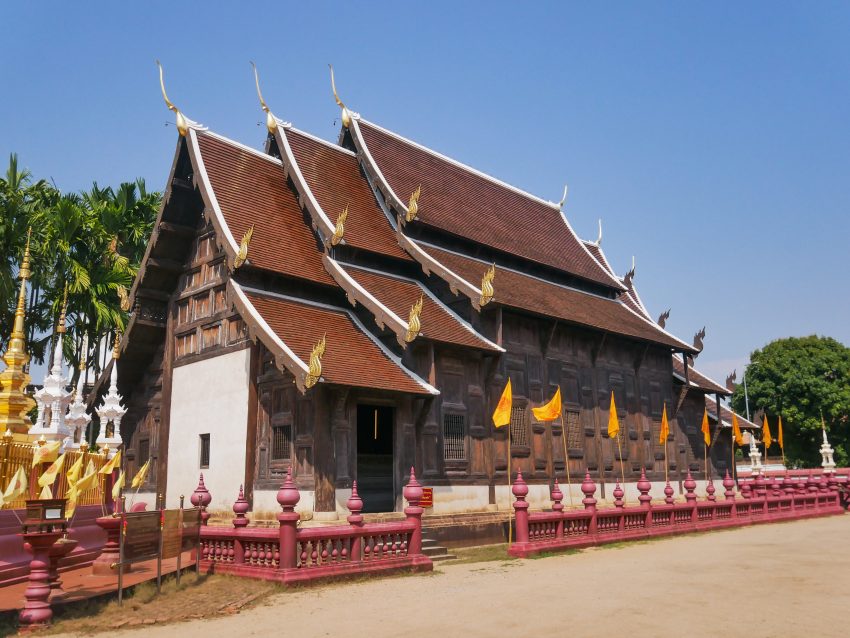
Wat Phan Tao is a teakwood viharn known for its dark, incensey calm and the sense of stepping into an older, wooden Lanna world. The hall was built from reclaimed royal teak after a 19th-century palace on the site was dismantled, and the craftsmanship shows in the massive columns and finely worked interior. Look up for hanging gold-and-white banners marked with zodiac animals, then find the gable mosaic: a peacock (linked to King Mahawong) with a dog beneath it, framed by naga and hamsa motifs. Outside, a gold-clad chedi rises from a ring of smaller spires and red-fenced mondops, especially striking as the light softens late in the day.
Location: Wat Phan tao Chiang Mai Thailand, Si Phum, Mueang Chiang Mai District, Chiang Mai, Thailand | Hours: 8.00am to 5.00pm | Price: Free entry | Distance: 0.3km

Explore Chiang Mai at your own pace with our self-guided walking tour! Follow our curated route to discover must-see sights and local secrets that makes Chiang Mai one of the best places to visit in Thailand.

6. Wat Tung Yu

Chiang Mai   Wat Tung Yu
Chiang Mai Wat Tung Yu
CC BY-SA 3.0 / Stefan Fussan
Wat Tung Yu (Wat Thung Yu) is a centuries-old Lanna temple with longstanding royal ties, mentioned in the early-1500s Nirat Hariphunchai and later marked by a tiered umbrella added to its chedi in 1909. Visitors linger over the unusually large, graphic “hell” murals behind the viharn, where punishment scenes make karma feel vividly concrete. The viharn’s high base and three-tier roof are dressed with eagle-shaped chofas, glittering naga details, and red-lacquered pillars, while the altar displays nine brightly coloured crystal Buddhas. Behind it, a weathered Lanna chedi with glass-and-porcelain decoration is guarded by chinthe lions, and the temple’s calm atmosphere draws some travellers for meditation and conversation with volunteers.
Location: Wat Tung Yu, Rachadamnoen Road, Si Phum, Mueang Chiang Mai District, Chiang Mai, Thailand | Distance: 0.4km

7. Wat Saen Muang Ma Luang
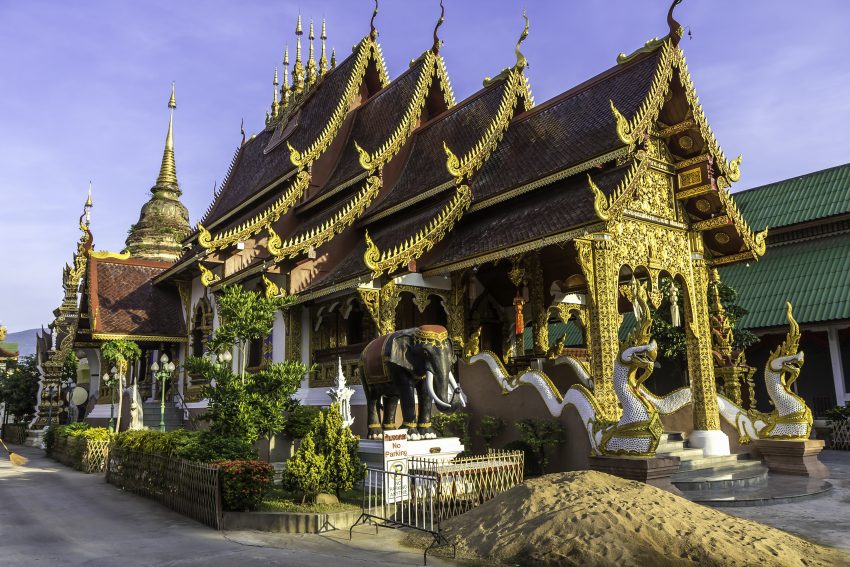
Chiang Mai   Wat Saen Mueang Ma Luang
Chiang Mai Wat Saen Mueang Ma Luang
CC BY-SA 3.0 / Stefan Fussan
Wat Saen Muang Ma Luang (also called Wat Hua Khuang) is a quiet Old City temple where Lanna craftsmanship takes center stage. The main wihan stands out for its steep, multi-tiered roof and an intricately carved wooden façade filled with floral patterns and mythical figures. Step inside to see richly colored murals depicting Buddhist stories and Jataka scenes, plus a calm hall of Buddha images that invites lingering rather than rushing. Despite being centrally located, the grounds often feel uncrowded, with small shrines, guardian statues, and pockets of shade for a pause. Visitors frequently note how well kept the buildings are and how peaceful it feels compared with busier temples.
Location: Wat Saen Muang Ma Luang (Wat Hua Khuang), Prapokkloa Road, Si Phum, Mueang Chiang Mai District, Chiang Mai, Thailand | Distance: 0.4km

8. Wat Chiang Man
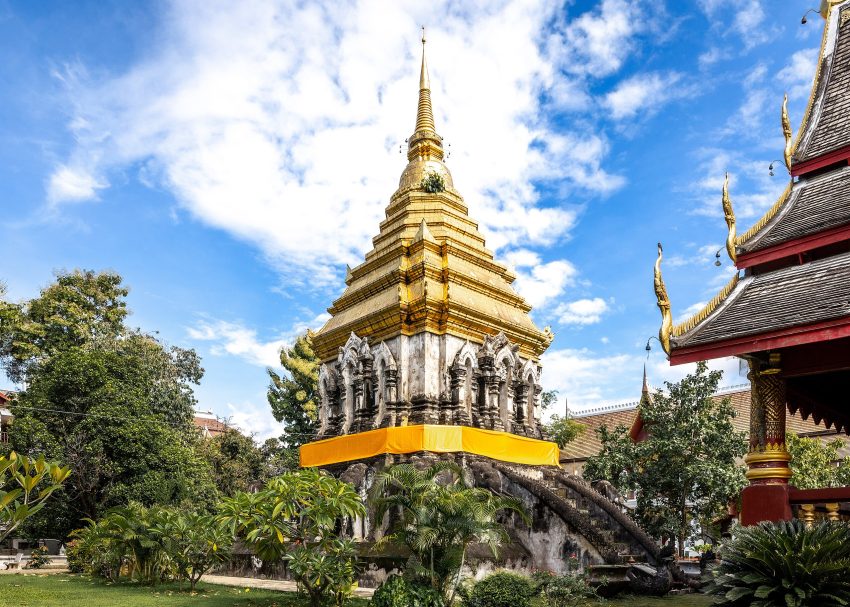
Wat Chiang Man
Wat Chiang Man
CC BY-SA 4.0 / Supanut Arunoprayote.
Wat Chiang Man is the oldest surviving temple in the Old City, founded in 1296 by King Mangrai, and it still feels like a working monastery rather than a museum. The standout is Chedi Chang Lom, whose brick base is ringed by 15 life-sized elephants that seem to shoulder the stupa above. Inside the halls, visitors come to pay respects to protective images including the tiny Crystal Buddha carved from clear quartz and the Phra Sila Buddha relief linked to rainmaking rites. A stone stele near the ubosot records early dates in the city’s story, while a lotus pond and clipped elephant-shaped shrubs add unexpected calm between bursts of foot traffic.
Location: Wat Chiang Man, Ratchapakhinai Road, Si Phum, Mueang Chiang Mai District, Chiang Mai, Thailand | Distance: 0.4km

9. Wat Chedi Luang
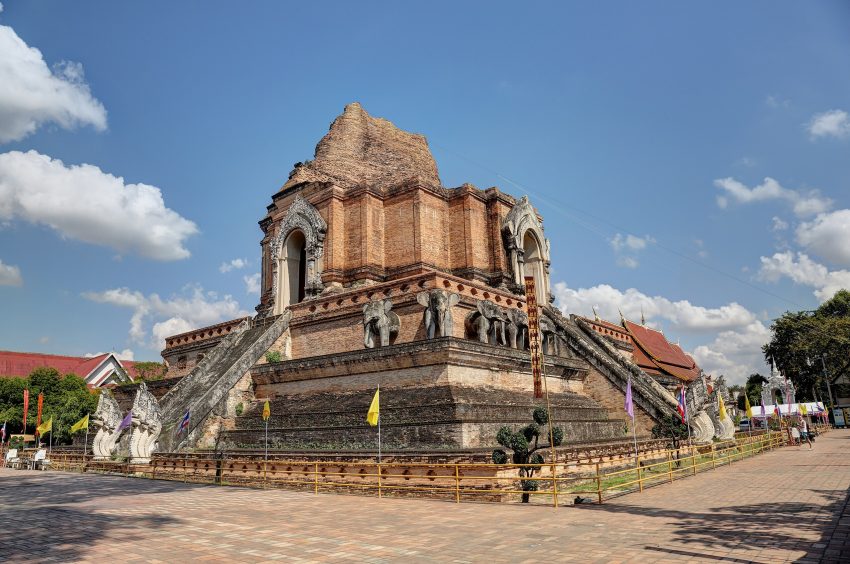
Wat Chedi Luang
Wat Chedi Luang
CC BY-SA 3.0 / Fumihiko Ueno
Wat Chedi Luang is a royal temple complex in the Old City, centered on a colossal brick chedi begun in 1391 and completed in 1475—once the tallest structure of the Lanna Kingdom before an earthquake in 1545 left its summit dramatically broken. The truncated stupa still feels monumental up close, especially as you circle its weathered base and guardian figures. Step into Phra Viharn Luang to see Phra Chao Attarat, a large standing bronze Buddha, framed by tall columns and glittering gables. Elsewhere on the grounds are teak-roofed viharns, relic shrines, and the Sao Inthakin city pillar pavilion, where worship continues amid a calm, lived-in atmosphere.
Location: Wat Chedi Luang, Prapokkloa Road, Si Phum, Mueang Chiang Mai District, Chiang Mai, Thailand | Hours: The Grand Viharn Assembly Hall is open from 8.00am to 5.00pm. The temple’s general opening hours are from 5.00am to 10.30pm. | Price: Adult: 50THB | Distance: 0.4km

10. Wat Pha Bong
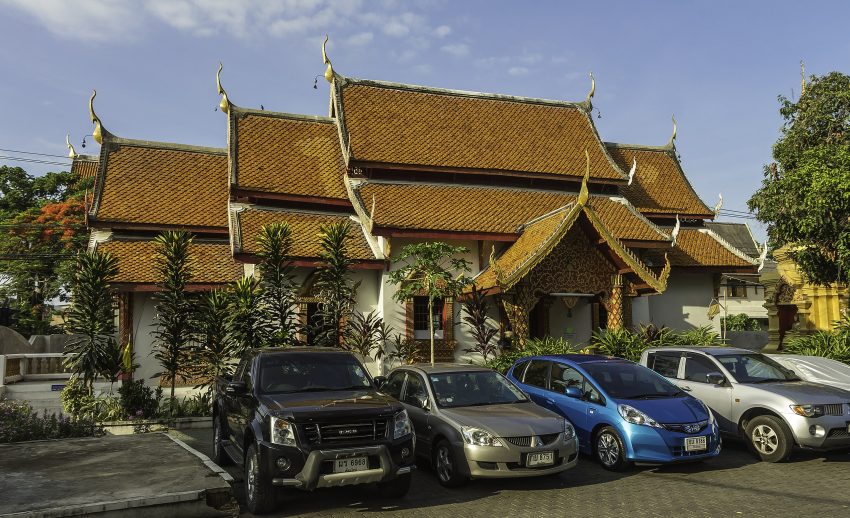
Chiang Mai   Wat Pha Bong
Chiang Mai Wat Pha Bong
CC BY-SA 3.0 / Stefan Fussan
Wat Pha Bong (also called Wat Mank Kalaram) is a small neighborhood Buddhist temple with an intimate, everyday feel. Visitors remember the deep, resonant gong at the entrance—tradition is to strike it three times for happiness, health, and peace—often with a friendly attendant nearby collecting donations. The Lanna-style viharn draws you in with a steep tiered roof, shimmering naga mosaics, and red-lacquered pillars framing murals of the Buddha’s past lives. Outside, a compact golden chedi catches the light, and a courtyard shrine features a life-size King Naresuan statue surrounded by cockerel figures. It’s typically quiet, making slow wandering and small rituals feel unhurried.
Location: Wat Pha Bong (Mangkhalaram) 1/3 Singharat Rd Chiang Mai 50200 Thailand | Hours: 5.00am to 6.00pm | Price: Free entry | Distance: 0.5km

11. Wat Lam Chang
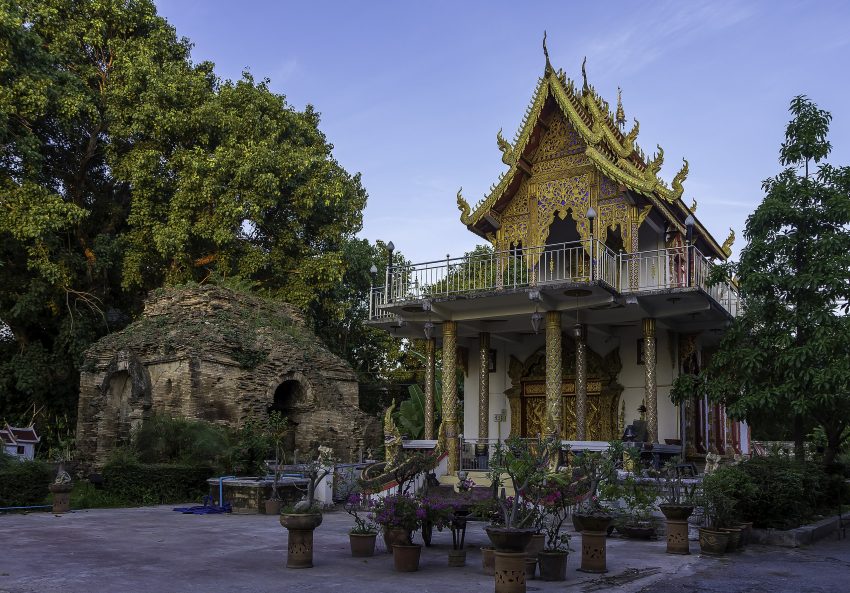
Wat Lam Chang
Wat Lam Chang
CC BY-SA 3.0 / Stefan Fussan
Wat Lam Chang (“Temple of the Tethered Elephant”) is a 14th-century Lanna-era sanctuary whose grounds were once used to keep and feed royal elephants, a story echoed in elephant carvings and statues throughout the compound. Step into the richly ornamented viharn to see gold floral detailing, makkara‑naga balustrades, and murals of the Buddha’s previous lives surrounding an altar crowded with more than 100 Buddha images. A two-storey structure pairs the ubosot—displaying old manuscript boxes and Jataka scenes—with an upper ho trai marked by gold-on-blue gable art and chofa finials. Outside, compare a weathered old chedi with a newer mosaic-glass chedi guarded by kneeling elephants.
Location: Wat Lam Chang, Moon Muang Road Lane 7, Si Phum, Mueang Chiang Mai District, Chiang Mai, Thailand | Hours: 6.00am to 6.00pm | Price: Free entry | Distance: 0.5km

12. White Elephant Gate
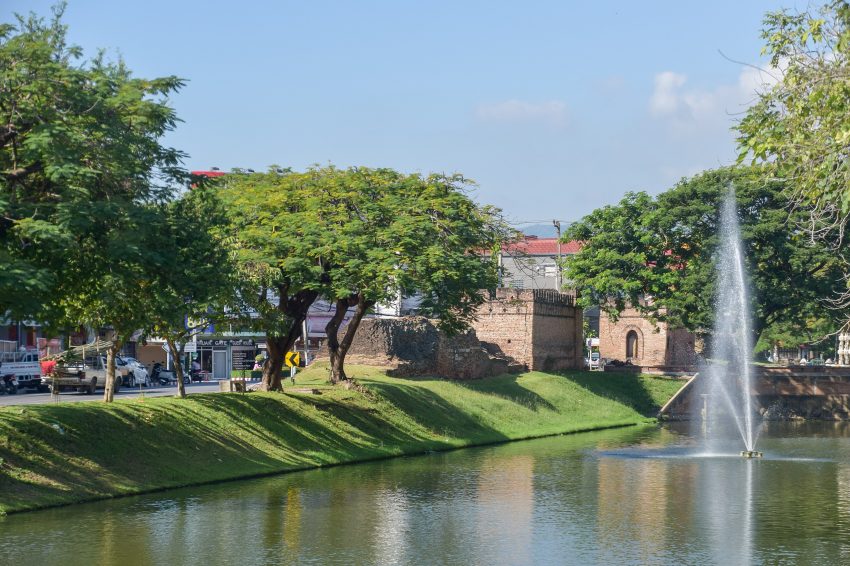
Chang Phueak Gate
Chang Phueak Gate
CC BY-SA 4.0 / Krzysztof Golik
White Elephant Gate (Chang Phuak) is a restored 14th-century gateway in the old defensive wall, set on the north edge of the Old City beside the moat. Its name—“white elephant”—points to Lanna royal symbolism, and tradition links the area to former elephant stables that underscored kingship and ceremony. Visitors notice the red-brick arch and the long, reflective strip of water outside the wall, especially when the light softens near sunset. Across the road, the Chang Phuak Night Market brings a contrasting burst of smoke, chatter, and street-food aromas, with stalls serving northern staples such as khao kha moo. The mix of medieval masonry and everyday bustle is what lingers.
Location: white elephant Chang Phuak Soi 6, Chang Phueak, Mueang Chiang Mai District, Chiang Mai, Thailand | Distance: 0.6km

13. Wat Phra Singh
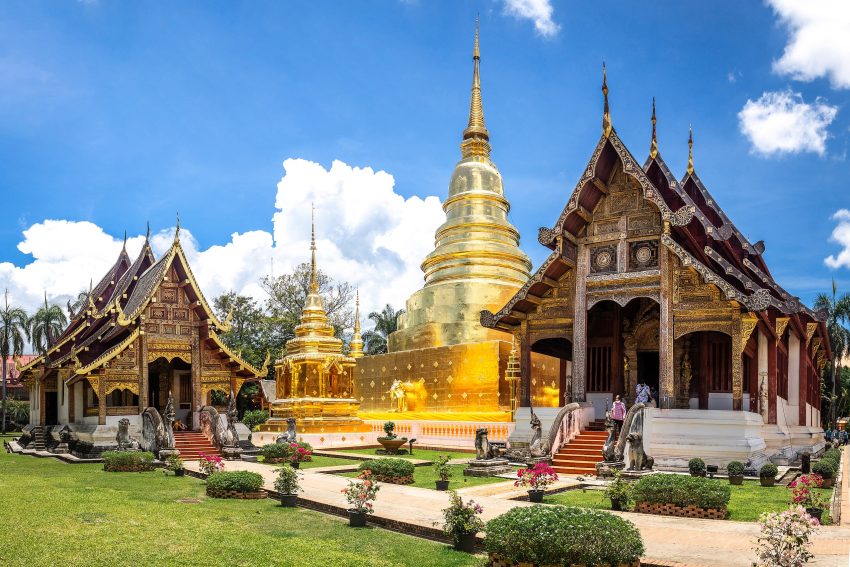
Wat Phra Sing Chiang Mai
CC BY-SA 4.0 / Supanut Arunoprayote.
Wat Phra Singh is a Royal First Grade temple at the heart of the Old City, founded in 1345 and still central to daily monastic life. Enter from Rachadamnoen Road past lion (singh) guardians into courtyards of gilded roofs, teak halls, stupas, and quiet shrines. The standout is Wihan Lai Kham, where Lanna-style craftsmanship frames the revered Phra Buddha Sihing image and murals that depict local life alongside Buddhist scenes. Don’t miss the raised Ho Trai library, built above a brick base to protect palm-leaf manuscripts from floods and pests. During Songkran, the Phra Buddha Sihing is ceremonially paraded through the streets, linking the temple to the city’s biggest seasonal ritual.
Location: Wat Phra Singh, Samlarn Road, Phra Sing, Mueang Chiang Mai District, Chiang Mai, Thailand | Hours: Daily 06.00-18.30 hrs | Price: Grounds are free, but the Main Sermon Hall is 50 Baht. | Website | Distance: 0.6km

14. Wat Ratcha Monthian
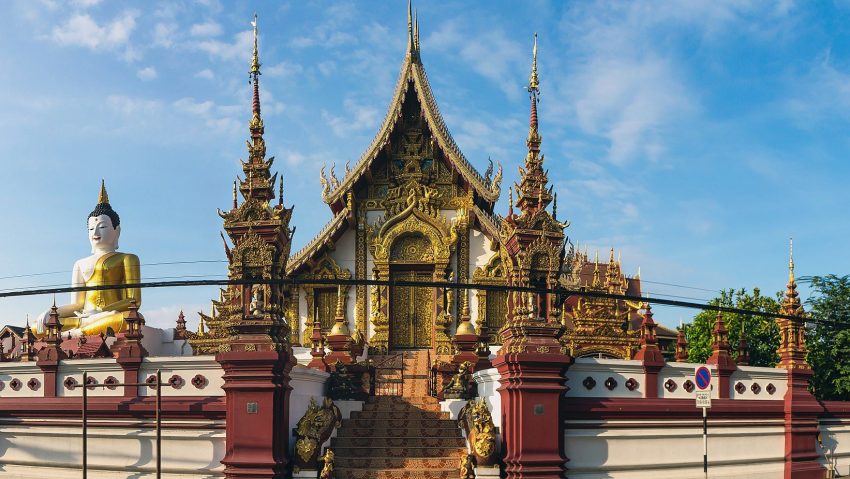
Wat Ratcha Monthian, Chiang Mai
CC BY-SA 3.0 / Stefan Fussan
Wat Ratcha Monthian is a neighborhood Buddhist temple on the southern edge of the Old City moat, best known for the giant white Buddha outside, seated in the Subduing Mara posture and facing the road. A steep staircase leads to an upper viharn whose façade glitters with gold floral patterns, naga-trimmed gables, chofa finials, and rooftop umbrellas, blending Lanna craft with Burmese-Shan flair. Inside, pale marble floors and red lacquer columns frame a crowned white Buddha with a calm, gentle expression. Downstairs feels more intimate and lived-in, with offerings before three crowned white Buddhas. The square, tiered Burmese-style chedi and nearby Rahu imagery add unusual visual notes.
Location: Wat Ratcha Monthian, 238/40 Manee Nopparat Rd, Tambon Si Phum, Amphoe Mueang Chiang Mai, 50200, Thailand | Hours: 6.00am to 6.00pm | Price: Free entry | Distance: 0.7km

15. Tha Pae Gate
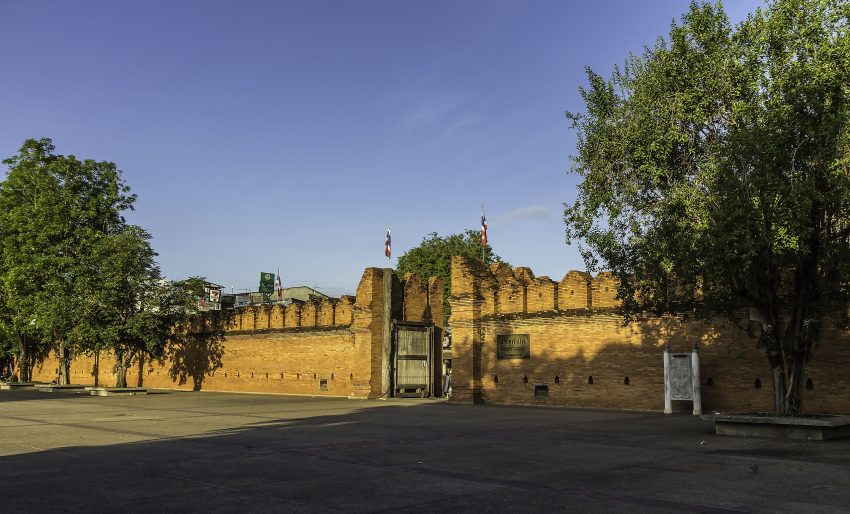
Chiang Mai   East gate of the city wall
Chiang Mai East gate of the city wall
CC BY-SA 3.0 / Stefan Fussan
Tha Pae Gate is the red-brick eastern entrance to the Old City’s former wall-and-moat defenses, a reminder of when this was a controlled checkpoint for trade and security under the Mangrai Dynasty. Its nickname, “Harbor of Floating Houses,” points to the old riverside commerce tied to the Ping River, even though the floating communities are long gone. Visitors linger for the central arch framed by reconstructed brickwork and an open square that’s made for photos, buskers, and street stalls. On Sunday evenings the space becomes the launch point for the Walking Street Market, with long lines of food and craft vendors and dense crowds. During major festivals, the square turns into a public stage for citywide celebrations.
Location: Tha Phae Gate, Tha Phae Road, Chang Khlan Sub-district, Mueang Chiang Mai District, Chiang Mai, Thailand | Distance: 0.7km

16. Wat Prasat
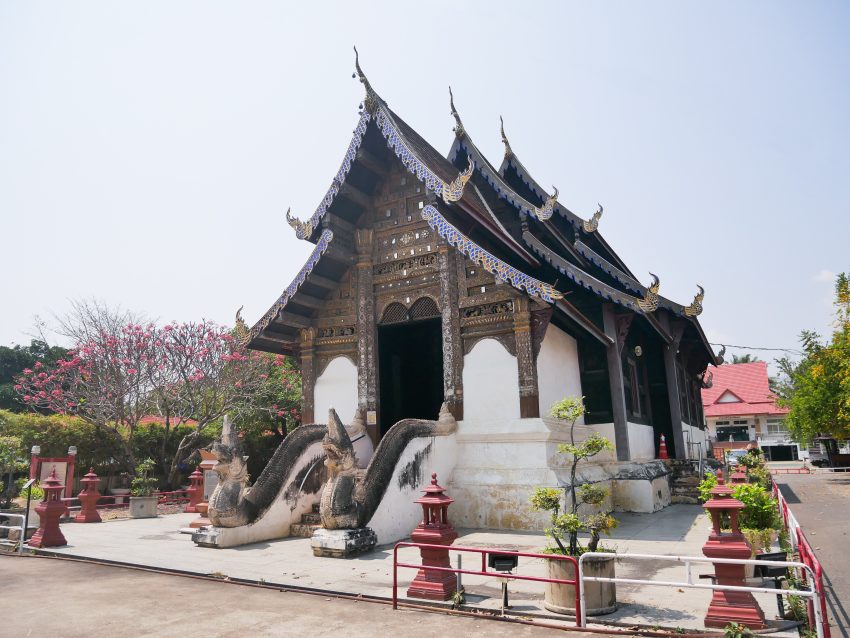
Wat Prasat
Wat Prasat
CC BY-SA 4.0 / กสิณธร ราชโอรส
Wat Prasat is a compact Old City temple complex prized for its hushed atmosphere and rare Lanna-era layout dating to the late 16th century. The dark teak viharn, with red-lacquered pillars and a subdued stone façade, connects directly to an older chedi through a tunnel-like chamber that hides the principal Buddha image. Behind it, the cruciform chedi’s niches hold white seated Buddhas, while small mondop-style corner towers topped with umbrella finials hint at Burmese influence. Visitors often linger for the quiet courtyards and photogenic wooden details, noting how calm it feels despite being near busier temple routes.
Location: Wat Prasat, Intra Warorot Lane 3 Alley, Si Phum, Mueang Chiang Mai District, Chiang Mai, Thailand | Hours: 8:00 AM to 5:00 PM. | Distance: 0.7km

17. Wat Khuan Khama

Golden Horse Temple
Golden Horse Temple
CC BY-SA 2.0 / Coggleswort00
Wat Khuan Khama (the “Golden Horse Temple”) is a 15th-century Lanna monastery just north of the Old City near Chang Phuak Gate, remembered for an equestrian origin story honoring a soldier’s beloved horse. The first thing you notice is the boundary wall crowned with gold horse statues, with larger figures standing guard at the entrances. Inside, the viharn’s tiered roof bristles with naga and chofa finials, while the murals stand out for showing modern Buddhist life—Songkran scenes, alms-giving, and the Northern Thai Fingernail Dance—rather than classic Jataka tales. Look for the altar’s nine Buddha images, including a green glass figure modeled after the Emerald Buddha, and the chedi’s subtle horse motifs.
Location: Wat Khuan Khama 143 Sri Poom Rd Tambon Si Phum, Mueang Chiang Mai District Chiang Mai 50200 Thailand | Hours: 6.00am to 6.00pm | Price: Free entry | Distance: 0.7km

18. Wat Lok Moli
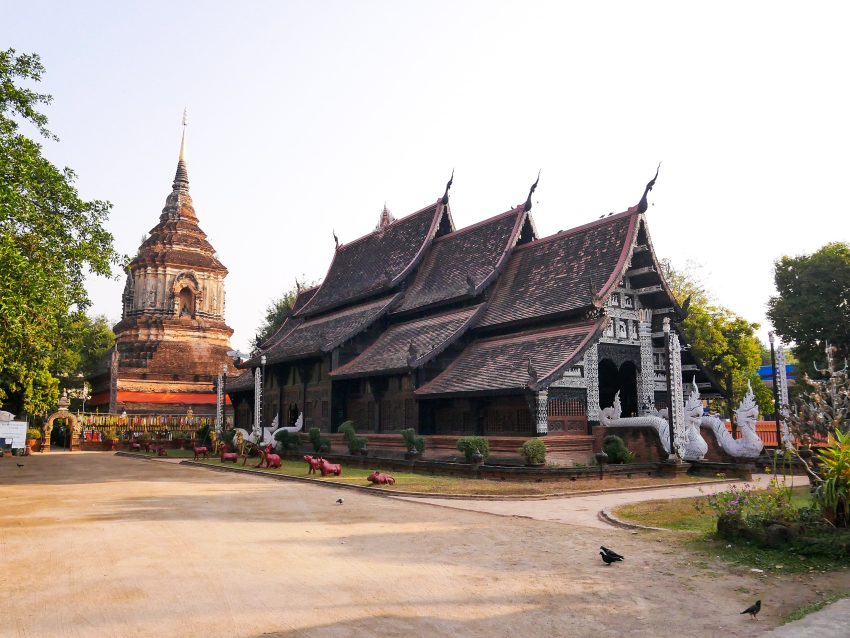
Wat Lok Moli
Wat Lok Moli
CC BY-SA 4.0 / กสิณธร ราชโอรส
Wat Lok Moli is a 14th-century Lanna Buddhist temple just north of the Old City moat, prized for its calm, garden-like compound and unhurried atmosphere. Its most arresting feature is a towering, weathered brick chedi—among the tallest and best preserved around—its surface marked by carved niches and age-darkened stucco. Near the entrance, elephant figures and guardian statues frame a pavilion with a statue of Queen Chiraprapha, linking the site to Lanna royalty. Inside, the wooden viharn stands out for intricate carvings and bold dark-and-white detailing that visitors often linger over. Many come for quiet photography, especially when the chedi catches soft morning or late-afternoon light.
Location: Wat Lok Moli, Manee Nopparat Road, ตำบล ศรีภูมิ อำเภอ เมืองเชียงใหม่ Chiang Mai, Thailand | Distance: 0.8km

19. Hua Lin Corner
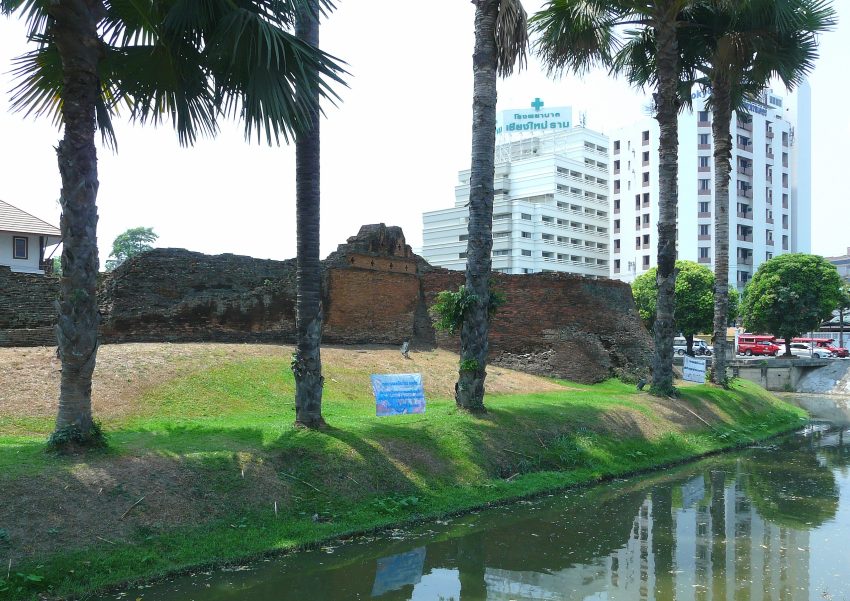
Chiang Mai City Wall Hua Lin Corner
CC BY-SA 3.0 / Hartmann Linge
Hua Lin Corner marks one of the original reinforced corners of the Old City’s near-square fortifications laid out in 1296 under King Mangrai. Set beside the moat on a calmer stretch of road than the main gates, it’s a good spot to study the defensive geometry up close: layered brickwork, a bastion-like turn in the wall, and the sloped embankments that once supported watch and patrol. Visitors tend to linger for the open views across the water, where lotus blooms sometimes float, and for the simple pleasure of a quiet sidewalk stroll along the moat. It’s less about big monuments and more about imagining how the Lanna capital was secured.
Location: Hua Lin Corner, Si Phum, Mueang Chiang Mai District, Chiang Mai, Thailand | Distance: 1.1km

20. Wat Buppharam
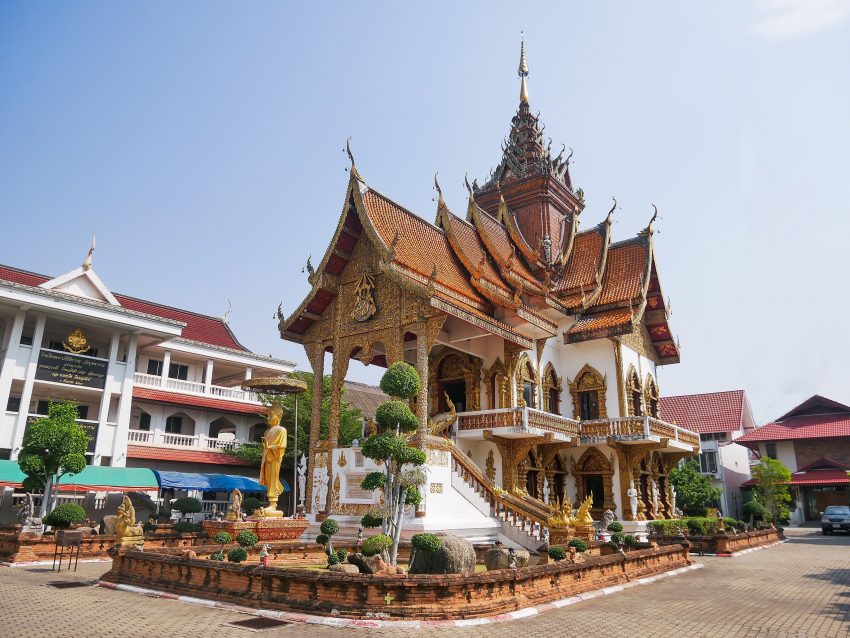
Wat BuppharamChiangmai
CC BY-SA 4.0 / กสิณธร ราชโอรส
Wat Buppharam is a working Buddhist temple known for its calm, intimate grounds and distinctive Lanna craftsmanship dating back to the 16th century. The main viharn draws you in with dark teak features, intricately carved wooden panels, and ceilings picked out with gilded details, while colourful murals tell Buddhist stories along the walls. Outside, a large, tiered chedi rises above the courtyard shrines, creating a striking contrast to the woodwork’s warm tones. Despite being close to busy streets, the atmosphere feels hushed and welcoming—visitors often linger in shaded corners, and reviews mention the lovingly kept grounds and a few resident animals.
Location: Wat Buppharam, Tha Phae Road, Chang Moi Sub-district, Mueang Chiang Mai District, Chiang Mai, Thailand | Distance: 1.2km

21. Wat Sri Suphan
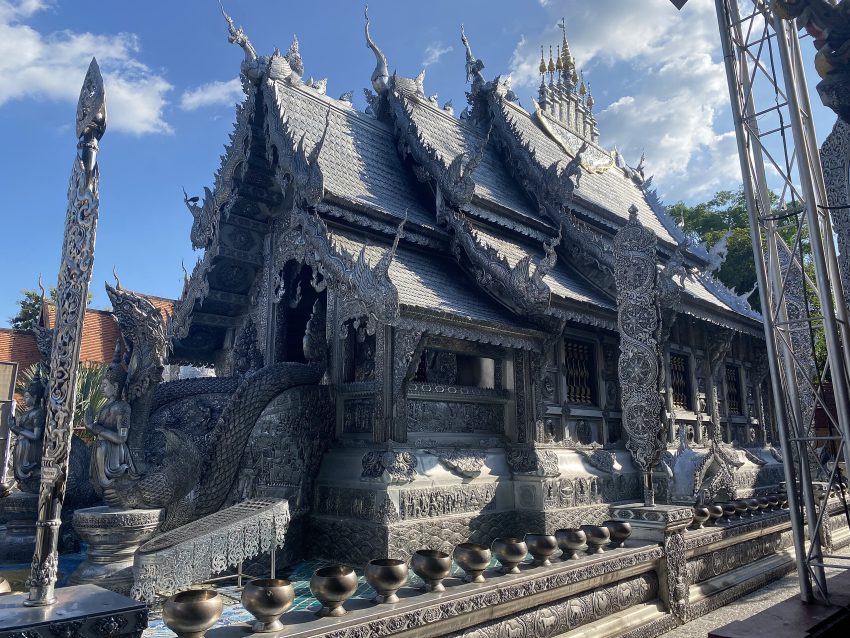
Wat Sri Suphan Chiang Mai
CC BY-SA 4.0 / Immanuelle
Wat Sri Suphan is a working Buddhist temple rooted in the old Haiya silversmith quarter, best known for its extraordinary silver-clad ubosot, completed in 2004 and unique in Thailand. The hall’s exterior is wrapped in repoussé panels—Buddhist stories, mythical creatures, and scenes of Lanna life—punctuated by Deva guardians, curling blue “water” motifs, and naga and Garuda figures along the roofline. Men may enter the ubosot, but women are traditionally restricted to admiring the intricate metalwork from outside, a detail many visitors note. Elsewhere, the steep-roofed viharn holds Chiang Saen–style Buddha images, and you can often hear hammers from nearby workshops shaping the same craft that decorates the temple.
Location: Wat Sri Suphan, Wua Lai Road, Haiya Sub-district, Mueang Chiang Mai District, Chiang Mai, Thailand | Hours: 9.00am to 9.30pm | Price: 50 Baht to the ordination hall (Women are not allowed. Photography is permitted) | Distance: 1.3km

22. Wat Suan Dok
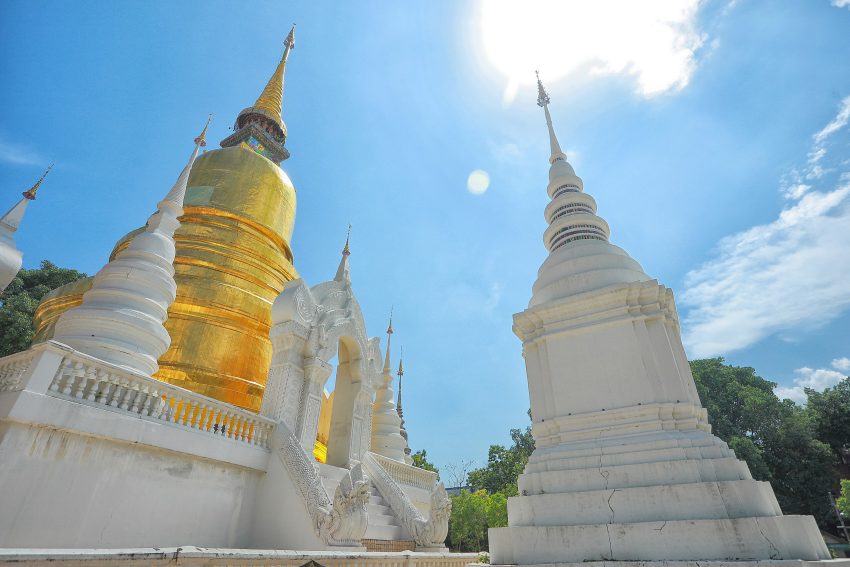
Wat Suan Dok
Wat Suan Dok
CC BY-SA 4.0 / Yakuzakorat
Wat Suan Dok is a 14th-century Buddhist temple set just west of the Old City walls on land that once served as a royal flower garden. The first thing most visitors remember is the luminous golden stupa rising from a field of pristine white chedis, many holding the ashes of Lanna royals and revered monks, creating a stark gold-on-white contrast in bright sun. A large viharn at the front shelters an imposing Buddha image and carved details, while the open grounds feel spacious and unhurried. Travelers often remark on the quiet atmosphere and how easy it is to wander and photograph without crowds, especially later in the day.
Location: Wat Suan Dok, Suthep Road, Suthep, Mueang Chiang Mai District, Chiang Mai, Thailand | Distance: 2.1km

23. National Museum
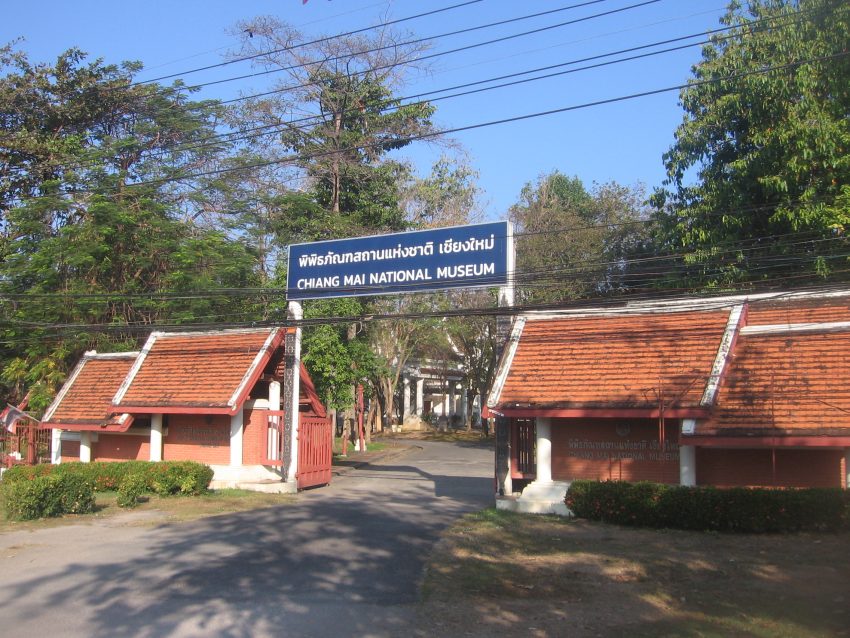
Chiang Mai National Museum
CC BY-SA 1.0 / Zhou Guanhuai
Operated by Thailand’s Fine Arts Department, the Chiang Mai National Museum lays out the story of the Lanna Kingdom across spacious, calm galleries with clear Thai–English labels. Exhibits move from early settlement and political shifts to spiritual life, with ancient tools, pottery, jewellery, and early sculpture that make daily life feel tangible. Buddhist art stands out, showing Lanna forms alongside Burmese and Shan influences in statues and religious objects. Maps tracing historic trade routes underline the region’s role as a crossroads with Burma, Laos, and China. The setting just northwest of the Old City gives it a slightly removed, contemplative feel that suits a slow, focused visit.
Location: Chiang Mai National Museum, Chang Phueak, Mueang Chiang Mai District, Chiang Mai, Thailand | Hours: Wednesday through Sunday, from 9:00 AM to 4:00 PM | Price: 30 baht | Distance: 2.6km

24. Wat Umong
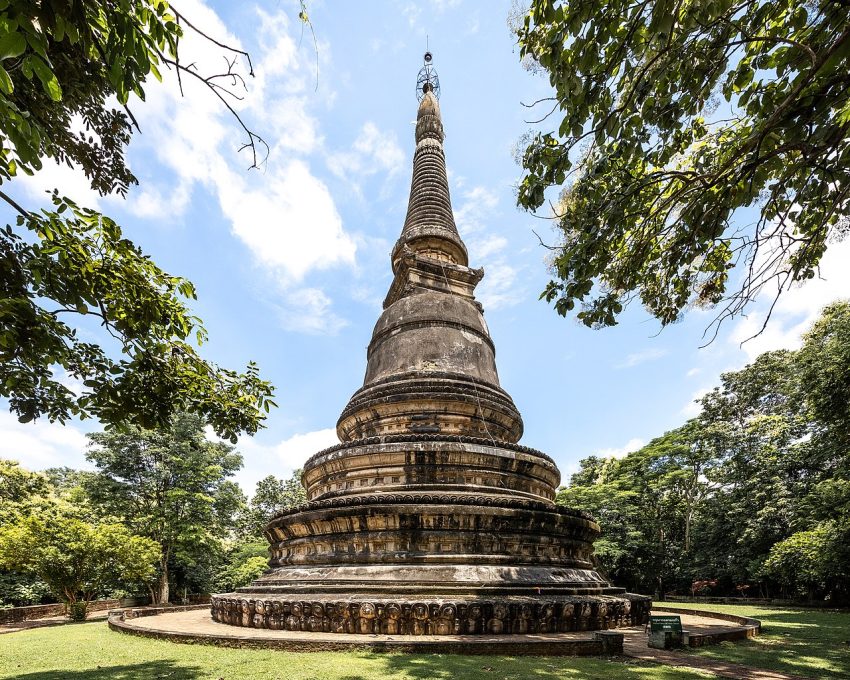
Wat Umong
Wat Umong
CC BY-SA 4.0 / Supanut Arunoprayote.
Wat Umong is a 14th-century forest monastery built for quiet meditation, set on the wooded western edge near Doi Suthep. Its most memorable feature is a brick tunnel system: cool, dim passageways with small shrines and faded Buddhist murals that feel worlds away from the street. Above the tunnels rises a weathered, mossy chedi tucked among tall trees, while the grounds unfold into shady paths dotted with statues and proverb signs. A tranquil pond draws visitors to sit, watch fish, and listen to birds, and you may spot monks moving through the forest. Reviews often mention the calm atmosphere and the temple’s retreat-like feel.
Location: Wat Umong, Suthep, Mueang Chiang Mai District, Chiang Mai, Thailand | Distance: 3.6km

25. Highland People Discovery Museum
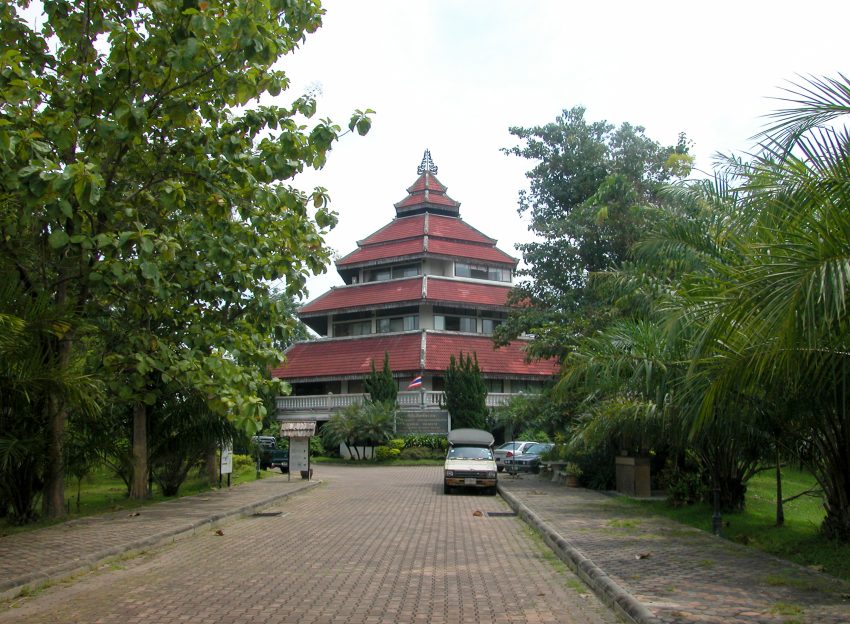
Tribal Museum Chiang Mai
CC BY-SA 4.0 / FredTC
A calm, two-part museum dedicated to the stories and material culture of northern Thailand’s hill tribes. Inside the main building, you’ll find traditional clothing, tools, and crafts, plus concise background panels on groups such as the Akha, Karen, Lisu, and Hmong; visitors often note the text is insightful even if the displays feel a bit loosely organized. Interactive screens add hands-on context for kids and curious adults. Entry is typically free by donation, and the small gift shop focuses on hill-tribe items rather than generic souvenirs. Clean bathrooms and a quiet, reflective atmosphere make it an easy, unhurried stop.
Location: The Highland People Discovery Museum, 9 Chotana Road, Chang Phueak, Mueang Chiang Mai District, Chiang Mai, Thailand | Hours: 8:30 AM to 4 PM Monday through Friday | Price: Free entry | Distance: 3.7km

Best Day Trips from Chiang Mai

A day trip from Chiang Mai offers the perfect opportunity to escape the urban rhythm and discover the surrounding region's charm. Whether you're drawn to scenic countryside, historic villages, or cultural landmarks, the area around Chiang Mai provides a variety of easy-to-reach destinations ideal for a one-day itinerary.

1. Wat Phra That Doi Kham
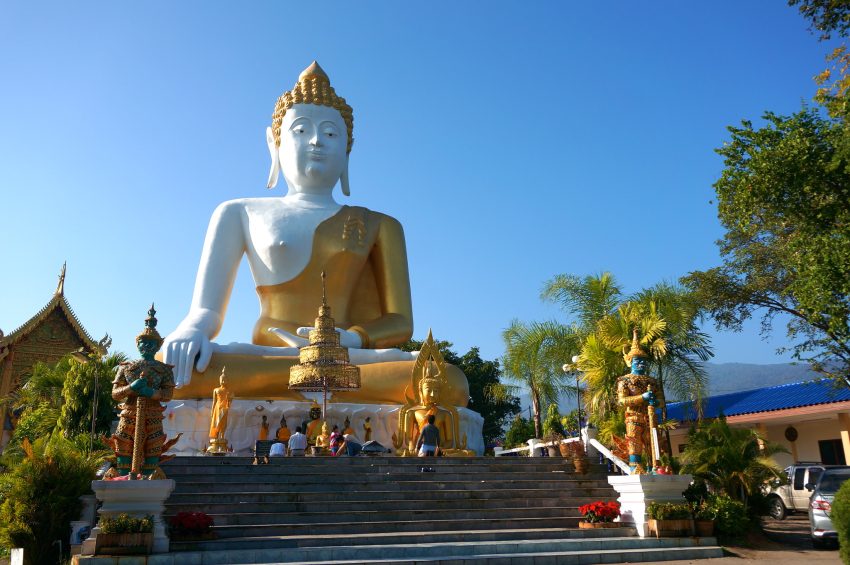
Wat Phra That Doi Kham
CC BY-SA 2.0 / eLjeProks
Wat Phra That Doi Kham is one of the best places to visit in Chiang Mai for travellers seeking a tranquil temple with breathtaking views and deep spiritual significance. Perched on a forested hill just south of the city, this ancient temple offers a quieter alternative to the famous Wat Phra That Doi Suthep while still delivering beautiful scenery and…
Location: Wat Phra That Doi Kham Mae Hia, Mueang Chiang Mai District Chiang Mai 50100 Thailand | Distance: 8km
Visiting Wat Phra That Doi Kham

2. Doi Suthep
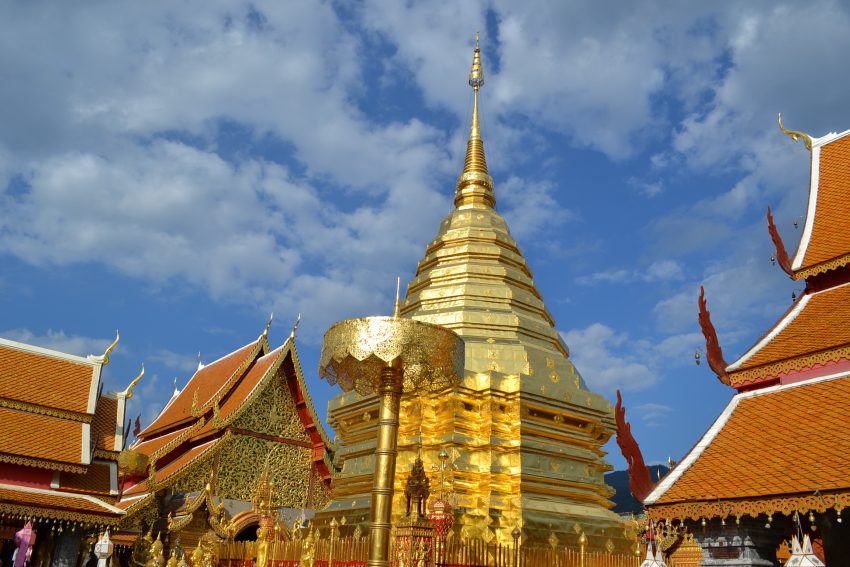
Phra That Doi Suthep
CC BY-SA 3.0 / ผู้สร้างสรรค์ผลงาน/ส่งข้อมูลเก็บในคลังข้อมูลเสรีวิกิมีเดียคอมมอนส์ - เทวประภาส มากคล้าย
Wat Phra That Doi Suthep is one of the must-see places in Chiang Mai, a sacred mountaintop temple offering sweeping views, shimmering golden architecture, and a serene atmosphere high above the city. Perched on Doi Suthep mountain in the Doi Suthep–Pui National Park, the temple is woven into local legend and spirituality, drawing visitors from across Thailand and around the…
Location: Doi Suthep, Suthep, Mueang Chiang Mai District, Chiang Mai, Thailand | Distance: 10.5km
Visiting Doi Suthep

3. Darapirom Palace Museum
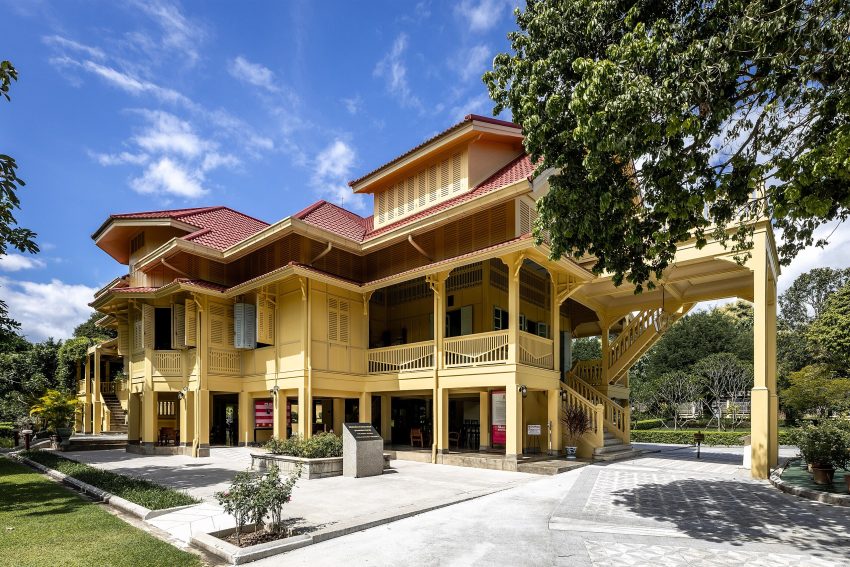
Darapirom Palace Museum
CC BY-SA 4.0 / Supanut Arunoprayote.
The Darapirom Palace Museum is one of the most atmospheric historic homes in northern Thailand, offering an intimate look into the life of Princess Dara Rasmi, a Lanna royal who became a consort of King Chulalongkorn (Rama V). Built in 1913, the palace blends traditional Thai and European architectural elements, creating an elegant space that reflects the cultural fusion of…
Location: Darapirom Palace Museum, Chulalongkorn University, Rim Tai, Mae Rim District, Chiang Mai, Thailand | Hours: Tuesday to Sunday, and on public holidays, from 9 a.m. to 5 p.m. | Price: 20 baht | Distance: 14.4km
Visiting Darapirom Palace Museum

4. Mae Sa Waterfall

Mae Sa Waterfall Chiang Mai
CC BY-SA 3.0 / Hdamm
Mae Sa Waterfall is one of the most scenic and accessible waterfalls in the Chiang Mai area, located within the lush forests of Doi Suthep–Pui National Park in Mae Rim District. Stretching across 10 picturesque tiers, this long cascade flows through cool, shaded jungle, offering plenty of spots where visitors can rest, take photos, or even dip their feet in…
Location: Mae Sa Waterfall, Soi Namtok Mae Sa 4, Mae Raem, Mae Rim District, Chiang Mai, Thailand | Distance: 16km
Visiting Mae Sa Waterfall

5. Lamphun
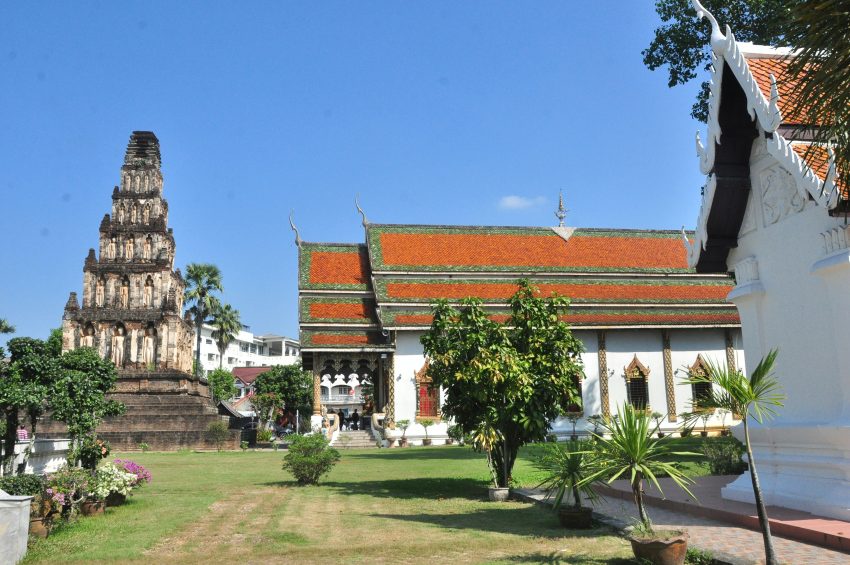
Lamphun Thailand
Lamphun Thailand
Lamphun, a small city in northern Thailand, offers a peaceful retreat surrounded by lush landscapes and charming historical sites. It is less crowded than nearby cities like Chiang Mai, making it an ideal destination for those looking to experience traditional Thai culture in a more relaxed setting. The city is known for its beautiful temples, scenic natural spots, and serene…
Visiting Lamphun
Powered by GetYourGuide

6. Bua Tong Waterfalls

Buatong Waterfall Thailand
CC BY-SA 3.0 / chootrong
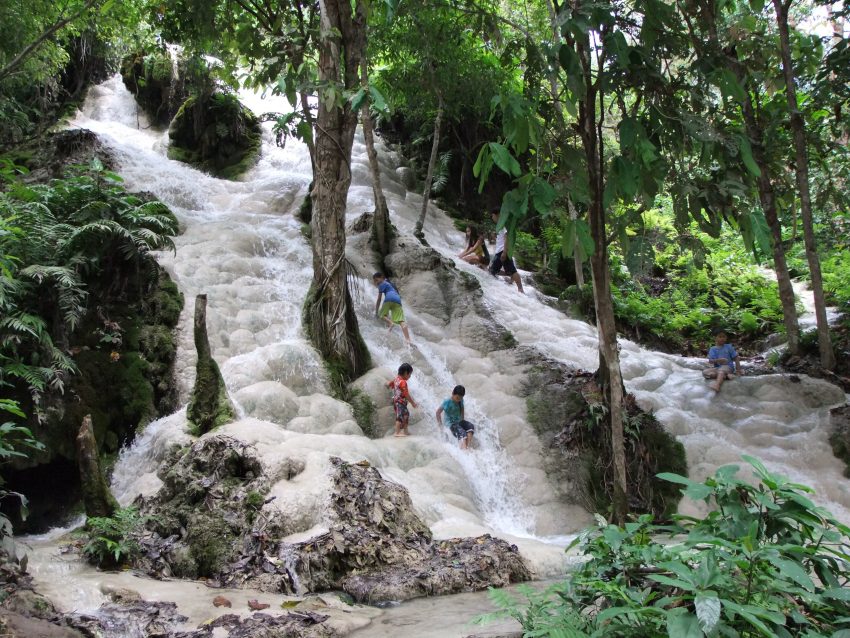
The Bua Tong Waterfalls, also known as the Sticky Waterfalls, are one of the most unusual natural attractions in northern Thailand. Located within Sri Lanna National Park about 60 kilometers north of Chiang Mai, these cream-colored limestone cascades are fed by a mineral-rich spring that coats the rocks with calcium. This creates a rough, non-slippery surface that allows visitors to…
Location: Buatong Waterfall-Chet Si Fountain National Park, Mae Ho Phra, Mae Taeng District, Chiang Mai, Thailand | Hours: 06.00 until 18:00 | Price: Free entry | Distance: 32.5km
Visiting Bua Tong Waterfalls
Powered by GetYourGuide

7. Rantong Elephant Rescue Centre

elephant sactuary
elephant sactuary
Rantong Elephant Rescue Centre is one of the most compassionate wildlife sanctuaries in northern Thailand, offering meaningful, respectful encounters with elephants rescued from hard labour or abusive tourism settings. Nestled in Chiang Mai’s lush hills, the centre provides a peaceful forest habitat where elephants can roam, forage, and socialise freely. For travellers seeking responsible tourism, this is one of the…
Location: Ran-Tong Save & Rescue Elephant Centre, Ban Chang, Mae Taeng District, Chiang Mai, Thailand | Website | Distance: 40.2km
Visiting Rantong Elephant Rescue Centre

8. Doi Inthanon
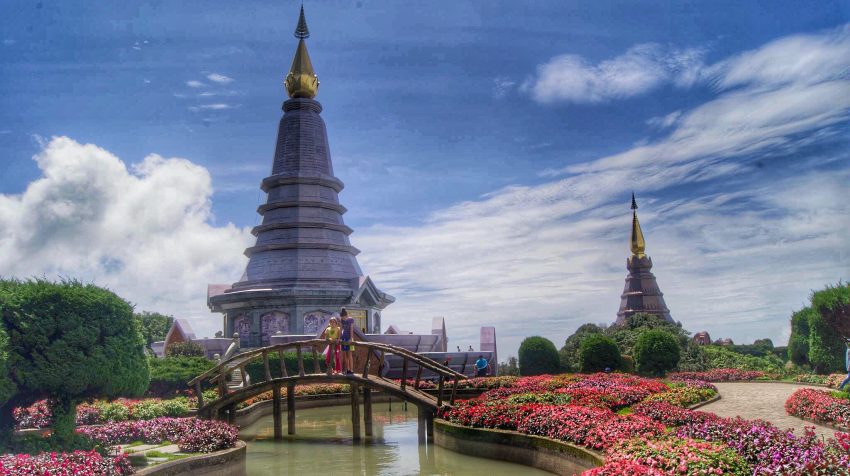
Twin Pagodas of Doi Inthanon
CC BY-SA 4.0 / ElliotJW
Doi Inthanon rises 2,565 meters above sea level, making it the highest mountain in Thailand and one of the must-see places in Chiang Mai for travellers seeking natural beauty and cooler mountain air. Known as “The Roof of Thailand,” it forms part of the Himalayan mountain range and offers an extraordinary variety of landscapes—from dense forests and waterfalls to misty…
Location: Doi Inthanon, Ban Luang, Mae Chaem District, Chiang Mai, Thailand | Distance: 57.3km
Visiting Doi Inthanon

9. Chiang Dao Cave
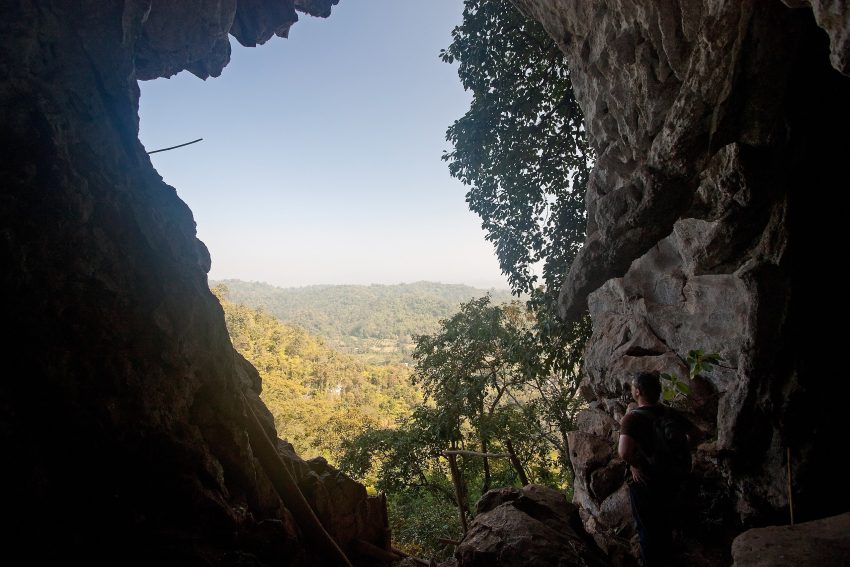
Bat cave Chiang Dao
Bat cave Chiang Dao
CC BY-SA 2.0 / Andrea Schaffer
Chiang Dao Cave, known locally as Tham Chiang Dao, is one of northern Thailand’s most captivating natural and spiritual sites. Set within the forested mountains of Chiang Dao National Park, this sprawling limestone cave system stretches for more than 12 kilometres, with illuminated chambers, sacred shrines, and fantastical rock formations. For nature lovers and spiritual travellers alike, this is one…
Location: Chiang Dao Cave, หมู่ 5 Chiang Dao, Chiang Dao District, Chiang Mai, Thailand | Distance: 67.4km
Visiting Chiang Dao Cave
Powered by GetYourGuide

10. Wat Tham Pha Plong

Wat Tham Pha Plong
Wat Tham Pha Plong
CC BY-SA 2.0 / Andrea Schaffer
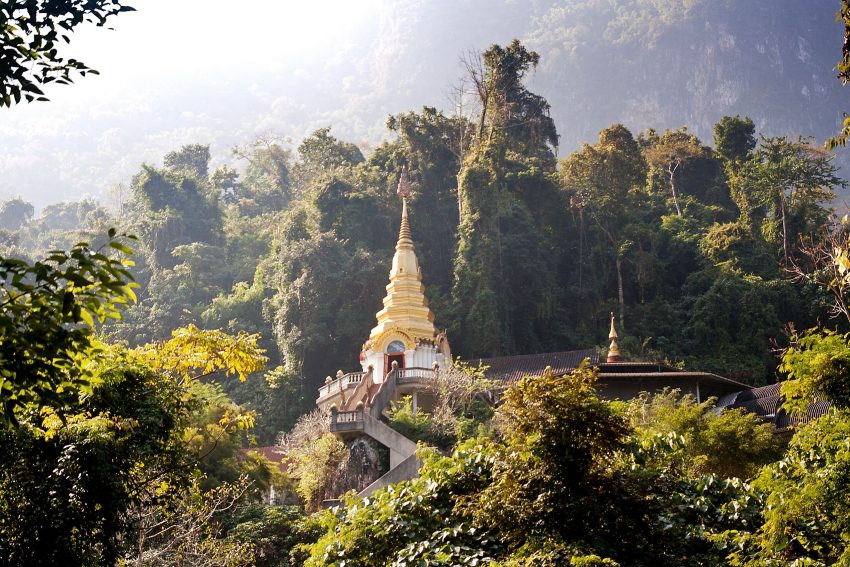
Wat Tham Pha Plong is one of northern Thailand’s most peaceful and spiritually rich temples, perched high on Doi Pha Plong at around 1,200 metres above sea level. Surrounded by dense forest and birdsong, the temple blends natural beauty with profound tranquillity, making it one of the best places to visit in Chiang Dao for travellers who seek both scenery…
Location: Wat Tham Pha Plong, หมู่ 5 Chiang Dao, Chiang Dao District, Chiang Mai, Thailand | Distance: 68.5km
Visiting Wat Tham Pha Plong

11. Lampang

Wat chalermprakiat Lampang
Lampang is a charming city in northern Thailand that offers a peaceful escape from the hustle and bustle of more tourist-heavy destinations. Known for its relaxed atmosphere and beautiful surroundings, Lampang is perfect for those looking to experience authentic Thai culture. The city is a great base for exploring nearby natural attractions such as waterfalls, caves, and national parks. Visitors…
Visiting Lampang
Powered by GetYourGuide

12. Pai

Complete Guide to Pai
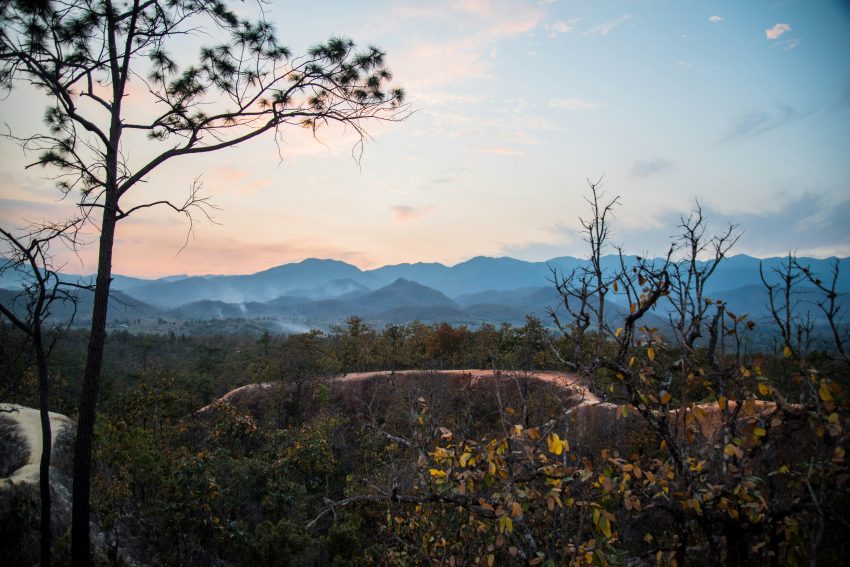
Pai is a charming town nestled in the mountains of northern Thailand, known for its laid-back atmosphere, stunning natural beauty, and vibrant arts scene. Surrounded by lush valleys, hot springs, waterfalls, and rice paddies, Pai offers visitors a perfect mix of relaxation and adventure. The town is a favorite among backpackers and nature lovers, providing ample opportunities for hiking, biking,…
Visiting Pai
Powered by GetYourGuide

13. Mae Hong Son

A Pagoda in Mae Hong Son
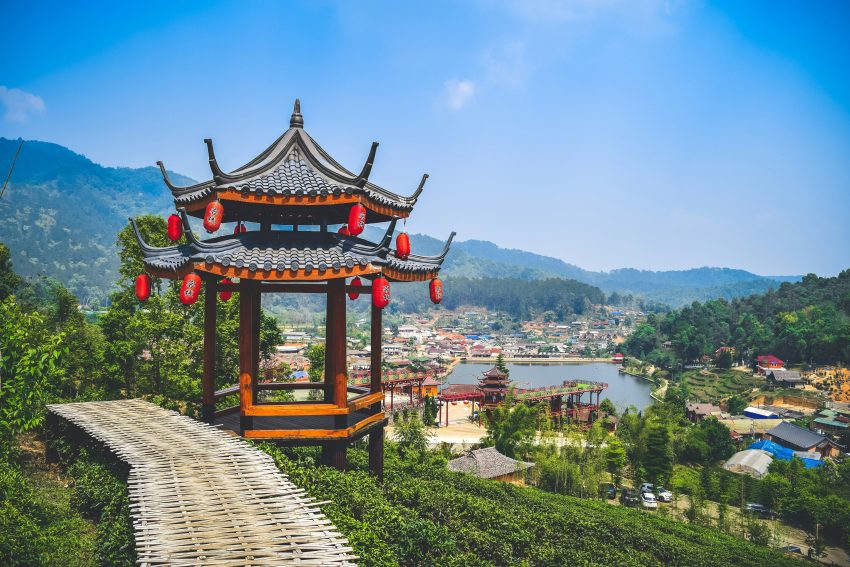
Mae Hong Son is a stunning destination nestled in the mountains of northern Thailand, known for its serene landscapes, charming villages, and rich cultural heritage. Visitors flock to this peaceful province for its natural beauty, including lush jungles, dramatic mountain views, and tranquil lakes. The town of Mae Hong Son itself offers a peaceful atmosphere with a mix of traditional…
Visiting Mae Hong Son
Powered by GetYourGuide

14. Phrae

Wat Hua Khuang Phrae
CC BY-SA 3.0 / อนุรักษ์ แสนเขื่อน
Visiting Phrae, Thailand, offers a tranquil escape into a town rich in culture and charm. Known for its laid-back atmosphere, Phrae is perfect for travelers seeking a mix of heritage, natural beauty, and authentic experiences. The town is home to beautifully preserved teakwood houses, including the iconic Vongburi House, which showcases traditional Thai architecture and antique collections. Phrae's temples, such…
Visiting Phrae

15. Chiang Rai

chiang rai
chiang rai
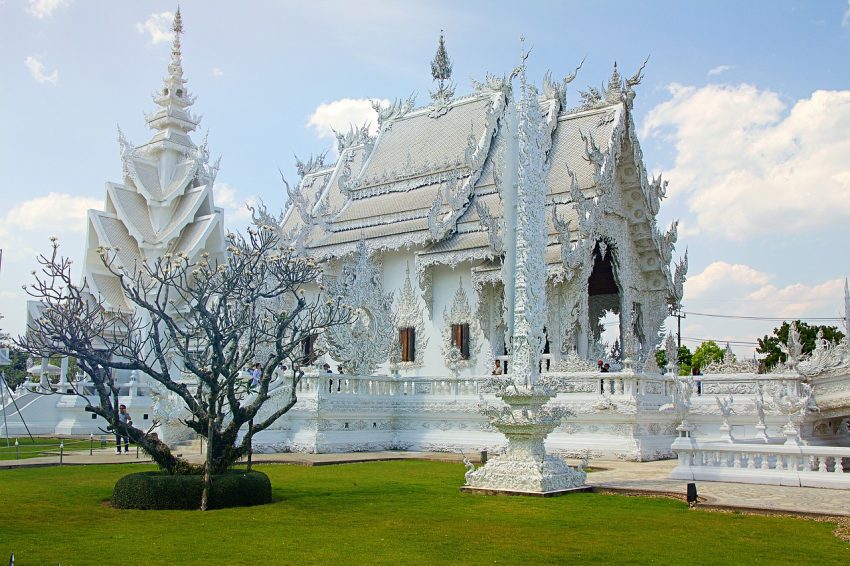
Visiting Chiang Rai offers a unique blend of art, nature, and spirituality in northern Thailand. Known for its stunning and unconventional temples, the city is home to the famous White Temple (Wat Rong Khun), a masterpiece of contemporary art that captivates with its intricate design and striking white exterior. Chiang Rai also boasts the Blue Temple (Wat Rong Suea Ten),…
Visiting Chiang Rai
Powered by GetYourGuide

Where to Stay in Chiang Mai

Staying within the Old City offers a cultural experience with temples, markets, and street food at your doorstep. For a more modern stay, the Nimmanhaemin area has trendy hotels, cafés, and nightlife.

Chiang Mai is best visited for 3 to 4 days, allowing time to explore temples, the night bazaar, and Doi Suthep. A 5 to 6-day stay is great for trekking, elephant sanctuaries, or visiting nearby Pai.

Using the our Hotel and Accomodation map, you can compare hotels and short-term rental accommodations in Chiang Mai. Simply insert your travel dates and group size, and you’ll see the best deals for your stay.

Chiang Mai Accommodation Map

Best Time to Visit Chiang Mai

Visiting Chiang Mai in the Cool Season (November to February)

The cool season is the most popular time to visit Chiang Mai, offering pleasant weather with temperatures ranging from 15°C to 28°C (59°F to 82°F). This period is ideal for outdoor activities like temple hopping, trekking, and visiting the nearby mountains. Events like the Loi Krathong and Yi Peng Lantern Festival in November add a magical touch to the city. However, it’s also the peak tourist season, so booking accommodations in advance is recommended.

Visiting Chiang Mai in the Hot Season (March to May)

The hot season brings rising temperatures, often exceeding 35°C (95°F). While sightseeing can be more challenging during the day, this period is great for exploring indoor attractions, visiting waterfalls, or enjoying poolside relaxation. April’s Songkran Festival, the Thai New Year water celebration, is a highlight of this season and offers a fun and refreshing way to experience local culture.

Visiting Chiang Mai in the Rainy Season (June to October)

The rainy season brings cooler temperatures and lush green landscapes to Chiang Mai. Rain showers are typically brief and occur in the late afternoon or evening, leaving mornings free for exploration. This is a quieter time to visit, with fewer tourists and lower accommodation costs. The vibrant countryside and waterfalls are particularly stunning during this period, making it ideal for nature lovers.

Each season offers unique experiences in Chiang Mai, but the cool season is generally considered the best for comfortable weather and cultural festivities. Whether you prefer bustling festivals or serene natural beauty, Chiang Mai has something to offer year-round.

Annual Weather Overview

  • January 29°C
  • February 31°C
  • March 36°C
  • April 37°C
  • May 33°C
  • June 31°C
  • July 31°C
  • August 29°C
  • September 30°C
  • October 30°C
  • November 29°C
  • December 28°C

How to get to Chiang Mai

Chiang Mai is well-connected and offers several transportation options to reach the city. Whether you’re coming from within Thailand or abroad, you can easily access this vibrant northern city and begin your adventure.

Getting to Chiang Mai by Air

The quickest way to reach Chiang Mai is by flying into Chiang Mai International Airport (CNX). The airport is well-served by both domestic and international flights, with connections to major cities in Thailand like Bangkok, Phuket, and Chiang Rai, as well as some international destinations in Asia. From the airport, you can take a taxi or use ride-hailing services to get to the city center, which is about 10 minutes away.

Getting to Chiang Mai by Train

Traveling by train is a scenic and comfortable option to reach Chiang Mai. Trains depart regularly from Bangkok’s Hua Lamphong Station, with overnight sleeper trains being a popular choice. The journey takes about 12 to 14 hours, allowing you to relax and enjoy the landscapes along the way. Upon arrival at Chiang Mai Railway Station, it’s easy to get a tuk-tuk or taxi to your accommodation.

Getting to Chiang Mai by Bus

Buses are a cost-effective and convenient option for traveling to Chiang Mai. Buses leave from various terminals in Bangkok, including the Mo Chit Bus Terminal, and the journey takes around 9 to 11 hours. Once you arrive at Chiang Mai Arcade Bus Station, you can take a taxi or local transport to the city center.

Getting to Chiang Mai by Car

For those who prefer flexibility, renting a car is an excellent choice for getting to Chiang Mai. The drive from Bangkok to Chiang Mai takes about 10 to 12 hours via Highway 1 or Highway 11, offering scenic views of the countryside and mountains. If you’re planning to explore the surrounding areas, renting a car gives you the freedom to stop and take in the sights along the way.

Getting Around Chiang Mai

Once in Chiang Mai, getting around is easy. You can rent a bicycle or motorbike, which is a popular way to explore the city at your own pace. Alternatively, taxis, tuk-tuks, and songthaews (shared red trucks) are widely available and inexpensive. Many visitors also opt for guided tours or private transportation to visit attractions outside the city.

Chiang Mai is easily accessible and offers various travel options to suit all preferences and budgets, making it a convenient and enjoyable destination for any traveler.
Powered by GetYourGuide

More from this area