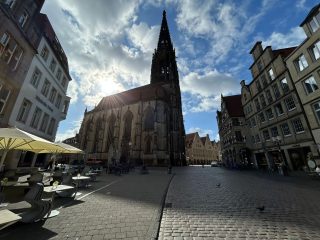
Zwinger, Münster
City Walls in Münster
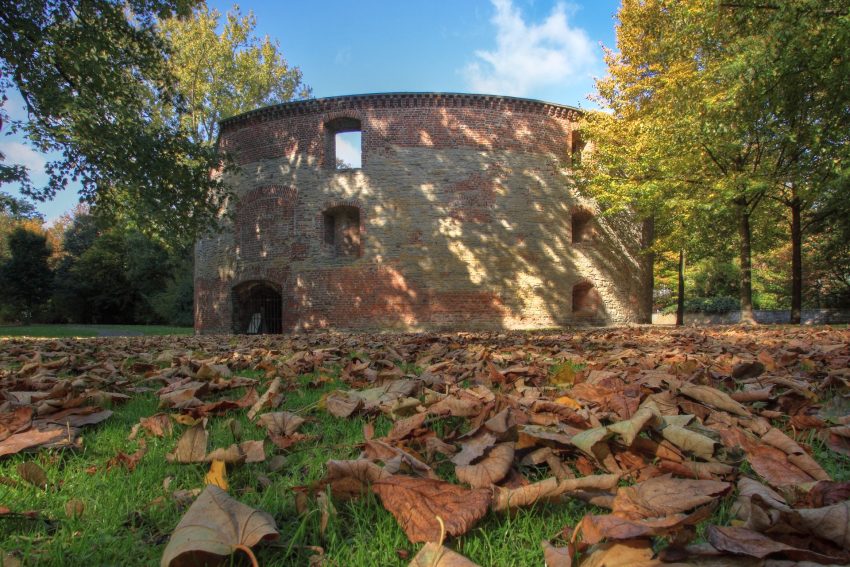
Tucked behind the line of Münster's former city walls, the Zwinger is a compact but powerful place where centuries of history collide. Built in the 16th century as part of the city's fortifications, this squat, thick-walled structure once guarded approaches to the medieval town, later serving as a prison and powder store. Today, its ruined shell feels worlds away from the bustle of Domplatz and Prinzipalmarkt, a quiet reminder that Münster's story includes not only splendid churches and palaces, but also darker, more difficult chapters.
During the Nazi era, the Zwinger became a Gestapo detention and execution site, and Allied bombing in 1944 left its interior devastated. Rather than smoothing over that history, the city chose to preserve the building as a ruin and a memorial. Since 1987, Rebecca Horn's installation Das gegenläufige Konzert has filled the space with rhythmic metal hammer blows that seem to echo from the walls themselves, turning the Zwinger into a highlight of any walking tour of Münster for those who want to engage deeply with the city's past.
History and Significance of the Zwinger
Originally built in the 16th century, the Zwinger formed part of Münster's outer defensive ring, sitting between the city wall and an outer barrier as an extra layer of protection. Its thick walls and strategic position made it a key strongpoint in the fortifications, and over time it took on different roles, including use as a prison and storage space. Even in its early centuries, the building was associated with control, confinement, and the realities of a fortified city.
The 20th century gave the Zwinger its most somber associations. Under the Nazi regime, it was used by the Gestapo as a detention and execution site, turning the already heavy space into a place of terror and persecution. In 1944, Allied bombing raids severely damaged the building, leaving the interior gutted and the structure in ruins. Unlike many other damaged sites, the Zwinger was not rebuilt to its former appearance; instead, it was preserved in its scarred state as a physical reminder of wartime violence and dictatorship.
In the post-war years, the city gradually reframed the Zwinger as a memorial, a place where political persecution and violence could be remembered and confronted. Rather than erasing its past, the decision to maintain it as a ruin underscored a commitment to historical honesty. Today, it stands as both a rare survivor of Münster's fortifications and a key site for commemorating victims of National Socialism, linking older military history with the tragedies of the 20th century.
Things to See and Do in the Zwinger
From the outside, the Zwinger’s thick stone walls, narrow openings, and compact footprint immediately mark it as something different from Münster’s churches and townhouses. Walking around the structure, you can see how it was designed as a defensive bulwark, more concerned with strength and position than decorative flourishes. Information panels, when present, help you place it within the former wall system and understand how it once functioned as part of the city’s defences.
Inside, when open, the atmosphere is strikingly different from a typical museum. Rebecca Horn’s installation Das gegenläufige Konzert uses metal hammers that periodically strike the inner walls, sending echoes through the space like distant, mechanical heartbeats. The combination of sound, stone, and emptiness turns the ruin into a meditative environment that invites visitors to pause, listen, and think about what this building has witnessed-from early military use to the horrors of Gestapo imprisonment.
Because of its heavy themes, a visit to the Zwinger is less about ticking off sights and more about taking time for reflection. Many visitors spend a quiet few minutes inside, then step back out to the green spaces and calm streets nearby, using the walk to process what they have seen and heard. The contrast between the Zwinger's interior and the friendly, lively city around it makes the experience even more powerful, underscoring how fragile peace and normality can be.
How to Get to the Zwinger
The Zwinger is located near Münster's Kreuzviertel district, close to the line of the former city walls and within walking distance of the Old Town. Most international visitors arrive via Münster Osnabrück International Airport, which offers connections to various European destinations and onward travel to the city centre by bus, shuttle, or taxi. For the best deals and a seamless booking experience, check out these flights to Münster on Booking.com.
From Münster (Westf) Hauptbahnhof, you can reach the Zwinger on foot or by local bus.Train schedules and bookings can be found on Omio. Walking takes around 20-25 minutes: first head toward the historic centre (Domplatz and Prinzipalmarkt), then continue outward along the green belt that traces the old fortifications until you reach the site. Buses serving the Kreuzviertel and nearby stops provide a quicker option if you prefer.
If you are travelling by car, follow signs to the Innenstadt and look for public car parks on the edge of the centre or in the Kreuzviertel area; from there, it is only a short walk through residential and park-like surroundings to the Zwinger.If you are looking to rent a car in Germany I recommend having a look at Discover Cars, first, as they compare prices and review multiple car rental agencies for you. The tower of the nearby Buddenturm and the line of former fortifications can help you orient yourself as you approach.
Practical Tips on Visiting the Zwinger
- Suggested tips: Approach the Zwinger as part of a longer walk along Münster's former walls, linking it with sites like the Buddenturm and nearby green spaces for context and quiet reflection.
- Best time to visit: Daytime hours offer the clearest access and safest footing; early morning or late afternoon can feel especially contemplative, with softer light and fewer people.
- Entrance fee:
- Opening hours:
- Official website:
- How long to spend: Plan 20-40 minutes to explore the exterior, read any information, and, if open, spend quiet time with the installation inside.
- Accessibility: Paths around the Zwinger are mostly level, but the ruin itself may include uneven surfaces, steps, and constrained access; visitors with reduced mobility should check conditions on arrival.
- Facilities: There are no dedicated facilities directly at the Zwinger; cafés, toilets, and shops are available back toward the Old Town and in the Kreuzviertel neighbourhood.
- Photography tip: Outside, try framing the Zwinger against surrounding greenery or nearby buildings to emphasize its heavy, fortress-like character; inside, focus on textures and shadows rather than using flash.
- Guided tours: Look out for memorial or history-focused tours that include the Zwinger, as they provide important context on its use during the Nazi period and the meaning of Rebecca Horn's installation.
- Nearby food options: After your visit, head toward Kreuzviertel's cafés or back into the city centre, where plenty of bakeries and restaurants offer a gentle re-entry into everyday Münster life.
Where to Stay close to the Zwinger
Staying near the Zwinger or in the adjacent Kreuzviertel gives you easy access to both this quiet memorial site and the more bustling streets of central Münster. A convenient central base is Stadthotel Münster, which offers modern rooms within comfortable walking distance of the Old Town, the promenade, and the former fortifications. For a more design-forward option positioned a little closer to Kreuzviertel, Factory Hotel combines industrial-chic interiors with good bus and bike links into the centre and toward the Zwinger. If you prefer to be close to both the Hauptbahnhof and the historic core, Hotel Kaiserhof makes a solid choice, allowing you to reach the memorial, Domplatz, and Prinzipalmarkt with ease.
Is the Zwinger Worth Visiting?
The Zwinger is absolutely worth visiting if you want to understand Münster beyond its postcard-perfect churches and squares. It is a compact site, but its layered history-from fortress to prison, Gestapo site, and finally memorial-makes a deep impression. Rebecca Horn's Das gegenläufige Konzert adds an artistic dimension that keeps the past from feeling purely abstract, turning the building into a living, sounding space of remembrance. For thoughtful travellers, it is one of the things to do in Münster that lingers long after you leave.
What Other Travellers Say...

Zwinger in Münster is a compact historic site a short, easy walk from the city centre that served as a military outpost later converted into a Gestapo prison; visitors describe a somber, ghostly atmosphere with a lot of history, some calling it a powerful, memorable experience, though one reviewer noted it can be closed in the afternoon and information in English may be limited so search for "Zwinger prison" when planning your visit.


FAQs for Visiting the Zwinger
Nearby Attractions to the Zwinger
- Buddenturm (Pulverturm): The oldest surviving tower of Münster's medieval fortifications, a short walk away and a striking reminder of the city's defensive past.
- St. Paulus Dom (Münster Cathedral): The city's Romanesque-Gothic cathedral on Domplatz, with an impressive interior and famous astronomical clock.
- Prinzipalmarkt: Münster's historic arcade-lined main street, filled with gabled houses, shops, and cafés at the heart of the Old Town.
- Historical City Hall of Münster: Gothic city hall on Prinzipalmarkt, where part of the Peace of Westphalia was signed in 1648.
- Fürstbischöfliches Schloss Münster and Schlossgarten: The former prince-bishop's Baroque palace and surrounding gardens, now part of the university and a popular place for walks and relaxation.
The Zwinger appears in our Complete Guide to Visiting Münster!

Moira & Andy
Hey! We're Moira & Andy. From hiking the Camino to trips around Europe in Bert our campervan — we've been traveling together since retirement in 2020!
This website uses affiliate links which may earn a commission at no additional cost to you!
Nearby Attractions
- Krameramtshaus (0.5) km
Historic Building - Kiepenkerl Denkmal (0.5) km
Statue - Lambertikirche (0.5) km
Church - Buddenturm (0.6) km
Tower - Prinzipalmarkt (0.6) km
Square - Münster Cathedral (0.7) km
Cathedral - Überwasserkirche (0.7) km
Church - City Hall of Münster (0.7) km
Town Hall - Erbdrostenhof (0.7) km
Historic Building - Stadtmuseum Münster (0.8) km
Museum