Wat Ounalom, Phnom Penh
Buddhist Temple in Phnom Penh
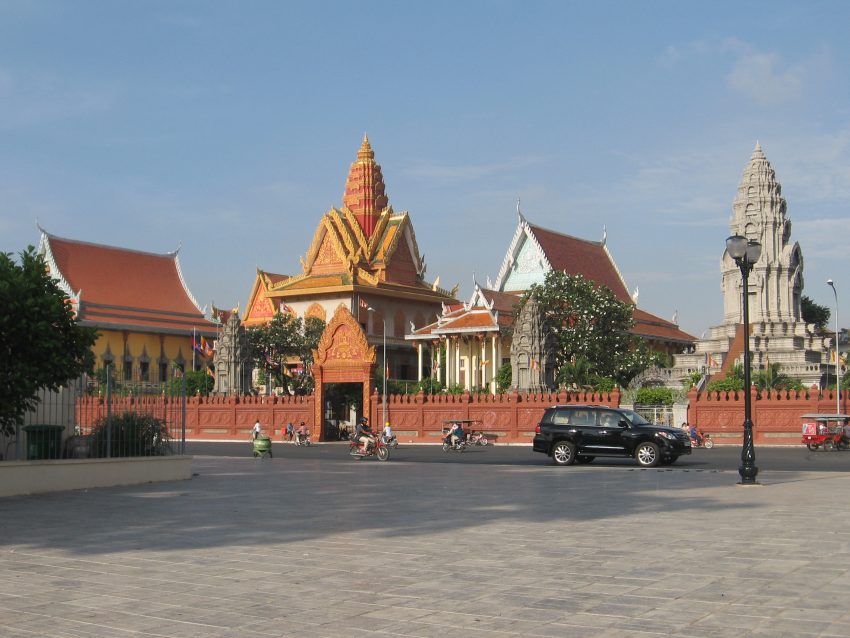
Just a short walk from Phnom Penh's Royal Palace and the busy riverside, Wat Ounalom is the oldest and most significant pagoda in Cambodia, founded in 1443 to enshrine a sacred eyebrow hair (ounalom) of the Buddha. As the headquarters of Cambodian Buddhism and home of the Patriarch of the Mahanikai School, it is both a working religious centre and one of the must-see places in Phnom Penh for travellers keen to understand the country's spiritual foundations.
Before the Khmer Rouge era, the pagoda housed more than 500 monks and the library of the Buddhist Institute, with over 30,000 titles. Much of that collection was lost when the temple was damaged and repurposed, but the eyebrow relic survived and remains the focal point of devotion today. Wandering its courtyards, shrines and halls, you sense both the weight of history and the resilience of a community that rebuilt after near-destruction, making Wat Ounalom often visited on walking tours of Phnom Penh that focus on faith, memory and everyday life.
History and Significance of Wat Ounalom
Wat Ounalom’s origins lie in the mid-15th century, when King Ponhea Yat established the pagoda to house a precious eyebrow hair of the Buddha. The very name “Ounalom” refers to this relic, immediately signalling the temple’s importance in Cambodian religious life. From the beginning, it was not just a local neighbourhood wat; it became a key centre for Buddhist scholarship and a point of contact between Cambodia and other Theravada traditions in the region.
Over time, the pagoda grew into a full monastic complex with multiple buildings, stupas and living quarters. It served as a major teaching centre, where monks studied scripture, copied texts and taught laypeople, and where the Buddhist Institute’s library amassed a vast collection of more than 30,000 titles. Wat Ounalom’s role as the seat of the Mahanikai Patriarch further cemented its status as the headquarters of Cambodian Buddhism, giving it both symbolic and practical influence over monastic life across the country.
The Khmer Rouge period (1975-1979) brought a devastating interruption. Monks were dispersed or killed, the library was destroyed and the pagoda was turned into a storehouse. Yet the sacred eyebrow relic survived, and after the regime fell, the temple gradually came back to life. Monks returned, buildings were repaired and worship resumed. Today, Wat Ounalom stands not only as the spiritual centre of Cambodian Buddhism but also as a powerful reminder of endurance and renewal in the face of cultural trauma.
Things to See and Do in Wat Ounalom
When you step through the gate into Wat Ounalom, the bustle of the riverside and Sisowath Quay fades into a calmer, more measured rhythm. Start by wandering the main courtyard, where stupas of different sizes and ages rise between shady trees. Many of these stupas hold the ashes of monks and laypeople, with inscriptions that trace family histories and hint at Phnom Penh's changing fortunes over the last century.
Seek out the main vihara (prayer hall), where you will find a large central Buddha image surrounded by offerings of flowers, incense and candles. Remove your shoes before entering, dress modestly and sit quietly at the back if a ceremony is in progress. Even a few minutes of stillness here can give you a sense of the temple’s role as a living place of practice rather than just a historic site. If you are fortunate, you may be able to ask a monk or attendant about the eyebrow relic and where it is kept within the complex.
Around the periphery, explore the smaller shrines and ancillary buildings that make up the pagoda’s daily life: monk quarters, study rooms and altars dedicated to various figures in the Buddhist pantheon. You might see novices sweeping the grounds, laypeople bringing offerings or small groups discussing teachings. Photography is generally fine in the courtyards, but always be sensitive to worshippers and avoid intruding on private moments of prayer. If you time your visit for early morning or late afternoon, the light on the stupas and roofs can be especially beautiful.
How to Get to Wat Ounalom
Most international visitors arrive in Cambodia via Phnom Penh International Airport or Siem Reap International Airport, with Phnom Penh's airport the closest gateway to Wat Ounalom. For the best deals and a seamless booking experience, check out these flights to Phnom Penh on Booking.com. From the airport, taxis, tuk-tuks and ride-hailing services can bring you into the city centre and down to the riverside area in around 30-45 minutes, depending on traffic.
Within Cambodia, Phnom Penh is linked to other major towns by a mix of buses and some train services, though most travellers still arrive overland by bus or minivan from places like Siem Reap, Battambang, Kampot or Sihanoukville.Train schedules and bookings can be found on Omio. Once in the capital, Wat Ounalom is easy to reach by tuk-tuk or taxi: simply ask for the pagoda near the riverside and close to the Royal Palace, and most drivers will know exactly where to go.
If you are travelling by car, the temple sits just off Sisowath Quay and Street 172, a short distance from the Royal Palace and central riverfront. Parking is usually along nearby streets rather than within the pagoda grounds; many visitors ask their driver to drop them at the entrance and return at an agreed time after they have finished exploring.
Practical Tips on Visiting the Wat Ounalom
- Suggested tips: Approach Wat Ounalom as both a historic landmark and an active monastery; move slowly, observe how locals behave and follow their lead on where to sit, stand or remove shoes.
- Best time to visit: Early morning or late afternoon offers cooler temperatures, softer light on the buildings and a good chance of seeing monks and laypeople engaged in daily rituals.
- Entrance fee: Entrance is free, though donations placed in marked boxes are appreciated and help support the temple.
- Opening hours: Daily from 6 am to 6 pm
- How long to spend: Plan 30-60 minutes for a relaxed look around the courtyards, stupas and main hall, longer if you stay to observe a ceremony or talk with monks.
- Accessibility: The main courtyard is mostly level, but some areas have uneven paving stones and a few steps; those with mobility challenges should take extra care and may prefer to focus on the ground-level spaces.
- Facilities: Facilities inside the pagoda are basic; for cafés, restaurants, ATMs and public toilets, use the many options along the nearby riverside and surrounding streets.
- Photography tip: Capture wide shots of the pagoda from the riverside side streets, then focus on details such as stupas, rooflines and offerings; always avoid photographing people at prayer without clear permission.
- Guided tours: Many city tours include Wat Ounalom along with the Royal Palace and National Museum; joining one can help you understand its role as the headquarters of Cambodian Buddhism.
- Nearby food options: The surrounding riverside district is full of cafés, restaurants and street food stalls, making it easy to combine your visit with breakfast, lunch or an evening meal.
Where to Stay close to the Wat Ounalom
The riverside area around Wat Ounalom is one of the most convenient places to stay in Phnom Penh, putting you within walking distance of the pagoda, the Royal Palace and the National Museum. A comfortable option close to the riverfront is Hotel Cambodiana, which offers river views and easy access by foot or tuk-tuk to Wat Ounalom and nearby sights. For a more boutique feel in the same area, Blue Lime Phnom Penh provides a tucked-away base just a short stroll from the pagoda and museum. Travellers who prefer a slightly more upscale urban-resort atmosphere might opt for Plantation Urban Resort & Spa, which is still within a manageable walk or quick tuk-tuk ride of Wat Ounalom and the riverside promenade.
Is the Wat Ounalom Worth Visiting
Wat Ounalom is absolutely worth visiting if you want to understand the spiritual backbone of Phnom Penh and Cambodia as a whole. As the oldest and most important pagoda in the country, the seat of the Mahanikai Patriarch and the guardian of a Buddha eyebrow relic, it condenses centuries of religious history into one accessible riverside complex. At the same time, it remains a living monastery, where monks study, chant and teach and where everyday Cambodians come to make offerings and seek merit. For anyone interested in Buddhism, culture or simply finding a moment of calm in the city, it is one of the best places to visit in Phnom Penh.
What Other Travellers Say...

Wat Ounalom Monastery in Phnom Penh is a large Buddhist temple compound noted for its elaborate stupas and monastery buildings; visitors describe it as calm and visually beautiful with bright gold, detailed ornamentation, and a serene atmosphere where ceremonies for young monks are held, but advise dressing modestly (no shoulders exposed, skirts/pants below the knee), removing shoes when required, and being wary of aggressive hawkers or tuk‑tuk drivers offering help.


FAQs for Visiting Wat Ounalom
Nearby Attractions to the Wat Ounalom
- Royal Palace and Silver Pagoda: The ceremonial heart of Cambodia's monarchy, just a short walk away along the riverside.
- National Museum of Cambodia: Home to one of the finest collections of Khmer art and sculpture, located very close to the pagoda.
- Riverside promenade and Sisowath Quay: A lively riverfront area with cafés, bars and views over the Tonlé Sap and Mekong, ideal for a stroll before or after your temple visit.
- Wat Phnom: The hilltop temple that gave the city its name, a short tuk-tuk ride away and a good companion stop for a day of pagoda visits.
- Central Market (Phsar Thmey): Phnom Penh's Art Deco market hall, perfect for combining culture at Wat Ounalom with shopping and people watching later in the day.
The Wat Ounalom appears in our Complete Guide to Visiting Phnom Penh!

Moira & Andy
Hey! We're Moira & Andy. From hiking the Camino to trips around Europe in Bert our campervan — we've been traveling together since retirement in 2020!
This website uses affiliate links which may earn a commission at no additional cost to you!
Planning Your Visit
Daily from 6 am to 6 pm
Entrance is free, though donations placed in marked boxes are appreciated and help support the temple.
Nearby Attractions
- National Museum of Cambodia (0.3) km
Museum - Sisowath Quay (0.5) km
Walk - Royal Palace of Cambodia (0.5) km
Palace - Phnom Penh Night Market (0.7) km
Market - Central Market (Phsar Thmey) (1.0) km
Market - Wat Phnom (1.1) km
Buddhist Temple - Independence Monument (1.3) km
Monument - Wat Langka (1.4) km
Buddhist Temple - Tuol Sleng Genocide Museum (2.5) km
Museum - Russian Market (Phsar Toul Tum Poung) (3.5) km
Market