Villa Mansi, Lucca
Historic Building and Museum in Lucca
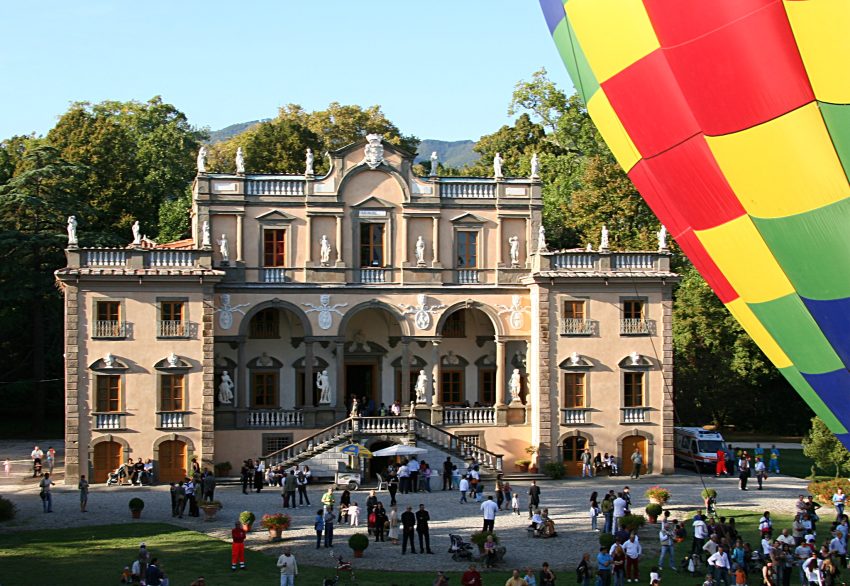
Just a short distance from Lucca, in the village of Segromigno within the municipality of Capannori, Villa Mansi offers a refined glimpse into the world of Lucchese nobility. Originally owned by the Cenami family and later purchased by the Mansi family in the 17th century, it became a showcase for the wealth and taste of one of Lucca's most influential lineages. The main façade, designed by Muzio Oddi from Urbino, looks compact at first glance, but its subtle shifts in depth and carefully balanced proportions give it a sense of movement and poise. With its slightly recessed central section, elevated portico, and sweeping double staircase, the villa feels at once solid and airy-a perfect stage for grand arrivals.
The façade's play of light and shadow is accentuated by the contrast between plastered surfaces and the stone architectural details, while the serliana motif of the portico rises upward into the upper storeys, framed by double columns and a central arch. Step inside and the elegance continues, with late 18th-century frescoes and paintings by Stefano Tofanelli decorating the rooms with mythological scenes, especially stories of Apollo. Outside, fountains, fishponds, statues, and a rich botanical collection complete the picture, making Villa Mansi a highlight of the Lucchese villa circuit and a natural stop on itineraries that explore historic estates-a highlight of any walking tour of Lucca that ventures into the surrounding countryside.
History and Significance of Villa Mansi
Villa Mansi’s story is tightly interwoven with the social and economic rise of Lucca’s patrician families. The property began as a country residence of the Cenami family, but in the 17th century it passed into the hands of the Mansi, wealthy merchants and bankers whose name still echoes through the city’s history. Under their ownership, the villa was transformed into a refined statement of status, with architecture and decoration carefully chosen to reflect both power and taste.
The main architectural intervention is attributed to Muzio Oddi, an architect from Urbino, who crafted a façade that is both rigorous and dynamic. Rather than relying on excessive ornament, Oddi created interest through a subtle recess of the central body, a dramatic double staircase, and an elevated portico with a serliana motif that continues into the upper levels. This composition embodies 17th-century ideals of balance, movement, and controlled grandeur, placing Villa Mansi firmly among the finest villas of the Lucca area and one of the must-see places in Lucca's countryside for architecture enthusiasts.
Inside, the late 18th-century decorative campaign led by Stefano Tofanelli added another layer to the villa's identity. Tofanelli, a distinguished Lucchese painter highly appreciated by Elisa Baciocchi (Napoleon's sister and Princess of Lucca), filled the interiors with mythological frescoes and paintings that reflect the neoclassical taste of the time. His cycles dedicated to Apollo and other classical themes link Villa Mansi to the broader European culture of the Enlightenment, turning the residence into a stage for both social life and artistic display.
Things to See and Do in Villa Mansi
A visit to Villa Mansi begins with its façade: stand back to appreciate how the slightly recessed central section and forward-jutting wings create a subtle sense of depth, while the double staircase invites you upward toward the portico. The chromatic contrast between the pale plaster and the stronger tones of architectural elements gives the building a light, almost theatrical quality, especially in changing sunlight. Take a moment to note the serliana motif-arched centre flanked by straight openings-that repeats above, binding the composition together.
Inside, the key attraction is the series of frescoes and paintings by Stefano Tofanelli, which decorate the principal reception rooms. These late 18th-century works are steeped in mythological narratives, especially the stories of Apollo, and showcase Tofanelli’s refined, neoclassical style. Wandering from room to room, you’ll see how the frescoes, painted ceilings, and wall decorations create coherent visual narratives, turning interiors into elegant “theatres” of classical mythology and Enlightenment ideals. This is a rewarding place for visitors who enjoy spotting details-draperies, gestures, and symbolic attributes-that reveal each scene’s meaning.
Out in the garden, the atmosphere shifts to one of romantic charm. Although the original 18th-century garden design by Filippo Juvarra has been altered over time, the spirit of his work survives in the presence of fountains, fishponds, and statues that punctuate the greenery. The botanical side of the estate remains a major draw: more than 40 species of trees from different parts of the world give the park a richly textured canopy, changing with the seasons. As you follow paths around water features, statues, and shaded lawns, it’s easy to understand why Lucchese villas like this are considered one of the best places to visit in Lucca’s hinterland if you enjoy blending art, architecture, and garden design.
How to Get to Villa Mansi
Villa Mansi is located in Segromigno, within the municipality of Capannori, a short drive northeast of Lucca. From the historic centre, you head out toward the Lucchese countryside, following local roads that wind through villages and fields before arriving at the villa's entrance. The setting makes it ideal as part of a half-day or full-day trip, especially if you're visiting several historic villas in the area.
If you are arriving by air, Pisa International Airport and Florence Airport are the most convenient entry points for the region, with regular flights from across Europe. For the best deals and a seamless booking experience, check out these flights to Lucca on Booking.com. From either airport, it's straightforward to reach Lucca first, then continue on to Segromigno by car, taxi, or local bus.
Lucca's train station, located just outside the southern side of the city walls, is well connected by regional trains to Pisa, Florence, and other Tuscan towns.Use Omnio to easily compare schedules, book train tickets, and find the best prices all in one place for a hassle-free journey across Italy. From Lucca, you can use local buses heading toward Capannori and Segromigno or arrange a taxi; journey times vary, so it's wise to check current timetables or ask at the tourist office before travelling.
If you are travelling by car, Villa Mansi is particularly easy to include in a scenic drive.If you are looking to rent a car in Italy I recommend having a look at Discover Cars, first, as they compare prices and review multiple car rental agencies for you. From Lucca, follow the roads toward Capannori and Segromigno, watching for signs to the villa and nearby historic estates. Having your own vehicle gives you maximum flexibility to explore not only Villa Mansi but also other villas, churches, and viewpoints in the surrounding hills.
Practical Tips on Visiting Villa Mansi
- Suggested tips: Combine your visit with another nearby villa or a stroll on Lucca’s walls to make a full day of architecture and garden exploration.
- Best time to visit: Spring and early summer are ideal for enjoying the gardens in bloom, while autumn offers softer light and colourful foliage; mornings or late afternoons are often more pleasant in high summer.
- Entrance fee: € 4.00 Combined ticket for the National Museums of Villa Guinigi and Palazzo Mansi: full price € 6.50
- Opening hours: Tuesday, Thursday, first and third Sunday of the month from 9.00 to 19.30 (last admission at 18.00) Wednesday, Friday and Saturday from 12.00 to 19.30 (last admission at 18.00)
- Official website: http://www.luccamuseinazionali.it/it
- How long to spend: Allow around 1-2 hours to see the main rooms, enjoy Tofanelli’s frescoes, and wander through the gardens at a relaxed pace.
- Accessibility: As a historic villa, access may involve steps, uneven floors, and garden paths; visitors with reduced mobility should check in advance for current accessibility information.
- Facilities: On-site facilities are limited; restrooms may be available for ticket-holders, while cafés and restaurants can be found in the nearby villages or back in Lucca.
- Photography tip: Capture the double staircase and portico from slightly off-centre to emphasise the façade’s depth; in the garden, use fountains and statues as focal points framed by trees and water.
- Guided tours: When offered, guided visits can add insight into the Mansi family, Tofanelli’s fresco cycles, and Juvarra’s original garden concept, enriching the overall experience.
- Nearby food options: Look for trattorie and osterie in Segromigno, Capannori, or along the roads back to Lucca, where you can enjoy local Tuscan dishes after your visit.
Where to Stay close to Villa Mansi
If you'd like to stay close to Villa Mansi while keeping easy access to Lucca, a good option is Villa La Principessa, a historic villa hotel set in its own parkland just outside the city, ideal if you're touring several countryside estates. For those who prefer to base themselves inside the walls and visit Villa Mansi as a day trip, Hotel Ilaria offers comfortable rooms near the eastern ramparts with convenient road access out toward Capannori and Segromigno. Another atmospheric choice in the heart of the old town is Palazzo Alexander, giving you a historic setting in Lucca itself while still being a manageable drive from Villa Mansi and the other grand villas in the area.
Is Villa Mansi Worth Visiting?
Villa Mansi is well worth visiting, particularly if you're drawn to historic villas, elegant architecture, and landscaped gardens. The combination of Muzio Oddi's carefully structured façade, Tofanelli's mythological frescoes, and the atmospheric garden-with its fountains, fishponds, statues, and diverse trees-makes it a rewarding stop on any exploration of the Lucchese countryside. It offers a quieter, more intimate experience than some larger estates, but that intimacy is part of its charm: you feel close to the history of the families who lived here and to the evolving tastes that shaped both the house and its grounds. For many travellers, it becomes one of those quietly memorable places that deepen their appreciation of Lucca beyond the city walls.
What Other Travellers Say...

Villa Mansi, on Via delle Selvette in Capannori, is a beautiful Baroque villa set in notable grounds with fountains, water features, high hedges, statues and busts; the interior features frescoes and paintings with an unfurnished ground floor aside from a preserved bedroom with a four‑poster bed, and visitors describe a pleasant self‑guided walk for an affordable ticket price, though some note the gardens could use more care and recommend arriving by private transport due to infrequent buses.


FAQs for Visiting Villa Mansi
Nearby Attractions to Villa Mansi
- Villa Reale di Marlia - Former residence of Elisa Baciocchi with extensive historic gardens, water features, and elegant villa interiors.
- Lucca's Historical Walls - The complete tree-lined Renaissance walls surrounding Lucca, perfect for a walk or bike ride before or after your countryside excursions.
- Palazzo Pfanner - An elegant villa just inside Lucca's walls, known for its Baroque garden, fountains, and views of San Frediano's bell tower.
- Basilica of San Frediano - Ancient church in Lucca with a striking golden façade mosaic and richly decorated interior chapels.
- Guinigi Tower - Iconic medieval tower in Lucca topped with a rooftop garden of holm oaks, offering panoramic views over the city and surrounding hills.
The Villa Mansi appears in our Complete Guide to Visiting Lucca!

Moira & Andy
Hey! We're Moira & Andy. From hiking the Camino to trips around Europe in Bert our campervan — we've been traveling together since retirement in 2020!
This website uses affiliate links which may earn a commission at no additional cost to you!
Planning Your Visit
Tuesday, Thursday, first and third Sunday of the month from 9.00 to 19.30 (last admission at 18.00)
Wednesday, Friday and Saturday from 12.00 to 19.30 (last admission at 18.00)
€ 4.00 Combined ticket for the National Museums of Villa Guinigi and Palazzo Mansi: full price € 6.50
Nearby Attractions
- Villa Reale di Marlia (3.7) km
Historic Building - Villa Guinigi National Museum (8.6) km
Museum - Lucca City Walls (8.8) km
City Walls - Villa Bottini (8.8) km
Historic Building - Botanical Garden (9.0) km
Gardens - Via Fillungo (9.0) km
Street - Piazza dell Anfiteatro (9.0) km
Amphitheatre - Basilica of San Frediano (9.0) km
Church - Guinigi Tower (9.0) km
Tower - Palazzo Pfanner (9.2) km
Gardens and Historic Building