Via Fillungo, Lucca
Street in Lucca
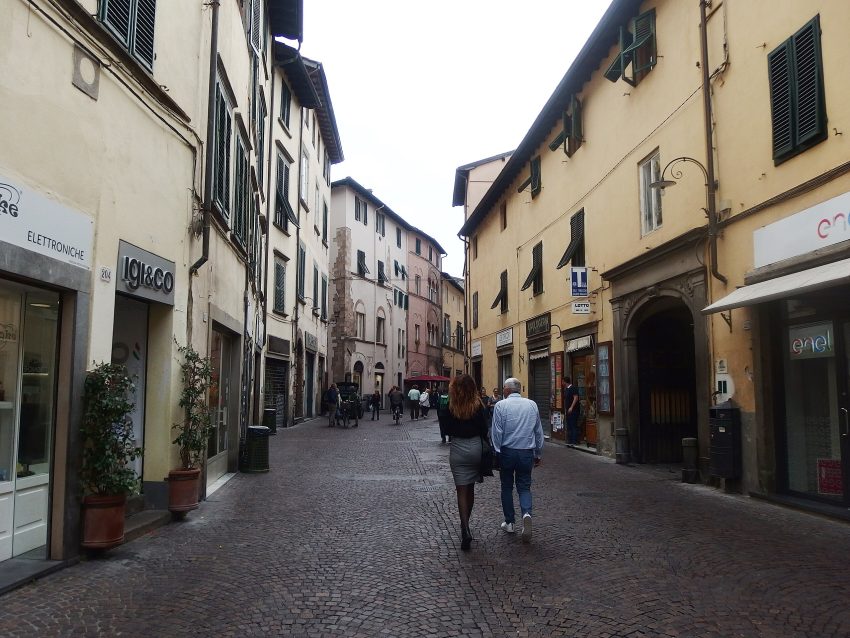
Winding for more than 700 metres through Lucca's historic centre, Via Fillungo is where everyday life and history meet. This long, gently curving street is lined with a blend of medieval houses and grand palaces, their facades sheltering everything from traditional bakeries and elegant boutiques to cosy cafés. Even though it's the city's main shopping artery, the way the shops are integrated into the buildings preserves the old streetscape, so you never feel like you're walking through a modern mall but through a lived-in, centuries-old city.
Named after Fillungo Castle in Garfagnana, the former feudal seat of the Falabrina family, Via Fillungo has long been one of the where to go in Lucca if you want to feel the city's pulse. Historically divided into three sections, it leads you past major landmarks: from Porta dei Borghi to Piazza San Frediano and its basilica, skirting the remnants of the Roman amphitheatre, then on through the “Panther” stretch to Piazza dei Mercanti, and finally toward Canto d'Arco and the 12th-century Church of Santo Cristoforo. Along the way you'll dodge the occasional bicycle, nibble on buccellato, and drift between window-shopping and people-watching, making it often visited on walking tours of Lucca that criss-cross the old town.
History and Significance of Via Fillungo
Via Fillungo owes its name to the now-vanished Fillungo Castle in the Garfagnana area, once the feudal residence of the Falabrina family, who held rights over the surrounding territories. As Lucca grew within its walls, this route evolved into the main north-south spine of the medieval city, linking gates, markets, workshops, and parish churches. Its gently sinuous line reflects centuries of layering rather than a single planned design, which is part of what makes it so appealing today.
Traditionally, the street has been divided into three segments. The first, sometimes called the “Great Way,” runs from Porta dei Borghi toward Via Mordini, where you're flanked by Piazza San Frediano and the Basilica of San Frediano on one side and the traces of the ancient Roman amphitheatre on the other. The middle “Panther” section continues to Piazza dei Mercanti, where commercial life once centred on trading and markets. The final part leads from Piazza dei Mercanti to Canto d'Arco and Santo Cristoforo, anchoring the route with another historic church. Together, these segments show how Via Fillungo has long tied everyday commerce to religious and civic landmarks.
Over time, the street has adapted without losing its character. Modern shopfronts were carefully integrated into existing buildings to minimise their visual impact, preserving the rhythm of arches, windows, and stonework. That sensitive approach is why Via Fillungo still feels authentic: you sense the medieval bones beneath the contemporary life. Today, it's one of the must-see places in Lucca, not because of a single monument, but because it captures the city's blend of history, style, and daily routine in one long, walkable line.
Things to See and Do in Via Fillungo
The simplest and best thing to do on Via Fillungo is to walk it from end to end, letting the street unfold in sections. Starting near Porta dei Borghi, you quickly reach Piazza San Frediano and the façade of the Basilica of San Frediano, with the ghost of the Roman amphitheatre just behind the houses on the opposite side. This first stretch sets the tone: textured stone walls, wrought-iron balconies, and narrow side alleys that tempt you off the main route.
In the central “Panther” segment, between Via Mordini and Piazza dei Mercanti, the street feels particularly buzzy. Boutiques, shoe shops, delis, and pasticcerie spill light and scent onto the pavement, and you'll find plenty of excuses to stop-whether for a new pair of Italian boots or a slice of buccellato, Lucca's famous sweet bread studded with raisins and aniseed. This is also where you feel the greatest mix of locals running errands and visitors strolling, making it one of the things to do in Lucca if you want to observe everyday urban life rather than just tick off monuments.
The final part of Via Fillungo leads you toward Canto d'Arco and the Church of Santo Cristoforo, a 12th-century landmark that closes the perspective of the street with its solid stone façade. Along this section and throughout the street, look up as well as into the windows: many façades still show traces of medieval and later alterations, from bricked-up arches to decorative cornices. If you're into photography, this last stretch is great for capturing the gentle curves of the street framed by buildings that seem to lean in toward each other, creating a tunnel of history and light.
How to Get to Via Fillungo
Via Fillungo lies right in the heart of Lucca's walled historic centre, and the best way to reach it is on foot once you're inside the city walls. From most gates, it's just a matter of following signs or a map toward the northern part of the old town and letting the flow of people guide you to the main shopping street.
If you are arriving by air, the nearest major gateways are Pisa International Airport and Florence Airport, both of which offer frequent flights and easy access into Tuscany. For the best deals and a seamless booking experience, check out these flights to Lucca on Booking.com. From there, you can travel to Lucca and walk through one of the city gates into the historic centre to find Via Fillungo.
Lucca's train station sits just outside the southern side of the walls near Porta San Pietro and is served by regular regional trains from Pisa, Florence, and other Tuscan cities.Use Omnio to easily compare schedules, book train tickets, and find the best prices all in one place for a hassle-free journey across Italy. From the station, walk through the gate and head toward the central squares; within about 10-15 minutes you'll reach the old town's core and easily pick up Via Fillungo.
If you're travelling by car, Lucca is well connected via the A11 motorway and local roads, but the historic centre operates as a limited traffic zone.If you are looking to rent a car in Italy I recommend having a look at Discover Cars, first, as they compare prices and review multiple car rental agencies for you. Park in one of the car parks outside or just inside the walls, then enjoy the short walk through the old streets until you merge naturally onto Via Fillungo.
Practical Tips on Visiting Via Fillungo
- Suggested tips: Take your time and walk the full length in both directions; the atmosphere changes with light and crowds, and you’ll notice new details on the way back.
- Best time to visit: Late morning and early evening are ideal for a lively yet pleasant stroll; early mornings offer quieter streets, while evenings bring more locals out for a passeggiata.
- Entrance fee: Strolling Via Fillungo is free; your only costs are whatever you choose to spend in its shops, cafés, and bakeries.
- Opening hours: The street itself is accessible at all times, but most shops open roughly from late morning to early evening, often closing for a midday break and on some holidays.
- How long to spend: Plan on at least an hour to wander, shop, and stop for a coffee or snack-more if you intend to explore side streets and nearby churches.
- Accessibility: The street is flat and paved, making it generally accessible, though it can become crowded and you’ll need to watch for bicycles weaving through pedestrians.
- Facilities: You’ll find plenty of cafés, bakeries, and bars along and near the street, many with restrooms for customers; ATMs and small supermarkets are also nearby.
- Photography tip: Use the gentle bends of the street to create depth in your shots, and shoot toward landmark façades like Basilica di San Frediano or Santo Cristoforo framed by the shopfronts.
- Guided tours: Many city walks naturally include sections of Via Fillungo, using it as a spine to connect churches, towers, and piazzas while explaining Lucca's commercial history.
- Nearby food options: From gelato and pastry shops to wine bars and trattorie, there’s no shortage of places to sample local specialities-don’t leave without trying buccellato from a traditional bakery.
Where to Stay close to Via Fillungo
Staying near Via Fillungo puts you right in the middle of Lucca's historic centre, with shops, churches, and the city walls all an easy stroll away. For a classic in-town base, Palazzo Alexander offers period charm in a historic building just a short walk from the street. If you'd like to be close to the cathedral and main squares while remaining within easy reach of Via Fillungo, Albergo San Martino is a cosy, well-situated option. Travellers who prefer a slightly quieter corner near the eastern walls, but still want quick access across the centre to Via Fillungo, might choose Hotel Ilaria, which combines comfort with an excellent location.
Is Via Fillungo Worth Visiting?
Via Fillungo is absolutely worth visiting and will almost certainly feature in your time in Lucca, even if you don't plan it that way. It's more than just a shopping street: it's a living cross-section of the city, where medieval façades, elegant palazzi, and modern boutiques coexist in a single, walkable line. You can browse stylish Italian goods, snack on traditional sweets, admire the architecture, and people-watch all at once. For many visitors, wandering Via Fillungo becomes one of the must-see experiences of Lucca precisely because it feels both everyday and special-a street where you can imagine life here centuries ago while enjoying the pleasures of the present.
What Other Travellers Say...

Torre delle Ore on Via Fillungo in Lucca is a tall medieval clock tower you can climb — about 207 narrow wooden steps — to reach dramatic rooftop panoramas of the city, including views of the tree-topped Guinigi tower; the ascent can be cramped when busy and the bell is notably loud, but visitors report the climb and vistas are well worth it, with tickets available on site (around €8) and the tower housing an old manually wound clock mechanism.


FAQs for Visiting Via Fillungo
Nearby Attractions to Via Fillungo
- Basilica of San Frediano - Romanesque church with a striking golden mosaic façade, located just off Via Fillungo at Piazza San Frediano.
- Piazza dell'Anfiteatro - Oval-shaped piazza built on the footprint of Lucca's Roman amphitheatre, reached via side streets from the central stretch of Via Fillungo.
- Church of Santo Cristoforo - 12th-century church that anchors one end of the street, adding a historic stone presence to the shopping route.
- Guinigi Tower - Medieval tower topped with a rooftop garden of holm oaks, a short walk away and visible from several points near Via Fillungo.
- San Michele in Foro - Impressive Romanesque church on the former Roman forum, easily reached by ducking off Via Fillungo toward its lively square.
The Via Fillungo appears in our Complete Guide to Visiting Lucca!

Moira & Andy
Hey! We're Moira & Andy. From hiking the Camino to trips around Europe in Bert our campervan — we've been traveling together since retirement in 2020!
This website uses affiliate links which may earn a commission at no additional cost to you!
Planning Your Visit
The street itself is accessible at all times, but most shops open roughly from late morning to early evening, often closing for a midday break and on some holidays.
Strolling Via Fillungo is free; your only costs are whatever you choose to spend in its shops, cafés, and bakeries.
Nearby Attractions
- Piazza dell Anfiteatro (0.1) km
Amphitheatre - Basilica of San Frediano (0.1) km
Church - Palazzo Pfanner (0.2) km
Gardens and Historic Building - Domus Romana (0.2) km
Historic Site - Guinigi Tower (0.3) km
Tower - Lucca City Walls (0.3) km
City Walls - Torre delle Ore (0.3) km
Tower - San Michele in Foro (0.4) km
Basilica - Villa Bottini (0.4) km
Historic Building - Puccini Museum (0.5) km
Historic Building and Museum