Roman Theatre, Málaga
Historic Site and Theatre in Málaga
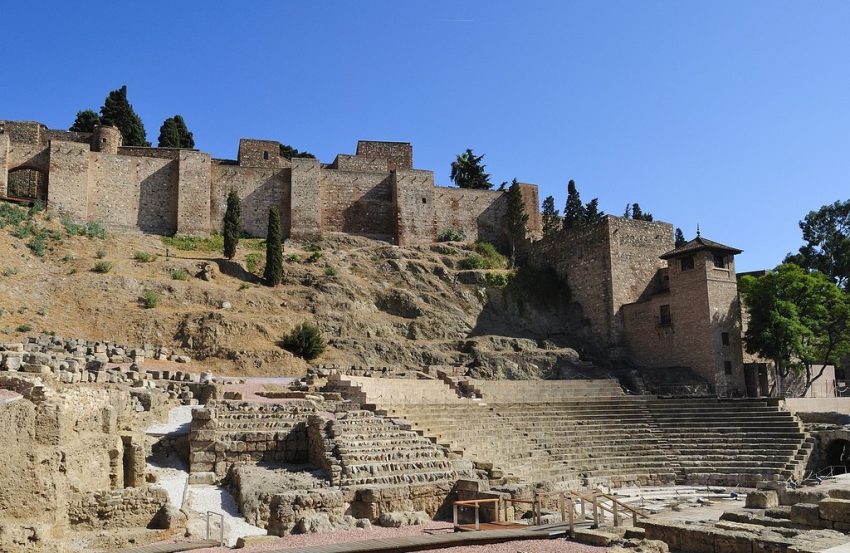
At the very base of Málaga's imposing Alcazaba, the Teatro Romano de Málaga unfolds like a stone fan across the hillside, a living reminder that this was once the Roman city of Malacca. Built in the 1st century AD under Emperor Augustus, the theatre was the city's main cultural stage for centuries, before being abandoned, quarried for stone, and eventually lost beneath later buildings. Today, its semi-circular rows of seating, stage remains, and modern interpretation centre make it one of the must-see places in Málaga for anyone curious about how the city looked nearly two thousand years ago.
The theatre's story is as fascinating as its form. It lay hidden for centuries beside the Casa de la Cultura until the mid-20th century, when renovation work revealed its proscenium and set off full-scale excavations. Now you can stroll around the site, admire the curve of the cavea against the slope of the hill, and then step inside the interpretation centre to see artifacts and fragments of the Lex Flavia Malacitana, the Roman municipal law code that once granted local citizens their rights. The combination of open-air ruins and modern displays makes this a great place to visit on a walking tour of Málaga, especially when combined with the Alcazaba above.
Table of Contents
- History and Significance of the Teatro Romano de Málaga
- Things to See and Do in the Teatro Romano de Málaga
- How to Get to the Teatro Romano de Málaga
- Practical Tips on Visiting the Teatro Romano de Málaga
- Where to Stay close to the Teatro Romano de Málaga
- Is the Teatro Romano de Málaga Worth Visiting?
- FAQs for Visiting Teatro Romano de Málaga
- Nearby Attractions to the Teatro Romano de Málaga
History and Significance of the Teatro Romano de Málaga
The Teatro Romano was constructed in the 1st century AD, during the reign of Augustus, when Malacca was a thriving Roman town on the Mediterranean trade routes. Like many Roman theatres, it was built into a natural slope, using the hillside itself to support the stepped seating. For roughly two centuries it served as a focal point of public life, hosting performances, political announcements, and communal gatherings that reflected the social and cultural rhythms of the Roman world.
By the 3rd century, the theatre had fallen out of use, and its dressed stone became a convenient quarry for later builders. When the Moors arrived and constructed the Alcazaba in the 11th century, they reused many of the theatre's materials: capitals, columns, and carved blocks were integrated into the fortress, where you can still spot them today in horseshoe arches and walls. This recycling blurred the theatre's footprint so effectively that it gradually disappeared from view, remembered only in scattered references.
The site remained forgotten until the 20th century, when the Casa de la Cultura, built between 1940 and 1942, underwent renovation in the 1950s and 1960s. During these works, the proscenium of the ancient theatre was discovered beneath the modern building. Archaeologists quickly realised the significance of the find, and the Casa de la Cultura was demolished to reveal and excavate the rest of the theatre. What emerged was a remarkably clear example of Roman civic architecture in southern Spain, making the Teatro Romano de Málaga not only a key archaeological site for the city but also one of the top sights in Málaga for understanding its layered past.
Things to See and Do in the Teatro Romano de Málaga
The most striking feature of the Teatro Romano is its cavea, or seating area, which has a radius of about 31 metres and rises to a height of around 16 metres. Thirteen tiers of seats, supported by radial walls that cut into the hillside, curve gracefully around the central orchestra. Standing at the base looking up, it's easy to imagine the space filled with spectators, the murmur of voices echoing off stone as performances unfolded on the stage. From higher up, you get a fantastic view over the theatre itself and up towards the Alcazaba, visually linking Málaga's Roman and Moorish histories.
At one end of the site stands the modern interpretation centre, which is well worth a visit. Inside, multimedia displays and exhibits explain how Roman theatres functioned, what performances were like, and how Malacca fitted into the wider Roman Empire. The exterior walls are decorated with original fragments of the Lex Flavia Malacitana, the local municipal law code that granted free-born residents the privileges of Roman citizenship. Seeing these legal texts integrated into the contemporary building creates a powerful connection between Roman public life and today’s city.
Depending on the season and programme, the theatre sometimes hosts cultural events, concerts, or small performances, echoing its ancient function as a stage for community life. Even when nothing is scheduled, the site is a wonderful place to linger: the open design, gentle play of light on stone, and constant backdrop of the Alcazaba make it a favourite spot for photographers and history lovers alike. This spot is one of the best places to see in Málaga if you want to feel how the Romans first shaped the contours of the modern city.
How to Get to the Teatro Romano de Málaga
The Teatro Romano de Málaga sits right at the foot of the Alcazaba on Calle Alcazabilla, in the very heart of the historic centre. If you're arriving in the city by air, Málaga-Costa del Sol Airport is the closest gateway, with frequent train, bus, taxi, and hire-car connections into the city centre. For the best deals and a seamless booking experience, check out these flights to Málaga on Booking.com.
From Málaga María Zambrano train station, you can walk to the theatre in about 20 minutes, following signs towards the historic centre and the Alcazaba, or take a short bus or taxi ride to the area around Paseo del Parque and the Ayuntamiento, from where it's only a few minutes' stroll. Train schedules and bookings can be found on Omio.
If you’re travelling by car, head towards the city centre and park in one of the underground car parks near the port or around the old town; from there, simply walk up to Calle Alcazabilla, where the theatre is clearly visible beneath the fortress walls. Driving directly to the site is not recommended, as the surrounding streets are narrow and mostly pedestrian. If you are looking to rent a car in Spain I recommend having a look at Discover Cars, first, as they compare prices and review multiple car rental agencies for you.
Practical Tips on Visiting the Teatro Romano de Málaga
- Suggested tips: Combine your visit with the Alcazaba directly above for a deeper understanding of how Roman and Moorish Málaga fit together on the same hillside.
- Best time to visit: Mornings and late afternoons are ideal for softer light and fewer crowds, especially in the hotter months.
- Entrance fee: Free
- Opening hours: Summer: From 09.30 to 13.30 and from 17.00 to 20.00. Winter: From 09.30 to 13.30 and from 16.00 to 19.00.
- Official website: https://www.juntadeandalucia.es/cultura/enclaves/enclave-arqueologico-teatro-romano-de-malaga
- How long to spend: Allow 30-60 minutes to explore the theatre, interpretation centre, and viewpoints at a relaxed pace.
- Accessibility: The interpretation centre is generally accessible, but the stone seating and slopes of the cavea can involve uneven surfaces and steps.
- Facilities: Basic information, displays, and restrooms are available nearby; cafés and shops are just a short walk away in the historic centre.
- Photography tip: For the best shots, frame the theatre with the Alcazaba above, or capture the curve of the seating from one side of the cavea looking across.
- Guided tours: Consider joining a combined Roman Theatre and Alcazaba tour for added historical context and to see reused theatre stones in the fortress walls.
- Nearby food options: Calle Alcazabilla and Plaza de la Merced are filled with tapas bars, ice cream shops, and cafés, perfect for a break before or after your visit.
Where to Stay close to the Teatro Romano de Málaga
Staying near the Teatro Romano puts you at the heart of Málaga's historic centre, with the Alcazaba, cathedral, and Picasso museums all within an easy stroll. Directly overlooking the Roman Theatre and fortress, Hotel Boutique Teatro Romano is an ideal choice if you want to wake up with views of the ruins right outside your window. For a touch of palatial elegance just a few minutes’ walk away, Palacio Solecio offers refined style in a beautifully restored historic building. If you prefer a slightly larger hotel with a rooftop pool and panoramic views over the old town, port, and Gibralfaro hill, AC Hotel Málaga Palacio makes a comfortable and well-located base.
Is the Teatro Romano de Málaga Worth Visiting?
Yes, the Teatro Romano de Málaga is definitely worth visiting, especially if you're interested in how Málaga's Roman roots still shape the city today. While the ruins are not as monumental as some larger theatres in Spain, their hillside setting beneath the Alcazaba, the clear layout of the cavea and stage, and the presence of the interpretation centre make the site both atmospheric and informative. It's also compact and easy to explore, so you can comfortably fit it into even a short visit to the old town.
Because the theatre is so closely linked to the Alcazaba above and the later use of its stones, seeing it in person helps you appreciate how each culture built on the foundations of the last. For many visitors, standing among the Roman seats and looking up at the Moorish walls is a powerful visual summary of Málaga's layered history. As part of a wider circuit around the historic centre, the Teatro Romano is a highlight of any walking tour of Málaga and a memorable stop in its own right.
What Other Travellers Say...

Málaga Roman Theatre, on C/ Alcazabilla at the foot of the Alcazaba in Málaga's centro, is an excavated ancient Roman amphitheatre now presented alongside a contemporary museum; visitors praise its strong state of preservation, stone seating and arches that evoke the original atmosphere, and interpretive features including a short bilingual (English/Spanish) videographic show in a small building that helps explain the site's layout and operation, while the museum displays artifacts and educational information uncovered during excavation.


FAQs for Visiting Teatro Romano de Málaga
Nearby Attractions to the Teatro Romano de Málaga
- Alcazaba of Málaga - Moorish fortress-palace rising directly above the theatre, with lush courtyards, towers, and superb views over the city.
- Castillo de Gibralfaro - Hilltop castle connected historically to the Alcazaba, offering panoramic views over Málaga, the port, and coastline.
- Málaga Cathedral (La Manquita) - Impressive Renaissance and Baroque cathedral with a distinctive unfinished tower, a short walk from the theatre.
- Museo Picasso Málaga - Major museum dedicated to Pablo Picasso's work, housed in the Palacio de Buenavista within the old town.
- Plaza de la Merced - Lively square associated with Picasso's birthplace, lined with cafés and bars, perfect for relaxing before or after your visit.
The Roman Theatre appears in our Complete Guide to Visiting Málaga!

Moira & Andy
Hey! We're Moira & Andy. From hiking the Camino to trips around Europe in Bert our campervan — we've been traveling together since retirement in 2020!
This website uses affiliate links which may earn a commission at no additional cost to you!
Planning Your Visit
Summer: From 09.30 to 13.30 and from 17.00 to 20.00.
Winter: From 09.30 to 13.30 and from 16.00 to 19.00.
Free
Nearby Attractions
- Alcazaba (0.1) km
Castle - Museo de Málaga (0.1) km
Museum - Iglesia de Santiago (0.1) km
Church - Church of San Agustin (0.1) km
Church - Picasso Museum (0.2) km
Museum - Málaga Cathedral (0.2) km
Cathedral - Plaza de la Merced (0.2) km
Monument, Square and Statue - Museo Casa Natal (0.3) km
Historic Building and Museum - Museo del Patrimonio Municipal (0.4) km
Museum - Teatro Cervantes (0.4) km
Theatre