Ta Prohm Kel, Siem Reap
Buddhist Temple in Siem Reap
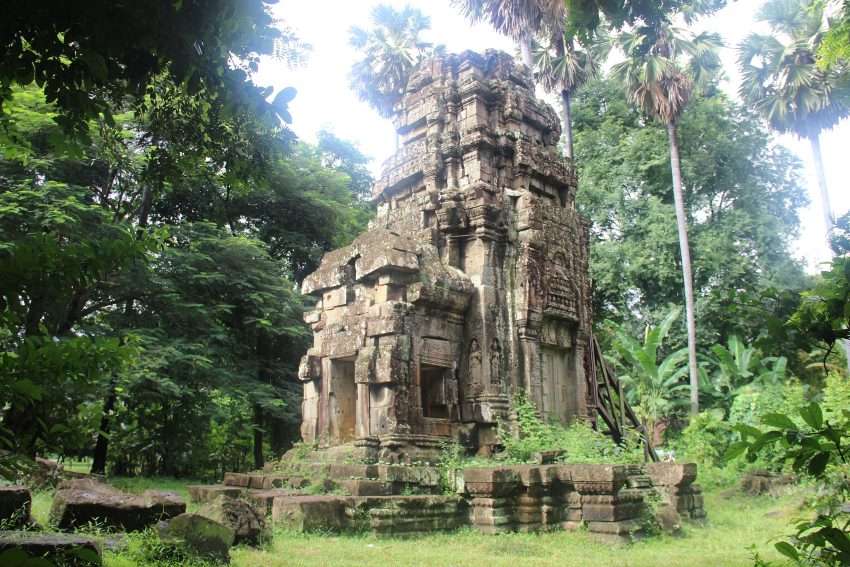
Ta Prohm Kel is a small sandstone temple inside Angkor Archaeological Park near Angkor Thom, and it feels very different from the blockbuster monuments that dominate most Siem Reap itineraries. Rather than arriving at a vast complex of towers and galleries, you come to a compact, modest chapel that rewards a slower look, especially if you enjoy the quieter corners of the Khmer world.
What makes it interesting is not grand scale but purpose. Ta Prohm Kel was one of the hospital chapels associated with the reign of Jayavarman VII, and that gives it a more intimate, functional story than many of Angkor's better-known state temples. For travelers who like to go beyond the obvious stops, it offers a short, atmospheric visit with Bayon-style details, a sense of stillness, and a good excuse to see a less crowded side of the park.
Table of Contents
History and Significance of the Ta Prohm Kel
Ta Prohm Kel dates to the end of the 12th century, during the reign of Jayavarman VII, the powerful Khmer ruler closely associated with Angkor Thom, the Bayon, and a broad network of Buddhist foundations across his empire. This temple was one of the chapels connected to hospitals, which makes it historically important as part of a wider public and religious landscape rather than as a purely ceremonial monument.
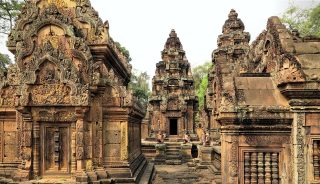
Architecturally, it belongs to the Bayon style and was built as a Buddhist sanctuary. The chapel faces east and once had a small gateway in front, while the surviving structure preserves characteristic decorative elements including devatas, small carved roundels, and traces of sacred imagery associated with Buddhist worship. A somasutra running through the north wall also points to ritual use within the sanctuary.
Its significance today lies in how much it reveals about everyday sacred infrastructure in the Khmer Empire. While Ta Prohm Kel is not one of Angkor's headline monuments, it helps fill in the bigger picture of how Jayavarman VII's kingdom functioned, combining religion, public care, and imperial planning. Restoration work has also helped stabilize the structure for future visitors.
Things to See and Do in the Ta Prohm Kel
The main reason to stop at Ta Prohm Kel is to appreciate a smaller-scale Angkor monument without the crowds. You are not coming here for sweeping terraces or vast bas-relief programs, but for a compact sanctuary where details stand out more clearly. The temple's quiet setting makes it easier to notice the surviving carvings and the proportions of the chapel itself.
Look closely at the doorway areas and wall surfaces, where Bayon-style decoration survives in fragments. Sculptural traces of Buddhist figures and finely carved decorative motifs are part of the appeal, and because the site is brief to visit, it works well as a pause between larger and more demanding temple stops.
It is also a good photography stop for travelers who prefer mood over spectacle. Because Ta Prohm Kel is much less famous than places like Angkor Wat, Bayon, or Ta Prohm, you often get a calmer experience here, which can make it easier to photograph the stonework, doorway framing, and surrounding greenery without waiting for large tour groups to move on. This is a place for a short, reflective stop rather than a major half-day visit.
How to Get to the Ta Prohm Kel
Ta Prohm Kel is inside Angkor Archaeological Park near the Angkor Thom area, so the usual base for visiting is Siem Reap. The nearest airport is Siem Reap-Angkor International Airport, and from there you continue by road into the city and onward to the park. For the best deals and a seamless booking experience, check out these flights to Siem Reap on Booking.com.
There is no practical train connection for reaching Angkor from central Siem Reap, so most visitors rely on road transport instead. If you are arriving in Cambodia overland, bus connections to Siem Reap are far more relevant than rail for this part of the country. Train schedules and bookings can be found on Omio.
From Siem Reap, the simplest way to reach Ta Prohm Kel is by tuk-tuk, taxi, guided tour vehicle, bicycle, or scooter, usually as part of a wider Angkor circuit. If you are self-driving or using a driver, it makes sense to combine it with Angkor Thom, Bayon, Baphuon, and nearby temples rather than treating it as a standalone destination.
Practical Tips on Visiting the Ta Prohm Kel
- Entrance fee: Daily: 07:30–17:30.
- Opening hours: Daily: 07:30–17:30.
- Official website: https://www.angkorenterprise.gov.kh/en/explore
- Best time to visit: Early morning or later afternoon is usually best for softer light and a quieter atmosphere, especially if you are pairing it with busier Angkor stops.
- How long to spend: Around 10-20 minutes is enough for most visitors, unless you are especially interested in Khmer architectural detail or photography.
- Accessibility: Access is easier than at some larger ruins because the stop is short and compact, but paths around Angkor can still be uneven, dusty, and challenging for wheelchairs or anyone with limited mobility.
- Facilities: There are no major on-site visitor facilities specific to this small temple, so it is best to use restrooms and buy water at larger Angkor stops before or after your visit.
Where to Stay Close to the Ta Prohm Kel
For most travelers, the best base is central Siem Reap if you want restaurants, markets, and easy access to the main Angkor routes; only prioritize a more secluded resort area if your trip is mainly about downtime and pool-focused stays.
Because Ta Prohm Kel sits within the wider Angkor zone rather than beside a large tourist district of its own, staying in Siem Reap is the practical choice. That gives you the broadest range of dining and transport options, and it also makes early starts for temple visits far easier. A polished option is Shinta Mani Angkor, which suits travelers who want a stylish, central base with strong service and easy access to both town and the temples.
A good mid-to-upscale alternative is FCC Angkor by Avani, which works well if you want somewhere calm but still close to the riverfront and central Siem Reap. For a more intimate heritage-style stay, Viroth's Hotel is a strong pick, especially for couples who want a quieter neighborhood feel while remaining within easy reach of the Angkor ticket office and park roads.
Is the Ta Prohm Kel Worth Visiting?
Yes, but with the right expectations. Ta Prohm Kel is worth visiting if you enjoy lesser-known corners of major heritage sites, want a quieter photo stop, or like understanding how the smaller pieces of the Angkor world fit together beyond the superstar temples.
The honest pivot is that travelers with only one day at Angkor, or those mainly chasing the most dramatic monuments, can skip it without missing one of the park’s defining highlights. It is best as a brief add-on for curious return visitors, photographers, or anyone building a slower and more layered Angkor itinerary.
What Other Travellers Say...
Prohm Kel Temple in Angkor is a small, free-to-visit ruin set amid wooded surroundings where ancient stone and dramatic tree roots intertwine; visitors praise wandering its many nooks and crannies, enjoying carved details, the sense of nature merging with the temple, occasional local musicians, and say a quick look takes about 5–10 minutes though some wish for more time to explore.


For Different Travelers
Families with Kids
For families, Ta Prohm Kel works best as a short stop rather than a headline destination. The small scale means children are less likely to get overwhelmed, and it can be a useful breather between the bigger temples where the walking is longer and the crowds heavier.
That said, there is not a great deal here to actively entertain younger kids for long. Families will usually get the most from it by pairing it with one or two larger monuments and treating it as a quick look, a photo break, and a chance to enjoy a quieter corner of the park.
Couples & Romantic Getaways
Couples who like quiet heritage spots will probably appreciate Ta Prohm Kel more than most. It has a calmer, more reflective atmosphere than Angkor's flagship sites, and that can make it feel more personal, especially if you visit in softer light when the stone and surrounding greenery photograph well.
It is not a romantic destination in the grand postcard sense, but it does suit travelers who value mood and space over spectacle. As part of a longer temple day, it can be one of those understated stops that ends up feeling unexpectedly memorable.
Budget Travelers
Budget travelers can make good use of Ta Prohm Kel because it is included within the standard Angkor Pass rather than requiring a separate ticket. If you are already visiting the park, stopping here adds variety to your day without adding extra cost.
The main question is time rather than money. If your budget trip also means a very tight schedule, you may prefer to focus on the biggest-name temples first and only add Ta Prohm Kel if you still have time and energy for a quieter detour.
FAQs for Visiting Ta Prohm Kel
Getting There
Tickets & Entry
Visiting Experience
Photography
Accessibility & Facilities
The Ta Prohm Kel appears in our Complete Guide to Visiting Siem Reap!

Moira & Andy
Hey! We're Moira & Andy. From hiking the Camino to trips around Europe in Bert our campervan — we've been traveling together since retirement in 2020!
This website uses affiliate links which may earn a commission at no additional cost to you!
Planning Your Visit
Daily: 07:30-17:30.
Daily: 07:30-17:30.
Nearby Attractions
- Phnom Bakheng (0.9) km
Buddhist Temple - Angkor Wat (1) km
Buddhist Temple - South Gate of Angkor Thom (1.3) km
City Gate - Angkor Thom (2.4) km
Buddhist Temple - Prasat Bayon (2.8) km
Buddhist Temple - Bayon Temple (2.8) km
Buddhist Temple - Baphuon (3.1) km
Buddhist Temple - Prasat Suor Prat (3.2) km
Tower - Kmoch Gate (Gate of the Dead) (3.3) km
City Gate - Terrace of the Elephants (3.4) km
Historic Site