Basilica di Santa Anastasia, Verona
Church in Verona

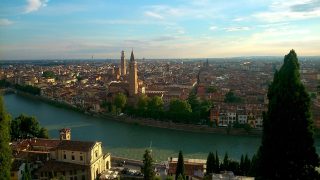
Basilica di Santa Anastasia is Verona's great Gothic surprise: a vast, light-filled Dominican church in the city's oldest quarter, a few minutes from Ponte Pietra and the Adige's most scenic bend. From the outside it can feel understated, but step in and the scale hits immediately-three wide aisles, towering pillars in red Veronese marble, and chapels that read like a concentrated lesson in Verona's art and patronage.
It's one of the must-see places in Verona because it combines atmosphere with serious masterpieces, without the bottlenecked feel of some headline stops. If you're mapping a walking tour of Verona, it's an ideal “slow down” landmark after the river and viewpoints, especially when you want a quieter, more contemplative counterbalance to the city's livelier squares.
Table of Contents
- History and Significance of the Basilica di Santa Anastasia
- Things to See and Do in the Basilica di Santa Anastasia
- How to Get to the Basilica di Santa Anastasia
- Practical Tips on Visiting the Basilica di Santa Anastasia
- Where to Stay Close to the Basilica di Santa Anastasia
- Is the Basilica di Santa Anastasia Worth Visiting?
- For Different Travelers
- FAQs for Visiting Basilica di Santa Anastasia
- Nearby Attractions to the Basilica di Santa Anastasia
History and Significance of the Basilica di Santa Anastasia
Construction began in the late 13th century under the Dominican Order and continued well into the 15th, giving the church its confident Gothic proportions and a plan that privileges height, light, and long sightlines. Although dedicated to Saint Anastasia, the basilica is also co-entitled to Saint Peter of Verona, a Dominican martyr and one of the city's co-patrons, which anchors the building firmly in Verona's religious and civic identity.
The church rises on ground layered with older sacred history, and its name recalls earlier worship on the site long before the current basilica took shape. Over the centuries it remained closely tied to Dominican life in Verona, with patron chapels and artistic commissions turning the interior into a kind of living gallery of local devotion, wealth, and taste.
Even today, the basilica's significance is not only architectural. Its chapels preserve some of the most referenced works in Veronese art history, and the building's sheer size-often described as the largest church in Verona-makes it feel like a major statement of faith and civic ambition in stone.
Things to See and Do in the Basilica di Santa Anastasia
Give yourself a few minutes just to absorb the interior rhythm: the tall pillars, the height of the nave, and the way the side chapels pull you into smaller, more intimate spaces. Near the entrance, look out for the distinctive holy-water stoups supported by carved figures, a detail that makes most visitors stop twice-first to smile, then to study the craftsmanship.
The essential art stop is the Pellegrini Chapel, where Pisanello’s fresco of Saint George and the Princess is the headline masterpiece. Even if you’re not typically “a fresco person,” the storytelling, costume detail, and sense of a medieval world caught mid-scene are hard to forget once you’ve seen it in place.
If you like architecture as much as art, notice the unfinished façade outside and the Gothic portal, then step back into the church and compare the exterior restraint with the interior richness. Santa Anastasia rewards a slow, chapel-by-chapel approach, but it also works for a quick visit if you focus on one masterpiece and one architectural detail before moving on.
How to Get to the Basilica di Santa Anastasia
Basilica di Santa Anastasia is in central Verona near Ponte Pietra and the Adige, an easy walk from Piazza delle Erbe through the historic lanes of the old town. The nearest airports are Verona Villafranca Airport (VRN), with Milan Bergamo (BGY) and Venice Marco Polo (VCE) as convenient alternatives depending on routes and prices. For the best deals and a seamless booking experience, check out these flights to Verona on Booking.com.
From Verona Porta Nuova train station, the simplest plan is a bus or taxi into the historic centre and then a short walk to the basilica, which sits comfortably within the pedestrian-friendly core. Use Omnio to easily compare schedules, book train tickets, and find the best prices all in one place for a hassle-free journey across Italy.. If you prefer to walk from the station, allow extra time, as the last section through the old town can be slower-paced in peak season.
By car, it’s best to park outside the restricted historic-centre zone and walk in, since access limitations and central parking constraints make driving inefficient for this stop. If you are looking to rent a car in Italy I recommend having a look at Discover Cars, first, as they compare prices and review multiple car rental agencies for you.
Practical Tips on Visiting the Basilica di Santa Anastasia
- Entrance fee: €4.00.
- Opening hours: (Summer) March – October: Monday – Saturday: 09:30–18:00. Sunday & public holidays: 13:00–18:00. (Winter) November – February: Monday – Saturday: 10:00–17:00. Sunday & public holidays: 13:00–17:30.
- Official website: https://www.chieseverona.it/en/our-churches/the-basilica-of-saint-anastasia
- Best time to visit: Visit mid-morning on a weekday for a calmer interior, or mid-afternoon for softer light and a more contemplative feel.
- How long to spend: Plan 45-75 minutes for a satisfying chapel-and-masterpiece visit, or 20-30 minutes if you’re fitting it into a tighter city loop.
- Accessibility: Expect historic paving outside and a large interior with plenty of space, but some chapels and viewing angles may involve tighter circulation when groups are present.
- Facilities: Treat it as a sacred-site visit and plan cafés and restrooms around nearby Piazza delle Erbe or the river-side lanes.
Where to Stay Close to the Basilica di Santa Anastasia
For a culture-heavy itinerary, base yourself in Verona's Centro Storico near the historic lanes between Piazza delle Erbe, Ponte Pietra, and the Duomo so you can reach major sights on foot early and late; if your priority is easy arrivals and day trips, staying near Porta Nuova station is more efficient.
For a classic, sight-first base very close to the basilica and the river walk, Due Torri Hotel is hard to beat for location and atmosphere. If you want a refined historic-centre stay right on one of Verona’s most walkable corridors, Hotel Gabbia d'Oro keeps you close to everything while still feeling quietly tucked away. For a practical, well-located option that stays walkable to the old town and keeps logistics simple, Hotel Mastino is a dependable choice for shorter stays.
Is the Basilica di Santa Anastasia Worth Visiting?
Yes, especially if you want Verona beyond the obvious. The basilica delivers scale, quiet atmosphere, and a genuine “masterpiece in context” experience that's hard to replicate in smaller churches or busier attractions.
It’s also one of the best-value cultural stops in the city because you can tailor the visit to your pace: a quick, high-impact look for architecture and one fresco, or a slower chapel-by-chapel wander that feels like a deep dive into Veronese Gothic art.
What Other Travellers Say...

Basilica di Sant' Anastasia, on Piazza S. Anastasia in Verona, is a large 13th‑century Gothic church whose grand interior is known for rich frescoes (including a notable work by Pisanello), sculptures and intricate architectural detail; visitors describe a serene, awe‑inspiring atmosphere, dramatic light through the arches, and vast decorative surfaces that reward lingering and close inspection — there is an admission charge (with an option to pay more for access to multiple historic churches).


For Different Travelers
Families with Kids
This works best for families as a “big space, short mission” visit: step in, look up at the height, then choose one or two standout details to keep attention focused. The carved holy-water stoups near the entrance are a natural kid-friendly hook, and the basilica’s scale can feel like a castle-like interior without needing a long explanation.
To keep it stress-free, aim for quieter hours and set a clear finish line, such as a riverside walk or gelato near the centre afterward. A shorter, well-paced visit usually lands better than trying to see every chapel with younger travelers.
Couples & Romantic Getaways
For couples, Santa Anastasia is a calm, atmospheric counterpoint to Verona’s more playful romance stops. The interior has a quiet grandeur that invites slow walking and shared “did you notice that?” moments-especially around the chapels and frescoes.
Pair it with a stroll to Ponte Pietra and a viewpoint walk afterward to keep the day feeling cinematic without being crowded. It's a strong way to experience Verona's romance as mood and setting, not just a single famous address.
Budget Travelers
This is an excellent budget pick because the experience is substantial for a modest entry fee, and it adds real depth to a day that might otherwise revolve around free squares and street life. If you’re prioritizing value, focus on the main interior, one key chapel, and a slow loop down a side aisle to see how many details you can catch without rushing.
It also pairs well with low-cost add-ons nearby: a self-guided riverside walk, a viewpoint climb, and a simple café stop in the lanes around the centre. In Verona, good pacing often saves more money than cutting every ticket.
FAQs for Visiting Basilica di Santa Anastasia
Getting There
Tickets & Entry
Visiting Experience
Tours, Context & Itineraries
Photography
Accessibility & Facilities
Food & Breaks Nearby
Safety & Timing
Nearby Attractions to the Basilica di Santa Anastasia
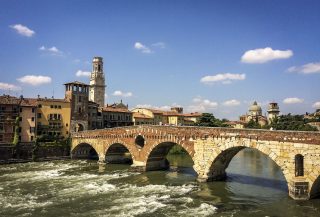
- Ponte Pietra - Verona's most atmospheric river crossing, ideal for classic photos and an easy link to viewpoints.
- Teatro Romano - A historic riverside theatre site that adds a strong Roman layer to a church-and-river day.
- Castel San Pietro Viewpoint - A panoramic overlook that pairs perfectly with the nearby Adige bend and old-town rooftops.
- Verona Cathedral (Duomo) - A calmer cathedral complex with major art and layered early-Christian history.
- Piazza delle Erbe - The city's liveliest central square for cafés, market energy, and a quick change of pace after church interiors.
The Basilica di Santa Anastasia appears in our Complete Guide to Visiting Verona!

Moira & Andy
Hey! We're Moira & Andy. From hiking the Camino to trips around Europe in Bert our campervan — we've been traveling together since retirement in 2020!
This website uses affiliate links which may earn a commission at no additional cost to you!
Planning Your Visit
(Summer) March - October: Monday - Saturday: 09:30-18:00. Sunday & public holidays: 13:00-18:00.
(Winter) November - February: Monday - Saturday: 10:00-17:00. Sunday & public holidays: 13:00-17:30.
€4.00.
Nearby Attractions
- Arche Scaligere (0.2) km
Tomb - Loggia del Consiglio (0.2) km
Historic Building - Piazza dei Signoria (0.2) km
Square - Ponte Pietra (0.3) km
Bridge and Historic Site - Museo Archeologico al Teatro Romano (0.3) km
Historic Building and Museum - Torre dei Lamberti (0.3) km
Tower - Piazza Delle Erbe (0.3) km
Square - Duomo di Verona (0.3) km
Cathedral - Palazzo Miniscalchi (0.3) km
Museum - Juliet's House (0.4) km
Historic Building