Castel San Pietro, Verona
Castle in Verona

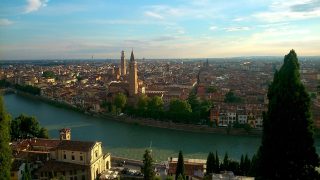
Castel San Pietro in Verona, Italy, is a hilltop fortress area and viewpoint on Colle San Pietro, just above the Roman Theatre and the curve of the Adige. Visitors come here mainly for the terrace and open piazzale, where the city spreads out below in layers of rooftops, towers, bridges, and river bends.
The site matters less for what you can enter and more for what you can see from it. The climb or funicular ride gives the stop a clear sense of arrival, and the view works well for travellers who want a short, practical break with a strong visual payoff. It suits people who like city panoramas, quiet pauses above the centre, and an easy way to understand Verona’s layout.
Table of Contents
- History and Significance of the Castel San Pietro
- Things to See and Do in the Castel San Pietro
- How to Get to the Castel San Pietro
- Practical Tips on Visiting the Castel San Pietro
- Where to Stay Close to the Castel San Pietro
- Is the Castel San Pietro Worth Visiting?
- For Different Travelers
- FAQs for Visiting Castel San Pietro
History and Significance of the Castel San Pietro
The hilltop has been strategically important since Roman times, when the area held religious and civic functions tied to the temple-and-theatre landscape that still defines this side of Verona. In the medieval period, the hill took its name from a church dedicated to Saint Peter, and its position above the river made it a natural lookout and defensive point as the city's power structures shifted.
In 1398, Gian Galeazzo Visconti built Castel San Pietro on earlier fortifications, turning the site into a stronger military presence that literally overlooked Verona's daily life. Over the following centuries, the hill and its structures continued to evolve under different rulers, reflecting how Verona's geography made control of high ground more than symbolic.
The Napoleonic era brought a decisive break: the older castle structures were largely destroyed in the early 19th century, and later Austrian rebuilding reshaped the hilltop into a more overtly military complex. Today, the name “Castel San Pietro” remains as a shorthand for the whole historic hilltop area, with the viewpoint acting as the modern reason to go.
Things to See and Do in the Castel San Pietro
Start with the viewpoint itself, because the terrace frames Verona in layers: the Adige in the foreground, the historic centre clustered beyond, and the surrounding hills giving the skyline depth. It's the kind of panorama that rewards a slow scan rather than a quick photo, especially if you arrive when the light is changing.
Take time to look down toward the Roman Theatre and the river crossing points, because this is where you understand Verona’s layout in a single glance. From up here, the city stops being a set of separate attractions and becomes a coherent place shaped by water, stone, and the way the streets funnel toward the centre.
If you're visiting as a couple, lean into the legend-and-atmosphere side of the stop: bring a drink or gelato for a brief pause at the top, and treat the terrace as a shared “Verona moment” rather than a box to tick. If you're travelling solo, it's also a great reset point to decide what to do next, because you can literally see where the city pulls you.
How to Get to the Castel San Pietro
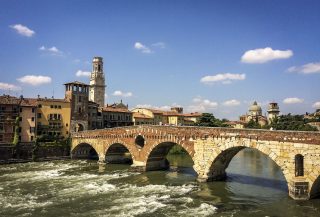
The classic approach is on foot via the scenic stairway that begins near Ponte Pietra and climbs alongside the Roman Theatre, delivering you directly to the hilltop viewpoint with a sense of arrival. If you prefer an easier ascent (or you're saving your energy for the rest of the day), you can also take the Funicolare di Castel San Pietro, which reaches the panoramic terrace quickly and keeps the climb optional.
The nearest airport is Verona Villafranca Airport (VRN), with useful alternatives at Bergamo (BGY) and Venice Marco Polo (VCE) if you're building a wider northern Italy itinerary. For the best deals and a seamless booking experience, check out these flights to Verona on Booking.com. From VRN, the simplest plan is shuttle or taxi into the centre, then continue on foot to Ponte Pietra for the stairs or the funicular station.
By train, arrive at Verona Porta Nuova and connect into the historic centre by bus or taxi, then walk to Ponte Pietra to start the ascent. Use Omnio to easily compare schedules, book train tickets, and find the best prices all in one place for a hassle-free journey across Italy. The site is easiest as a “finish on foot” destination, because narrow streets and one-way systems can make short drives feel longer than they look.
If you're travelling by car, park at the edge of the historic centre (or use a central garage), then walk to the river and continue up from Ponte Pietra. If you are looking to rent a car in Italy I recommend having a look at Discover Cars, first, as they compare prices and review multiple car rental agencies for you.
Practical Tips on Visiting the Castel San Pietro
- Entrance fee: Free to access the panoramic terrace on foot; Funicular €3 roundtrip / €2 one way.
- Opening hours: (Summer) 01 April – 31 October; Daily: 10:00–21:00. (Winter) 01 November – 31 March; Daily: 10:00–17:00.
- Official website: https://www.visitverona.it/en/poi/castle-san-pietro
- Best time to visit: Late afternoon into sunset for the most dramatic light over the river and rooftops, or early morning for a calmer terrace.
- How long to spend: 30-60 minutes is ideal for photos and a relaxed pause; longer if you’re combining it with the Roman Theatre area below.
- Accessibility: The stair route involves sustained steps; the funicular is the most comfortable option if you want to minimise climbing.
- Facilities: Expect limited on-site services at the viewpoint itself; plan your main café stop around Ponte Pietra or back in the centre.
Where to Stay Close to the Castel San Pietro
For a culture-heavy itinerary, base yourself in Verona’s Centro Storico so you can walk to the city’s main sights early and return easily in the evening; if you want a quieter base with quick access to the river and the hill climb, Veronetta is often the most convenient fit.
For a classic, walk-everywhere stay that keeps you close to the river routes and an easy approach to Ponte Pietra, consider Due Torri Hotel. If you want a central base that works brilliantly for looping through the historic core and then heading out toward the viewpoint when the light is right, Hotel Accademia is a strong pick. For a highly practical option that keeps you close to Piazza Bra and makes it easy to time an evening climb after dinner, Hotel Milano & SPA is reliably well placed.
Is the Castel San Pietro Worth Visiting?
Yes, because it gives you the most instantly satisfying “Verona reveal” in the city: river, rooftops, and historic core in one uninterrupted sweep. The viewpoint also adds a sense of shape to your itinerary, since it works as a natural finale after the lower city sights and makes the day feel designed rather than accidental.
It's especially worth it if you time it with changing light. Even if you've already climbed a tower elsewhere, Castel San Pietro feels different because the panorama is wider and the approach (stairs or funicular) builds anticipation in a way a quick elevator ride rarely does.
What Other Travellers Say...
Castel San Pietro sits atop a hill in Verona offering panoramic views over the city from terraces of a Romanesque fortress; visitors praise the stunning, peaceful vistas of bridges and the river, recommend reaching the summit by the small funicular (or on foot), note there's a bar where you can enjoy coffee, desserts or ice cream, and often hear local musicians playing guitar which adds to the atmosphere despite the many stairs.


For Different Travelers
Families with Kids
For families, Castel San Pietro works best as a “mission with a reward”: the goal is the viewpoint, and the prize is the big, obvious panorama that kids can understand without explanation. If you take the stairs, treat it like a mini-adventure with short pauses rather than a single push.
If you’re travelling with younger kids or anyone who tires quickly, the funicular keeps the experience positive and avoids turning the visit into a negotiation. Plan a gelato stop near the river so the ascent feels like part of a fun loop, not an isolated effort.
Couples & Romantic Getaways
For couples, this is one of Verona’s most naturally romantic stops, because the view encourages you to slow down and linger. It’s especially good as an early-evening pause: a short ride or climb, a few quiet minutes at the terrace, then an easy drift back into the centre for aperitivo.
If you want it to feel special, avoid the busiest sunset crush by arriving a little earlier and letting the scene change in front of you. The atmosphere is as much about the gradual shift from daylight to city lights as it is about a single photo.
Budget Travelers
Budget travellers will appreciate that the best part of Castel San Pietro is effectively free if you walk up, and even the funicular is a small-cost upgrade rather than a major ticket. This makes it a high-impact stop that doesn't force you to choose between “iconic” and “affordable.”
To maximise value, pair it with other low-cost highlights nearby: Ponte Pietra, riverside strolling, and the lanes of the historic centre. That way you get a full, satisfying itinerary with minimal paid entries.
History Buffs
History buffs will enjoy the hill’s layered narrative, where Roman-era significance, medieval fortification, Visconti ambitions, and later Austrian military reshaping all leave traces in the story of the site. Even without interior access, the context makes the viewpoint feel like more than a scenic platform.
Use the stop as a springboard to explore the Roman Theatre area below, because the relationship between the hill and the theatre is part of what made this location important in the first place. Seeing both together helps the city’s ancient geography click into place.
FAQs for Visiting Castel San Pietro
Getting There
Tickets & Entry
Visiting Experience
Tours, Context & Itineraries
Photography
Accessibility & Facilities
Food & Breaks Nearby
Safety & Timing
The Castel San Pietro appears in our Complete Guide to Visiting Verona!

Moira & Andy
Hey! We're Moira & Andy. From hiking the Camino to trips around Europe in Bert our campervan — we've been traveling together since retirement in 2020!
This website uses affiliate links which may earn a commission at no additional cost to you!
Planning Your Visit
(Summer) 01 April - 31 October; Daily: 10:00-21:00.
(Winter) 01 November - 31 March; Daily: 10:00-17:00.
Free to access the panoramic terrace on foot; Funicular €3 roundtrip / €2 one way.
Nearby Attractions
- Museo Archeologico al Teatro Romano (0.1) km
Historic Building and Museum - Ponte Pietra (0.3) km
Bridge and Historic Site - Basilica di Santa Anastasia (0.4) km
Church - Duomo di Verona (0.5) km
Cathedral - Arche Scaligere (0.6) km
Tomb - Loggia del Consiglio (0.6) km
Historic Building - Piazza dei Signoria (0.6) km
Square - Giardino Giusti (0.6) km
Gardens - Palazzo Miniscalchi (0.7) km
Museum - Torre dei Lamberti (0.7) km
Tower