Royal Carthusian Monastery, Valldemossa
Monastery near Palma de Mallorca
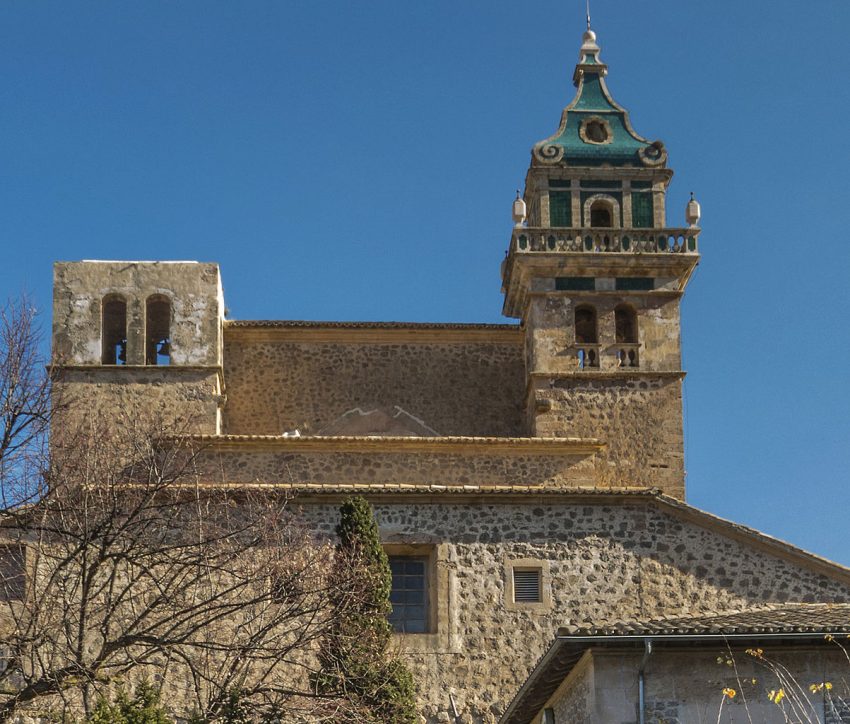
Tucked into the stone-built village of Valldemossa in the Tramuntana mountains, the Valldemossa Monastery (Real Cartuja) feels like a self-contained world of cloisters, gardens and echoing corridors, a place where time slows and stories linger in the air. Once a royal residence chosen by King Jaume II for his son Sancho, the complex became a Carthusian monastery in 1399 and remained home to monks until 1835, before gaining literary fame as the winter refuge of composer Frédéric Chopin and writer George Sand in 1838-1839, making it one of the best places to visit in Valldemossa for anyone who loves history, music or quiet corners.
Walking through its white-arched corridors you step from one “cell” to another, each now a small themed museum: one dedicated to Chopin, others to local history, and still others preserving the old pharmacy and library where monks once studied herbs and scriptures. Outside, views of terracotta roofs, terraces and olive-clad hills remind you that this is a mountain retreat as much as a historic monument, and the monastery is a highlight of any walking tour of Valldemossa that winds through the village's steep lanes and stone houses.
Table of Contents
- History and Significance of the Valldemossa Monastery
- Things to See and Do in the Valldemossa Monastery
- How to Get to the Valldemossa Monastery
- Practical Tips on Visiting the Valldemossa Monastery
- Where to Stay close to the Valldemossa Monastery
- Is the Valldemossa Monastery Worth Visiting?
- FAQs for Visiting Valldemossa Monastery
- Nearby Attractions to the Valldemossa Monastery
History and Significance of the Valldemossa Monastery
The story of the monastery begins with royal ambition. In the early 14th century, King Jaume II chose this elevated, cool valley as the site for a palace for his son, Sancho, taking advantage of the fresh mountain air and natural defensibility of Valldemossa. The complex was initially a royal residence rather than a monastery, a place where the court could escape the summer heat of Palma and enjoy hunting, fresh water and relative seclusion.
In 1399, the palace and its grounds were donated to the Carthusian order, who transformed it into a place of devotion, contemplation and study. The monks adapted the existing buildings and added new structures, creating the Real Cartuja de Valldemossa we recognise today, with its cloisters, cells, gardens and communal spaces. For centuries, the monastery followed a strict rhythm of prayer and silence, broken only by a brief weekly gathering in the library where monks could speak with one another.
Secularisation in the 19th century brought dramatic change. The Carthusians left in 1835, and some of the former monastic cells eventually became private residences or museums. Just a few years later, in the winter of 1838-1839, Chopin and George Sand arrived, seeking a mild climate for Chopin’s health. Their brief, intense stay, with its mix of creative work and stormy weather, added a romantic layer to the monastery’s history. Today, the Real Cartuja is a place where royal, monastic and artistic stories intersect, each still visible in different corners of the complex.
Things to See and Do in the Valldemossa Monastery
As you enter, the white-arched corridors are your first introduction to the monastery’s rhythm. These walkways lead off to individual “cells,” each now a museum room with its own theme. Take your time along the cloister, stepping into each cell to discover period furniture, religious art, documents and personal objects that sketch out the daily life of the monks and the later residents. The simplicity of the architecture makes the details stand out all the more.
The old pharmacy is one of the most evocative stops. Here, shelves lined with jars and bottles recall the days when monks prepared remedies from herbs grown in the monastery gardens and collected in the surrounding hills. Even today you can almost imagine the faint scent of dried plants in the air. Nearby, the library offers a glimpse into the intellectual life of the community, a serene room where the monks gathered once a week for permitted conversation, sharing news and ideas after long stretches of silence.
Do not miss the modern art museum housed within the complex. It is an unexpected contrast to the medieval and early modern surroundings, with works by artists such as Picasso, Miró and Juli Ramis bringing bold colour and abstraction into stone-lined spaces. Finally, visiting Chopin’s cell gives a more personal touch: here you can get a sense of how the composer and George Sand lived during their winter stay, surrounded by mountains, mists and the echoing quiet of the former monastery, and imagine the music taking shape in this unlikely refuge.
How to Get to the Valldemossa Monastery
Most visitors start their journey in Mallorca at Palma de Mallorca Airport, the island's main international gateway with regular flights from across Europe. For the best deals and a seamless booking experience, check out these flights to Palma de Mallorca on Booking.com. From the airport, you can pick up a hire car or take a bus into Palma and then continue up into the mountains towards Valldemossa.
If you are already in Palma or another town with rail access, trains will bring you into Palma's Estació Intermodal near Plaça d'Espanya, from where buses run regularly up to Valldemossa in the Tramuntana mountains.Train schedules and bookings can be found on Omio. Once you arrive in the village, the monastery is just a short, well-signposted walk from the main parking areas and central streets.
Travelling by car, follow the Ma-1110 road from Palma towards Valldemossa, enjoying the increasingly scenic drive as you climb into the hills.If you are looking to rent a car in Spain I recommend having a look at Discover Cars, first, as they compare prices and review multiple car rental agencies for you. There are designated parking areas on the edge of the village; from there you can walk into the old centre and follow signs to the Real Cartuja, which dominates one side of the main square.
Practical Tips on Visiting the Valldemossa Monastery
- Suggested tips: Combine your monastery visit with a stroll through Valldemossa’s narrow streets and a coffee or coca de patata (local sweet pastry) in the main square.
- Best time to visit: Late morning or mid-afternoon outside peak summer is ideal; early in the day can be quieter and cooler, especially in high season.
- Entrance fee: €12.00
- Opening hours: Hours: I 10:00 a.m. to 5:00 p.m. Monday to Friday. 10:00 a.m. to 4:00 p.m. Saturdays
- Official website: https://cartoixadevalldemossa.com/
- How long to spend: Plan 1-2 hours inside the monastery to see the cloister, cells, pharmacy, library, modern art museum and Chopin’s cell at a relaxed pace.
- Accessibility: Historic corridors and steps can pose challenges for visitors with reduced mobility; some areas may be more accessible than others, so ask staff for the easiest routes.
- Facilities: Expect a ticket office, small shop and toilets on-site, plus a welcoming café on the ground floor and plenty of additional cafés and restaurants in the village.
- Photography tip: Capture the rhythm of the white arches in the corridors and the views from the monastery out over Valldemossa and the surrounding hills; check any restrictions before photographing inside specific rooms.
- Guided tours: Audio guides or guided visits may be available and are useful for understanding the monastery’s royal origins, Carthusian life and Chopin’s winter stay.
- Nearby food options: The streets around the monastery and main square are lined with cafés, bakeries and restaurants where you can try local pastries, tapas and Mallorcan dishes.
Where to Stay close to the Valldemossa Monastery
Staying in or near Valldemossa lets you experience the monastery in the softer light of early morning or evening, when day-trip crowds thin and the village feels especially serene. For a characterful stay within walking distance of the Real Cartuja, Es Petit Hotel de Valldemossa offers intimate rooms in a traditional stone house with views over the village and valley. A slightly more rural option with a boutique feel is Mirabó de Valldemossa, a country hotel set on a hillside above the town, perfect if you want peace, views and a short drive down to the monastery. For a cosy base in the village centre with easy access to cafés and viewpoints, Hotel Sa Vall works well for combining monastery visits with gentle walks and evenings in local restaurants.
Is the Valldemossa Monastery Worth Visiting?
The Valldemossa Monastery is absolutely worth visiting, especially if you are drawn to places where different layers of history overlap. In a single visit you move from royal palace to monastic cloister to Romantic-era artists' refuge, with a modern art collection adding a final twist. The setting in Valldemossa's mountain valley adds to the atmosphere, and the combination of cool stone corridors, scented pharmacy, quiet library and Chopin's cell makes the Real Cartuja one of the most memorable historic sites on Mallorca.
What Other Travellers Say...

Carthusian Monastery Valldemossa, on Plaça Cartoixa in Valldemossa, is a compact monastery museum and former residence of composer Frédéric Chopin with rooms open to visitors; highlights noted by visitors include the Pleyel pianoforte, portraits, a well-preserved historic pharmacy, three hermit cells with a terrace garden overlooking the valley, live piano mini-concerts, and a tower with standout views (many recommend buying the combined ticket to include tower access). Some visitors praise the setting and performances, while others warn that facilities and ticket inclusions can be confusing and to bring coins for nearby parking.


FAQs for Visiting Valldemossa Monastery
Nearby Attractions to the Valldemossa Monastery
- Valldemossa village centre: Wander the cobbled streets, stone houses and small squares of this picturesque mountain village before or after your monastery visit.
- Mirador de Sa Foradada: A scenic viewpoint along the coast road towards Deià, famous for its pierced rock and sunset views over the sea.
- Deià: A beautiful artist’s village further along the Tramuntana, with stone houses, coastal walks and a long association with writers and painters.
- Palma Cathedral La Seu: The island's iconic Gothic cathedral in Palma, an easy day trip from Valldemossa and a striking contrast to the mountain monastery.
- Son Marroig: A historic estate and viewpoint near Deià, offering terraces, a small museum and sweeping views over the rugged north-western coastline.
The Royal Carthusian Monastery, Valldemossa appears in our Complete Guide to Visiting Palma de Mallorca!

Moira & Andy
Hey! We're Moira & Andy. From hiking the Camino to trips around Europe in Bert our campervan — we've been traveling together since retirement in 2020!
This website uses affiliate links which may earn a commission at no additional cost to you!
Planning Your Visit
Hours: I 10:00 a.m. to 5:00 p.m. Monday to Friday.
10:00 a.m. to 4:00 p.m. Saturdays
€12.00
Nearby Attractions
- Plaza de España (15.1) km
Square - Esglesia de Santa Catalina de Siena (15.2) km
Church - Pueblo Español (15.2) km
Museum - Church of Santa Magdalena (15.2) km
Church - Mercat Olivar (15.3) km
Market - Juan March Foundation Museum (15.5) km
Museum - Can Casasayas (15.6) km
Historic Building - Plaza Mayor (15.6) km
Square - Es Baluard Centre (15.6) km
Museum - Passeig del Born (15.6) km
Street