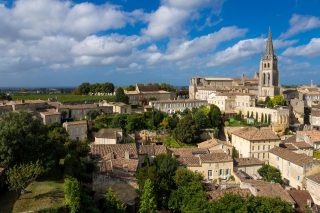
Roman Sanxay, Poitiers
Amphitheatre and Roman Site near Poitiers
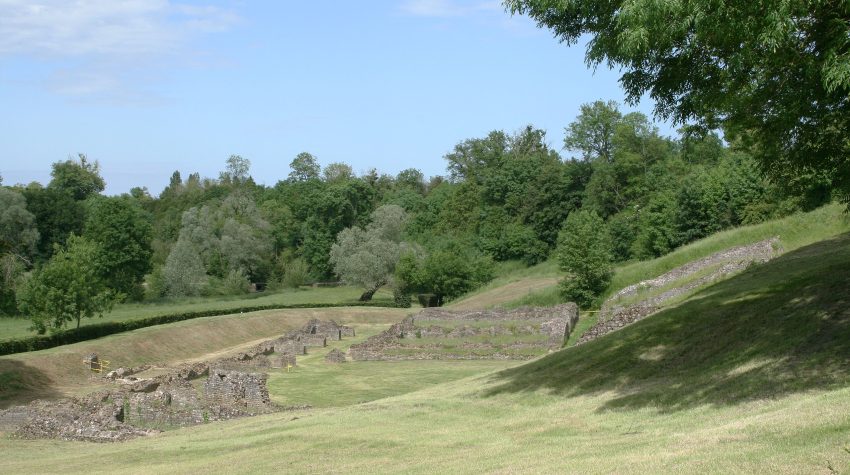
Roman Sanxay is one of the most atmospheric Gallo-Roman sites in western France, hidden in gentle countryside yet closely tied to the history of Poitiers. Once a thriving religious and cultural centre in the 1st and 2nd centuries AD, it drew pilgrims to its sacred springs, temples, baths, and amphitheatre, and today it stands as one of the top sights in Poitiers for travellers willing to make a short detour. Walking among the ruins, you can easily imagine the crowds who once came here seeking healing, entertainment, and spiritual comfort.
What makes Roman Sanxay so special is the way its main monuments still read clearly in the landscape. You can move from the octagonal temple platform to the remains of the thermal baths and then up to the amphitheatre, all within a compact, green valley that has changed surprisingly little in two millennia. The site is a highlight of any walking tour of Sanxay itself, and it works beautifully as a half-day escape from the city when you want a mix of archaeology, fresh air, and timeless rural views.
Table of Contents
History and Significance of the Roman Sanxay
Roman Sanxay emerged in the 1st and 2nd centuries AD as a major sanctuary complex connected to the wider Roman road network of western Gaul. Rather than a dense city, it was a religious and healing centre, organised around a sacred spring that fed both the temple precinct and the baths. Pilgrims came here to honour deities such as Mercury and Apollo, to bathe in the curative waters, and to participate in ceremonies that blended local Gallic traditions with Roman religious practices.
At the heart of the sanctuary was the remarkable Temple of Mercury and Apollo, distinguished by its octagonal cella and Greek cross-style surrounding portico. This unusual design makes it a rare architectural ensemble in Roman Gaul and underlines the importance of the cult worshipped here. The sacred spring running beneath the cella gave the temple a powerful spiritual focus, reinforcing Sanxay’s reputation as a place where divine favour and healing could be sought together.
Over time, Sanxay’s amphitheatre, thermal baths, and associated buildings created a complete ritual and social landscape. The amphitheatre, carved into the slope and capable of hosting thousands of spectators, hosted theatrical performances, spectacles, and religious events linked to the sanctuary calendar. Like many Roman sites, Sanxay declined as the Empire weakened and religious practices changed, but its rural setting helped preserve the outlines of the complex, allowing archaeologists and visitors today to read the site as a rare, coherent example of a Gallo-Roman sanctuary town.
Things to See and Do in the Roman Sanxay
Begin at the temple area, where you can walk around the foundations of the octagonal Temple of Mercury and Apollo. Even though only the lower courses remain, the plan is still clearly visible, and information panels usually help you understand how the building would have looked, with its Greek cross portico and the sacred spring flowing beneath. Standing here, try to picture the temple walls rising above you, filled with offerings, incense, and the murmur of pilgrims.
From the temple precinct, follow the paths towards the thermal baths, which were central to daily life at Roman Sanxay. The remains of heated rooms, pools, and service areas show how carefully the Romans engineered water flow and temperature, especially in a sanctuary where healing and purification were key themes. As you walk through the ruins, look for traces of hypocaust pillars and channels that once carried hot air under the floors, an elegant example of Roman technical skill in a rural setting.
No visit is complete without seeing the amphitheatre, one of the most impressive structures on the site. Its seating, partly embedded in the natural slope, once accommodated around 6,500 people for gladiatorial games, performances, and religious festivals. Even in its ruined state, the scale is striking, and in summer the amphitheatre sometimes returns to its roots as a performance venue, with concerts or shows staged under the open sky. Take a moment to sit on the stone or grassy tiers and imagine the roar of a Roman crowd echoing off the surrounding hills.
How to Get to the Roman Sanxay
Roman Sanxay lies in the countryside near the village of Sanxay, southwest of Poitiers, so you will first need to reach the Poitiers area by air if you are coming from further afield. The nearest airport is Poitiers-Biard, with additional international options in Paris for long-haul travellers. For the best deals and a seamless booking experience, check out these flights to Poitiers on Booking.com. From these gateways you can continue towards Poitiers and on to Sanxay by a combination of train, bus, or rental car.
If you are travelling by train, head to Poitiers, which is well connected by high-speed and regional services from major French cities.You can use SNCF Connect to check schedules, compare routes, and purchase tickets for National (SNCF ) and regional trains (TER). For a more streamlined experience, we recommend using Omio, which allows you to easily compare prices, schedules, and book tickets for both National and Regional travel across all of Europe, all in one place. From Poitiers, regional buses may serve nearby towns, but services can be limited, so many visitors combine rail with a rental car for the final stretch to Sanxay. Local tourist information can help you match current bus timetables with your planned visit.
Reaching Roman Sanxay is easiest by car, whether you start from Poitiers, another town in the Vienne department, or even the Atlantic coast.If you are looking to rent a car in France I recommend having a look at Discover Cars, first, as they compare prices and review multiple car rental agencies for you. The drive takes you along quiet rural roads through farmland and small villages, and there is usually signposting to the archaeological site as you approach Sanxay. Once there, you will find parking near the entrance, and the main monuments are linked by marked footpaths within the site.
Practical Tips on Visiting the Roman Sanxay
- Suggested tips: Wear sturdy shoes, as you will be walking on grass, gravel, and uneven stone surfaces, and bring water and a hat on hot days.
- Best time to visit: Late spring to early autumn offers the most pleasant weather and the best chance of catching outdoor events in the amphitheatre.
- Entrance fee: Adults: €7.00
- Opening hours: September 16 to May 14: Wednesday to Sunday, 10am to 1pm and 2pm to 5pm (closed Mondays and Tuesdays) May 15 to September 15: Tuesday to Sunday, 10am to 1pm and 2pm to 6pm (closed on Mondays)
- Official website: https://www.site-galloromain-de-sanxay.fr/
- How long to spend: Plan 1.5 to 2 hours to explore the temple, baths, and amphitheatre at a relaxed pace, longer if you stay for a performance or picnic.
- Accessibility: Paths are mostly outdoors and may be uneven or grassy, so access can be challenging for visitors with limited mobility, especially in wet weather.
- Facilities: Basic visitor facilities such as ticketing, information panels, and toilets are often available; cafés and shops are more likely to be found in nearby villages or back in Poitiers.
- Photography tip: Early morning or late afternoon light brings out the textures of the stone and the contours of the amphitheatre; wide-angle shots work well to capture the monuments in their landscape.
- Guided tours: In high season, guided-tours or special events may be offered and are a good way to understand the religious and social life of the sanctuary.
- Nearby food options: Consider combining your visit with a meal in Sanxay or another nearby village, or pack a picnic to enjoy in designated areas near the site.
Where to Stay close to the Roman Sanxay
Because Roman Sanxay sits in a rural area, many visitors choose to base themselves in Poitiers and make a rewarding half-day trip to the site. A comfortable central option is Hotel de l Europe Poitiers, which gives you easy access to Poitiers’ train station, historic centre, and driving routes out towards Sanxay. If you prefer a more characterful stay, Mercure Poitiers Centre places you in a converted chapel in the heart of town, ideal if you want to mix countryside excursions with evenings in the city. For a practical and modern base, ibis Styles Poitiers Centre offers straightforward comfort within walking distance of Poitiers’ main sights and an easy drive to the Roman sanctuary.
Is the Roman Sanxay Worth Visiting?
Roman Sanxay is very much worth the journey if you are interested in ancient history, archaeology, or simply enjoy evocative places where ruins and landscape blend together. Few sites in western France offer such a complete picture of a Gallo-Roman sanctuary town, with temple, baths, and amphitheatre all accessible in one visit. Combined with its peaceful rural setting and the option to tie it into a wider exploration of Poitiers and the Vienne countryside, Roman Sanxay stands out as one of the best places to visit in Poitiers for travellers looking beyond the usual city-centre highlights.
What Other Travellers Say...

Site gallo-romain de Sanxay, on Route de Ménigoutte in Sanxay, offers well-preserved Gallo-Roman ruins including thermal baths, a theatre and temple remains; the site is neatly laid out with clear multilingual information panels and seating, making it easy to explore on foot for about an hour or longer, and it also serves as an atmospheric venue for events like opera.


FAQs for Visiting Roman Sanxay
Nearby Attractions to the Roman Sanxay
- Poitiers: The historic regional capital, with Roman remains, medieval churches, and lively squares, ideal as a base for visiting Roman Sanxay.
- Musee Sainte-Croix Poitiers: The main museum in Poitiers, showcasing archaeology from prehistory to the Roman and Merovingian periods alongside fine arts and sculpture.
- City Walls of Poitiers: Surviving sections of Roman and medieval fortifications encircling the plateau, perfect for a history-focused walk.
- Parc de Blossac Poitiers: A spacious landscaped park with formal gardens and viewpoints, offering a relaxing green break after a day of archaeological exploration.
- Rural villages of the Vienne valley: Small nearby settlements and countryside viewpoints that give a feel for the modern agricultural landscape surrounding the ancient sanctuary.
The Roman Sanxay appears in our Complete Guide to Visiting Poitiers!

Moira & Andy
Hey! We're Moira & Andy. From hiking the Camino to trips around Europe in Bert our campervan — we've been traveling together since retirement in 2020!
This website uses affiliate links which may earn a commission at no additional cost to you!
Planning Your Visit
September 16 to May 14: Wednesday to Sunday, 10am to 1pm and 2pm to 5pm (closed Mondays and Tuesdays)
May 15 to September 15: Tuesday to Sunday, 10am to 1pm and 2pm to 6pm (closed on Mondays)
Adults: €7.00
Nearby Attractions
- Abbaye de Saint-Benoît (28.4) km
Abbey - City Walls of Poitiers (28.6) km
City Walls - Parc de Blossac (28.6) km
Park - Poitiers Prefecture (29.0) km
Historic Building - Amphithéâtre de Poitiers (29.2) km
Amphitheatre and Roman Site - Place du Maréchal Leclerc (29.3) km
Square - Palace of the Counts of Poitou (29.6) km
Palace - Church of Notre-Dame-la-Grande (29.7) km
Church - Place de la Liberté (29.7) km
Square - Musée Sainte-Croix (29.8) km
Museum