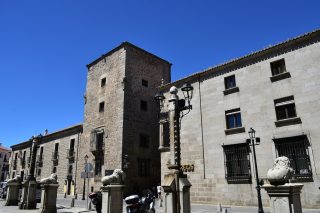
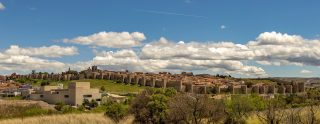
Puerta de Santa Teresa, Ávila
City Gate in Ávila

The Puerta de la Santa is one of those places in Ávila that you can “pass through” in 30 seconds, yet it rewards you if you pause and look closely. Built into the city's famous walls, this historic gate frames the approach to the area associated with Santa Teresa, and it's easy to see why locals consider it one of the things to see in Ávila when you're exploring the old town on foot.
Architecturally, it's compact but characterful: two square towers with a defensive machicolation above, and stonework that still hints at older phases despite later repairs. It also sits naturally on a walking tour of Ávila, because within a few minutes you can connect the gate to convent history, wall viewpoints, and a cluster of small streets that still feel medieval in scale.
Table of Contents
- History and Significance of the Puerta de la Santa
- Things to See and Do in the Puerta de la Santa
- How to Get to the Puerta de la Santa
- Practical Tips on Visiting the Puerta de la Santa
- Where to Stay Close to the Puerta de la Santa
- Is the Puerta de la Santa Worth Visiting?
- For Different Travelers
- FAQs for Visiting the Puerta de la Santa
- Nearby Attractions to the Puerta de la Santa
History and Significance of the Puerta de la Santa
Ávila's walls are punctuated by a small set of historic entrances, and the Puerta de la Santa is traditionally counted among the nine gates that lead into the walled city. Unlike the grander gates that read as “monumental arrivals,” this one feels like a purposeful threshold-less ceremonial, more lived-in-linking everyday streets to a neighbourhood that carries deep Carmelite associations.
The gate’s name is tied to Santa Teresa and the site where a Carmelite complex later rose on or near the location associated with her birth, which gives this corner of the walls an almost pilgrimage-like pull. Historically, that mattered: gates weren’t just defensive features, they were where the city’s identity became visible-who entered, where routes converged, and which institutions (religious or civic) anchored the district beyond.
Even if you're not visiting Ávila for religious history, the Puerta de la Santa is a useful “orientation marker.” It tells you you're in a part of town where the walls, convent life, and older residential fabric overlap, and where a short stroll can stack up several high-impact stops without needing a long detour.
Things to See and Do in the Puerta de la Santa
Start with the structure itself. Stand just far enough back to read the gate as a defensive piece: the twin square towers, the mass of stone, and the machicolation that once turned vertical space into protection. Then walk through slowly and look back-Ávila’s walls often photograph best when you use an archway or gate as a frame, and this one is made for that.
Next, build your “two-minute loop” around what's immediately adjacent. The Palacio de Núñez Vela is right beside the gate, and even from the outside you can sense how noble residences once leaned into the wall line for status and security. It's a subtle detail that adds texture to the story: Ávila's walls weren't only military architecture; they shaped where people built, how they defended, and how they displayed power.
Finally, use the gate as a springboard for nearby Santa Teresa sites. This is the natural approach point for the convent complex linked to her early life, and it’s an easy place to decide whether you want a quick look-and-go, or a longer, more reflective stop that includes museum time and a calmer wander through the surrounding lanes.
How to Get to the Puerta de la Santa
Ávila is most commonly reached via Madrid, and Madrid-Barajas Airport (MAD) is the most practical arrival point for most international travellers. For the best deals and a seamless booking experience, check out these flights to Ávila on Booking.com.
By train, Ávila is straightforward: arrive at Ávila railway station (Estación de Ávila) and then continue by taxi or a steady walk toward the walled old town. Train schedules and bookings can be found on Omio.
Within the historic centre, the easiest approach is simply to navigate toward the Convento/Iglesia de La Santa area and the wall line; the gate is an obvious, signposted break in the fortifications once you’re close. If you’re driving, aim for parking outside the walls and finish on foot, which avoids restricted lanes and keeps the visit simple. If you are looking to rent a car in Spain I recommend having a look at Discover Cars, first, as they compare prices and review multiple car rental agencies for you.
Practical Tips on Visiting the Puerta de la Santa
- Entrance fee: Free
- Opening hours: 24 Hours
- Official website: https://muralladeavila.com/en/plan-your-visit/route-around-the-walls
- Best time to visit: Come early for quieter streets and softer light on the stonework, or near sunset when the walls glow and the atmosphere feels especially old-world.
- How long to spend: 10-20 minutes is enough for photos and context, but plan 45-90 minutes if you’re pairing it with nearby Santa Teresa sites and a gentle wander.
- Accessibility: The gate area is walkable, but expect uneven paving and occasional slopes on surrounding lanes typical of historic centres.
- Facilities: There are no dedicated facilities at the gate itself, so plan for cafés, restrooms, and longer breaks around the nearby plazas and main streets.
Where to Stay Close to the Puerta de la Santa
For a culture-heavy itinerary, base yourself inside the walls near the cathedral and main historic streets so you can walk everywhere; if your focus is transport convenience or quick in-and-out access, staying just outside the walls near easy road approaches can save time while still keeping the old town close.
If you want to wake up essentially beside the gate, Hotel Puerta de la Santa is the obvious choice-steps from the entrance and ideal for early-morning photos before day-trippers arrive. Hotel Puerta de la Santa For a more classic historic-centre stay near the cathedral (and still an easy walk to the gate), consider a landmark-style property like Palacio de los Velada, which places you right in the densest cluster of monuments. Hotel Palacio de los Velada And if you like the idea of a calmer, heritage feel with a little more space, the Parador de Ávila offers an atmospheric base in the historic quarter with a more “retreat-like” pace after sightseeing. Parador de Ávila
Is the Puerta de la Santa Worth Visiting?
Yes-especially because it's a high-value stop that costs nothing and fits naturally into how you'll explore Ávila anyway. Even if you're not seeking religious history, it's a tangible piece of the wall system with distinctive features, and it sits beside streets where Ávila's “city of stone” identity feels most immediate.
What makes it worthwhile is how easily it anchors a mini-route. You can use it to connect the walls, nearby convent history, and a compact set of viewpoints and lanes without backtracking, so it strengthens your day plan rather than adding complexity.
What Other Travellers Say...

Church & birthplace of Saint Teresa of Jesus in Ávila sits at Carmelitas Descalzos, Pl. la Santa, Nº 2, and is described as a peaceful, prayerful 17th-century church built on the site believed to be her birthplace; visitors praise its serene atmosphere, ornate architecture and historical significance, recommend guided tours for added context, and note it makes for a worthwhile day trip with calm surroundings that invite reflection.


For Different Travelers
Families with Kids
If you’re travelling with kids, treat the gate as a quick “castle entrance” moment rather than a long history lesson. Let them spot the defensive details-towers, openings, and the way the wall line guides movement-and then keep momentum toward a plaza for snacks.
Stroller-wise, plan your route with smoother streets where possible and accept that you may need a slightly longer path to avoid rougher cobbles. The best family rhythm here is short bursts of sightseeing with frequent pauses, and the gate works perfectly as one of those short, satisfying stops.
Couples & Romantic Getaways
For couples, the Puerta de la Santa is at its best when you slow down: arrive early, walk through quietly, and linger for a few photos that capture the scale of the walls without crowds. It's a simple scene, but it feels cinematic-especially when the stone takes on warm tones later in the day.
Turn it into a gentle sequence rather than a checklist. Pair the gate with a nearby church or convent visit for atmosphere, then drift into the old town for a long coffee or a late tapas stop-this is one of those corners of Ávila where the mood does most of the work.
Budget Travelers
If you're watching spending, this is an easy win: it's free, it's central, and it gives you that “I've arrived in medieval Ávila” feeling instantly. Use it as a waypoint while you explore the exterior wall paths and the old-town lanes that cost nothing but deliver constant views.
To stretch the value, build your day around several quick, no-ticket stops connected by walking: gates, viewpoints along the wall line, and public squares. The Puerta de la Santa is especially useful because it links naturally to other nearby highlights without requiring paid entry to feel rewarding.
FAQs for Visiting the Puerta de la Santa
Getting There
Tickets & Entry
Visiting Experience
Tours, Context & Itineraries
Photography
Accessibility & Facilities
Food & Breaks Nearby
Safety & Timing
Nearby Attractions to the Puerta de la Santa
- Convento e Iglesia de La Santa: The spiritual heart of this corner of Ávila, closely tied to Santa Teresa and worth visiting for its atmosphere.
- Museo de Santa Teresa: A focused museum experience that adds context to what you’ve just seen at the gate and nearby convent complex.
- Muralla de Ávila: Follow the wall line for classic views and a better sense of how the gates knit the old town together.
- Catedral de Ávila: A landmark cathedral-fortress with a commanding presence, easily combined with the gate on a walk through the historic core.
- Basílica de San Vicente: One of Ávila's standout Romanesque monuments, ideal if you want another high-impact stop after the walls.
The Puerta de Santa Teresa appears in our Complete Guide to Visiting Ávila!

Moira & Andy
Hey! We're Moira & Andy. From hiking the Camino to trips around Europe in Bert our campervan — we've been traveling together since retirement in 2020!
This website uses affiliate links which may earn a commission at no additional cost to you!
Nearby Attractions
- Palacio de Núñez Vela (0.0) km
Palace - El Convento de Santa Teresa (0.0) km
Convent - Palacio de Los Almarza (0.1) km
Palace - Palacio de Los Superunda (0.1) km
Palace - Torreón de los Guzmanes (0.1) km
Palace - Palace of Polentinos (Ávila) (0.2) km
Historic Building and Palace - Palacio de los Dávila (0.2) km
Palace - Iglesia de San Juan Bautista (0.2) km
Church - Plaza Mercado Chico (0.3) km
Square - Parador de Ávila (0.4) km
Palace