Puccini Museum, Lucca
Historic Building and Museum in Lucca
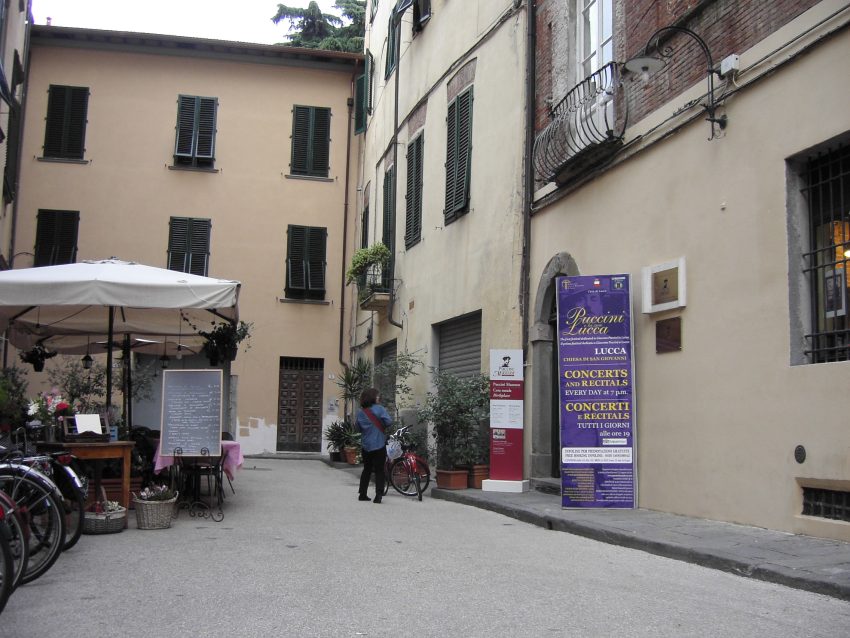
In a quiet corner of Lucca's historic centre, the Puccini Museum draws you into the private world of one of opera's greatest composers. Set at corte San Lorenzo 8, this modest house is where Giacomo Puccini was born on 22 December 1858 and where he spent his formative years, absorbing the sounds of the city and developing the musical instincts that would later change the opera stage forever. Although Puccini lived in many places during his career and eventually settled by Lake Massaciuccoli, he always regarded this house in Lucca with special affection. Today, the building has been carefully restored to its 19th-century appearance, offering an intimate glimpse into both the composer's daily life and his extraordinary imagination.
Stepping inside, you move through a sequence of rooms furnished with original pieces, as if Puccini might walk back through the door at any moment. The exhibition route traces his life and work through precious objects: the famous Steinway & Sons piano on which he wrote Turandot, signed scores of early compositions such as Preludio a orchestra and Messa a 4 voci, and an astonishing collection of letters, drafts, and memorabilia. For anyone who loves La Bohème, Tosca, or Madama Butterfly, seeing these handwritten pages and personal possessions in the city of his birth makes the Puccini Museum one of the must-see places in Lucca and often visited on walking tours of Lucca that focus on music and culture.
Table of Contents
History and Significance of Puccini Museum
The Puccini Museum is first and foremost a house: a simple Lucchese residence whose walls witnessed the beginnings of a musical dynasty. Puccini was born here into a long line of church musicians and composers who had served Lucca's institutions for generations. The family's modest but cultured surroundings shaped his early years, providing a framework of discipline, liturgical music, and local traditions that he would later transform into something far larger and more theatrical. When he left for Milan to study and launch his career, this house remained his emotional anchor-a place he would remember and return to in memory even as his fame spread across Europe and the world.
Over time, the property passed through various hands and uses, but its association with Puccini never faded. Eventually, local efforts to preserve his legacy converged on the idea of restoring his birthplace as a museum dedicated to his life and work. The rooms were painstakingly returned to their original layout and atmosphere, using surviving furnishings, period pieces, and archival records. Today, walking through the spaces where Puccini grew up, visitors can better understand the contrast between his relatively modest origins and the international acclaim he would later enjoy. The museum doesn’t just celebrate the legend; it grounds him in a specific place and family environment.
The collection is what makes this house truly exceptional. Beyond the Steinway piano used for Turandot, the museum preserves signed scores of early works like Preludio a orchestra and Messa a 4 voci, alongside rediscovered manuscripts and drafts. The letters-especially those exchanged with publisher Giulio Ricordi-reveal the business and emotional pressures that accompanied his creative life. Working versions of librettos for Tosca and La fanciulla del West, rare proofs of the Fanciulla score, and an annotated arrangement of La Rondine filled with his handwritten notes bring visitors as close as possible to Puccini's creative process, transforming the museum into one of the things to do in Lucca that feels genuinely unique.
Things to See and Do in Puccini Museum
Your visit starts with the atmosphere: creaking floorboards, carefully chosen colours, and rooms arranged much as they would have been during Puccini’s youth. Historic furniture-chairs, tables, chests, and smaller personal objects-helps anchor the composer in a tangible, domestic world, far removed from the grandeur of opera houses. Moving from room to room, you follow a narrative that takes you from childhood and early training through to success, crisis, and late works.
One of the centrepieces is the Steinway & Sons piano Puccini used while composing Turandot. Standing in front of it, you can almost hear the unfinished final act in your head and imagine the composer wrestling with themes, orchestration, and drama. Nearby, signed scores of early works remind you that his journey began with experiments and student pieces long before the operas that made his name. The museum’s displays of paintings, photographs, sketches, and personal mementos help put faces to the names of collaborators, friends, and performers, adding a human dimension to the story.
Another highlight is the wealth of paper artefacts: letters, draft librettos, working scores, and corrected proofs. The correspondence with Giulio Ricordi and others reveals negotiations, doubts, and triumphs, while annotated materials for Fanciulla del West and La Rondine show how Puccini tweaked structure, orchestration, and vocal lines. One particularly evocative item is the Turandot costume worn by soprano Maria Jeritza at the opera's 1926 Metropolitan Opera premiere, based on a design by Umberto Brunelleschi. Its presence in the small Lucchese house closes the circle between the local boy and the global stages his music conquered, making this spot one of the best places to see in Puccini Museum for opera lovers.
How to Get to Puccini Museum
The Puccini Museum is located at corte San Lorenzo 8, right in the historic heart of Lucca within the city walls. From major landmarks like San Michele in Foro or Piazza dell'Anfiteatro, it's only a short walk through narrow streets; local signs and tourism maps clearly indicate the route, and the compact nature of the old town makes navigation straightforward on foot.
If you are flying into Tuscany, the nearest major airports are Pisa International Airport and Florence Airport, both with frequent flights and onward transport options into the region. For the best deals and a seamless booking experience, check out these flights to Lucca on Booking.com. From either, you can reach Lucca first and then walk from the station or your accommodation to the museum.
Lucca's train station lies just outside the southern stretch of the city walls and is served by regular regional trains from Pisa, Florence, and other Tuscan towns.Use Omnio to easily compare schedules, book train tickets, and find the best prices all in one place for a hassle-free journey across Italy. From the station, walk through Porta San Pietro and follow signs for the historic centre; reaching corte San Lorenzo typically takes 15-20 minutes on foot, depending on your route and stops along the way.
If you are travelling by car, Lucca is easily accessed via the A11 motorway and connecting regional roads.If you are looking to rent a car in Italy I recommend having a look at Discover Cars, first, as they compare prices and review multiple car rental agencies for you. Because much of the historic centre is a restricted traffic zone, it's best to park in one of the car parks outside or just inside the walls-such as those near Porta San Pietro or Porta Santa Maria-and continue on foot; once inside the walls, the Puccini Museum is clearly signposted and easy to reach.
Practical Tips on Visiting Puccini Museum
- Suggested tips: Take time to read the captions and letters as you go-this is a museum where words and documents are as revealing as objects.
- Best time to visit: Late morning or mid-afternoon usually offer a relaxed atmosphere; visiting outside peak weekend hours can make the small rooms feel less crowded.
- Entrance fee: Adults €9:00
- Opening hours: March Mon – Sun 10:00 am – 6:00 pm Closed on Tuesdays (except on holidays) 1st April – 30th September 10:00 am – 7:00 pm Open every day 1st October – 1st November Mon – Sun 10:00 am – 6:00 pm Closed on Tuesdays (except on holidays) 2nd November – 7th December Mon – Fry 10:00 am – 2:00 pm Sat – Sun 10:00 am – 5:00 pm Closed on Tuesdays (except on holidays and 29th november) and from 7th to 18th November 8th December – 8th January 10:00 am – 5:00 pm Closed 25th December 9th January – 28th February Mon – Sun 10:00 am – 5:00 pm Closed on Tuesdays (except on holidays) Last admission 30 minutes before closing
- Official website: http://www.puccinimuseum.org/en/
- How long to spend: Plan on 60-90 minutes to explore the rooms, study the manuscripts, and appreciate the objects without rushing.
- Accessibility: The historic building layout may present challenges for visitors with reduced mobility; check in advance for current accessibility arrangements and possible assistance.
- Facilities: On-site facilities are limited; restrooms may be available for visitors, while cafés and shops can be found just a few steps away in the surrounding streets.
- Photography tip: Focus on details-close-ups of Puccini’s handwriting, the piano keys, or costume textures-rather than wide-room shots, and always follow any photography rules posted inside.
- Guided tours: When available, guided visits or audio guides can deepen your understanding of the manuscripts, letters, and personal items, especially if you’re not already familiar with Puccini’s life.
- Nearby food options: The streets around corte San Lorenzo and toward San Michele in Foro are full of cafés, wine bars, and trattorie, ideal for a pre- or post-visit coffee, aperitivo, or meal.
Where to Stay close to Puccini Museum
Staying near the Puccini Museum puts you within easy reach of Lucca's main churches, piazzas, and the tree-lined city walls. For a characterful base in the historic centre, Palazzo Alexander offers atmospheric rooms in a restored palazzo just a short walk from the museum and San Michele in Foro. If you prefer being closer to the cathedral while still remaining within a comfortable walking distance of Puccini's birthplace, Albergo San Martino provides a cosy, well-located option. Travellers who like easy access to the eastern walls and a calm base slightly off the busiest streets might choose Hotel Ilaria, from where it’s an easy stroll into the centre and over to corte San Lorenzo for your museum visit.
Is Puccini Museum Worth Visiting?
The Puccini Museum is absolutely worth visiting, especially if you have even a passing interest in opera or cultural history. Unlike a large, impersonal institution, this house museum feels personal and concentrated: every room, letter, and object contributes to a clearer picture of Puccini as both a man and an artist. Seeing the Turandot piano, annotated scores, rare proofs, and personal belongings in the very place where his story began has a powerful emotional impact. Even visitors who arrive knowing only a few famous arias often leave with a much deeper connection to the composer and to Lucca itself.
What Other Travellers Say...

Puccini Museum at Corte S. Lorenzo 9 is the composer's birthplace turned museum, with restored rooms filled with original furniture, letters, manuscripts, portraits, costumes and Puccini's Steinway piano; visits are self-paced (tablet guides available) and typically take 30–60 minutes, with most of the flat accessible via a lift though the kitchen may be closed to visitors, and tickets are bought across the street while friendly staff can enhance the audio presentations.


FAQs for Visiting Puccini Museum
Nearby Attractions to Puccini Museum
- San Michele in Foro - Striking Romanesque church on Lucca's former Roman forum, crowned by a statue of the Archangel Michael.
- Cathedral of San Martino - Lucca's duomo, home to the Volto Santo and the celebrated tomb of Ilaria del Carretto.
- Piazza dell'Anfiteatro - Unique oval piazza built on the footprint of the Roman amphitheatre, surrounded by cafés and colourful façades.
- Basilica of San Frediano - Ancient church known for its golden façade mosaic and impressive interior chapels.
- Lucca's Historical Walls - Complete tree-lined Renaissance fortifications encircling the city, ideal for a panoramic walk or bike ride.
The Puccini Museum appears in our Complete Guide to Visiting Lucca!

Moira & Andy
Hey! We're Moira & Andy. From hiking the Camino to trips around Europe in Bert our campervan — we've been traveling together since retirement in 2020!
This website uses affiliate links which may earn a commission at no additional cost to you!
Planning Your Visit
March
Mon - Sun 10:00 am - 6:00 pm
Closed on Tuesdays (except on holidays)
1st April - 30th September
10:00 am - 7:00 pm
Open every day
1st October - 1st November
Mon - Sun 10:00 am - 6:00 pm
Closed on Tuesdays (except on holidays)
2nd November - 7th December
Mon - Fry 10:00 am - 2:00 pm
Sat - Sun 10:00 am - 5:00 pm
Closed on Tuesdays (except on holidays and 29th november) and from 7th to 18th November
8th December - 8th January
10:00 am - 5:00 pm
Closed 25th December
9th January - 28th February
Mon - Sun 10:00 am - 5:00 pm
Closed on Tuesdays (except on holidays)
Last admission 30 minutes before closing
Adults €9:00
Nearby Attractions
- San Michele in Foro (0.1) km
Basilica - Torre delle Ore (0.2) km
Tower - Palazzo Ducale in Lucca (0.2) km
Historic Building and Museum - Domus Romana (0.2) km
Historic Site - Piazza Napoleone (0.2) km
Square - Risorgimento Museum in Lucca (0.2) km
Museum - Palazzo Pfanner (0.3) km
Gardens and Historic Building - Church and Baptistery of Santi Giovanni e Reparata (0.3) km
Church and Museum - Teatro del Giglio (0.3) km
Theatre - Basilica of San Frediano (0.4) km
Church