Porte Narbonnaise, Carcassonne
Attraction, City Gate and Historic Site in Carcassonne
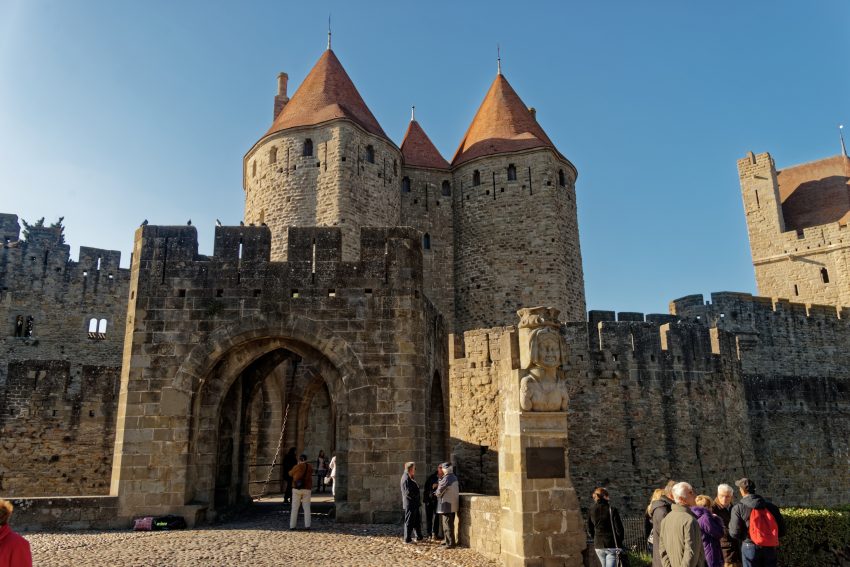
The Porte Narbonnaise is the most famous entrance into the Cité de Carcassonne, a dramatic fortified gateway framed by two powerful towers and approached by a bridge over dry moats. Even if you only have a short time in Carcassonne, walking in through this gate is the classic “first moment” that makes the medieval skyline feel real.
Most travelers experience the Porte Narbonnaise as part of a self-guided stroll or a walking tour of the Cité, using it as the natural starting point for the ramparts, the Château Comtal, and the basilica. For the best views, linger outside the gate first to take in the full façade, then turn back for photos once you're inside and looking outward.
Table of Contents
- History and Significance of the Porte Narbonnaise
- Things to See and Do in the Porte Narbonnaise
- How to Get to the Porte Narbonnaise
- Practical Tips on Visiting the Porte Narbonnaise
- Where to Stay Close to the Porte Narbonnaise
- Is the Porte Narbonnaise Worth Visiting?
- For Different Travelers
- FAQs for Visiting Porte Narbonnaise
- Nearby Attractions to the Porte Narbonnaise
History and Significance of the Porte Narbonnaise
The Porte Narbonnaise is the Cité's principal eastern entrance, designed as a serious defensive system rather than a simple doorway. Its twin towers, layered barriers, and controlled passage reflect the period when Carcassonne was reinforced as a strategic stronghold, with architecture meant to slow attackers and protect the approach.
Over time, the gate became the symbolic threshold between the modern town and the fortified medieval city. Today it’s one of the most recognizable features of Carcassonne’s UNESCO-listed silhouette, and it sets the tone for the rest of your visit: military engineering, imposing stonework, and a sense of staged arrival.
Look closely as you pass through: details like arrow slits, heavy defensive openings, and the overall funnel-like design help you read the gate as a working fortification, not just a picturesque backdrop.
Things to See and Do in the Porte Narbonnaise
Start outside the gate, where the approach gives you the most cinematic perspective of the towers and walls. This is also where you'll often see guides gathering groups, so it's an easy place to join a walking tour or simply follow the flow toward the Cité's main lanes.
Once you cross into the Cité, pause and turn around: the outward view back through the entrance is a great way to appreciate the thickness of the defenses and the way the passage is controlled. From here, it's a straightforward walk to key highlights like the Château Comtal (for rampart walks and views) and the Basilica of Saint-Nazaire (for a quieter, more atmospheric interior).
If you're not entering paid monuments, the Porte Narbonnaise still anchors a rewarding loop: wander the cobbled streets, browse small shops, and time your walk for late afternoon when the stone warms in color and the crowds begin to thin.
How to Get to the Porte Narbonnaise
The nearest major airports are Toulouse-Blagnac (TLS) and Montpellier Méditerranée (MPL), with additional options at Béziers Cap d'Agde (BZR) and Perpignan (PGF) depending on your route. For the best deals and a seamless booking experience, check out these flights to Carcassonne on Booking.com.
Carcassonne is easy to reach by train, and from Carcassonne station you can walk (about 25–35 minutes) or take a local bus/taxi up to the Cité; the Porte Narbonnaise is the most obvious arrival point once you reach the walls. You can use SNCF Connect to check schedules, compare routes, and purchase tickets for National (SNCF ) and regional trains (TER). For a more streamlined experience, we recommend using Omio, which allows you to easily compare prices, schedules, and book tickets for both National and Regional travel across all of Europe, all in one place.
If you're driving, follow signs for the Cité and use the dedicated parking areas near the medieval city, then walk a few minutes to the Porte Narbonnaise entrance. If you are looking to rent a car in France I recommend having a look at Discover Cars, first, as they compare prices and review multiple car rental agencies for you.
Practical Tips on Visiting the Porte Narbonnaise
- Official website: https://www.carcassonne.fr/article-page/porte-narbonnaise
- Entrance fee: Free.
- Opening hours: 24 Hours.
- Best time to visit: Go early in the morning for a quieter entry and cleaner photos, or come near sunset when the stone glows and the Cité feels more atmospheric.
- How long to spend: Plan 10–20 minutes if you’re just passing through and taking photos; allow 45–90 minutes if you’re using it as the start of a relaxed Cité walk.
- Accessibility: Expect uneven cobblestones and slopes around the Cité; the approach and passage can be manageable, but some nearby lanes and viewpoints involve steps or steep sections.
- Facilities: You'll find cafés, restaurants, and restrooms within the Cité; just outside the gate area is also a practical meeting point for tours and transport.
Where to Stay Close to the Porte Narbonnaise
Base yourself inside the Cité if you want the most atmospheric mornings and evenings, when day-trippers have left and the streets feel calmer.
Staying near the Porte Narbonnaise makes it easy to start early, return for a midday break, and come back for golden-hour photos without worrying about transport. If you prefer more dining variety and flatter streets, the lower town (Bastide Saint-Louis) is a strong alternative, but you'll trade convenience for a longer walk back up to the gate.
Hôtel de la Cité Carcassonne – MGallery Chosen for its iconic, once-in-a-lifetime setting inside the medieval walls and a classic luxury experience steps from the Cité’s main sights.
Le Donjon – Coeur de la Cité Médiévale A practical pick for travelers who want to sleep inside the Cité and be close to the main lanes, with an easy walk to the Porte Narbonnaise.
Hôtel Du Pont Vieux Great value just outside the walls, ideal if you want quick access to the gate while keeping a little distance from the busiest interior streets.
Tribe Carcassonne A modern, comfortable base in the lower town with straightforward access to the Cité, good for travelers who prefer contemporary style over medieval ambiance.
Mercure Carcassonne La Cité A reliable mid-range option with convenient access to the Cité area, useful if you’re arriving by car and want an easy in-and-out stay.
Is the Porte Narbonnaise Worth Visiting?
Yes: it's the most memorable way to enter the Cité de Carcassonne, and it delivers instant “wow” even if you don't have time for the paid castle and ramparts. The approach, the scale of the towers, and the feeling of crossing into a fortified town make it one of the most satisfying quick stops in Carcassonne.
Honest Pivot: if you dislike crowds and don’t plan to explore the Cité beyond a fast photo, you may find the area around the gate too busy in peak season. In that case, consider visiting very early, or focus your time on a quieter viewpoint across the river and skip the busiest entry moment.
For Different Travelers
The Porte Narbonnaise works well as a flexible “start line” for exploring Carcassonne: you can treat it as a quick photo stop, a tour meeting point, or the gateway to a longer deep-dive into the ramparts and castle.
Families with Kids
Kids usually love the storybook feel of arriving at a fortified gate, and the short walk-through keeps attention spans happy. It’s also a good place to set simple goals like “spot the defensive features” before rewarding everyone with a snack inside the Cité.
If you’re visiting with a stroller, plan for cobblestones and occasional tight spots, and keep your route simple. A short loop from the gate to a nearby square for a break can be more enjoyable than trying to cover everything.
Couples & Romantic Getaways
The Porte Narbonnaise is especially romantic at golden hour, when the stone warms and the towers look theatrical against the sky. Entering the Cité together here sets up a classic evening: slow wandering, a basilica visit, and dinner behind the walls.
For a quieter feel, aim for early morning or later evening when day crowds fade. Even a brief pause outside the gate can feel special if you time it right.
Budget Travelers
This is one of the best free highlights in Carcassonne: you can get the iconic arrival experience without paying anything to enter the Cité. Spend your budget on a picnic or a single paid highlight (like the ramparts) rather than trying to do everything.
To keep costs down, walk up from the lower town and enjoy the scenic approach. The gate is also a great anchor point for a self-guided itinerary using free viewpoints and street-level exploration.
History Buffs
For history lovers, the Porte Narbonnaise is a readable piece of military architecture, not just a pretty entrance. The layered defenses and the way the passage is controlled help you understand how the Cité functioned under threat.
Use the gate as a starting point for a more structured visit: pair it with the rampart walk and the castle exhibits to connect the “outside defenses” to the lived-in interior of the fortress.
FAQs for Visiting Porte Narbonnaise
Getting There
Tickets & Entry
Visiting Experience
Tours, Context & Itineraries
Photography
Accessibility & Facilities
Food & Breaks Nearby
Safety & Timing
Nearby Attractions to the Porte Narbonnaise
- Château Comtal: The Cité’s main castle complex, with exhibits and access to sections of the rampart walk.
- Basilica of Saints Nazarius and Celsus (Basilique Saint-Nazaire): A quieter highlight known for its atmosphere and beautiful interior details.
- Ramparts of the Cité de Carcassonne: Walkable wall sections offering panoramic views over the Aude valley and the lower town.
- Porte d'Aude: A second historic gate with a different, often less crowded approach and great angles on the walls.
- Pont Vieux: The old bridge linking the lower town to the Cité, ideal for classic skyline photos.
The Porte Narbonnaise appears in our Complete Guide to Visiting Carcassonne!

Moira & Andy
Hey! We're Moira & Andy. From hiking the Camino to trips around Europe in Bert our campervan — we've been traveling together since retirement in 2020!
This website uses affiliate links which may earn a commission at no additional cost to you!
Planning Your Visit
24 Hours.
Free.
Nearby Attractions
- Dame Carcas (0.1) km
Statue - Jean-Pierre Cros-Mayrevieille Monument (0.1) km
Memorial, Monument and Statue - Cité de Carcassonne (0.1) km
Ancient City, Castle and City Walls - La Grand Puit (0.1) km
Historic Site and Monument - Musee de L'Inquisition (0.1) km
Attraction and Museum - Château et Remparts (0.2) km
Castle, City Walls and Historic Site - Musée de l'Ecole (0.2) km
Museum - Porte de l'Aude (0.2) km
City Gate, City Walls and Historic Site - Basilique Saint-Nazaire (0.3) km
Basilica, Church and Religious Building - Eglise Saint-Gimer (0.3) km
Church and Religious Building