Porta Grazia, Messina
City Gate, Historic Site and Monument in Messina
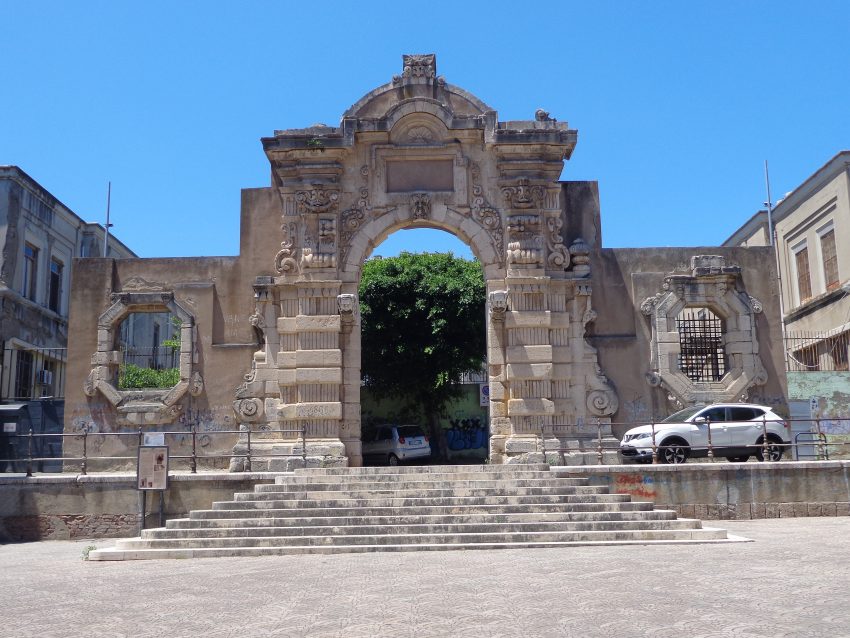
Porta Grazia is a monumental stone gateway in Messina, set in the open air in Piazza Casa Pia near the waterfront. It's a striking remnant of the city's historic coastal defenses, and today it works beautifully as a quick, atmospheric stop while you explore the port area on foot.
Most travelers see Porta Grazia as part of a self-guided walking tour that links Messina's harbor viewpoints with central sights like the Cathedral area. For the best angles, circle the arch to appreciate the sculpted details up close, then step back across the square to take in its full scale.
Table of Contents
- History and Significance of the Porta Grazia
- Things to See and Do in the Porta Grazia
- How to Get to the Porta Grazia
- Practical Tips on Visiting the Porta Grazia
- Where to Stay Close to the Porta Grazia
- Is the Porta Grazia Worth Visiting?
- For Different Travelers
- FAQs for Visiting Porta Grazia
- Nearby Attractions to the Porta Grazia
History and Significance of the Porta Grazia
Porta Grazia was originally one of the access points to Messina's imposing seaside citadel, built in the late 17th century after the city's anti-Spanish revolt. The fortification was designed to control the strategic Strait of Messina, and the gateway became one of the most decorative elements of an otherwise military, functional complex.
The portal is celebrated as a late-Baroque sculptural work: heavy stone massing, ornamental capitals and carved flourishes, and a ceremonial presence that hints at the power the citadel was meant to project. Even if you’re not a specialist, it’s easy to read the message in the architecture: this was an entrance designed to impress.
After the earthquakes that reshaped Messina’s urban fabric, the gateway was dismantled and later reassembled in Piazza Casa Pia, where it has stood for decades as a public monument. Seeing it in its current setting is also a reminder of how the city has preserved fragments of its past while continually rebuilding.
Things to See and Do in the Porta Grazia
Start by walking a slow loop around the structure. From close range you’ll notice the contrast between smooth stone blocks and the more elaborate carved sections, plus the symmetry of the design that frames the arch like a stage set.
Next, step back to photograph it with context. Piazza Casa Pia gives you room to capture the full height of the portal, and the surrounding streets make it easy to pair this stop with a waterfront stroll or a longer walk toward central Messina.
Finally, use Porta Grazia as a “history anchor” on your itinerary: pause for a few minutes, imagine the scale of the former citadel, and then continue to other harbor-area viewpoints. It's a small stop that adds texture to a day otherwise focused on churches, panoramas, and food.
How to Get to the Porta Grazia
The nearest airports are Catania–Fontanarossa (CTA) and Reggio Calabria (REG), both commonly used for reaching Messina and the Strait area. For the best deals and a seamless booking experience, check out these flights to Messina on Booking.com.
Messina is well connected by rail, and arriving at Messina Centrale makes it straightforward to continue on foot, by taxi, or by local transit toward Piazza Casa Pia. Use Omnio to easily compare schedules, book train tickets, and find the best prices all in one place for a hassle-free journey across Italy.
If you’re driving, aim for parking near the port/central area and finish the last stretch on foot to avoid tight streets and limited curb space around the square. If you are looking to rent a car in Italy I recommend having a look at Discover Cars, first, as they compare prices and review multiple car rental agencies for you.
Practical Tips on Visiting the Porta Grazia
- Entrance fee: Free.
- Opening hours: 24 Hours.
- Best time to visit: Go in the morning for softer light and fewer people in the square; late afternoon is also great for photos and a calmer pace.
- How long to spend: Plan 10–20 minutes for a look-around and photos, or 30 minutes if you’re pairing it with a relaxed waterfront stroll.
- Accessibility: The monument is outdoors and generally easy to approach, but expect typical city paving and occasional uneven surfaces around the square.
- Facilities: There are no dedicated visitor facilities on-site; use nearby cafés and services in central Messina before or after your stop.
Where to Stay Close to the Porta Grazia
Best area to base yourself: Central Messina near the Cathedral and Messina Centrale, so you can walk to the waterfront and connect easily to trains and ferries.
Hotel Royal Palace A practical pick for travelers who want a central base with easy access to the station and a straightforward walk or short ride to the port area.
Hotel Touring A convenient option if you’re prioritizing transport connections and want a simple, no-fuss stay for a short city break.
Elysium B&B A cozy choice that suits travelers who like smaller properties and a more local feel while staying close to central sights.
B&B Liberty A good fit for those who want to sleep in the heart of the city and build a walkable itinerary around monuments, food stops, and the waterfront.
Vmaison Boutique Hotel A more design-forward stay for travelers who want boutique comfort and don’t mind being slightly outside the immediate port zone.
Is the Porta Grazia Worth Visiting?
Yes, Porta Grazia is worth visiting if you enjoy quick, high-impact historical sights: it's free, outdoors, and visually impressive, and it adds real context to Messina's maritime history without requiring a big time commitment.
Honest Pivot: If you're short on time and prefer “full” attractions (museums with interiors, guided routes, or extensive ruins), you may find this stop too brief. In that case, prioritize Messina's major landmarks and viewpoints, and treat Porta Grazia as a bonus only if you're already walking near the port.
What Other Travellers Say...

Reviews are broadly positive, with visitors describing Porta Grazia as an evocative, monumental gateway that hints at the scale of Messina's former seaside citadel. Many highlight the sculpted stone details and say it's a pleasant, quiet stop in Piazza Casa Pia with space to sit and take photos. The most common drawback is that it's a brief, standalone sight—more of a quick look than a full attraction—so some travelers may wish there were more surrounding interpretation or a larger site to explore.


For Different Travelers
Porta Grazia works best as a flexible add-on: you can keep it to a quick photo stop or use it as a starting point for a deeper harbor-area walk. Because it's outdoors and doesn't require tickets, it's easy to fit into almost any Messina itinerary.
Families with Kids
Kids often enjoy the “giant gate” feel and the simple challenge of spotting decorative details in the stonework. It’s also a low-stress stop because there’s no queueing and you can move on quickly if attention spans fade.
To make it more engaging, turn it into a mini scavenger hunt: look for carved elements, count symmetrical features, and talk about what a citadel was used for. Pair it with a gelato break afterward to keep the pace family-friendly.
Couples & Romantic Getaways
For couples, Porta Grazia is a quiet, photogenic pause that adds a sense of place to a waterfront walk. The open square makes it easy to take a few portraits without feeling rushed.
It's especially nice as a “between stops” moment: see the gateway, stroll toward the harbor, then continue into central Messina for an aperitivo. The monument's dramatic lines also make for strong golden-hour shots.
Budget Travelers
This is an excellent budget stop: it's outdoors, quick, and rewarding even if you only have a couple of hours in Messina. You can build a full low-cost day by combining Porta Grazia with walking routes, viewpoints, and inexpensive street food.
Because it doesn’t require planning, it’s also ideal if you’re arriving by train or ferry and want something meaningful to see immediately without committing to a paid attraction.
History Buffs
History lovers will appreciate Porta Grazia as a tangible fragment of the Real Cittadella and the broader story of Messina's strategic role on the Strait. The gateway's ceremonial Baroque styling is a clue to how power and control were communicated through architecture.
To deepen the visit, read up briefly on the 17th-century fortifications and then view the portal with that context in mind. You’ll get more out of the details when you imagine the scale of the original defensive complex.
FAQs for Visiting Porta Grazia
Getting There
Tickets & Entry
Visiting Experience
Tours, Context & Itineraries
Photography
Accessibility & Facilities
Food & Breaks Nearby
Safety & Timing
Nearby Attractions to the Porta Grazia
- Messina Cathedral (Duomo di Messina): The city's landmark church complex, famous for its grand square and iconic features.
- Fontana di Orione: A richly decorated Renaissance fountain that's one of Messina's most photogenic monuments.
- Church of Santissima Annunziata dei Catalani: A compact medieval church that offers a striking contrast to later Baroque architecture.
- Vittorio Emanuele II Theatre: An elegant historic theater building that adds architectural variety to a central walk.
- Waterfront and port viewpoints: Easy scenic spots for watching ships and taking in the Strait atmosphere.
The Porta Grazia appears in our Complete Guide to Visiting Messina!

Moira & Andy
Hey! We're Moira & Andy. From hiking the Camino to trips around Europe in Bert our campervan — we've been traveling together since retirement in 2020!
This website uses affiliate links which may earn a commission at no additional cost to you!
Planning Your Visit
24 Hours.
Free.
Nearby Attractions
- Fontana del Nettuno (0.4) km
Attraction, Fountain and Monument - Via Giuseppe Garibaldi (0.8) km
Area, Attraction and Street - Teatro Vittorio Emanuele II (0.8) km
Arts Venue, Opera House and Theatre - Sanctuary of Montevergine (0.8) km
Church, Monastery and Religious Building - Sacrario di Cristo Re (0.8) km
Church, Memorial and Viewing Point - Fort Saint Salvatore and Little Madonna of the Port Statue (0.9) km
Castle, Port and Statue - Palazzo Zanca (1.0) km
- Galleria Vittorio Emanuele III (1.0) km
Attraction, Historic Building and Shopping Centre - Palazzo dei Leoni (1.1) km
Historic Building, Historic Site and Palace - Santuario della Madonna di Montalto (1.2) km
Church, Religious Building and Viewing Point