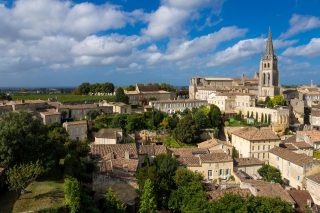
Place de la Liberté, Poitiers
Square in Poitiers
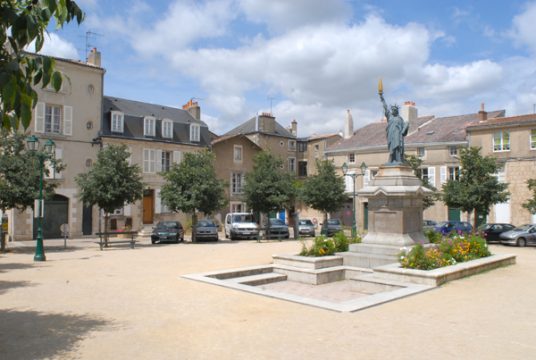
Place de la Liberté is one of the must-see places in Poitiers if you like squares with stories layered into every stone. Once known as Place du Pilori, it began life in the 12th century as the Marché Neuf, a busy market where traders and townspeople gathered under the watchful eye of the city's authorities. Over the centuries, it witnessed everything from public punishments to revolutionary justice, and today it feels strangely peaceful for a place that once echoed with crowds, shouting and the sound of the guillotine.
Standing in the square now, with the small replica Statue of Liberty rising from its pedestal, it is hard to imagine the darker moments of its past. Yet the symbolism is clear: where once General Jean-Baptiste Berton was executed crying “Vive la Liberté”, a monument to liberty, equality and fraternity now anchors the space. The result is a square that is often visited on walking-tours of Poitiers, not just for its architecture but for the way it captures the city's journey from medieval marketplace to modern republican symbol.
Table of Contents
- History and Significance of the Place de la Liberté
- Things to See and Do in the Place de la Liberté
- How to Get to the Place de la Liberté
- Practical Tips on Visiting the Place de la Liberté
- Where to Stay close to the Place de la Liberté
- Is the Place de la Liberté Worth Visiting
- FAQs for Visiting Place de la Liberté
- Nearby Attractions to the Place de la Liberté
History and Significance of the Place de la Liberté
Place de la Liberté began as Place du Pilori in the 12th century, when it was laid out as the Marché Neuf, a new market area just beyond the older medieval core. Markets were the lifeblood of a city like Poitiers, and this square bustled with stalls, deals and gossip as the town expanded. By 1307, however, its role had shifted: a pillory was installed, and the space became associated with public punishments, where offenders were exposed to the crowd as a warning to others. The dual identity of trade and justice quickly became part of its character.
The Hundred Years' War brought violence and disruption. When the English captured Poitiers in 1346, parts of the area were destroyed, and the surrounding quarter suffered economic decline. Yet the square remained a civic stage, and its most notorious chapter came during the French Revolution, when the guillotine was installed here. Executions continued even after the fall of Robespierre, embedding the place firmly in the collective memory as a theatre of revolutionary justice. On 5 October 1822, General Jean-Baptiste Berton, a Napoleonic officer who plotted against Louis XVIII, was executed here, shouting “Vive la Liberté!” in his final moments.
That cry later inspired the square's new identity. In 1900, Place du Pilori was officially renamed Place de la Liberté, a symbolic act that tried to transform a place of punishment into one of republican values. Three years later, in 1903, a replica of Auguste Bartholdi's Statue of Liberty, funded by Freemasons, was erected in the square. The statue's base carries inscriptions recalling the ideals of liberty, equality and fraternity, making the square not just a civic space but also a small open-air monument to French democracy. Today, protected heritage status and careful restoration underline its importance in telling Poitiers' political and social story.
Things to See and Do in the Place de la Liberté
The main focal point of Place de la Liberté is the Statue of Liberty replica, which immediately draws the eye. Though much smaller than its New York counterpart, it carries the same essential symbolism, reminding visitors that freedom and citizenship are at the heart of modern French identity. Take time to walk around the statue and read the inscriptions on its base, which reference the Revolution and the ideals that shaped the Third Republic when the monument was installed.
As you explore the square, look for traces of its earlier life. While the pillory and guillotine are long gone, the proportions of the space and the surrounding façades evoke its past as a market and civic stage. Close your eyes for a moment and imagine stalls, carts and crowds filling the area, or the tense silence that must have fallen during an execution. The contrast with today's calmer atmosphere makes the historical narrative feel very vivid. This spot is one of the best places to see in Poitiers if you are interested in how cities reuse and reinterpret their public spaces over time.
Beyond the statue and the square itself, Place de la Liberté is a great springboard for exploring nearby streets and monuments. From here you can link easily to other key sites in the old town, stopping for a coffee at a nearby café or detouring to churches, small shops and hidden courtyards. In the evening, the square can feel particularly atmospheric as lights come on and the statue stands out against the darkening sky, giving you a quiet but powerful sense of Poitiers' layered past.
How to Get to the Place de la Liberté
To visit Place de la Liberté, you will first need to reach Poitiers, which is served by Poitiers Biard Airport on the edge of the city as well as larger international airports in Paris for long-haul arrivals. For the best deals and a seamless booking experience, check out these flights to Poitiers on Booking.com. From these gateways you can continue your journey by train, coach or rental car towards Poitiers.
Poitiers is well connected by rail, with frequent services from Paris, Bordeaux and other French cities arriving at Gare de Poitiers.You can use SNCF Connect to check schedules, compare routes, and purchase tickets for National (SNCF ) and regional trains (TER). For a more streamlined experience, we recommend using Omio, which allows you to easily compare prices, schedules, and book tickets for both National and Regional travel across all of Europe, all in one place. From the station, you can either walk uphill into the historic centre in around 15-20 minutes or take a local bus that drops you closer to the old town squares.
Local buses run through central Poitiers and can bring you to stops just a short walk from Place de la Liberté. If you are driving, Place de la Liberté is close to the historic core and is well signposted from the inner ring roads; several public car parks lie within a few minutes' walk of the square.If you are looking to rent a car in France I recommend having a look at Discover Cars, first, as they compare prices and review multiple car rental agencies for you. Once parked or dropped off, you will find the square easy to reach on foot as you navigate the network of old streets.
Practical Tips on Visiting the Place de la Liberté
- Suggested tips: Take a few minutes to read up on the square’s history before you arrive, so the statue and setting resonate more deeply when you are standing there.
- Best time to visit: Late afternoon and early evening work well, with softer light on the buildings and a pleasant atmosphere as locals pass through or gather nearby.
- Entrance fee: Free to visit as a public square.
- Opening hours: Accessible at all times, though the square feels liveliest during daytime and early evening.
- How long to spend: Around 20-40 minutes is enough to appreciate the square, the statue and the surrounding streets, longer if you sit down for a drink nearby.
- Accessibility: The square is generally level and paved, making it accessible for most visitors, though some adjacent streets are cobbled or slightly sloped.
- Facilities: There are no dedicated facilities in the square itself, but cafés, shops and public services in the nearby streets cover most needs.
- Photography tip: Try framing the Statue of Liberty against the façades or the sky, and experiment with low angles to emphasise its silhouette and the inscriptions on the base.
- Guided tours: City walking-tours often include Place de la Liberté as a stop, providing extra context on its medieval role, revolutionary episodes and the story of General Berton.
- Nearby food options: Use the square as a starting point to explore side streets lined with cafés, bakeries and small restaurants, ideal for a pause between sightseeing stops.
Where to Stay close to the Place de la Liberté
Staying near Place de la Liberté puts you right in the heart of Poitiers' historic centre, with easy access to its main squares, churches and museums. A comfortable and central option is Hotel de l Europe Poitiers, which offers a relaxed base within walking distance of Place de la Liberté and other key sights. For a stay with more architectural character, Mercure Poitiers Centre occupies a former chapel and sits just a short stroll away, making it convenient for evening walks through the old town. Travellers looking for a modern, good-value choice might prefer ibis Styles Poitiers Centre, which combines straightforward comfort with a location that still keeps Place de la Liberté and neighbouring attractions close at hand.
Is the Place de la Liberté Worth Visiting
Place de la Liberté is absolutely worth visiting if you are interested in the way public spaces carry memory and meaning. Few squares in Poitiers compress so many roles into one setting: medieval market, stage for public punishment, revolutionary execution ground and, finally, a quiet urban space crowned by a Statue of Liberty dedicated to republican values. Even a short stop here adds depth to your understanding of the city, turning what might look like just another small square into a powerful symbol of how Poitiers has navigated centuries of change.
What Other Travellers Say...

Place de la Liberté in Poitiers is a small, charming square in the old town centered on a replica of the Statue of Liberty; visitors praise the statue and the nearby old houses but note the square is compact, parking can be difficult, and bins are sometimes overflowing.


FAQs for Visiting Place de la Liberté
Nearby Attractions to the Place de la Liberté
- Notre Dame la Grande: A magnificent Romanesque church with an intricately carved façade and a beautiful interior, only a short walk from the square.
- Poitiers Hôtel de Ville: The grand town hall on Place du Maréchal Leclerc, set on a lively square that often hosts events and markets.
- Poitiers Cathedral Saint Pierre: A soaring Gothic cathedral with impressive stained glass and a calm, contemplative atmosphere.
- Musee Sainte Croix: The city’s main museum, combining archaeology from prehistory to Roman times with fine arts and a notable sculpture collection.
- Parc de Blossac: A spacious landscaped park with formal gardens and viewpoints over the valley, perfect for a relaxing stroll after exploring the old town squares.
The Place de la Liberté appears in our Complete Guide to Visiting Poitiers!

Moira & Andy
Hey! We're Moira & Andy. From hiking the Camino to trips around Europe in Bert our campervan — we've been traveling together since retirement in 2020!
This website uses affiliate links which may earn a commission at no additional cost to you!
Planning Your Visit
Accessible at all times, though the square feels liveliest during daytime and early evening.
Free to visit as a public square.
Nearby Attractions
- Church of Notre-Dame-la-Grande (0.3) km
Church - Palace of the Counts of Poitou (0.3) km
Palace - Place du Maréchal Leclerc (0.7) km
Square - Cathédrale Saint-Pierre de Poitiers (0.8) km
Cathedral - Poitiers Prefecture (0.8) km
Historic Building - Musée Sainte-Croix (0.8) km
Museum - Baptistère Saint-Jean (0.8) km
Baptistery - Amphithéâtre de Poitiers (0.8) km
Amphitheatre and Roman Site - City Walls of Poitiers (1.4) km
City Walls - Parc de Blossac (1.4) km
Park