Palazzo Zuckermann, Padova
Historic Building and Museum in Padova
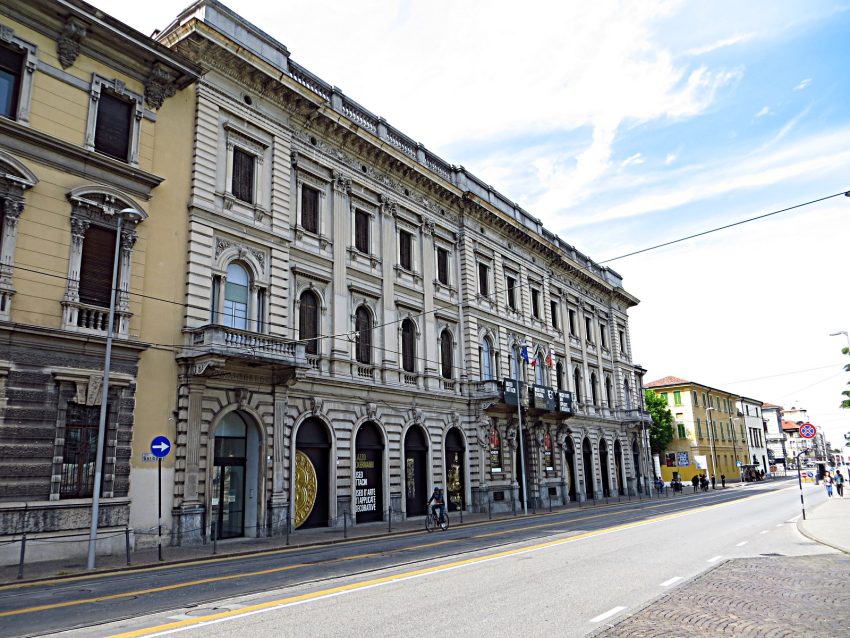
Palazzo Zuckermann sits on Corso Garibaldi right at the cultural heart of Padua, just across the road from the Scrovegni Chapel and the Museo agli Eremitani. This early-20th-century palace, commissioned by industrialist Erico Zuckermann and built between 1912 and 1914, now houses two of the city's most engaging museums: the Museo di arti applicate e decorative on the first floor and the Museo Bottacin above it. Once used as Padua's main post office, the building has been reborn as a refined showcase for everything from medieval ceramics and silverware to 19th-century sculpture and one of Italy's most notable numismatic collections.
For visitors, Palazzo Zuckermann is one of the things to do in Padua that neatly ties together art, design and urban history. Its compact layout makes it easy to explore in an hour or two, especially if you are already visiting the Scrovegni Chapel or wandering through the Giardini dell'Arena. With period rooms, glass cases full of decorative objects and thoughtful displays, it offers a quieter, more reflective experience than the big painting galleries across the street and is often visited on walking tours of Padua as a complementary stop.
Table of Contents
- History and Significance of the Palazzo Zuckermann
- Things to See and Do in the Palazzo Zuckermann
- How to Get to the Palazzo Zuckermann
- Practical Tips on Visiting the Palazzo Zuckermann
- Where to Stay close to the Palazzo Zuckermann
- Is the Palazzo Zuckermann Worth Visiting
- FAQs for Visiting Palazzo Zuckermann
- Nearby Attractions to the Palazzo Zuckermann
History and Significance of the Palazzo Zuckermann
The Palazzo Zuckermann you see today reflects Padua's early-20th-century confidence and prosperity. Built between 1912 and 1914 by architect Arosio for the industrialist Erico Zuckermann, it was originally conceived as a prestigious private palace in one of the city's most strategic locations, close to the old core and the developing modern quarters. Its solid, imposing façade and elegant interior details mirror the tastes of the period, when Padua was modernising yet still keen to project a sense of continuity and tradition.
During the 20th century, changing needs transformed the palace from a private residence into an institutional building, at one point serving as Padua’s main post office. Later, the city repurposed the structure once more, this time as part of the Civic Museum of Padua. This move brought two major collections under one roof: the Museo di arti applicate e decorative, showcasing centuries of craftsmanship, and the Museo Bottacin, built around Nicola Bottacin’s eclectic donation from 1865.
Today, Palazzo Zuckermann acts as a bridge between different strands of Padua's heritage. On one side of Corso Garibaldi, you have the Scrovegni Chapel and the Eremitani Museum, famous for medieval and Renaissance art; on the other, Palazzo Zuckermann focuses on applied arts, decorative objects and coins from the medieval period through to the late 19th century. Together they create a dense cultural district where you can walk from Giotto's frescoes to fine ceramics, silver, glassware and numismatic treasures in a matter of minutes.
Things to See and Do in the Palazzo Zuckermann
On the first floor, the Museo di arti applicate e decorative guides you through craft and everyday luxury from the Middle Ages to the late 19th century. Here you will find ceramics, glassware, silver, jewellery, furniture and textiles that reveal how taste and technology changed over time. Take your time with the details: the curve of a porcelain handle, the engraving on a silver chalice, or the carving on a wooden chest often say as much about their era as any history book. It is an excellent place to appreciate how beauty and use were combined in objects designed for daily life or special occasions.
Climb to the second floor to enter the world of the Museo Bottacin. This museum is based on the remarkably rich collections donated by businessman and collector Nicola Bottacin in 1865. Alongside paintings and sculptures by artists such as Felice Schiavoni, Antonio Zona, Cristoforo Dall’Acqua, Gerolamo Induno, Pietro Magni and Vincenzo Vela, the real star here is the numismatic collection. Cabinets of coins and medals trace political, economic and artistic trends across centuries, and even if you are not a coin specialist, the craftsmanship and variety are impressive.
Because Palazzo Zuckermann is relatively compact, it is easy to combine both museums in a single visit without feeling rushed. Many travellers choose to pair it with the Scrovegni Chapel and Museo agli Eremitani across the street, creating a full morning or afternoon focused on Padua's art and history. If you enjoy understanding a city through its objects as well as its paintings and architecture, this palace offers a particularly satisfying, layered experience.
How to Get to the Palazzo Zuckermann
Palazzo Zuckermann stands on Corso Garibaldi, directly opposite the Scrovegni Chapel and Museo agli Eremitani, in the northern part of Padua's historic centre. International visitors typically arrive via Venice Marco Polo or Treviso airports, continuing by shuttle, bus or train via Mestre or Venice to Padua before walking into the centre. For the best deals and a seamless booking experience, check out these flights to Padova on Booking.com.
By train, travel to Padova railway station, a major stop on the Venice-Milan and Venice-Bologna lines with frequent regional and high-speed services. Use Omnio to easily compare schedules, book train tickets, and find the best prices all in one place for a hassle-free journey across Italy. From the station, it is an easy 10-15 minute walk along well-signed routes towards the Scrovegni Chapel and Eremitani complex; once there, you will find Palazzo Zuckermann just across Corso Garibaldi. City buses also run from the station to stops along or near Corso Garibaldi if you prefer not to walk.
Bus services from nearby towns and villages in the Veneto region generally terminate at or near the station or central hubs, from which you can walk or take local transport to the museum district. If you are driving, Padua is close to the A4 and A13 motorways, with car parks around the edge of the historic centre and near the station providing convenient access without needing to navigate the narrowest streets. If you are looking to rent a car in Italy I recommend having a look at Discover Cars, first, as they compare prices and review multiple car rental agencies for you. From these parking areas, follow signs to the Scrovegni Chapel; Palazzo Zuckermann is directly opposite, making it very straightforward to find.
Practical Tips on Visiting the Palazzo Zuckermann
- Suggested tips: Combine your visit with the Scrovegni Chapel and Museo agli Eremitani across the street for a full, culture-rich half-day in one compact area; consider booking chapel tickets in advance and using Palazzo Zuckermann to fill time before or after your slot.
- Best time to visit: Late morning or mid-afternoon tend to be pleasantly quiet, allowing you to enjoy the collections without crowds; weekdays are usually calmer than weekends.
- Entrance fee: adult/reduced €10/8
- Opening hours: 10am-7pm Tue-Sun
- Official website: https://padovacultura.padovanet.it/it/musei/palazzo-zuckermann#Info
- How long to spend: Allow 60-90 minutes to explore both floors at a relaxed pace; dedicated art and history fans may wish to spend longer with the decorative arts and numismatic collections.
- Accessibility: The palace has multiple levels, so check for lifts and accessible routes; most main exhibition spaces are designed to be reachable, but some older areas may involve steps.
- Facilities: Expect a ticket desk, restrooms and basic visitor information; cafés and restaurants are available nearby around Corso Garibaldi and the Giardini dell'Arena area.
- Photography tip: Look for striking compositions of display cases, staircases and period architectural details; be sure to respect any no-flash or no-photo signs in specific rooms.
- Guided tours: If possible, join a guided tour or use an audio guide that covers Palazzo Zuckermann alongside the Scrovegni Chapel and Eremitani Museum to better understand how the collections relate to Padua's wider history.
- Nearby food options: After your visit, cross towards the historic centre for plenty of cafés, gelaterie and trattorie where you can unwind and reflect on your favourite pieces.
Where to Stay close to the Palazzo Zuckermann
For easy access to Palazzo Zuckermann and the surrounding museum district, look for accommodation between the railway station and the historic centre. Hotel Europa Padova is a convenient option within walking distance of Corso Garibaldi, making it simple to visit the palace, Scrovegni Chapel and Eremitani Museum in one outing. If you prefer to base yourself deeper in the old town while still being close to the museums, Hotel Majestic Toscanelli offers a classic central stay about 10-15 minutes’ walk away. Another good choice is Hotel Milano, which is slightly closer to the station but still gives straightforward walking access to Palazzo Zuckermann and Giardini dell'Arena.
Is the Palazzo Zuckermann Worth Visiting
Palazzo Zuckermann is definitely worth visiting, especially if you are already planning to see the Scrovegni Chapel and Museo agli Eremitani across the street. Where those sites focus on monumental frescoes and paintings, Palazzo Zuckermann adds a different dimension, showing how art and craftsmanship filtered into everyday life through ceramics, silver, glass, furniture and jewellery. The Museo Bottacin's coin and medal collections give additional insight into the economic and political currents that shaped Padua and the wider region.
Because everything is housed in a single, manageable building, you can absorb a surprising amount without feeling overwhelmed. For travellers who enjoy decorative arts and the quieter corners of a city's museum scene, Palazzo Zuckermann is one of the best places to visit in Padua, rounding out your understanding of the city's cultural heritage beyond its more famous churches and squares.
What Other Travellers Say...

Palazzo Zuckermann – Museo di arti applicate e decorative e Museo Bottacin, on Corso Giuseppe Garibaldi 33 in Padova, spreads over multiple floors with collections of historic furniture, ceramics, textiles, jewelry and a notable numismatic collection; visitors highlight a spectacular, well-lit 19th-century sculpture room, several rooms of 19th-century Italian paintings and period furniture, and a wide range of coins from ancient Egypt, Greece and Rome, all arranged so the museum is easy and enjoyable to explore without large crowds, and it can be visited alongside nearby civic museums.


FAQs for Visiting Palazzo Zuckermann
Nearby Attractions to the Palazzo Zuckermann
- Scrovegni Chapel: Giotto's masterpiece fresco cycle, one of Italy's most important works of medieval art, directly across from Palazzo Zuckermann.
- Museo agli Eremitani: The main art gallery of Padua’s Civic Museums, with archaeological collections and significant paintings, located opposite the palace.
- Giardini dell'Arena: A peaceful park with the remains of a Roman amphitheatre, ideal for a stroll before or after your museum visits.
- Caffè Pedrocchi: Historic café and former intellectual hub in central Padua, within walking distance for a coffee or snack break.
- Palazzo della Ragione and the market squares: The vast medieval hall and lively markets of Piazza delle Erbe and Piazza dei Frutti, offering atmosphere, architecture and local flavour.
The Palazzo Zuckermann appears in our Complete Guide to Visiting Padova!

Moira & Andy
Hey! We're Moira & Andy. From hiking the Camino to trips around Europe in Bert our campervan — we've been traveling together since retirement in 2020!
This website uses affiliate links which may earn a commission at no additional cost to you!
Planning Your Visit
10am-7pm Tue-Sun
adult/reduced €10/8
Nearby Attractions
- Roman Arena of Padua (0.1) km
Amphitheatre - Cappella degli Scrovegni (0.1) km
Church - Musei Civici di Padova (0.1) km
Historic Building and Museum - Chiesa degli Eremitani (0.1) km
Church - Giardini dell’Arena (0.2) km
Gardens - Ponte Molino (0.3) km
Bridge and Historic Building - Cafe Pedrocchi (0.4) km
Historic Building - Palazzo Bo (0.5) km
Historic Building and Palace - Palazzo della Ragione (0.5) km
Historic Building and Market - Piazza dei Signori (0.6) km
Square