Palazzo Pfanner, Lucca
Gardens and Historic Building in Lucca
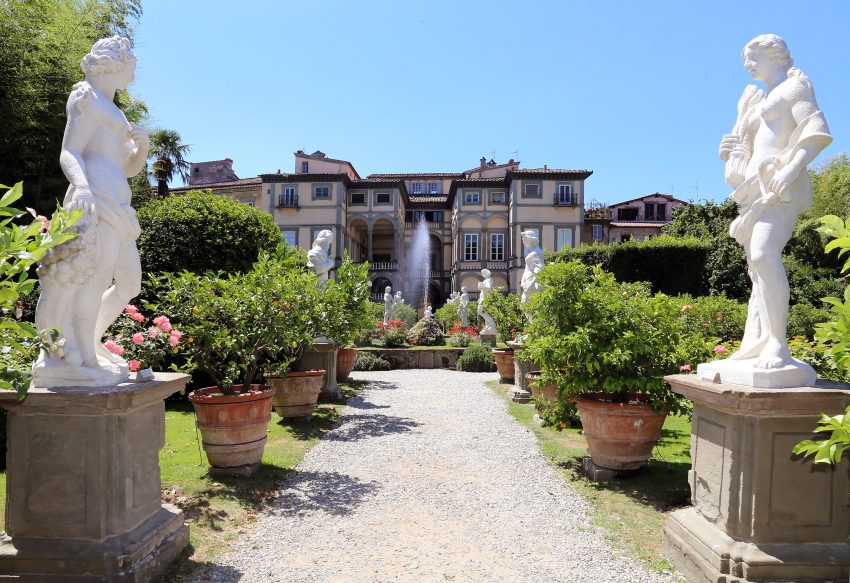
Tucked just inside Lucca's historic walls, Palazzo Pfanner feels like a secret slice of aristocratic life hidden behind the city's medieval streets. Begun in the second half of the 17th century for the Moriconi family, wealthy silk merchants, the palazzo quickly passed to the Controni family in 1680 when the original owners ran into financial trouble. Under the Controni, the residence expanded and took on the refined Baroque appearance we see today, with a magnificent stone staircase believed to be the work of architect Domenico Martinelli, who was renowned for his designs in Vienna and Prague. Inside, frescoed rooms with perspective and quadraturist paintings create a sense of depth and theatricality that feels tailor-made for period dramas.
Outside, the palace opens onto one of Lucca's most graceful Baroque gardens. In the early 18th century, Filippo Juvarra was entrusted with redesigning the outdoor spaces, laying out linear paths that divide the garden into geometric compartments. Within these carefully planned lines, you find seasonal flowers, centuries-old trees, a lemon house, a bamboo grove, a fountain, and statues inspired by Greek mythology. It's a tranquil world of clipped hedges and sculpted stone, and one of the best places to visit in Lucca if you enjoy combining architecture, garden design, and quiet corners. From here you can also catch a particularly beautiful view of the bell tower of the Basilica of San Frediano, making Palazzo Pfanner a great place to visit on a walking tour of Lucca when you want a peaceful pause in a cinematic setting.
Table of Contents
History and Significance of Palazzo Pfanner
Palazzo Pfanner’s story begins with ambition and commerce. The Moriconi family, successful silk merchants, commissioned the residence in the latter half of the 17th century as a statement of wealth and status. However, the cost of building such a grand home proved too much, and financial difficulties forced them to sell the property to the Controni family in 1680. Under Controni ownership, the palace grew in scale and elegance, becoming a showcase of Lucchese Baroque taste.
One of the most striking interior features is the monumental stone staircase leading to the central hall, attributed to Domenico Martinelli. Known for his work in cities like Vienna and Prague, Martinelli brought a sophisticated international flair to Lucca, and his design here bridges Italian Baroque drama with central European refinement. The rooms off the main hall were decorated with frescoes that use perspective and quadraturist techniques to extend space visually, giving guests the impression of larger, more complex interiors than the building's footprint would suggest.
The palazzo's identity shifted again in the mid-19th century, when Austrian brewer Felix Pfanner set up the first brewery in the Duchy of Lucca-and one of the earliest in Italy-within its walls. Gradually acquiring the whole residence, Pfanner turned the garden into a social space for tastings and gatherings, blending noble villa life with entrepreneurial innovation. Although the brewery closed in 1929, the family remained, and today some rooms host a permanent exhibition of medical-surgical instruments belonging to Pietro Pfanner, adding another unusual chapter to the building's history. This layered past, spanning silk, nobility, beer, and medicine, makes Palazzo Pfanner one of the must-see places in Lucca for travellers who enjoy stories as much as scenery.
Things to See and Do in Palazzo Pfanner
Most visits begin in the garden, where Juvarra's layout reveals itself as you walk along the straight paths. The geometry is clear but never stiff: parterres edged with low hedges are punctuated by statues drawn from Greek mythology, and the central fountain provides a soothing soundtrack. Seasonal flowers add colour, while centuries-old trees and the lemon house speak to the long gardening tradition in Lucca. The bamboo grove adds a surprising note of exotic greenery, contrasting with the more formal elements and offering a cool retreat on hot days.
From the garden, look up to appreciate the façade of the palazzo, then head inside to explore its historic rooms. The grand staircase sets the tone, its elegant curve drawing you upward toward the central hall. Frescoed ceilings and walls use perspective tricks to expand the space, with painted columns, balconies, and architectural details that blur the line between reality and illusion. These are rooms designed to impress, and walking through them you can easily imagine the social life of Lucca’s elite.
Another fascinating stop is the exhibition of medical-surgical instruments once belonging to Pietro Pfanner. This collection, displayed in some of the palace rooms, offers a glimpse into the history of medicine and surgery, with tools that are both intriguing and slightly unsettling. Combined with the story of Felix Pfanner's brewery-which once made this one of the key social addresses in town-it gives the visit an unexpected dimension beyond simple “palace and garden” sightseeing. It's one of the things to do in Lucca that feels slightly off the usual tourist track while still being very accessible.
How to Get to Palazzo Pfanner
Palazzo Pfanner is located in the historic centre of Lucca, near the northern stretch of the city walls and just a short walk from the Basilica of San Frediano and Via Fillungo. Once you're inside the walls, follow signs for San Frediano or simply wander toward the area just inside the ramparts; the palazzo's entrance is tucked into a quiet street, with its gardens stretching toward the wall on the far side.
If you are arriving by air, Pisa International Airport and Florence Airport are the most convenient gateways to Lucca. For the best deals and a seamless booking experience, check out these flights to Lucca on Booking.com. From either airport, you can reach Lucca by train, bus, or hire car, then continue on foot into the walled centre to find Palazzo Pfanner.
By train, Lucca has regular regional connections to Pisa, Florence, and other Tuscan cities.Use Omnio to easily compare schedules, book train tickets, and find the best prices all in one place for a hassle-free journey across Italy. The station is just outside the southern section of the city walls near Porta San Pietro; from there, walk through the gate and follow the main streets into the centre, then head north toward San Frediano. The walk to Palazzo Pfanner typically takes about 20 minutes, depending on your route and stops along the way.
If you are travelling by car, Lucca is connected to Pisa, Florence, and the wider region via the A11 motorway and local roads.If you are looking to rent a car in Italy I recommend having a look at Discover Cars, first, as they compare prices and review multiple car rental agencies for you. Because the historic centre is largely a limited traffic zone, it's best to park in one of the car parks outside or just inside the walls-especially near Porta Santa Maria or Porta San Donato-and then walk in; from the nearest parking areas, Palazzo Pfanner is an easy stroll through atmospheric streets.
Practical Tips on Visiting Palazzo Pfanner
- Suggested tips: Start in the garden to enjoy the tranquillity and views toward San Frediano’s bell tower, then move indoors to appreciate the staircase and frescoed rooms when the day is at its warmest.
- Best time to visit: Late morning or mid-afternoon work well for light in the garden; in high season, an earlier visit can help you avoid the warmest temperatures and busier periods.
- Entrance fee: Adults: €10
- Opening hours: Open from March to December Daily: 10:00 to 18:00
- Official website: https://www.palazzopfanner.it/
- How long to spend: Allow 45-90 minutes to stroll the gardens, explore the interior rooms, and browse the medical-surgical collection at a relaxed pace.
- Accessibility: The garden paths are generally manageable, but access to upper-floor rooms via the historic staircase may be challenging for visitors with reduced mobility; check at the entrance for current accessibility options.
- Facilities: Basic visitor facilities are limited on site, but cafés, restaurants, and shops are close by in the surrounding streets; restrooms may be available for ticket-holders inside.
- Photography tip: Use the garden’s central axis to frame the palazzo façade, then turn around to capture the view of San Frediano’s bell tower rising above the greenery; indoors, focus on staircase details and fresco fragments rather than wide room shots.
- Guided tours: On some occasions, guided visits or special events may be offered, adding extra context about the palazzo’s families, brewery history, and film appearances.
- Nearby food options: The streets around San Frediano and Via Fillungo are filled with trattorie, wine bars, and cafés, making it easy to pair your visit with a leisurely lunch, aperitivo, or gelato stop.
Where to Stay close to Palazzo Pfanner
Staying near Palazzo Pfanner puts you in a particularly charming corner of Lucca's old town, close to both the walls and some of the city's most atmospheric streets. A short walk away, Palazzo Alexander offers historic charm in a restored palace, making it a fitting match if you enjoy period architecture and original features. For a comfortable, central base slightly closer to the cathedral but still within easy reach of Palazzo Pfanner and San Frediano, Albergo San Martino is a welcoming option. Travellers who prefer to be near the eastern stretch of the walls while remaining an easy stroll from the palazzo and the main sights might like Hotel Ilaria, which combines modern comforts with quick access to Lucca’s leafy ramparts and historic streets.
Is Palazzo Pfanner Worth Visiting?
Palazzo Pfanner is definitely worth visiting, especially if you appreciate places where architecture, gardens, and layered stories come together. The Baroque garden alone-complete with statues, fountains, and a view of San Frediano's bell tower-would justify a stop, but the combination of Martinelli's grand staircase, the frescoed interiors, the unusual medical-surgical exhibition, and the building's brewing past make it even more compelling. Add in its appearances in films like “Il Marchese del Grillo” and “Portrait of a Lady,” and you have a location that feels both authentically Lucchese and wonderfully cinematic. For many visitors, it becomes one of the top sights in Lucca precisely because it offers something different from churches and towers while still being deeply rooted in the city's history.
What Other Travellers Say...

Fontana con sculture, tucked inside Palazzo Pfanner on Via degli Asili in Lucca, is a beautifully composed fountain adorned with numerous well-placed sculptures that enhance its visual impact; visitors praise it as well worth a visit, though experiences vary slightly.

FAQs for Visiting Palazzo Pfanner
Nearby Attractions to Palazzo Pfanner
- Basilica of San Frediano - One of Lucca's oldest churches, famous for its golden façade mosaic and rich interior chapels.
- Lucca's Historical Walls - The complete Renaissance walls encircling the city, with a tree-lined walkway offering panoramic views.
- Piazza dell'Anfiteatro - An oval piazza built on the footprint of the Roman amphitheatre, ringed with cafés and colourful façades.
- Guinigi Tower - Iconic medieval tower topped with a rooftop garden of holm oaks, providing sweeping views over Lucca.
- San Michele in Foro - Striking Romanesque church on the site of the Roman forum, crowned by a statue of the Archangel Michael.
The Palazzo Pfanner appears in our Complete Guide to Visiting Lucca!

Moira & Andy
Hey! We're Moira & Andy. From hiking the Camino to trips around Europe in Bert our campervan — we've been traveling together since retirement in 2020!
This website uses affiliate links which may earn a commission at no additional cost to you!
Planning Your Visit
Open from March to December
Daily: 10:00 to 18:00
Adults: €10
Nearby Attractions
- Domus Romana (0.1) km
Historic Site - Basilica of San Frediano (0.2) km
Church - Via Fillungo (0.2) km
Street - Piazza dell Anfiteatro (0.3) km
Amphitheatre - Torre delle Ore (0.3) km
Tower - San Michele in Foro (0.3) km
Basilica - Puccini Museum (0.3) km
Historic Building and Museum - Guinigi Tower (0.4) km
Tower - Lucca City Walls (0.4) km
City Walls - Piazza Napoleone (0.5) km
Square