Palazzo Bernabei, Assisi
Museum and Palace in Assisi
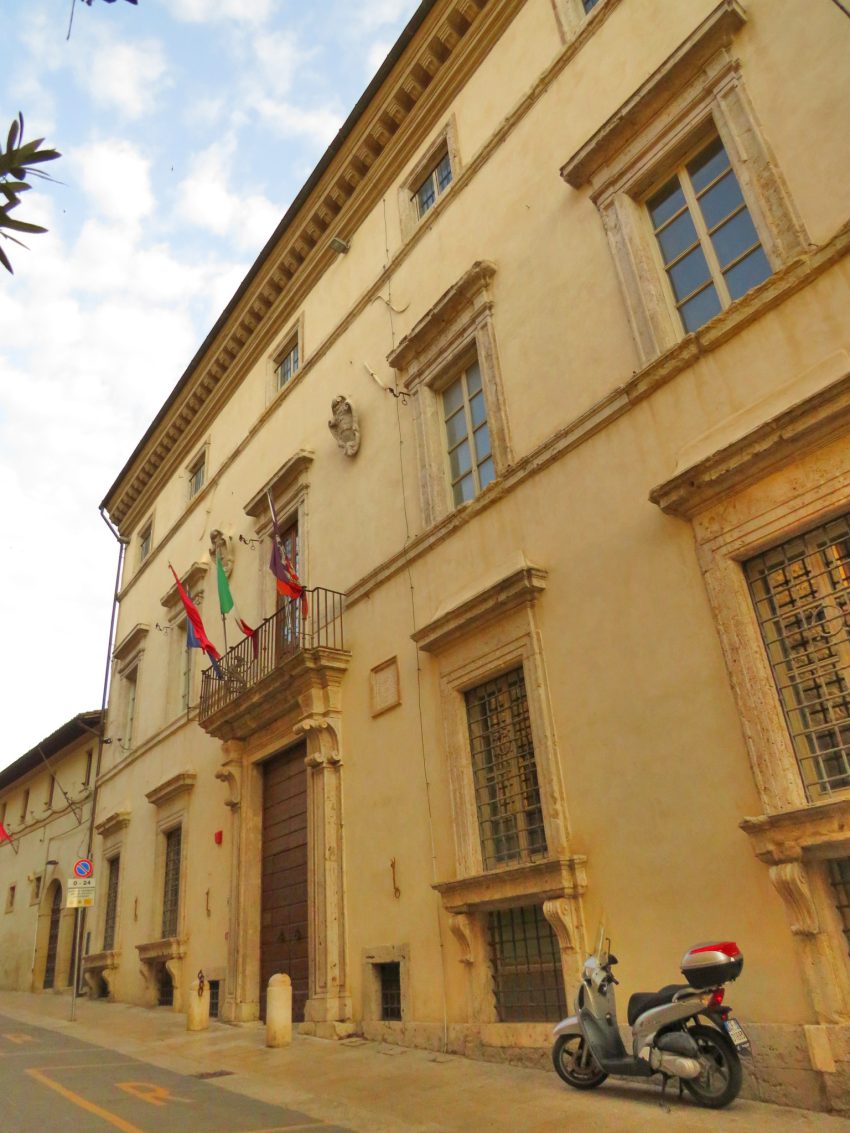
Palazzo Bernabei sits on Via San Francesco, only a short stroll from the Basilica of San Francesco, so it's one of those places you can slip into without reorganising your day. From the outside it reads as a handsome historic palazzo, but inside the experience is unexpectedly global: this is home to MUMA, a compact museum shaped by the Capuchin missionary presence in the Amazon and the stories, objects, and environments connected to that world.
If your Assisi itinerary is heavy on basilicas and sacred art, Palazzo Bernabei is a useful change of register. The museum rooms are modest in size, but the content is distinct-ethnographic material, mission history, and a natural-history thread that makes it feel less like “another museum stop” and more like a short, focused detour with real curiosity value.
Table of Contents
- History and Significance of the Palazzo Bernabei
- Things to See and Do in the Palazzo Bernabei
- How to Get to the Palazzo Bernabei
- Practical Tips on Visiting the Palazzo Bernabei
- Where to Stay Close to the Palazzo Bernabei
- Is the Palazzo Bernabei Worth Visiting?
- For Different Travelers
- FAQs for Visiting Palazzo Bernabei
- Nearby Attractions to the Palazzo Bernabei
History and Significance of the Palazzo Bernabei
Palazzo Bernabei (also associated with the earlier Palazzo Sperelli name) reflects the phase when Assisi's noble residences were being expanded and refined under changing political and cultural currents in the early modern period. Its later ownership and institutional life matter as much as its architecture: by the late 19th century it was in Capuchin hands, and over time it became tied to the city's Franciscan scholarship and cultural infrastructure.
The “missionary museum” identity adds a different kind of significance to Assisi’s usual story. Instead of focusing on Francis and Clare through local sites alone, the museum connects Franciscan life to outward movement-networks of travel, encounters, and long-term presence in Amazonia, particularly in regions where indigenous cultures remain central.
In practical terms, this makes Palazzo Bernabei a complementary stop: it does not compete with Assisi's headline sights, but it deepens the city's wider Franciscan footprint in a way that feels concrete and contemporary, especially through multimedia interpretation and object-based storytelling.
Things to See and Do in the Palazzo Bernabei
Expect a small set of rooms rather than a sprawling collection, and approach it like a curated “capsule visit.” The most engaging sections are typically the indigenous culture displays-objects of daily life, ritual, and craftsmanship that give a grounded sense of place rather than an abstract overview.
The museum’s natural-history material is a secondary highlight, especially if you like the idea of seeing Amazonia through both cultural and environmental lenses. Even when the number of objects is limited, the variety (tools, materials, fauna-focused displays, and visual storytelling) helps the visit feel layered rather than repetitive.
If you are travelling with limited time, this is a good museum to treat as a deliberate 30-45 minute stop near San Francesco. It works particularly well as a “between basilicas” break, when you want something quieter, indoors, and meaningfully different.
How to Get to the Palazzo Bernabei
Perugia San Francesco d'Assisi Airport (PEG) is the closest airport for reaching Assisi, with Rome Fiumicino (FCO) and Florence (FLR) also practical depending on your wider Italy route. For the best deals and a seamless booking experience, check out these flights to Assisi on Booking.com.
The simplest rail approach is to travel by train to Assisi station (in Santa Maria degli Angeli), then continue by local bus or taxi up to Assisi's historic centre. Use Omnio to easily compare schedules, book train tickets, and find the best prices all in one place for a hassle-free journey across Italy.
From the upper town, Palazzo Bernabei is on Via San Francesco and is easiest to reach on foot as part of a walk linking the basilicas and central streets.
If you are arriving by car, use the main parking areas outside the historic centre and continue on foot or by shuttle where applicable, since access inside the old town is restricted. If you are looking to rent a car in Italy I recommend having a look at Discover Cars, first, as they compare prices and review multiple car rental agencies for you.
Practical Tips on Visiting the Palazzo Bernabei
- Entrance fee: Free
- Opening hours: (Summer, June – September) Tuesday – Sunday & Public Holidays: 09:30–18:30. (Winter, October – May) Tuesday – Sunday & Public Holidays: 10:00–18:00. Closed Monday. Closed 12 January – 31 March
- Official website: https://www.mumamuseo.it/
- Best time to visit: Late morning or mid-afternoon, when you want an indoor break between the major basilicas and a calmer pace.
- How long to spend: 30-60 minutes, depending on how closely you read the interpretation and engage with the multimedia elements.
- Accessibility: Expect stairs and an older-building layout; if step-free access is essential, check ahead for the best entry route and any limitations.
- Facilities: Keep expectations modest; this is a small museum visit best paired with cafés and services nearby in the historic centre.
Where to Stay Close to the Palazzo Bernabei
For a culture-heavy itinerary, stay inside Assisi’s historic centre so you can walk to San Francesco, Via San Francesco, and evening viewpoints without relying on transport; if your trip is built around rail connections and day trips, staying in Santa Maria degli Angeli near the station is the most convenient base and you can head up to the old town each day.
For a high-comfort stay with atmosphere and easy access to the core sights, Nun Assisi Relais & Spa Museum is a strong option in the historic centre. For a classic Assisi base close to Via San Francesco, Giotto Hotel & Spa keeps you well-positioned for walking routes. If you prefer station-side logistics and straightforward arrivals, TH Assisi - Hotel Cenacolo is practical for train travellers while still keeping the old town within easy reach.
Is the Palazzo Bernabei Worth Visiting?
Yes, especially if you want to diversify an Assisi day beyond basilicas and medieval streets. The museum is small, but the subject matter is distinctive, and its location makes it an efficient, low-effort add-on near one of the city's main visitor routes.
Honest pivot: if you have very limited time and your priority is Assisi’s core Franciscan sites and major fresco cycles, this can be skipped without damaging the essentials. It is best for travellers who enjoy niche museums, cross-cultural context, or a quieter stop that shifts the tone of the day.
For Different Travelers
Families with Kids
This museum can work well for families because it is compact and visually varied, which helps avoid the “museum fatigue” that can set in after multiple churches. Treat it like a short, curiosity-led visit: pick a few objects to focus on and let kids move through at a quicker pace rather than trying to absorb every label.
It also makes a useful reset between big-ticket sights. If the day has included long indoor quiet stretches, this can be a change of topic without becoming another endurance stop, especially if you pair it with a snack break nearby afterward.
Couples & Romantic Getaways
For couples, Palazzo Bernabei is a good “side step” that feels more personal than the main crowd-flow attractions. It offers a different kind of conversation-travel, culture, and the idea of Franciscan life extending far beyond Umbria-without requiring a long commitment.
It also fits neatly into a gentle walking itinerary along Via San Francesco. You can slot it between major sights and still keep the day feeling unhurried, with time left for viewpoints and a slower evening in town.
Budget Travelers
This is an excellent budget stop because it is free and centrally located, so it costs you very little beyond a small slice of time. If you are building an Assisi day on foot, it is also efficient: no special transport, no timed entry pressure, and a clear change of theme.
Use it strategically as an indoor pause when you would otherwise spend money on an extra coffee stop just to rest. You still get the break, but you also add substance to the day.
History Buffs
History-minded travellers will appreciate Palazzo Bernabei for the way it expands “Franciscan history” into global networks and long timelines. The story here is not only devotional; it is also institutional, cultural, and tied to how communities documented, collected, and interpreted life in Amazonia across decades.
It is most rewarding if you approach it with questions rather than expectations of a large collection. Focus on what the objects and displays say about encounter, representation, and everyday life, and you will get more out of the small scale.
FAQs for Visiting Palazzo Bernabei
Getting There
Tickets & Entry
Visiting Experience
Tours, Context & Itineraries
Photography
Accessibility & Facilities
Safety & Timing
Nearby Attractions to the Palazzo Bernabei
- Basilica di San Francesco d'Assisi: Assisi's essential complex for frescoes, pilgrimage atmosphere, and the city's most significant sacred art.
- Oratorio dei Pellegrini: A smaller, often-overlooked stop with a quieter feel and a location that fits naturally into the San Francesco area walk.
- Piazza del Comune and the Temple of Minerva: The civic heart of Assisi, ideal for cafés, people-watching, and linking multiple historic streets.
- Basilica di Santa Chiara: A major Clare-focused basilica that complements San Francesco and adds another pillar to Assisi's story.
- Rocca Maggiore: The hilltop fortress with the best panoramic views, especially rewarding after time spent in the denser historic lanes.
The Palazzo Bernabei appears in our Complete Guide to Visiting Assisi!

Moira & Andy
Hey! We're Moira & Andy. From hiking the Camino to trips around Europe in Bert our campervan — we've been traveling together since retirement in 2020!
This website uses affiliate links which may earn a commission at no additional cost to you!
Planning Your Visit
(Summer, June - September) Tuesday - Sunday & Public Holidays: 09:30-18:30.
(Winter, October - May) Tuesday - Sunday & Public Holidays: 10:00-18:00.
Closed Monday.
Closed 12 January - 31 March
Free
Nearby Attractions
- Piazza Inferiore di San Francesco (0.1) km
Square - Bosco di San Francesco (0.1) km
Woods - Pinacoteca Comunale (0.1) km
Gallery and Palace - Basilica di San Francesco d'Assisi (0.2) km
Basilica - Abbey of San Pietro (0.3) km
Abbey - Teatro Metastasio in Assisi (0.5) km
Theatre - Roman Forum and Archaeological Museum (0.6) km
Roman Site - Palazzo del Capitano del Popolo (0.6) km
Palace - Temple of Minerva (0.7) km
Roman Site - Piazza del Comune (0.7) km
Square