Palacio de Los Almarza, Ávila
Palace in Ávila

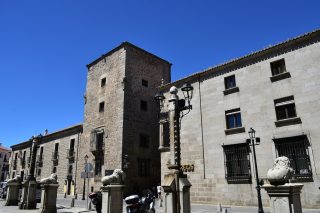
Palacio de los Almarza is a quiet architectural highlight inside Ávila's walled old town-more “stop and admire” than “tour for hours,” but absolutely worth it if you enjoy details. The building is famous for its stonework: a Renaissance façade carved into granite masonry, with Gothic touches that make the entrance feel almost like a sculptural display rather than a simple doorway.
Because it sits naturally on old-town routes near other historic buildings, it's one of the things to see in Ávila that fits effortlessly into a walking tour of Ávila. Even though it's typically closed inside, the exterior is the point here: a short, atmospheric pause that adds texture to your day between bigger monuments.
Table of Contents
- History and Significance of the Palacio de los Almarza
- Things to See and Do in the Palacio de los Almarza
- How to Get to the Palacio de los Almarza
- Practical Tips on Visiting the Palacio de los Almarza
- Where to Stay Close to the Palacio de los Almarza
- Is the Palacio de los Almarza Worth Visiting?
- For Different Travelers
- FAQs for Visiting Palacio de los Almarza
- Nearby Attractions to the Palacio de los Almarza
History and Significance of the Palacio de los Almarza
The palace belongs to the surge of civil architecture that transformed Ávila in the early modern period, when elite residences began to adopt Renaissance forms while still holding onto medieval and Gothic language. That blend is exactly what you see on the main façade: classical structure, but with decorative choices that feel older and more symbolic.
For many years the building was associated with religious community use, which helps explain why access is normally limited and why the experience today is primarily exterior-focused. In practical terms, it’s best understood as a protected historic building that enriches the street-level fabric of the old town, rather than a conventional museum you plan around.
Its heritage status (as a protected monument) underlines its importance within the walled city: it’s not just “another old house,” but a recognized piece of Ávila’s architectural story-one that rewards travelers who look closely.
Things to See and Do in the Palacio de los Almarza
Start with the portal composition. The semi-circular arch is built with oversized voussoirs that give the entrance real weight, and the surrounding frame pulls your eye upward rather than letting the doorway sit quietly at street level.
Above, look for the ogee-arched window and the decorative carving that reads almost like a narrative band, then take in the coats of arms flanking the ensemble. This is the kind of façade where you can spend five minutes and still notice something new on the last glance.
Finally, step back for a wider view so the doorway and window sit together in one frame. It’s a satisfying photo stop precisely because the stonework is graphic and bold, and it stands out even on a street lined with historic façades.
How to Get to the Palacio de los Almarza
Most travelers reach Ávila via Madrid-Barajas (MAD), then continue onward by land transport into the city. For the best deals and a seamless booking experience, check out these flights to Ávila on Booking.com.
Ávila is well connected by train from Madrid, which is often the simplest way to arrive without dealing with parking near the historic centre. Train schedules and bookings can be found on Omio.
Buses also run into Ávila, and from the station areas you can continue by taxi or on foot into the walled old town depending on luggage and timing.
If you’re driving, aim to park on the edge of the walled centre and walk in, as the oldest streets can be narrow and slow to navigate even when distances look short. If you are looking to rent a car in Spain I recommend having a look at Discover Cars, first, as they compare prices and review multiple car rental agencies for you.
Practical Tips on Visiting the Palacio de los Almarza
- Entrance fee: Free (exterior viewing).
- Opening hours: 24 Hours
- Official website: https://www.avilaturismo.com/en/palace-of-los-almarza
- Best time to visit: Go in the morning for quieter streets and cleaner photos of the doorway details, or late afternoon for warmer light on the granite.
- How long to spend: 10-20 minutes is ideal, unless you’re pairing it with a slower “palaces and façades” wander inside the walls.
- Accessibility: It’s viewed from the street, but the surrounding lanes can have uneven paving and small level changes typical of the old town.
- Facilities: There are no on-site visitor facilities, so plan cafés and restrooms around the main plazas a short walk away.
Where to Stay Close to the Palacio de los Almarza
For a culture-heavy itinerary, base yourself inside Ávila’s walled old town so you can walk to the main monuments and enjoy evening strolls; if your priority is transport links and easy arrivals, staying closer to the station side of town can simplify logistics.
For a highly central base beside the cathedral, Hotel Palacio Valderrábanos keeps you in the heart of the old town with most sights on foot. For a similarly prime location with a classic historic-hotel feel, Hotel Palacio de los Velada is another strong choice for walkability. If you want a memorable stay that feels closely tied to Ávila’s heritage setting, Parador de Ávila works well for atmosphere and old-town access.
Is the Palacio de los Almarza Worth Visiting?
Yes-if you like architectural detail, it's a high-reward stop that takes very little time. The façade is distinctive even by Ávila standards, and it adds depth to your sense of the city beyond the headline walls and churches.
If you’re seeking interiors and exhibitions, it’s not the right fit, but as a street-level heritage moment it’s excellent: a quick pause, a strong photo, and a clear example of Ávila’s Renaissance-era civil style.
For Different Travelers
Families with Kids
Treat this as a short “spot the symbols” stop rather than a long visit. Kids often enjoy looking for shields, unusual window shapes, and the oversized stone blocks that make the doorway look almost like a castle entrance.
It also works well as a pacing break between larger attractions. You can keep moving, stay outdoors, and still feel like you found something special beyond the obvious sights.
Couples & Romantic Getaways
This is a great detail stop for couples who like slow wandering and quiet streets. It’s especially nice in the softer light of late afternoon, when the granite feels warmer and the old town looks more cinematic.
Pair it with a relaxed route through nearby lanes and a café stop afterward. The pleasure here is the unhurried feeling of noticing small, beautiful things together.
Budget Travelers
It’s ideal for budget travel because it’s essentially a free highlight: no ticket, no time pressure, and still a genuinely memorable façade. Build a day around exterior architecture, plazas, and viewpoints, and choose only one paid interior if you want to keep costs controlled.
If you're collecting “best details” rather than “biggest monuments,” this is exactly the kind of stop that makes Ávila feel richer without adding spend.
History Buffs
For history-minded travelers, the real interest is the stylistic overlap: Renaissance order mixed with Gothic vocabulary, expressed in one carefully composed façade. It’s a compact lesson in how architectural change happens gradually, not as a clean break.
It’s also a useful contrast point with nearby palaces and civic buildings. Once you start comparing portals, windows, and heraldry, the old town becomes a readable archive rather than just a scenic backdrop.
FAQs for Visiting Palacio de los Almarza
Getting There
Tickets & Entry
Visiting Experience
Tours, Context & Itineraries
Photography
Accessibility & Facilities
Food & Breaks Nearby
Safety & Timing
Nearby Attractions to the Palacio de los Almarza
- Palacio de los Superunda: A Renaissance palace nearby that adds context for Ávila's civil architecture beyond churches and walls.
- Ávila Cathedral: A fortress-like Gothic landmark that anchors most old-town routes and is easy to combine on foot.
- Plaza del Mercado Chico: The intimate main square inside the walls, ideal for a café break and people-watching.
- Basilica of San Vicente: A standout Romanesque church with impressive sculpture and a strong medieval atmosphere.
- Ávila City Walls: The defining monument of the city, perfect for pairing an exterior façade stop with panoramic views.
The Palacio de Los Almarza appears in our Complete Guide to Visiting Ávila!

Moira & Andy
Hey! We're Moira & Andy. From hiking the Camino to trips around Europe in Bert our campervan — we've been traveling together since retirement in 2020!
This website uses affiliate links which may earn a commission at no additional cost to you!
Planning Your Visit
24 Hours
Free (exterior viewing).
Nearby Attractions
- Palacio de Los Superunda (0.0) km
Palace - Torreón de los Guzmanes (0.0) km
Palace - El Convento de Santa Teresa (0.1) km
Convent - Puerta de Santa Teresa (0.1) km
City Gate - Palacio de Núñez Vela (0.1) km
Palace - Palacio de los Dávila (0.1) km
Palace - Iglesia de San Juan Bautista (0.2) km
Church - Palace of Polentinos (Ávila) (0.2) km
Historic Building and Palace - Plaza Mercado Chico (0.2) km
Square - Parador de Ávila (0.3) km
Palace