Palacio de Bracamonte, Ávila
Palace in Ávila

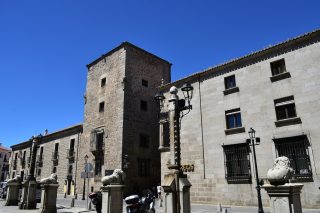
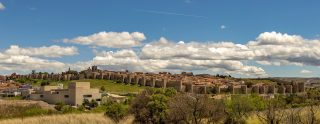
Set just inside the northern stretch of Ávila's medieval walls, the Palacio de Bracamonte is the kind of place you can easily walk past unless you know what you're looking for. From Plaza de Fuente el Sol, its stone façade feels suitably serious and fortified, which makes sense in a city where noble residences often doubled as part of the defensive line.
What makes it special is the contrast between the sober exterior and the refined detail within: a porticoed courtyard and a layered mix of late-Gothic and early-Renaissance elements. It's a rewarding stop on a walking tour of Ávila, especially if you enjoy those small, “blink and you'll miss it” corners that make historic cities feel lived-in rather than museum-like, and it earns its place as one of the things to see in Ávila for travelers who like architecture with context.
Table of Contents
- History and Significance of the Palacio de Bracamonte
- Things to See and Do in the Palacio de Bracamonte
- How to Get to the Palacio de Bracamonte
- Practical Tips on Visiting the Palacio de Bracamonte
- Where to Stay Close to the Palacio de Bracamonte
- Is the Palacio de Bracamonte Worth Visiting?
- For Different Travelers
- FAQs for Visiting Palacio de Bracamonte
- Nearby Attractions to the Palacio de Bracamonte
History and Significance of the Palacio de Bracamonte
The palace was commissioned in the early 16th century by descendants of Álvaro Dávila and Juana de Bracamonte, built over an earlier medieval residence within the walls. That intramural location was not just prestigious; it was strategic, tying elite households directly to the city’s defensive fabric and the gate-and-wall system that defined Ávila’s power and identity.
Like many of Ávila’s noble houses, it suffered as the city’s aristocratic life thinned out in the 17th century, with long periods of decline and partial ruin. At the end of the 19th century it was reconstructed, and later gained formal recognition as a protected monument, which helped secure its survival into the present day.
Today, the Palacio de Bracamonte functions primarily as an administrative building linked to regional cultural services. That modern role is part of its story too: it remains a working piece of the city, not just a preserved shell, and that's often why access can feel more “opportunity-based” than timetable-driven.
Things to See and Do in the Palacio de Bracamonte
The highlight is the 16th-century porticoed courtyard, arranged in a double gallery that rewards a slow look. On the lower level, you'll notice the sturdy rhythm of Doric Tuscan columns, while the upper gallery adds a more decorative feel with geometric Gothic-inspired motifs and heraldic details that read like a stone family album of old Ávila.
Look closely at the coats of arms: they’re not just ornament, but a visual map of alliances and lineages that shaped the city’s political and social landscape. If you enjoy “reading” buildings, this is a good place to do it, because the decoration has a documentary quality rather than a purely aesthetic one.
Even if you only see the palace briefly, the setting is part of the experience. Plaza de Fuente el Sol sits right up against the walls, and the palace’s relationship to that stone boundary is unusually direct, making it easy to connect the dots between domestic grandeur and urban defence.
How to Get to the Palacio de Bracamonte
Ávila is most commonly reached via Madrid-Barajas Airport (MAD), with onward connections to the city by public transport or car. For the best deals and a seamless booking experience, check out these flights to Ávila on Booking.com.
From Madrid and other major Spanish cities, trains to Ávila are a straightforward option, and the station is close enough that you can reach the walled Old Town by a short taxi ride or a walk if you pack light. Train schedules and bookings can be found on Omio.
Intercity buses also run to Ávila, typically arriving within easy reach of the centre, and they can be the simplest choice if you're coming from Madrid on a budget.
If you're driving, approach via the main routes from Madrid and aim for parking outside or near the walls, then continue on foot into the Old Town to avoid restricted streets and tight turns. If you are looking to rent a car in Spain I recommend having a look at Discover Cars, first, as they compare prices and review multiple car rental agencies for you.
Practical Tips on Visiting the Palacio de Bracamonte
- Entrance fee: Free.
- Opening hours: Monday – Friday: 09:00–14:00. Closed on Saturday – Sunday.
- Official website: https://www.avilaturismo.com/que-ver/palacio-de-bracamonte
- Best time to visit: Aim for a weekday morning when the building is most likely to be open in its normal routine, then pair it with nearby wall viewpoints for a fuller mini-route.
- How long to spend: 10-20 minutes is usually enough for a satisfying look, unless you’re lingering for architectural details and photography.
- Accessibility: Expect typical historic-centre surfaces around the plaza; access into interior areas may be limited and not always step-free.
- Facilities: There are no dedicated visitor facilities on-site, so plan for cafés and restrooms elsewhere in the Old Town.
Where to Stay Close to the Palacio de Bracamonte
For a culture-heavy itinerary, base yourself inside the walled Old Town near the Cathedral; if your priority is easy transport connections, stay nearer the train station just outside the walls.
If you want to be firmly in the historic atmosphere, Sofraga Palacio puts you right on the edge of the walls in a beautifully restored setting that suits an architecture-first trip.
Sofraga Palacio
For maximum walkability to the Cathedral area and a classic Ávila address, Hotel Palacio de los Velada is hard to beat, especially if you want to step out and be among the main sights immediately.
Hotel Palacio de los Velada
If you prefer convenience for arrival and departure (or you’re doing a rail-based itinerary), Exe Reina Isabel is a practical option near the station, with an easy hop to the walls when you’re ready to explore.
Exe Reina Isabel
Is the Palacio de Bracamonte Worth Visiting?
Yes, if you like historic cities in the details rather than only in headline monuments. The Palacio de Bracamonte is a quick stop, but it adds texture to Ávila's story by showing how noble life, civic power, and wall-based defence overlapped in one compact corner of the Old Town.
If you’re short on time, treat it as a “bonus” on your way between bigger sights, especially around Plaza de Fuente el Sol and the nearby wall stretches. If you enjoy coats of arms, courtyards, and those moments where a city suddenly feels three-dimensional, it’s a very worthwhile detour.
What Other Travellers Say...

Palacio de Bracamonte o Palacio de Santa Cruz, en Pl. Fuente el Sol 1, Ávila, ofrece un patio porticado interior muy bien conservado rodeado de numerosos escudos nobiliarios y jardines exteriores; la fachada de color salmón se mantiene en buen estado. El edificio, propiedad de la Junta de Castilla y León, alberga dependencias públicas y en ocasiones exposiciones de artistas; el acceso al interior puede ser gratuito y el patio puede visitarse, aunque algunos visitantes señalan que se han añadido vidrieras en la primera planta que restan encanto.


For Different Travelers
Families with Kids
This works best as a short, curiosity-driven stop rather than a long visit: turn it into a quick “spot the shields” game in the courtyard area and then move on to somewhere with more open space nearby. Pair it with a wall walk section so kids feel like they’re doing something active, not just looking at stonework.
If you’re visiting with a stroller, plan your route on the flattest streets you can within the Old Town and be prepared for occasional cobbles. Keep expectations flexible, because access to interior areas can depend on the building’s working-day rhythm.
Couples & Romantic Getaways
If you like quiet corners, this is the kind of place that feels pleasantly undiscovered, especially early in the day. The plaza-and-walls setting is naturally atmospheric, and it’s easy to build a slow, photogenic loop from here toward the Cathedral area without feeling rushed.
For a romantic pace, use the palace as a transition point: architecture first, then a café stop, then a gentle stroll along a scenic wall stretch. It’s less about “doing” and more about enjoying Ávila’s layered look and feel.
Budget Travelers
The palace is ideal for a budget itinerary because it’s a low-cost, high-context stop that enhances everything around it. Even a brief look makes the surrounding streets and walls feel more meaningful, which is exactly what you want when you’re exploring mainly on foot.
Plan a compact route that links this plaza with nearby churches, wall viewpoints, and the Cathedral area, and you’ll get a full day’s worth of atmosphere without needing a ticket-heavy schedule.
FAQs for Visiting Palacio de Bracamonte
Getting There
Tickets & Entry
Visiting Experience
Tours, Context & Itineraries
Photography
Accessibility & Facilities
Food & Breaks Nearby
Safety & Timing
Nearby Attractions to the Palacio de Bracamonte
- Walls of Ávila: Walk a nearby stretch to appreciate how the palace sits right up against the city's defining monument.
- Arco del Mariscal: A striking wall gate close to Plaza de Fuente el Sol that helps you understand Ávila's historic access points.
- Capilla de Mosén Rubí: A compact architectural gem in the same plaza area, ideal for a quick add-on stop.
- Ávila Cathedral: A must-visit landmark where sacred architecture and fortified design meet in a single silhouette.
- Basílica de San Vicente: One of Ávila's most impressive Romanesque churches, renowned for its stone carving and atmosphere.
The Palacio de Bracamonte appears in our Complete Guide to Visiting Ávila!

Moira & Andy
Hey! We're Moira & Andy. From hiking the Camino to trips around Europe in Bert our campervan — we've been traveling together since retirement in 2020!
This website uses affiliate links which may earn a commission at no additional cost to you!
Planning Your Visit
Monday - Friday: 09:00-14:00.
Closed on Saturday - Sunday.
Free.
Nearby Attractions
- Marshal Gate (0.0) km
City Gate, City Walls and Historic Site - Palacio de los Águila (0.1) km
Palace - Palacio de los Verdugo (0.1) km
Palace - Palacio de Sofraga (0.1) km
Palace - Puerta de San Vicente (0.2) km
City Gate - Plaza Mercado Chico (0.2) km
Square - Parador de Ávila (0.2) km
Palace - Los Velada Palace (0.2) km
Hotel and Palace - San Vicente Garden (0.2) km
City Walls, Gardens and Park - Iglesia de San Juan Bautista (0.2) km
Church