Ottoman Aqueduct, Kusadasi
Aqueduct and Historic Site in Kusadasi
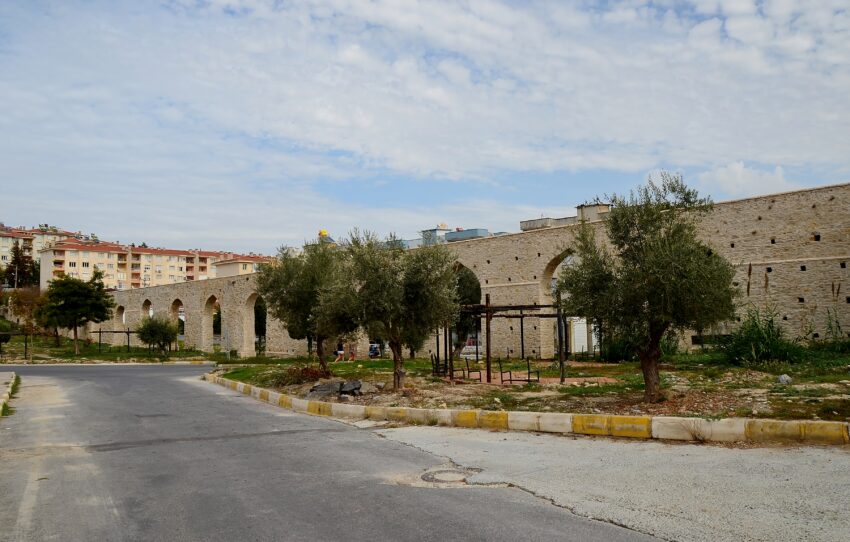
The Ottoman Aqueduct in Kuşadası is a small but characterful piece of the town's built heritage, best appreciated as a quick stop while you're exploring the center on foot. Rather than a ticketed attraction, it feels like a historic landmark woven into everyday Kuşadası-an unexpected reminder that water engineering once shaped how the town grew.
It's easiest to include the aqueduct on a self-guided walking tour linking the waterfront, central streets, and other Ottoman-era structures in town. For the best look, aim for viewpoints from the sidewalk and nearby open areas where you can step back far enough to see the arches and stonework in one frame.
Table of Contents
- History and Significance of the Ottoman Aqueduct
- Things to See and Do in the Ottoman Aqueduct
- How to Get to the Ottoman Aqueduct
- Practical Tips on Visiting the Ottoman Aqueduct
- Where to Stay Close to the Ottoman Aqueduct
- Is the Ottoman Aqueduct Worth Visiting?
- For Different Travelers
- FAQs for Visiting Ottoman Aqueduct
History and Significance of the Ottoman Aqueduct
Kuşadası’s Ottoman-period aqueducts were built to bring water into the settlement-practical infrastructure that also became a lasting visual symbol. In a port town that expanded with trade and administration, reliable water supply mattered, and aqueducts helped connect springs and sources to where people lived and worked.
What makes the Ottoman Aqueduct interesting today is its everyday setting: it's not tucked behind museum walls, so you can see how historic utility structures sit inside a modern town. Even if you're not a specialist, the masonry, proportions, and repeating arches make it easy to appreciate as a piece of engineering as well as local history.
Things to See and Do in the Ottoman Aqueduct
Start by taking a slow lap around the structure to notice the rhythm of the arches and the way the stone changes in tone and texture. If you enjoy photography, try two angles: a straight-on symmetry shot and a side perspective that shows depth through the arches.
Because it’s a short stop, it pairs well with nearby Kuşadası highlights-especially if you’re building a “history + seaside” day. Consider combining it with a stroll toward the harbor and older central streets, or use it as a quick cultural break between beach time and dinner.
How to Get to the Ottoman Aqueduct
The nearest airports are İzmir Adnan Menderes Airport (ADB) and Milas-Bodrum Airport (BJV), with ADB typically the most convenient for Kuşadası transfers. For the best deals and a seamless booking experience, check out these flights to Kusadasi on Booking.com.
Kuşadası does not have a central passenger train station, so most travelers arrive by rail to nearby hubs (commonly İzmir or Selçuk) and continue onward by bus, minibus (dolmuş), or taxi into Kuşadası. You can use the official TCDD Taşımacılık website to check schedules, compare routes, and purchase tickets for Türkiye’s national and regional trains operated by TCDD. For a more streamlined experience (especially if you prefer an English interface or want to compare across countries), we recommend using Omio, which allows you to easily compare prices, schedules, and book train tickets across Türkiye and the rest of Europe — all in one place.
If you’re driving, Kuşadası is straightforward to reach via the Aegean coastal road network, and the aqueduct is easiest to visit as a brief town-center stop between other sights. If you are looking to rent a car in Türkiye I recommend having a look at Discover Cars, first, as they compare prices and review multiple car rental agencies for you.
Practical Tips on Visiting the Ottoman Aqueduct
- Entrance fee: Free.
- Opening hours: 24 Hours.
- Best time to visit: Go early morning or late afternoon for softer light and fewer cars/people in the background.
- How long to spend: Plan 10-20 minutes for a look-around and photos, longer if you’re pairing it with a walking loop through the center.
- Accessibility: Viewing is typically from public sidewalks/roadside areas; surfaces may be uneven and there may be curbs, so step-free access can vary by approach.
- Facilities: There are usually no on-site facilities; rely on nearby cafés, shops, and public services in central Kuşadası.
Where to Stay Close to the Ottoman Aqueduct
Base yourself in central Kuşadası near the waterfront and town center so you can walk to sights, restaurants, and evening strolls without relying on taxis.
Ilayda Avantgarde Hotel Chosen for its prime seafront location and easy walkability to the center, making it simple to add the aqueduct as a quick stop between meals and harbor walks.
DoubleTree by Hilton Kuşadası A strong pick for reliable comfort and amenities, plus a convenient position between the marina area and central Kuşadası.
Charisma De Luxe Hotel Included for its sea-view setting and resort feel while still being close enough to reach town-center landmarks with a short ride.
Efe Boutique Hotel A good option if you want a smaller, boutique-style stay near the waterfront, ideal for travelers building a walk-heavy itinerary.
Ramada Resort by Wyndham Kuşadası Best for travelers who want a larger resort base with pools and facilities, then dip into town for quick cultural stops like the aqueduct.
Is the Ottoman Aqueduct Worth Visiting?
Yes-if you like small, authentic landmarks that add texture to a destination, the Ottoman Aqueduct is absolutely worth a brief visit. It's quick, free-feeling, and easy to fold into a walking tour, and it gives you a tangible connection to how Kuşadası functioned before modern infrastructure.
Honest Pivot: if you're short on time and your priority is big-ticket sights (like Ephesus) or pure beach time, you can skip it without regret. It's best for travelers who enjoy “micro-sights” and noticing the layers of history in ordinary streets.
For Different Travelers
The Ottoman Aqueduct works best as a flexible add-on rather than a standalone destination. Think of it as a quick, low-effort stop that complements a broader Kuşadası day.
Families with Kids
Kids often enjoy the simple “spot the arches” game and the idea of an old structure that once carried water. Keep it short and pair it with a nearby treat stop so it feels like part of a fun walk.
Because it’s not a museum-style visit, there’s little to “do” on-site beyond looking and photos. A quick story about how towns got water before modern pipes can make it more engaging.
Couples & Romantic Getaways
For couples, the aqueduct is a nice, quiet-feeling detour that breaks up a waterfront stroll. It’s especially good for a few photos that feel more local than the usual marina shots.
Pair it with a sunset walk by the sea afterward for a simple, romantic itinerary that mixes history and scenery without needing a full tour.
Budget Travelers
This is an easy win for budget travelers because it doesn’t require tickets and doesn’t demand much time. You can build a full “walk and snack” day around central Kuşadası and still feel like you’ve seen something historic.
If you’re minimizing transport costs, staying central makes it even easier-walk to the aqueduct, then continue on to other free viewpoints and public areas.
History Buffs
History lovers will appreciate the Ottoman-era layer of Kuşadası beyond the region’s famous ancient sites. It’s a reminder that the town’s story didn’t stop in antiquity-later periods left practical, visible marks too.
To get more context, consider pairing it with other Ottoman-era structures in town and reading up on local water systems before you go. Even a short stop becomes more meaningful with that background.
FAQs for Visiting Ottoman Aqueduct
Getting There
Tickets & Entry
Visiting Experience
Tours, Context & Itineraries
Photography
Accessibility & Facilities
Food & Breaks Nearby
Safety & Timing
The Ottoman Aqueduct appears in our Complete Guide to Visiting Kusadasi!

Moira & Andy
Hey! We're Moira & Andy. From hiking the Camino to trips around Europe in Bert our campervan — we've been traveling together since retirement in 2020!
This website uses affiliate links which may earn a commission at no additional cost to you!
Planning Your Visit
24 Hours.
Free.
Nearby Attractions
- Ladies Beach (0.9) km
Beach - Kuşadası (1.2) km
Town - Kaleici Camii (1.3) km
Historic Building, Mosque and Religious Building - Okuz Mehmed Pasha Inn (1.3) km
Attraction, Historic Building and Historic Site - Kuşadası Clock Tower (1.3) km
Attraction, Monument and Tower - Old Town Bazaar (1.4) km
Area, Bazaar and Market - Kusadasi Cruise Pier (1.5) km
Docks, Pier and Port - Ataturk Monument (1.5) km
Memorial, Monument and Viewing Point - Kuşadası Castle (1.6) km
Castle, Historic Site and Museum - Kuşadası Lighthouse (1.8) km
Attraction and Lighthouse