Musee de L'Inquisition, Carcassonne
Attraction and Museum in Carcassonne
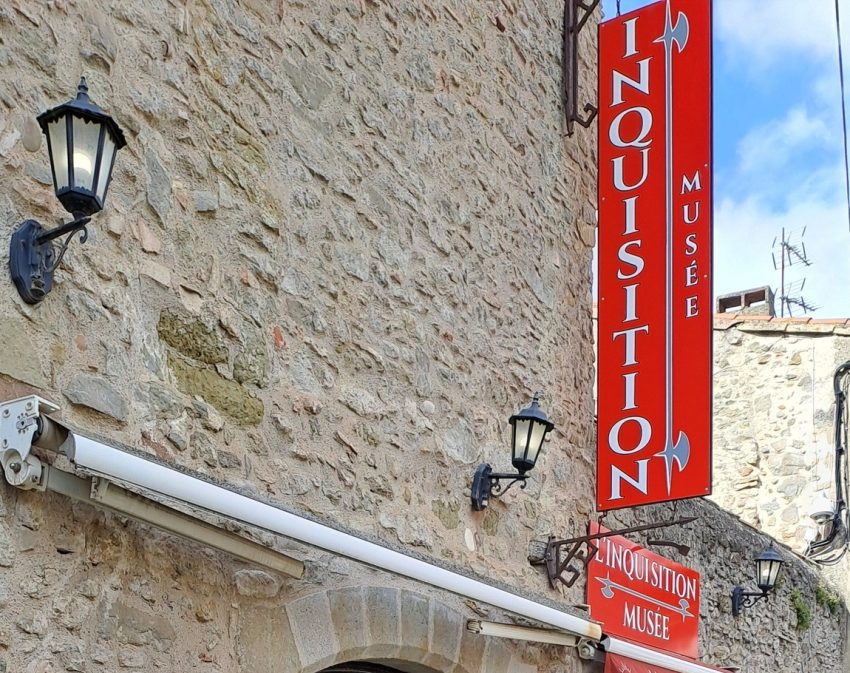
Musee de L'Inquisition sits inside Carcassonne's Medieval Cité, a short walk from the city's most iconic ramparts and lanes. It's a small, deliberately atmospheric museum focused on the history of the Inquisition and the harsh realities of medieval justice, presented through staged displays and interpretive panels.
Because it's right in the heart of the old town, it's easy to include on a self-guided walking tour through the Cité's narrow streets, viewpoints, and landmark stops. Many visitors pair it with the ramparts and Château Comtal nearby, or pop in as a quick, intense indoor break between outdoor sightseeing.
Table of Contents
- History and Significance of the Musee de L’Inquisition
- Things to See and Do in the Musee de L’Inquisition
- How to Get to the Musee de L’Inquisition
- Practical Tips on Visiting the Musee de L’Inquisition
- Where to Stay Close to the Musee de L’Inquisition
- Is the Musee de L’Inquisition Worth Visiting?
- For Different Travelers
- FAQs for Visiting Musee de L’Inquisition
- Nearby Attractions to the Musee de L’Inquisition
History and Significance of the Musee de L’Inquisition
The museum’s subject matter is rooted in a turbulent chapter of medieval European history, when religious and political power often overlapped and dissent could be punished severely. In the wider Languedoc region, the legacy of the Cathar movement and the subsequent campaigns against heresy form an important backdrop to understanding why the idea of “inquisition” still resonates here.
Rather than being a broad, academic survey, Musee de L'Inquisition is significant for how it translates a difficult topic into a visceral visitor experience. It leans into mood, staging, and shock value to make the human consequences of persecution and interrogation feel immediate.
For travelers, the museum's place in Carcassonne matters: the Medieval Cité is often experienced as romantic and storybook-like, and this visit provides a stark counterpoint. It can add context to the region's layered history, especially if you're also exploring Cathar sites or medieval fortifications during your trip.
Things to See and Do in the Musee de L’Inquisition
Expect a compact route with displays designed to be intense and memorable, including reconstructions and themed rooms that emphasize interrogation, imprisonment, and punishment. If you’re interested in how fear and authority were used to control populations, the museum’s narrative framing can be thought-provoking, even when the presentation is theatrical.
Take your time with the explanatory text and translations where available; visitors who slow down tend to get more out of it than those who rush through for the shock factor alone. If you’re traveling with kids or anyone sensitive to graphic themes, previewing the tone before committing is wise.
Some visitors mention that there can be more than one area/site involved in the experience, so plan your route through the Cité accordingly. If you're trying to fit it into a busy day, it can work as a short standalone stop, but it's more satisfying when paired with a broader “medieval Carcassonne” itinerary.
How to Get to the Musee de L’Inquisition
The nearest major airports are Toulouse-Blagnac (TLS) and Montpellier Méditerranée (MPL), with additional options via Béziers Cap d'Agde (BZR) depending on season and routes. For the best deals and a seamless booking experience, check out these flights to Carcassonne on Booking.com.
Carcassonne is easy to reach by train, and from Carcassonne station you can continue by local bus, taxi, or a longer walk up to the Medieval Cité. You can use SNCF Connect to check schedules, compare routes, and purchase tickets for National (SNCF ) and regional trains (TER). For a more streamlined experience, we recommend using Omio, which allows you to easily compare prices, schedules, and book tickets for both National and Regional travel across all of Europe, all in one place..
If you’re driving, aim for parking areas around the Medieval Cité and then continue on foot into the old town, where streets are narrow and pedestrian-heavy. If you are looking to rent a car in France I recommend having a look at Discover Cars, first, as they compare prices and review multiple car rental agencies for you.
Practical Tips on Visiting the Musee de L’Inquisition
- Official website: https://musee-inquisition-carcassonne.com/
- Entrance fee: Adults: €12; Students: €9.50; Children: €8.50.
- Opening hours: (Winter) January 2 – June 30; September 1 – December 31; Daily: 10:00–17:00. (Summer) July 1 – August 31; Daily: 10:00–19:00.
- Best time to visit: Go earlier in the day to avoid the busiest Cité foot traffic and to keep your schedule flexible if the visit feels heavier than expected.
- How long to spend: Plan around 45–75 minutes, depending on how much you read and whether you’re visiting more than one area.
- Accessibility: Expect uneven medieval streets outside and potentially tight interior spaces; if you have mobility needs, confirm access details before you go.
- Facilities: Facilities are limited compared with large museums; plan to use cafés and restrooms in the surrounding Cité before or after your visit.
Where to Stay Close to the Musee de L’Inquisition
Base yourself in or right next to the Medieval Cité if you want the easiest early-morning and late-evening access to Carcassonne’s most atmospheric streets.
Hôtel de la Cité Carcassonne - MGallery A classic splurge inside the walls, ideal if you want maximum medieval ambience and a high-comfort retreat after sightseeing.
Best Western Le Donjon A convenient in-Cité option that keeps you steps from the lanes and viewpoints, great for travelers prioritizing location.
Hôtel Du Pont Vieux A strong mid-range pick near the main approach to the Cité, handy for quick walks up to the museum and easy access to restaurants.
Tribe Carcassonne A modern, design-forward base closer to the lower town and transport links, good if you prefer contemporary style and an easy station connection.
Hôtel Le Parc - La Table de Franck Putelat A refined, quieter stay near the Cité with a gourmet focus, best for travelers building a food-and-history weekend.
Is the Musee de L’Inquisition Worth Visiting?
Yes, if you're curious about darker historical themes and you want a quick, intense counterpoint to the fairy-tale feel of Carcassonne's Medieval Cité. It's memorable, conversation-starting, and easy to slot into a walking route without derailing your day.
Honest Pivot: If you dislike graphic or macabre content, are traveling with very sensitive children, or prefer polished, scholarly museum interpretation over theatrical staging, you may want to skip it. In that case, you’ll likely enjoy spending your time on the ramparts, viewpoints, and the Château Comtal instead.
What Other Travellers Say...

Overall reviews are mixed (around mid-3s), with many visitors describing it as a memorable, macabre stop that feels intense and thought-provoking. Common positives include the dramatic staging, the “dark history” atmosphere, and information that helps explain how the Inquisition operated. Common negatives mention a low-budget or “touristy” feel in parts and that the experience can be unsettling, especially for children; some also note the visit may be split across more than one area, which can surprise first-timers.


For Different Travelers
Musee de L'Inquisition can land very differently depending on your interests and comfort level. Think of it less as a traditional museum and more as a themed historical experience that's strongest when you know what you're walking into.
Families with Kids
For older kids and teens who are already interested in medieval history, it can be a memorable stop that sparks questions and discussion. It also works best when framed with context beforehand, so it doesn’t feel like shock for shock’s sake.
For younger children, the tone may be too intense, and some families find it unsettling rather than educational. If you do go, keep it short and balance it with lighter Cité activities afterward.
Couples & Romantic Getaways
Couples who like unusual, offbeat attractions may find it a surprisingly engaging detour between scenic walks and long lunches. It’s also an easy add-on if you’re exploring the Cité slowly and want something different from churches, shops, and viewpoints.
If your trip is centered on romance and relaxed vibes, this may feel too grim for the mood. Consider visiting earlier in the day, then pivot to sunset rampart views to reset the tone.
Budget Travelers
It's a paid attraction, so budget travelers should weigh it against Carcassonne's many free highlights, like wandering the Medieval Cité streets and enjoying viewpoints. If you're choosing just one paid stop, compare it with the Château Comtal and ramparts for overall value.
If you’re traveling in shoulder season, it can still be a compact indoor activity when weather turns. The best value comes from taking your time with the information rather than rushing through.
History Buffs
History buffs may appreciate the regional context and the way the visit contrasts with Carcassonne’s more romanticized medieval imagery. It can also complement a broader itinerary focused on Cathar history in the surrounding area.
That said, the presentation can feel more theatrical than academic. If you want deeper scholarship, pair this with guided walking context in the Cité or a visit to more interpretation-heavy sites.
FAQs for Visiting Musee de L’Inquisition
Getting There
Tickets & Entry
Visiting Experience
Tours, Context & Itineraries
Photography
Accessibility & Facilities
Food & Breaks Nearby
Safety & Timing
Nearby Attractions to the Musee de L’Inquisition
- Château Comtal: The Cité’s main castle complex, ideal for rampart walks and big-picture medieval context.
- Basilique Saint-Nazaire: A beautiful basilica known for its architecture and stained glass, offering a calmer contrast to darker themes.
- Ramparts of the Cité de Carcassonne: Classic panoramic walks along fortified walls with sweeping views.
- Porte Narbonnaise: The most famous gateway into the Medieval Cité and a great photo stop.
- Pont Vieux: A scenic old bridge viewpoint for postcard-style shots of the fortified skyline.
The Musee de L'Inquisition appears in our Complete Guide to Visiting Carcassonne!

Moira & Andy
Hey! We're Moira & Andy. From hiking the Camino to trips around Europe in Bert our campervan — we've been traveling together since retirement in 2020!
This website uses affiliate links which may earn a commission at no additional cost to you!
Planning Your Visit
(Winter) January 2 - June 30; September 1 - December 31; Daily: 10:00-17:00.
(Summer) July 1 - August 31; Daily: 10:00-19:00.
Adults: €12; Students: €9.50; Children: €8.50.
Nearby Attractions
- La Grand Puit (0.0) km
Historic Site and Monument - Jean-Pierre Cros-Mayrevieille Monument (0.1) km
Memorial, Monument and Statue - Château et Remparts (0.1) km
Castle, City Walls and Historic Site - Cité de Carcassonne (0.1) km
Ancient City, Castle and City Walls - Porte Narbonnaise (0.1) km
Attraction, City Gate and Historic Site - Dame Carcas (0.2) km
Statue - Eglise Saint-Gimer (0.2) km
Church and Religious Building - Porte de l'Aude (0.2) km
City Gate, City Walls and Historic Site - Musée de l'Ecole (0.3) km
Museum - Basilique Saint-Nazaire (0.3) km
Basilica, Church and Religious Building