Leaning Tower of Pisa
Historic Building and Tower in Pisa
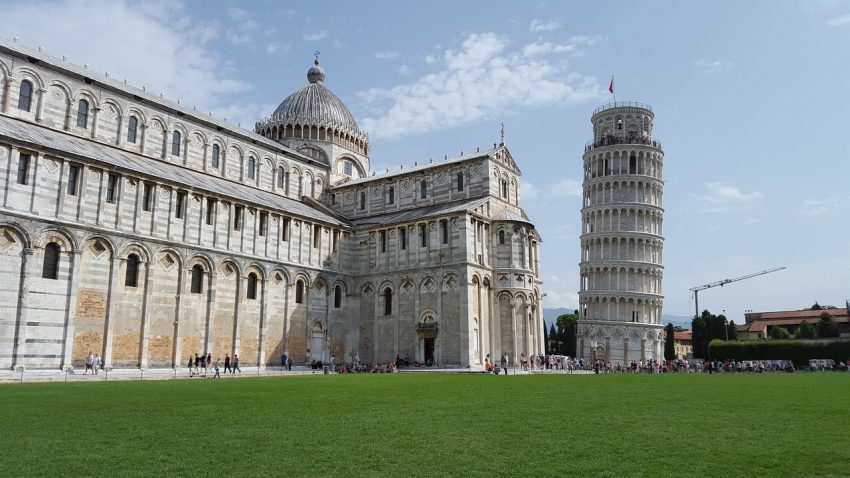
Every child grows up seeing photos of it, and almost every visitor to Pisa makes their way to see it in person: the Leaning Tower of Pisa, or La Torre Pendente, rising beside the cathedral in the Piazza dei Miracoli. Standing here, the tower's white arcades, visible tilt and constant flow of people posing for “holding it up” photos make it one of the must-see places in Pisa, whether you are a history fan, architecture lover or simply curious to see if the lean looks as dramatic as in the pictures.
What you see today is the result of centuries of problem-solving and engineering rescue work. Begun in 1173, when Pisa was a powerful maritime republic, the tower was designed as a freestanding bell tower echoing the cathedral's elegant loggia-style façade. But even before builders reached the third level, the soft subsoil on the south side began to give way, causing an alarming lean. Construction stopped, resumed almost a century later, and continued in stages until the bell chamber was finally added in the 14th century. Later stabilisation projects, including a huge intervention in the late 20th century, have secured the structure so that visitors can once again climb its 294 steps and enjoy sweeping views over Pisa. Today, it is a highlight of any walking tour of Pisa, anchoring a square where every building feels like part of an open-air museum.
Table of Contents
- History and Significance of the Leaning Tower of Pisa
- Things to See and Do in the Leaning Tower of Pisa
- How to Get to the Leaning Tower of Pisa
- Practical Tips on Visiting the Leaning Tower of Pisa
- Where to Stay close to the Leaning Tower of Pisa
- Is the Leaning Tower of Pisa Worth Visiting
- FAQs for Visiting the Leaning Tower of Pisa
- Nearby Attractions to the Leaning Tower of Pisa
History and Significance of the Leaning Tower of Pisa
Work on the Leaning Tower began in 1173, at the height of Pisa's power as a maritime republic with influence stretching across the Mediterranean. The idea was to complete a monumental cathedral complex, with a separate bell tower reflecting the same Romanesque style of arcades and columns used on the cathedral façade. The tower was built as a series of stacked loggia levels, each ringed with slender columns and arches in pale stone that would catch the light and frame the bells above the city.
However, the choice of foundations proved problematic. The tower stands on soft, unstable ground made of clay and sand, and by the time builders reached the third level, the south side had already started to sink. Construction was halted as the tilt increased, and when work resumed in 1272, the new architects tried to counteract the lean by building the upper floors with a slight corrective angle towards vertical. This created the gentle curve you can still see if you look carefully at the tower’s profile: it is not just leaning, but also subtly “bent” from the efforts to save it.
The open bell chamber, added between about 1350 and 1372 by Tommaso Pisano, completed the tower’s silhouette, and for centuries it served as the cathedral’s campanile. The lean, though worrying, became part of its identity. In the 20th century, as the tilt increased by around a millimetre per year and engineers detected rotational movement around the axis, fears grew that it might collapse. A major restoration and stabilisation project led to the closure of the tower in 1990; when it reopened in 2001, the tilt had been reduced from about 5.5 degrees to roughly 4 degrees, leaving the top displaced by just under 4 metres from true vertical. The fact that you can climb it today is thanks to that painstaking engineering work, which turned a near-disaster into a global conservation success story.
Things to See and Do in the Leaning Tower of Pisa
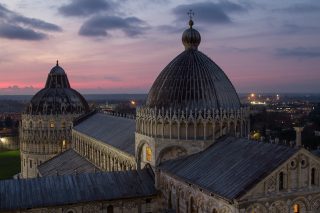
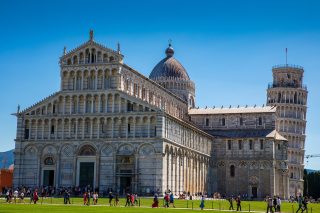
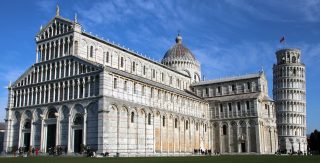
Most visitors start by taking in the classic view: stand back in the Piazza dei Miracoli and look at how the Leaning Tower aligns with the cathedral and baptistery. From this angle, you can really appreciate the ring of open galleries around the tower and the contrast between its pale stone and the green lawn. Once the obligatory “holding up the tower” photo is out of the way, take a lap around the base to notice details such as column capitals, decorative bands and the slight curve of the structure as it rises.
If you have a climbing ticket, the real experience begins inside. The spiral staircase of around 294 steps winds steeply to the top, and you will feel the lean as you climb: on some sections you naturally drift towards one wall, and your sense of balance may wobble slightly. At the top, you step out onto the viewing platform and can walk around, looking over the red roofs of Pisa, the cathedral's roofline and the Tuscan countryside beyond. It is a compact city, so you quickly pick out other landmarks and see how the Arno River shapes the urban layout.
Even if you choose not to climb (for example, if you dislike heights or have mobility issues), simply exploring the tower from below and combining it with the cathedral, baptistery and Camposanto makes for a very full visit. Take time to sit on the grass (where allowed), watch the play of light on the arcades and listen to the bells if you are lucky enough to be there when they ring. The whole Piazza dei Miracoli is one of the top sights in Pisa, and the tower is of course its star, but the experience is richer when you see it as part of a larger, carefully planned medieval ensemble.
How to Get to the Leaning Tower of Pisa
The easiest way to arrive from abroad is via Pisa International Airport, also known as Galileo Galilei Airport, which has flights from various European cities and lies only a few kilometres from the city center. For the best deals and a seamless booking experience, check out these flights to Pisa on Booking.com.
Within Italy, Pisa is very well connected by train; frequent regional and high-speed services link Pisa Centrale station with Florence, Lucca, Livorno and other Tuscan and Italian cities, and from the station it is about a 20-25 minute walk or a short bus or taxi ride to the Piazza dei Miracoli where the tower stands.Use Omnio to easily compare schedules, book train tickets, and find the best prices all in one place for a hassle-free journey across Italy. Local buses run from the station and other parts of town to stops near the square, and many visitors also arrive on organised day tours from Florence and the wider Tuscany region, which include transport and pre-booked tower entry.
If you are travelling by car, Pisa is close to major routes such as the A12 and the Florence-Pisa dual carriageways, and you can use signposted parking areas on the edge of the historic center, walking or taking a shuttle from there to the Piazza dei Miracoli; driving into the very centre is restricted, so it is best to park and continue on foot. If you are looking to rent a car in Italy I recommend having a look at Discover Cars, first, as they compare prices and review multiple car rental agencies for you.
Practical Tips on Visiting the Leaning Tower of Pisa
- Suggested tips: Book your tower climb in advance, arrive early for your time slot, travel light (bags must be left in the cloakroom) and give yourself time to enjoy the whole Piazza dei Miracoli, not just the tower.
- Best time to visit: Early morning or late afternoon avoids the biggest crowds and harshest light; shoulder seasons like spring and autumn tend to be more comfortable than peak summer.
- Entrance fee:
- Opening hours: Adults: from €27.00
- Official website: https://www.opapisa.it/en
- How long to spend: Allow at least 1.5-2 hours if you are climbing the tower and briefly visiting the square; half a day is ideal if you also want to tour the cathedral, baptistery and cemetery.
- Accessibility: The climb is via a narrow spiral staircase with no lift and is not suitable for visitors with mobility issues, serious vertigo or certain health conditions; the square itself is much more accessible at ground level.
- Facilities: There are ticket offices, cloakrooms for bags, restrooms and cafés in and around the Piazza dei Miracoli; additional dining and shopping options lie within a short walk along surrounding streets.
- Photography tip: For classic shots, step back to include both the tower and cathedral, and experiment with angles from the sides of the square rather than just straight on; inside the tower, use a fast shutter speed to compensate for low light and movement on the stairs.
- Guided tours: Consider guided tours that combine the tower with other monuments in the square; they often include skip-the-line access and insightful commentary on the construction, lean and stabilisation works.
- Nearby food options: Seek out trattorias and cafés just beyond the immediate tourist strip for better value and a more local feel; a coffee or gelato stop after your climb is almost mandatory.
Where to Stay close to the Leaning Tower of Pisa
If you want to be within easy walking distance of the Leaning Tower and the rest of the Piazza dei Miracoli, one convenient option is Grand Hotel Duomo, which sits just a short stroll from the square and offers rooftop views over the tower and cathedral. For a quieter base still within reach of the main sights, Hotel Bologna Pisa places you in the historic center between the station and the river, making it easy to explore both the tower area and the rest of town on foot. Another solid choice is Hotel Pisa Tower, a small hotel located close to the Piazza dei Miracoli that works well if your main priority is maximising time at the tower and surrounding monuments.
Is the Leaning Tower of Pisa Worth Visiting
The Leaning Tower of Pisa is absolutely worth visiting, even if you only have a short time in the city. Photos cannot quite capture the strange sensation of standing beside such a beautiful structure that is visibly, dramatically off-vertical, nor the feeling of climbing inside and noticing how the tilt plays tricks with your balance. Combined with the wider beauty of the Piazza dei Miracoli, the tower's layered history of medieval ambition, structural failure and modern engineering rescue makes it far more than a simple photo stop. For most travellers it quickly becomes one of the top attractions in Pisa and a highlight of their time in Tuscany.
What Other Travellers Say...

Tower of Pisa, on Piazza del Duomo in Pisa, is the famously leaning 14th-century tower whose tilt is striking in person; visitors describe a surprising sense of disorientation when inside and note that the climb involves many worn marble steps and a spiral ascent that makes the lean palpable, with rewarding panoramic views from the top. Reviewers recommend booking a timed reservation to climb, mention combined passes that include the tower, cathedral, baptistery and a museum (with lockers provided and bags not allowed inside), and advise planning travel time carefully—it's an easy day trip from Florence by train but can take longer from ports like Livorno and taxis may be scarce there. Many find the piazza and surrounding buildings worth a stroll even if you skip going in, and suggest visiting early or late to avoid crowds and to get better photos and a quieter experience.


FAQs for Visiting the Leaning Tower of Pisa
Nearby Attractions to the Leaning Tower of Pisa
- Pisa Cathedral: The city's grand Romanesque cathedral directly beside the tower, with a richly decorated interior and important artworks.
- Baptistery of St John: A circular baptistery with impressive acoustics and fine stonework, completing the core trio of monuments in the Piazza dei Miracoli.
- Camposanto Monumentale: A monumental cemetery with cloistered walkways, fresco fragments and historic tombs along the edge of the square.
- Museo dell'Opera del Duomo: A museum housing original sculptures and artworks from the cathedral complex, ideal if you want more context on what you have seen outside.
- Piazza delle Vettovaglie: A lively market square in the historic center where you can experience a more everyday side of Pisa with food stalls, cafés and local shops.
The Leaning Tower of Pisa appears in our Complete Guide to Visiting Pisa!

Moira & Andy
Hey! We're Moira & Andy. From hiking the Camino to trips around Europe in Bert our campervan — we've been traveling together since retirement in 2020!
This website uses affiliate links which may earn a commission at no additional cost to you!
Planning Your Visit
Adults: from €27.00
Nearby Attractions
- Museo dell'Opera del Duomo (0.0) km
Museum - Cathedral of Santa Maria Assunta (0.1) km
Cathedral - Campo dei Miracoli (0.2) km
Historic Site and Square - Camposanto Monumentale (0.2) km
Historic Building - Battistero di San Giovanni (0.2) km
Historic Building - Orto Botanico dell’Università di Pisa (0.3) km
Gardens - Baths of Nero (0.4) km
Historic Site - Palazzo dei Cavalieri (0.5) km
Palace - Santo Stefano dei Cavalieri (0.5) km
Church - Borgo Stretto (0.8) km
Street